
BuddhistCatholicContemplativeEvangelicalGeneral ChristianHinduJewishLatter-day SaintMuslimNew VisionsProgressive Christian
Beliefs
- Buddhist
- Catholic
- Contemplative
- Evangelical
- General Christian
- Hindu
- Jewish
- Latter-day Saint
- More Voices
- Muslim
- New Visions
- Pagan
- Progressive Christian
Topics
- Religion News
- Food and Religion
- Sports and Religion
- Religious Art
- Religious Music and Entertainment
- Religious Events
- History and Religion
- Style and Religion
- Politics and Religion
- Women in Religion
- Recreation Outdoors and Religion
- Business Finance and Religion
- Careers Workplace and Religion
- Education and Religion
- Family Parenting and Religion
- Health Fitness and Religion
- Home and Religion
- Relationships and Religion
- Technology and Religion
- Travel and Religion
Columnists
- Buddhist Columnists
- Business Finance and Religion Columnists
- Careers Workplace and Religion Columnists
- Catholic Columnists
- Contemplative Columnists
- Education and Religion Columnists
- Evangelists Columnists
- Family Parenting and Religion Columnists
- General Christian Columnists
- Health Fitness and Religion Columnists
- Hindu Columnists
- History and Religion Columnists
- Home and Religion Columnists
- Jewish Columnists
- More Voices Columnists
- Latter Day Columnists
- Muslim Columnists
- New Visions Columnists
- Nonreligious Columnists
- Pagan Columnists
- Politics and Religion Columnists
- Progressive Columnists
- Recreation Outdoors and Religion Columnists
- Relationships and Religion Columnists
- Religion News Columnists
- Religious Art Columnists
- Religious Events Columnists
- Religious Music and Entertainment Columnists
- Sports and Religion Columnists
- Style and Religion Columnists
- Technology and Religion Columnists
- Travel and Religion Columnists
- Women in Religion Columnists
Resource Library
- 2026 Calendar
- Library of World Religions
- The 100 Most Holy Places on Earth
- Patheos Answers
- Podcasts
- Videos
- Faith Leaders Database
- Anglican Episcopalian
- Bahai
- Baptist
- Buddhism
- Christianity
- Confucianism
- Eastern Orthodoxy
- Hinduism
- Holiness and Pentecostal
- ISKCON
- Islam
- Judaism
- Lutheran
- Methodist
- The Church of Jesus Christ of Latter-day Saints
- New Age
- Paganism
- Presbytarian and Reformed
- Protestantism
- Religion Behind the Scenes
- Roman Catholic
- Scientology
- Shia Islam
- Sikhism
- Sufism
- Sunni Islam
- Taoism
- Zen
- See all religions
Research Tools
 Ad-Free & Subscriber Log-In Subscription Support
Ad-Free & Subscriber Log-In Subscription Support
Follow Patheos 

- Trending:
- Forgiveness
- |
- Marriage
- |
- Consciousness
- |
- Death Penalty
- |
- Election
- |
- Halloween

- HOME
- Me and the Blog
- Defining Pagan
- Rituals & Holidays
- All Posts
- Blogroll
- Publications
- FREE NEWSLETTER
- Home
- Pagan
- Thank the Gods We Don’t Have a Bible
Thank the Gods We Don’t Have a Bible
Last updated on: April 17, 2015 at 5:12 pm by Jason Mankey
Thank the Gods We Don’t Have a Bible 2015-04-17T17:12:35-06:00 Jason Mankey
Patheos Explore the world's faith through different perspectives on religion and spirituality! Patheos has the views of the prevalent religions and spiritualities of the world.
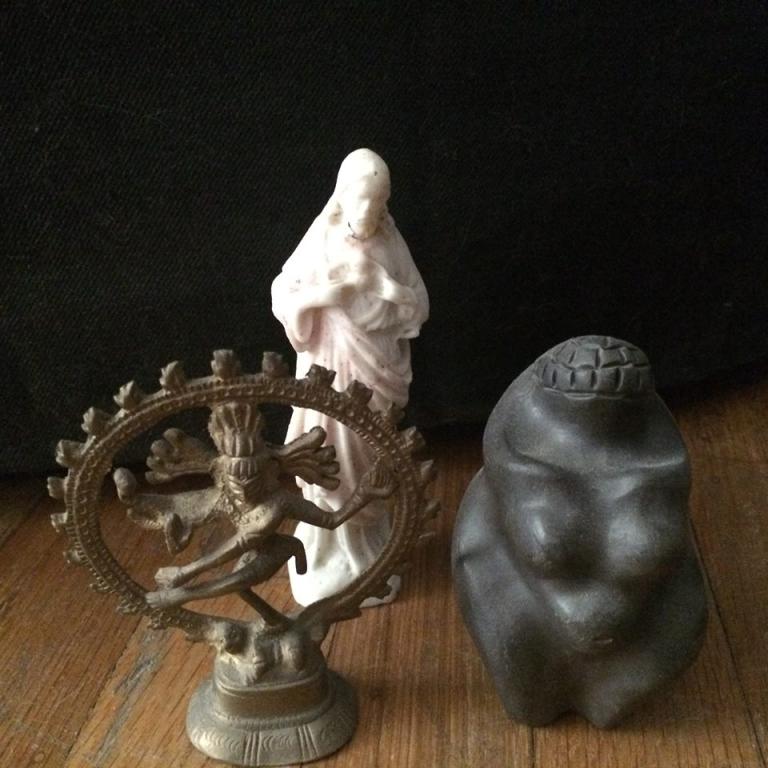 Living in Northern California can be like living in a bubble. It’s a very socially progressive area of the country, and I usually take it for granted that my neighbors are a part of this century. This morning that fantasy was interrupted while listening to a call-in-show on public radio. There’s nothing like hearing from a “good Christian” whose religion is being “threatened” by gay marriage. Such arguments are hair-brained and stupid, and having to hear such nonsense immediately put me on edge.
What I despise most about those “arguments” is that they are created by the selective reading of an extremely old and outdated text. Everyday I give thanks to the gods that my religion was not built on the whims of a bunch of dudes who lived 2000 years ago.* I don’t begrudge people who follow the Bible or the Koran, such texts certainly have the ability to give meaning to people’s lives. However, I am often bothered by how people interpret those texts and to some degree live in thrall of them.
My own practice includes a Book of Shadows that’s been handed down to me, but that text does not dictate how I view others. It contains only one rule, and even then that rule is open to a large degree of interpretation. My BoS is mostly ritual, there’s no comparison to something like the Bible. If anything it’s more like a hymnal or a Book of Prayer with a smattering of myth. It contains no theology and allows me to approach the gods on my own terms. My BoS has also been added to and subtracted to over the years. No one suffers under the delusion that its contents are written in stone somewhere between the worlds.
My faith rejects absolutes and encourages self-discovery. No one has ever discouraged me from researching Wiccan history or figuring out exactly where our text(s) comes from. My beliefs are not in conflict with science. I feel that the lack of a “sacred text” gives Pagan faiths an edge over monotheistic ones, and better prepares us for today’s world.

Context has been stripped away from books like the Bible Back when I was in school and reading classic pieces of literature my teachers always emphasized to me the context in which certain books were written. Gulliver’s Travels wasn’t really just an adventure story, it was satire, and realizing that made the book more enjoyable. I’ve never understood why so many believers refuse to put the Bible into its place in history.
Take for example the dietary rules articulated in the book Leviticus. In one instance the Hebrew God condemns the eating of certain ocean creatures. Today this seems rather arbitrary (my wife swears calamari is delicious) but 2600 years ago it made a lot more sense. Squid was far more likely to make a person sick than fish. Today we have refrigerators and have a much better handle on how to prepare food. The person who wrote Leviticus most likely did so with the best of intentions and wrote it as he (or she) understood the world at that moment. If the early Hebrews had had access to the modern freezer Leviticus would be a lot different. But that’s something that nobody talks about, because the Bible is not a reflection of humanity but the thoughts of a particular god.
The New Testament doesn’t fair much better either. The Book of Revelation for instance is not about the judgement of a wrathful and jealous deity. It’s about the place of Christians in the Roman Empire at the end of the First Century. Taking away the context of Revelation turns the entire book into an Evangelical Christian fantasy. One can’t read Revelation (or any other part of the Bible) intelligently without understanding what was going on in the world when it was written.
Paganism has no Prophets Part of the problem with putting religious texts into their proper place and time is they are generally considered to be written by “prophets.” I really like Gerald Gardner and Doreen Valiente, but they weren’t prophets. Perhaps some of what they wrote or believed was divinely inspired, but that inspiration was filtered through their humanness. Gardner was often full of BS, and that’s something he likely would admit to if he were still around.
The people who helped establish my religious tradition were simply people doing the best they could. They had foibles and faults just like the rest of us, and we are all just as capable of touching the divine as they were. The Apostle Paul of the Christian tradition was a tremendous writer, but he was the writer, not the god he served. Anything in his letters that was divinely inspired was filtered through his experiences and prejudices. The idea of prophets as exalted humans obscures this fact and makes it harder to throw out antiquated ideas.

I like listening to this guy.
Inerrancy Because holy books are seen as the product of prophets and not simply people they are considered by some to be “inerrant.” Biblical inerrancy essentially means that the Bible is “without error or fault.” The problems with Biblical inerrancy are many, but there are two major ones that I feel the need to address.
The first is that texts like the Bible were written long before the modern scientific process. The person who assembled the Book of Genesis wrote down a bunch of different mythologies that offered explanations for the origins of the Earth. (That’s why there are two creation stories in Genesis.) The individual who wrote those stories never imagined that 3000 years later people would still be reading them. Those stories were written down when people still believed that the Earth was flat and that demons caused disease. We can’t mention that context because a book like Genesis was written by a prophet and is therefore inerrant.
Inerrancy offers limited avenues for growth and change. We understand the world so much better than we did 2000 years ago, but inerrancy does not allow people to apply that knowledge to their holy texts. Most every Pagan I know looks at mythology as something that illustrates an idea, not as a literal telling of how the world works. In my own practice I honor the Goddess and the God on the Wheel of the Year and honor the Horned One’s yearly sacrifice so that he may be reborn. I certainly don’t think this happens in a literal sense, it’s simply suggestive of how the world works. Things die and out of that new things are born.
One of my biggest pet peeves is when people speak in absolutes, not allowing for anything in between right and wrong. Unchanging holy books are absolutes, and as a result are often used to justify deplorable behavior and actions. There are many enlightened followers of books such as the Bible who realize things like context and the fallibility of human writers . . . . . and then there are people like “good Christian” clinging to an outdate document that doesn’t take into account our present circumstances.
Thank the gods for a flexible, adaptable, and enlightened approach to modern spirituality. May we never have a Bible and may we always be open to society’s inevitable changes.
________
*The various books of the Bible have various dates of composition, and certainly some of the stories within it go back over 3000 years.
Previous Post

April 14, 2015
What to Do With Broken Statuary
Next Post

April 20, 2015 Jason Reads and Listens (Book and Music Reviews)
Browse Our Archives
Select a Category Editorializing Gateways to Paganism Guest Posts Holiday Histories Led Zeppelin News and Views Occult Pagan Pagan TV Club Paganism polytheism Ramble On Reviews Ritual Strange Days Uncategorized
Select a Month August 2026 March 2026 February 2026 November 2025 September 2025 August 2025 April 2025 August 2024 April 2024 February 2024 December 2023 October 2023 August 2023 June 2023 May 2023 January 2023 October 2022 August 2022 July 2022 June 2022 May 2022 April 2022 March 2022 February 2022 January 2022 December 2021 November 2021 October 2021 September 2021 August 2021 July 2021 June 2021 April 2021 March 2021 February 2021 January 2021 December 2020 November 2020 October 2020 August 2020 July 2020 June 2020 May 2020 April 2020 March 2020 February 2020 January 2020 December 2019 November 2019 October 2019 September 2019 August 2019 July 2019 June 2019 May 2019 April 2019 March 2019 February 2019 January 2019 December 2018 November 2018 October 2018 September 2018 August 2018 July 2018 June 2018 May 2018 April 2018 March 2018 February 2018 January 2018 December 2017 November 2017 October 2017 September 2017 August 2017 July 2017 June 2017 May 2017 April 2017 March 2017 February 2017 January 2017 December 2016 November 2016 October 2016 September 2016 August 2016 July 2016 June 2016 May 2016 April 2016 March 2016 February 2016 January 2016 December 2015 November 2015 October 2015 September 2015 August 2015 July 2015 June 2015 May 2015 April 2015 March 2015 February 2015 January 2015 December 2014 November 2014 October 2014 September 2014 August 2014 July 2014 June 2014 May 2014 April 2014 March 2014 February 2014 January 2014 December 2013 November 2013 October 2013 September 2013 August 2013 July 2013 June 2013 May 2013 April 2013 March 2013 February 2013 January 2013 December 2012 November 2012 October 2012 September 2012 August 2012 July 2012 June 2012 April 2012 October 2011 September 2011 August 2011
Follow Us!
TAKE THE
Religious Wisdom Quiz
In 2 Corinthians, Paul describes a man being caught up to the third heaven. How many years before writing did this happen?
Select your answer to see how you score.
Twelve years Fourteen years Ten years Seven years
Related posts from Raise the Horns
The Great God Pan Among the Stars

What Makes a Good Ritualist? No Idea

Yule is Also a Time for the Dead
TRENDING AT PATHEOS Pagan

Pope Leo Celebrates Mass for Nurses & Docs...
I don't have any idea how he did it, but Pope Leo...

The Sermon on the Mount, Part I: Matthew...
The Sermon on the Mount, Part I (Matthew 4:12-5:12) St. Matthew moves...

What's up from Crossway: Reviewing some of their latest A few weeks...

Janie Learns the Way of the Cross: A...
Teaching children about Jesus' Passion can be challenging. Many parents and educators...

Looking For Good Catholic Writing - October 2026
He alone extends the heavens, and he walks upon the waves of...

In "Irreplaceable," our book on vocation and technology, Trevor Sutton and I...
view all Pagan blogs
Ad-Free & Subscriber Log-In Subscription Support
- About Us
- 2026 Calendar
- Videos
- Podcasts
- Library of World Religions
- Faith In Media Tracker
- Advertise With Us
- Write for Us
- Privacy Policy
- Terms of Service
- Do Not Sell My Data
- Contact Us
- Radiant Digital
- Manage Newsletter Subscriptions
- Unsubscribe From Notifications
- Sitemap
Copyright 2008-2026, Patheos. All rights reserved.
Subscription Support Ad-Free & Subscriber Log-In
Follow Patheos