
BuddhistCatholicContemplativeEvangelicalGeneral ChristianHinduJewishLatter-day SaintMuslimNew VisionsProgressive Christian
Beliefs
- Buddhist
- Catholic
- Contemplative
- Evangelical
- General Christian
- Hindu
- Jewish
- Latter-day Saint
- More Voices
- Muslim
- New Visions
- Pagan
- Progressive Christian
Topics
- Religion News
- Food and Religion
- Sports and Religion
- Religious Art
- Religious Music and Entertainment
- Religious Events
- History and Religion
- Style and Religion
- Politics and Religion
- Women in Religion
- Recreation Outdoors and Religion
- Business Finance and Religion
- Careers Workplace and Religion
- Education and Religion
- Family Parenting and Religion
- Health Fitness and Religion
- Home and Religion
- Relationships and Religion
- Technology and Religion
- Travel and Religion
Columnists
- Buddhist Columnists
- Business Finance and Religion Columnists
- Careers Workplace and Religion Columnists
- Catholic Columnists
- Contemplative Columnists
- Education and Religion Columnists
- Evangelists Columnists
- Family Parenting and Religion Columnists
- General Christian Columnists
- Health Fitness and Religion Columnists
- Hindu Columnists
- History and Religion Columnists
- Home and Religion Columnists
- Jewish Columnists
- More Voices Columnists
- Latter Day Columnists
- Muslim Columnists
- New Visions Columnists
- Nonreligious Columnists
- Pagan Columnists
- Politics and Religion Columnists
- Progressive Columnists
- Recreation Outdoors and Religion Columnists
- Relationships and Religion Columnists
- Religion News Columnists
- Religious Art Columnists
- Religious Events Columnists
- Religious Music and Entertainment Columnists
- Sports and Religion Columnists
- Style and Religion Columnists
- Technology and Religion Columnists
- Travel and Religion Columnists
- Women in Religion Columnists
Resource Library
- 2026 Calendar
- Library of World Religions
- The 100 Most Holy Places on Earth
- Patheos Answers
- Podcasts
- Videos
- Faith Leaders Database
- Anglican Episcopalian
- Bahai
- Baptist
- Buddhism
- Christianity
- Confucianism
- Eastern Orthodoxy
- Hinduism
- Holiness and Pentecostal
- ISKCON
- Islam
- Judaism
- Lutheran
- Methodist
- The Church of Jesus Christ of Latter-day Saints
- New Age
- Paganism
- Presbytarian and Reformed
- Protestantism
- Religion Behind the Scenes
- Roman Catholic
- Scientology
- Shia Islam
- Sikhism
- Sufism
- Sunni Islam
- Taoism
- Zen
- See all religions
Research Tools
 Ad-Free & Subscriber Log-In Subscription Support
Ad-Free & Subscriber Log-In Subscription Support
Follow Patheos 

- Trending:
- Forgiveness
- |
- Marriage
- |
- Consciousness
- |
- Death Penalty
- |
- Election
- |
- Halloween

- HOME
- Me and the Blog
- Defining Pagan
- Rituals & Holidays
- All Posts
- Blogroll
- Publications
- FREE NEWSLETTER
- Home
- Pagan
- Jason Reads and Listens (Book and Music Reviews)
Jason Reads and Listens (Book and Music Reviews)
Last updated on: April 20, 2015 at 10:30 am by Jason Mankey
Jason Reads and Listens (Book and Music Reviews) 2015-04-20T10:30:07-06:00 Jason Mankey
Patheos Explore the world's faith through different perspectives on religion and spirituality! Patheos has the views of the prevalent religions and spiritualities of the world.
I tend to read a lot, but until recently I haven’t had a lot of time to do so. Over the last few months I ‘ve been finishing my own book (The Witch’s Athame, coming in early 2016!), busy with festival presentations, and all that while starting my new job here at Patheos Pagan. To say I was a bit overwhelmed would be putting it mildly. I barely had time to watch Arrow and The Flash, let alone do something as challenging as reading a book. So yeah, I’ve been a bit behind with my reading (and I’m still behind) but at least there’s some light at the end of the tunnel. What follows are real reviews of real books (and one album) that might be of real interest to real Pagans.
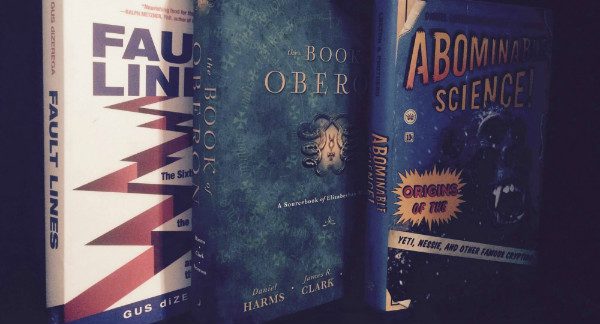
 The Book of Oberon: A Sourcebook of Elizabethan Magic by Daniel Harms, Joseph H. Peterson, and James R. Clark. Llewellyn Publications, 2015. Paganism’s roots have always been in the Western Magical Tradition. That tradition extends back to the paganisms of antiquity, and also to the very Christian practices of cunning-craft and the grimoire tradition. Those bothered by seeing long excerpts from the Gospel of John in a magical text should probably pass on The Book of Oberon, but for everyone else The BoO is a must-have. Not only is this a wonderful introduction to the world of magical books, it’s nearly a work of art. The illustrations by James Clark are outstanding and editors Harms and Peterson have done a masterful job reawakening this five hundred year old text.
The Book of Oberon is not a single work in the tradition of other better known grimoires. Instead, it’s a rather broad collection of magical ideas mostly collected during the mid to late 16th Century. Harms named the text The Book of Oberon because it contains instructions on how to conjure up the being Oberion (better known as Oberon) during ritual. The title works and lends the whole enterprise a bit of poetry. Not surprinsgly the latter third of the text contains the The Key of Solomon, reinforcing just how influential that piece of spell-craft has been over the centuries.
Like the Harms edition of The Long Lost Friend, The Book of Oberon is not lacking in historical materials. Harms and Peterson firmly place the book in the context of its day and also trace the history of the book’s namesake. As a lover magical history the introduction alone was a treat. Praise also needs to be lavished on the book’s editors; The BoO is a testament to just how great Llewellyn is at what they do.
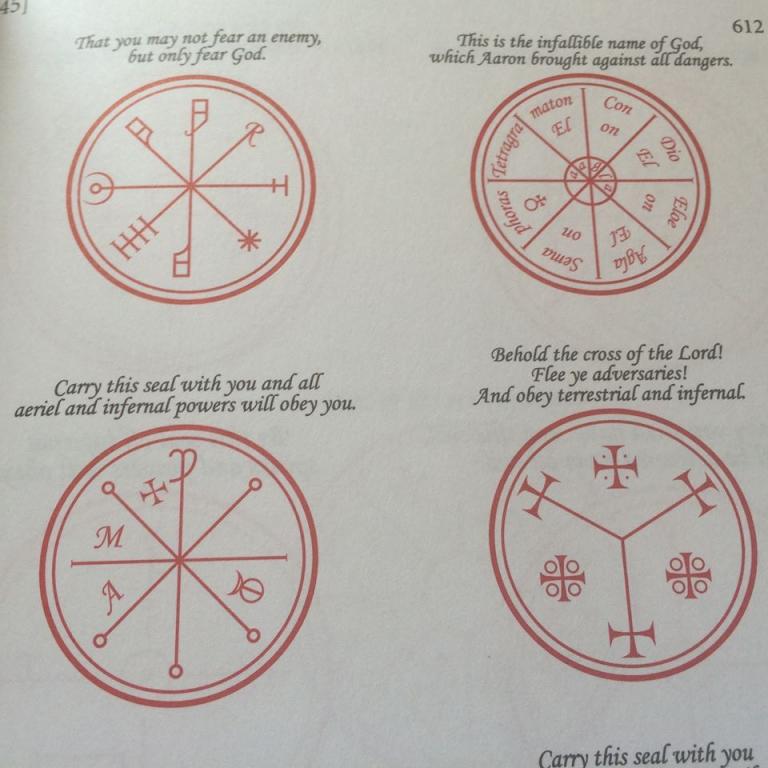
Sigils from the book’s text.
A magical book should be useful, and while I don’t quite have the balls to conjure up Oberon or Mycob (“Queen of the Fairies”), I’m still going to use parts of this grimoire during ritual. For those wondering just how much of Wicca’s history is embedded in the Western Magical Tradition, well the BoO answers some of those questions. It all gets far too Jesus-y in places (which is to be expected), but there’s enough overlap with what I do in circle that many of the formulas written about in Oberon feel familiar:
“I conjure you, O circle, and this place, by that true God who created this Earth. I sanctify and consecrate you, O circle, and this place, by the Creator himself . . . . . . may this place and this circle by the gift of the grace of the almighty and most high God (be) blessed and consecrated and sanctified and guarded . . . . .that no evil spirit may have any power or place to advance in this circle, nor cause any terrors, phantasms, fears, nor temptations of any kind, nor have the power to harm . . . .” from-The consecration of the circle, the master standing in the midst
More than just magical history, Oberon contains easily doable (with some adaption) and practical spell-craft. It’s also arranged with enough precision that finding a certain type of spell isn’t much trouble. I can’t rave about this book enough. Oberon is a delight and you can bet your athame that I’ll be doing a ritual based on it for my coven soon. With a list price of 65 dollars there’s a larger than normal price-tag attached to it, but with the amount of time, care, and commitment that went into it . . . . well it’s worth every penny.
 Abominable Science!: Origins of the Yeti, Nessie, and Other Famous Cryptids by Daniel Loxton and Donald R. Prothero. Columbia University Press 2013 (Paperback, April 2015). Instead of a Pagan-writer I was almost a cryptid-writer; and if my wife didn’t object so strongly to the latter prospect I’d currently be writing a book on Bigfoot. I first encountered the occult (and by extension Witchcraft and Paganism) due to its proximity in the Dewey Decimal System to books on the Loch Ness Monster and her ilk. Though I’m no longer convinced as to the reality of Nessie (despite a trip to Loch Ness last Autumn) I still hold a soft-spot in my heart for Bigfoot and the Yeti.

Loch Ness, I saw goats there, but no monsters.
This past Winter I came across an article with author Daniel Loxton and was impressed with his passion for cryptozoology, all while remaining a skeptic. Since I believe in getting “the rest of the story” I took a flyer on he and Prothero’s book Abominable Science, and I’m glad I did. I’ve read other skeptical inquiries into Bigfoot and Nessie over the years, but none of them were as eye-opening and well argued as Abominable Science. This is an extremely readable book for an academic press, and succeeds in that regard without dumbing down its arguments. It’s also lavishly illustrated and printed on high quality (glossy) paper.
As someone with a toe in the water of the cryptid-community I was surprised that much of the “scientific inquiry” being done on the subject of Sasquatch, lake monsters, and Mokele Mbembe has been conducted by “young-Earth” creationists. (I think I need to go wash my hands.) The book’s cover looks a little sensational, but the text behind it is smart and satisfying. This is good reading for both skeptics and believers.
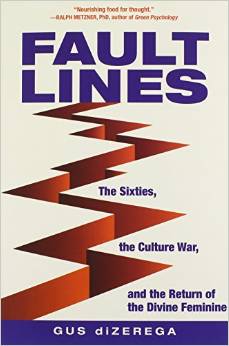 Fault Lines: The Sixties, the Culture War, and the Return of the Divine Feminine by Gus diZerega. Quest Books, 2013. diZerega’s book Pagans and Christians remains one of my favorite explorations of Pagan (most specifically Wiccan) theology ever published. That book’s best parts had nothing to do with Christianity or interfaith and everything to do with Gus’s perspectives on Pagan belief. Fault Lines is a radically different work, focused instead on history and societal evolution. While I didn’t love Fault Lines as much as Pagans and Christians, I still found a lot to enjoy within its pages.
Perhaps what I enjoyed the most was Gus’s alternative look at modern history. In the tradition of Howard Zinn, diZerega takes a different approach to viewing our world, and I found much of it enlightening. I’ll admit I’m not as well-versed on 20th Century Feminism as some of my peers, and as a result much of what Gus had to say was new to me. Much like P&C I found inspiration in odd corners of the book. His writing on Mythos vs Logos will be something I return to in the years to come.
I find Gus a bit hard to read online sometimes (some of his blog posts contain a density that doesn’t always translate well to my brain) but I felt as if Fault Lines captured diZerega at his literary best. The text was immersive without being overwhelming. It probably wasn’t Gus’s intention but I found the tone of the book “hopeful” at least up until the last chapter (which starkly illustrates our current climate crisis). As diZerega illustrates throughout the book, Goddess worship seems to elevate society; even as the capitalist-war machine seeks to undermine the natural world. Well argued and well reasoned I felt smarter and better informed after reading this book.
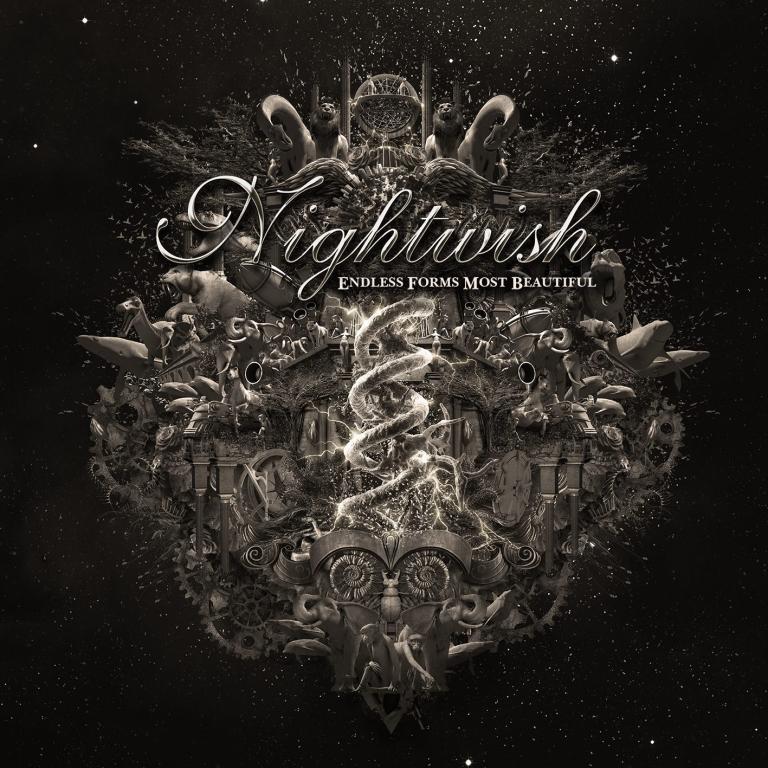 Nightwish-Endless Forms Most Beautiful, available as a physical CD or digital download from Nuclear Blast Records (USA), 2015. Nightwish has been plugging away since the mid-90’s, all while practically inventing the genre symphonic metal. Beautiful is their first album with new lead singer Floor Jansen, replacing Anette Olzon (who herself replaced original vocalist Tarja Turunen). The game of lead-singer musical chairs has been frustrating to watch as a fan, but it pays off on Beautiful, and marks a return to form for the band after the disappointment of their previous release Imaginarium (which sounded more like ABBA than Nightwish).
Jansen shines on the album, capable of the operatic acrobats that were a staple of the Turunen era, but without the over-the-top histrionics. The album is heavy, yet filled with hooks, and contains a few inspired “world music” moments, sounding like something from the heyday of New Age influenced Celtic rock. (I know that sounds like a bad thing, trust me, it’s not.) Lyrically Nightwish has always been a bit nonsensical (it’s gotta be difficult to write lyrics in a second language), but it’s only a slight annoyance. The driving melodies of keyboardist (and composer) Tuomas Holopainen paired with the soaring vocals of Jansen are the selling point here. The twenty-four minute Greatest Show on Earth is going to be a tough sell to folks who aren’t fans (it would have been much better as four or five different songs) but everything else is so strong and so catchy that this should release should net the band several new followers.
And for those who might think Nightwish isn’t Pagan Music . . . . well, if it loves the Earth and sparks the imagination it’s Pagan Music in my book!
Previous Post

April 17, 2015
Thank the Gods We Don't Have a Bible
Next Post

April 21, 2015 Beltane Ritual 2015
Browse Our Archives
Select a Category Editorializing Gateways to Paganism Guest Posts Holiday Histories Led Zeppelin News and Views Occult Pagan Pagan TV Club Paganism polytheism Ramble On Reviews Ritual Strange Days Uncategorized
Select a Month August 2026 March 2026 February 2026 November 2025 September 2025 August 2025 April 2025 August 2024 April 2024 February 2024 December 2023 October 2023 August 2023 June 2023 May 2023 January 2023 October 2022 August 2022 July 2022 June 2022 May 2022 April 2022 March 2022 February 2022 January 2022 December 2021 November 2021 October 2021 September 2021 August 2021 July 2021 June 2021 April 2021 March 2021 February 2021 January 2021 December 2020 November 2020 October 2020 August 2020 July 2020 June 2020 May 2020 April 2020 March 2020 February 2020 January 2020 December 2019 November 2019 October 2019 September 2019 August 2019 July 2019 June 2019 May 2019 April 2019 March 2019 February 2019 January 2019 December 2018 November 2018 October 2018 September 2018 August 2018 July 2018 June 2018 May 2018 April 2018 March 2018 February 2018 January 2018 December 2017 November 2017 October 2017 September 2017 August 2017 July 2017 June 2017 May 2017 April 2017 March 2017 February 2017 January 2017 December 2016 November 2016 October 2016 September 2016 August 2016 July 2016 June 2016 May 2016 April 2016 March 2016 February 2016 January 2016 December 2015 November 2015 October 2015 September 2015 August 2015 July 2015 June 2015 May 2015 April 2015 March 2015 February 2015 January 2015 December 2014 November 2014 October 2014 September 2014 August 2014 July 2014 June 2014 May 2014 April 2014 March 2014 February 2014 January 2014 December 2013 November 2013 October 2013 September 2013 August 2013 July 2013 June 2013 May 2013 April 2013 March 2013 February 2013 January 2013 December 2012 November 2012 October 2012 September 2012 August 2012 July 2012 June 2012 April 2012 October 2011 September 2011 August 2011
Follow Us!
TAKE THE
Religious Wisdom Quiz
How many times does the word "Christian" appear in the Bible?
Select your answer to see how you score.
3 12 7 10
Related posts from Raise the Horns
Best Witchcraft & Magickal Books of 2021


(Not Really) Witches of America
I Read I Write: Academic Edition
TRENDING AT PATHEOS Pagan

The Real AI Story Is Adoption Without Trust
Artificial intelligence has crossed a political threshold. It is no longer a...

A new article, written by Jeff Lindsay and Gale L. Pooley,...

Swimfan: Forgotten Aughts Pleasures
This is a recovery effort. In 2002, My Big Fat Greek Wedding...

Top Three Anti-Catholic Lies About Catholicism
This is my initial transcript for the video, "THE 3 WORST...

Pope Leo Celebrates Mass for Nurses & Docs...
I don't have any idea how he did it, but Pope Leo...

The Sermon on the Mount, Part I: Matthew...
The Sermon on the Mount, Part I (Matthew 4:12-5:12) St. Matthew moves...
view all Pagan blogs
Ad-Free & Subscriber Log-In Subscription Support
- About Us
- 2026 Calendar
- Videos
- Podcasts
- Library of World Religions
- Faith In Media Tracker
- Advertise With Us
- Write for Us
- Privacy Policy
- Terms of Service
- Do Not Sell My Data
- Contact Us
- Radiant Digital
- Manage Newsletter Subscriptions
- Unsubscribe From Notifications
- Sitemap
Copyright 2008-2026, Patheos. All rights reserved.
Subscription Support Ad-Free & Subscriber Log-In
Follow Patheos