
BuddhistCatholicContemplativeEvangelicalGeneral ChristianHinduJewishLatter-day SaintMuslimNew VisionsProgressive Christian
Beliefs
- Buddhist
- Catholic
- Contemplative
- Evangelical
- General Christian
- Hindu
- Jewish
- Latter-day Saint
- More Voices
- Muslim
- New Visions
- Pagan
- Progressive Christian
Topics
- Religion News
- Food and Religion
- Sports and Religion
- Religious Art
- Religious Music and Entertainment
- Religious Events
- History and Religion
- Style and Religion
- Politics and Religion
- Women in Religion
- Recreation Outdoors and Religion
- Business Finance and Religion
- Careers Workplace and Religion
- Education and Religion
- Family Parenting and Religion
- Health Fitness and Religion
- Home and Religion
- Relationships and Religion
- Technology and Religion
- Travel and Religion
Columnists
- Buddhist Columnists
- Business Finance and Religion Columnists
- Careers Workplace and Religion Columnists
- Catholic Columnists
- Contemplative Columnists
- Education and Religion Columnists
- Evangelists Columnists
- Family Parenting and Religion Columnists
- General Christian Columnists
- Health Fitness and Religion Columnists
- Hindu Columnists
- History and Religion Columnists
- Home and Religion Columnists
- Jewish Columnists
- More Voices Columnists
- Latter Day Columnists
- Muslim Columnists
- New Visions Columnists
- Nonreligious Columnists
- Pagan Columnists
- Politics and Religion Columnists
- Progressive Columnists
- Recreation Outdoors and Religion Columnists
- Relationships and Religion Columnists
- Religion News Columnists
- Religious Art Columnists
- Religious Events Columnists
- Religious Music and Entertainment Columnists
- Sports and Religion Columnists
- Style and Religion Columnists
- Technology and Religion Columnists
- Travel and Religion Columnists
- Women in Religion Columnists
Resource Library
- 2026 Calendar
- Library of World Religions
- The 100 Most Holy Places on Earth
- Patheos Answers
- Podcasts
- Videos
- Faith Leaders Database
- Anglican Episcopalian
- Bahai
- Baptist
- Buddhism
- Christianity
- Confucianism
- Eastern Orthodoxy
- Hinduism
- Holiness and Pentecostal
- ISKCON
- Islam
- Judaism
- Lutheran
- Methodist
- The Church of Jesus Christ of Latter-day Saints
- New Age
- Paganism
- Presbytarian and Reformed
- Protestantism
- Religion Behind the Scenes
- Roman Catholic
- Scientology
- Shia Islam
- Sikhism
- Sufism
- Sunni Islam
- Taoism
- Zen
- See all religions
Research Tools
 Ad-Free & Subscriber Log-In Subscription Support
Ad-Free & Subscriber Log-In Subscription Support
Follow Patheos 

- Trending:
- Forgiveness
- |
- Marriage
- |
- Consciousness
- |
- Death Penalty
- |
- Election
- |
- Halloween

- HOME
- Me and the Blog
- Defining Pagan
- Rituals & Holidays
- All Posts
- Blogroll
- Publications
- FREE NEWSLETTER
- Home
- Pagan
- How the Claim of Being Old Saved Modern Paganism
How the Claim of Being Old Saved Modern Paganism
Last updated on: February 27, 2015 at 8:26 am by Jason Mankey
How the Claim of Being Old Saved Modern Paganism 2015-02-27T08:26:31-07:00 Jason Mankey
Patheos Explore the world's faith through different perspectives on religion and spirituality! Patheos has the views of the prevalent religions and spiritualities of the world.
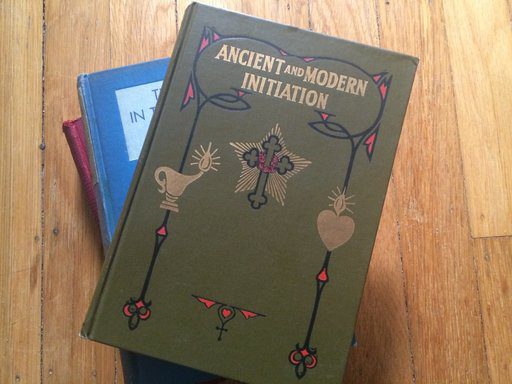 Though there are parts of the Pagan umbrella that claim to be genuinely “old” Modern Paganism is essentially that, modern. It was created and recast with several components: some from antiquity, but many more from modern sources. The idea of Witchcraft is an old one, but how it’s practiced today is a new thing. I find it doubtful that any self-identified Witch from 200 years ago was practicing like any of us today. Witchcraft’s claim of antiquity kept it from ever falling under the control of one person, which has helped it to remain fresh, vibrant, and vital.
Comparing and contrasting religions is often a fool’s game, but I like to do it just the same. When comparing Wicca to other traditions I tend to look at the religions that grew up alongside of it. It’s possible to date the public start of the Wiccan religion to 1954 when Gerald Gardner released Witchcraft Today.** A few months before that a man by the name of L. Ron Hubbard established The Church of Scientology. Yup, I often compare and contrast Wicca with Scientology, and it’s not just because they are the same age.
Besides their dates of birth Scientology has a lot of parallels with Modern Witchcraft. Hubbard, like Gardner, was a fan of Aleister Crowley. Gardner’s infatuation with Crowley is more well known, most likely because Wiccans aren’t all that embarrassed by Crowley. The modern day Church of Scientology is less comfortable with Crowley and sees no reason to play up Hubbard’s interest in the man*. However Hubbard’s own words are rather telling, at one point Hubbard even refers to Crowley as his “very good friend” though the two men never met face to face:
“The magical cults of the 8th, 9th, 10th, 11th and 12th centuries in the Middle East were fascinating. The only modern work that has anything to do with them is a trifle wild in spots, but is a fascinating work in itself, and that’s the work of Aleister Crowley – the late Aleister Crowley – my very good friend.”-L. Ron Hubbard, 1952
Much like the Wiccan tenet of “An it harm none, do what you will” is most likely based on Crowley’s “do what thou wilt,” according to Hubbard’s son L. Ron Junior, Ron senior also looked to Crowley for inspiration in the early days of Scientology:
“The one super-secret sentence that Scientology is built on is: ‘Do as thou wilt. That is the whole of the law.’ It also comes from the black magic, from Aleister Crowley. It means that you are a law unto yourself, that you are above the law, that you create your own law. You are above any other human considerations.”
 I’m not suggesting that Scientology is Witchcraft’s long lost cousin, it’s certainly not, but like Gardner’s Wicca it was very much a product of its time. But instead of looking to the past for inspiration, Hubbard looked towards the future. His “religion” would use “tech” (like the infamous e-meter) and approach the world through an allegedly scientific lens. Gardner’s Witchcraft went the other way, finding inspiration in the Middle Ages and antiquity. By claiming a historicity for his Witchcraft (something I think he very much believed in) Gardner saved all of us from a more authoritarian present.
One thing that Gardner articulated early on was that he was not the only Witch in town. By publicly stating that he was initiated back in 1939 Gardner created a hierarchy above himself. He further cemented the existence of other Witches by stating in Gerald Gardner (Gardner’s biography attributed to Jack Bracelin but most likley written by Sufi mystic Idries Shah):
“Old Dorothy called up covens right and left; although by witch law they should not be known to each other.”
By doing this Gardner unknowingly left the door open for other Witches to arise and in many cases question his legitimacy. If his version of Witchcraft could survive, why not another one?
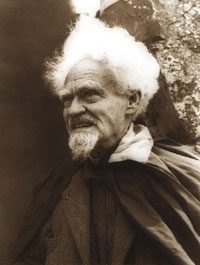 And over the years and later decades that’s exactly what happened. Other Witches came forward suggesting their versions of the Craft were older than Gerald’s. I’m dubious about a lot of those claims, but those individuals did add to how many of us do ritual and perceive Witchcraft and Paganism. Witches like Doreen Valiente even saw common-cause with nearly anyone who identified with the word “Witch.” Because ultimate authority rested in the past, no one in the present was able to turn themselves into Wiccan Jesus.
This is completely at odds with how Hubbard chose to run his new faith. He became the ultimate authority, any new level that could be reached in the church had to first be obtained by him. There were no initiators, or collaborators; his system allowed no one else to step forward and challenge his authority. By incorporating as a church he instituted a hierarchy that he could control. The covens that derived from Gardner held their own authority; there would be no answering to a Pagan Pope or Chairman of the Board.
By creating a decentralized structure the adherents of Modern Witchcraft also continued to walk between two worlds. Without institutions, and the control they often provide, Witches were never able to completely insulate themselves from the outside world. It’s one of the reasons many of us communicate so effectively. Contrast this with Scientology’s rather awkward message to the world outside its bubble. It’s forgotten how to speak individuals who aren’t a part of it. (Check out Tony Ortega’s Underground Bunker for some Scientology speak.)
So I’m thankful to early Pagans like Gerald who kept the door open. He could have established the “First Church of Wicca” and created an insular culture, but he chose not to. That choice is why the Craft has continued to progress and attract new adherents, while the religion that grew up alongside it seems to be in retreat. It’d be nice to have some fancy buildings, but I’m much happier having fancy and easy to access rituals and practices.
*And by extension rocket-scientist and occult mage Jack Parsons whom Hubbard ritualized with.
**An earlier version of this article had me switching “Witchcraft Today” with Gardner’s later book “The Meaning of Witchcraft.” I regret the error and thank Alaric Albertsson for pointing it out in the nicest way possible.
Photos of Gardner and Hubbard from Wikipedia Commons.
Previous Post

February 23, 2015
Paganism: A Tribe or Tribes?
Next Post

March 4, 2015 The Roebuck in the Ritual (A Cochrane Inspired Rite)
Browse Our Archives
Select a Category Editorializing Gateways to Paganism Guest Posts Holiday Histories Led Zeppelin News and Views Occult Pagan Pagan TV Club Paganism polytheism Ramble On Reviews Ritual Strange Days Uncategorized
Select a Month August 2026 March 2026 February 2026 November 2025 September 2025 August 2025 April 2025 August 2024 April 2024 February 2024 December 2023 October 2023 August 2023 June 2023 May 2023 January 2023 October 2022 August 2022 July 2022 June 2022 May 2022 April 2022 March 2022 February 2022 January 2022 December 2021 November 2021 October 2021 September 2021 August 2021 July 2021 June 2021 April 2021 March 2021 February 2021 January 2021 December 2020 November 2020 October 2020 August 2020 July 2020 June 2020 May 2020 April 2020 March 2020 February 2020 January 2020 December 2019 November 2019 October 2019 September 2019 August 2019 July 2019 June 2019 May 2019 April 2019 March 2019 February 2019 January 2019 December 2018 November 2018 October 2018 September 2018 August 2018 July 2018 June 2018 May 2018 April 2018 March 2018 February 2018 January 2018 December 2017 November 2017 October 2017 September 2017 August 2017 July 2017 June 2017 May 2017 April 2017 March 2017 February 2017 January 2017 December 2016 November 2016 October 2016 September 2016 August 2016 July 2016 June 2016 May 2016 April 2016 March 2016 February 2016 January 2016 December 2015 November 2015 October 2015 September 2015 August 2015 July 2015 June 2015 May 2015 April 2015 March 2015 February 2015 January 2015 December 2014 November 2014 October 2014 September 2014 August 2014 July 2014 June 2014 May 2014 April 2014 March 2014 February 2014 January 2014 December 2013 November 2013 October 2013 September 2013 August 2013 July 2013 June 2013 May 2013 April 2013 March 2013 February 2013 January 2013 December 2012 November 2012 October 2012 September 2012 August 2012 July 2012 June 2012 April 2012 October 2011 September 2011 August 2011
Follow Us!
TAKE THE
Religious Wisdom Quiz
Which parable shows a king forgiving a huge debt?
Select your answer to see how you score.
The Prodigal Son The Unforgiving Servant The Sower The Good Samaritan
Related posts from Raise the Horns

What Makes a Good Ritualist? No Idea

Witchcraft Remembrances & Appreciation at Samhaintide

Raymond Buckland & The Big Blue Book

TRENDING AT PATHEOS Pagan

Janie Learns the Way of the Cross: A...
Teaching children about Jesus' Passion can be challenging. Many parents and educators...

Looking For Good Catholic Writing - October 2026
He alone extends the heavens, and he walks upon the waves of...

In "Irreplaceable," our book on vocation and technology, Trevor Sutton and I...

I was strolling through the top floor of the brand new Parthenon...

What Does Gêvâh Mean For Kimberley Guifoyle &...
This week, a lot of the news is focused on Kimberly Guilfoyle....

INNER CIRCLE: Profound Mystery (Of Christ In All...
Ephesians 5:31-32 “For this reason, a man will leave his father and...
view all Pagan blogs
Ad-Free & Subscriber Log-In Subscription Support
- About Us
- 2026 Calendar
- Videos
- Podcasts
- Library of World Religions
- Faith In Media Tracker
- Advertise With Us
- Write for Us
- Privacy Policy
- Terms of Service
- Do Not Sell My Data
- Contact Us
- Radiant Digital
- Manage Newsletter Subscriptions
- Unsubscribe From Notifications
- Sitemap
Copyright 2008-2026, Patheos. All rights reserved.
Subscription Support Ad-Free & Subscriber Log-In
Follow Patheos