
BuddhistCatholicContemplativeEvangelicalGeneral ChristianHinduJewishLatter-day SaintMuslimNew VisionsProgressive Christian
Beliefs
- Buddhist
- Catholic
- Contemplative
- Evangelical
- General Christian
- Hindu
- Jewish
- Latter-day Saint
- More Voices
- Muslim
- New Visions
- Pagan
- Progressive Christian
Topics
- Religion News
- Food and Religion
- Sports and Religion
- Religious Art
- Religious Music and Entertainment
- Religious Events
- History and Religion
- Style and Religion
- Politics and Religion
- Women in Religion
- Recreation Outdoors and Religion
- Business Finance and Religion
- Careers Workplace and Religion
- Education and Religion
- Family Parenting and Religion
- Health Fitness and Religion
- Home and Religion
- Relationships and Religion
- Technology and Religion
- Travel and Religion
Columnists
- Buddhist Columnists
- Business Finance and Religion Columnists
- Careers Workplace and Religion Columnists
- Catholic Columnists
- Contemplative Columnists
- Education and Religion Columnists
- Evangelists Columnists
- Family Parenting and Religion Columnists
- General Christian Columnists
- Health Fitness and Religion Columnists
- Hindu Columnists
- History and Religion Columnists
- Home and Religion Columnists
- Jewish Columnists
- More Voices Columnists
- Latter Day Columnists
- Muslim Columnists
- New Visions Columnists
- Nonreligious Columnists
- Pagan Columnists
- Politics and Religion Columnists
- Progressive Columnists
- Recreation Outdoors and Religion Columnists
- Relationships and Religion Columnists
- Religion News Columnists
- Religious Art Columnists
- Religious Events Columnists
- Religious Music and Entertainment Columnists
- Sports and Religion Columnists
- Style and Religion Columnists
- Technology and Religion Columnists
- Travel and Religion Columnists
- Women in Religion Columnists
Resource Library
- 2026 Calendar
- Library of World Religions
- The 100 Most Holy Places on Earth
- Patheos Answers
- Podcasts
- Videos
- Faith Leaders Database
- Anglican Episcopalian
- Bahai
- Baptist
- Buddhism
- Christianity
- Confucianism
- Eastern Orthodoxy
- Hinduism
- Holiness and Pentecostal
- ISKCON
- Islam
- Judaism
- Lutheran
- Methodist
- The Church of Jesus Christ of Latter-day Saints
- New Age
- Paganism
- Presbytarian and Reformed
- Protestantism
- Religion Behind the Scenes
- Roman Catholic
- Scientology
- Shia Islam
- Sikhism
- Sufism
- Sunni Islam
- Taoism
- Zen
- See all religions
Research Tools
 Ad-Free & Subscriber Log-In Subscription Support
Ad-Free & Subscriber Log-In Subscription Support
Follow Patheos 

- Trending:
- Forgiveness
- |
- Marriage
- |
- Consciousness
- |
- Death Penalty
- |
- Election
- |
- Halloween

- HOME
- Me and the Blog
- Defining Pagan
- Rituals & Holidays
- All Posts
- Blogroll
- Publications
- FREE NEWSLETTER
- Home
- Pagan
- The Non-Adept’s Guide to Robert Cochrane
The Non-Adept’s Guide to Robert Cochrane
Last updated on: January 5, 2015 at 9:59 am by Jason Mankey
The Non-Adept’s Guide to Robert Cochrane 2015-01-05T09:59:17-07:00 Jason Mankey
Patheos Explore the world's faith through different perspectives on religion and spirituality! Patheos has the views of the prevalent religions and spiritualities of the world.
 (An adept is generally defined as “a person who is skilled or proficient at something” but what about those of us who are not skilled or proficient in certain areas? As Pagans and/or Magickal Folk just how much knowledge should we posses about certain individuals? Is a thorough reading of all their works required or is a passing familiarity enough to get by on? The Non-Adept’s Guide is an attempt to provide the resources for a definition beyond Wikipedia, but not so much that the reader will be ready to write a college paper on the subject. Previous entries in this series include looks at Gerald Gardner and Aleister Crowley.)
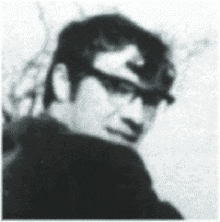
Robert Cochrane was the pen name of Roy Bowers (1931-1966), an English witch who developed (or inherited) a unique a form of Modern Pagan Practice often labeled as a branch of Traditional Witchcraft. Cochrane’s initial coven is known today as The Clan of Tubal Cain, named after the legendary Hebrew smith Tubal Cain. My interest in Cochrane began shortly after running across him in Doreen Valiente’s memoir on Craft history, The Rebirth of Witchcraft. Her description of Cochrane is captivating, and she writes of him as a charming and powerful rogue whose ritual techniques she remained in awe of decades later. Cochrane also shows up in Ronald Hutton’s Triumph of the Moon, again tortured and troubled (Cochrane tried to commit suicide at Midsummer in 1966, went into a coma he never woke up from, and died nine days later), but also hailed as a “genius.”
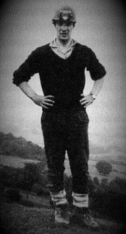 Years ago I foolishly believed that Cochrane and the Craft he practiced were a dead end; a tale of “what might have been” had he lived longer. How wrong I was. Cochrane’s Craft is alive and well, and continually changing and growing (something I think Cochrane would be proud of). Today there’s a Clan of Tubal Cain with links to Cochrane’s original group, and several active traditions based around his teachings, such as the 1734 Tradition and the Ancient Keltic Church. Though Cochrane didn’t write any books, many of his letters survive and have served as a guideposts to several Witches. Evan John Jones, a member of Cochrane’s coven, became a respected Craft writer in his own rite, articulating some of Cochrane’s ideas into his books. Some former members of Cochrane’s coven went on to start their own traditions and groups, expounding upon the foundations laid by their coven’s Magister.
It’s a bit strange for me to writing about Cochrane. I’m not a follower and the man directed a lot of venom at some of my fellow Gardnerians during his lifetime (he created the term “Gardnerian” as an insult). I’m also not a believer that Cochrane’s version of Witchcraft is any older than Gardner’s. In fact I think much of what went on during his early rituals was very much inspired by the practices of Gardner and his initiates. But I also think that Cochrane was a truly gifted ritualist and that the later work of his coven escaped what many scholars call the Gardnerian Magnet, meaning it was infused with its own unique ideas and practices. Had he had lived another thirty years the Craft might look very different today.
Other suggested lists:
Cochrane-based Witchcraft Traditions by Sarah Anne Lawless
The Library: 1734 Tradition by Coven Ashesh Hekat
The Library at The Clan of Tubal Cain
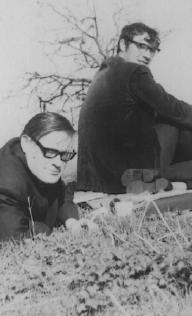 The influence of Cochrane and his Traditional Witchcraft is much more profound than most are aware of, and I think many of us share his legacy without realizing it. Cochrane’s ritual system never became all that popular, but many of his other innovations did. He was massively influenced by Robert Graves’ The White Goddess and ideas of Maiden, Mother, Crone, and Divine Child were central to his cosmology.* He might have been one of the first witches to weave that bit of modern mythology into his Craft practice (something that many of us have been doing ever since). His clan also worked robed, and outdoors, very much in contrast to the majority of England’s Witches during the 1960’s. He was also a socialist (according to his biographers) and some of his politics would be very much at home in many Craft circles today. The shadow of Cochrane’s stang is bigger than most people think . . . . . .
This past Fall I began toying with the idea of assembling a Cochrane-style ritual out of the available written sources for a Pagan Festival in February. Because of that I’ve been focused a great deal on the writings of Cochrane and his heirs, re-reading previously purchased volumes and seeking out new ones. What follows is not a definitive list of Cochrane resources, but the things I found the most helpful on my journey.
The Essentials
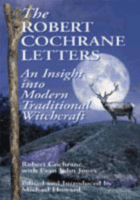 When it comes to Cochrane the best place to start is with his own words. The best source of those words is The Robert Cochrane Letters: An Insight into Modern Traditional Witchcraft by Robert Cochrane with Evan John Jones and edited by Michael Howard. (They are also available online, but I so prefer to have them in book form.) Cochrane’s writing style is rather cryptic and it often feels as if he’s writing to impress and confuse his pen-pals, but there’s no better introduction to the man than this volume. I don’t think it does a very good job of mapping out his ritual style or techniques, but it’s definitely the a necessary first stop.
 The Roebuck in the Thicket: An Anthology of the Robert Cochrane Witchcraft Tradition contains a few Cochrane penned magazine articles, including a terrific article entitled The Witches’ Esbat from New Dimensions magazine back in 1964 (online here). However most of the book comes from the pen of Evan John Jones, the heir to Cochrane’s tradition so to speak. Where Cochrane is cryptic Jones is blunt and to the point and he makes the ideas behind Cochrane’s Traditional Witchcraft easy to grasp and utilize. Much of Jones’s writing expresses his interpretation and adaptation of Cochrane, but as I mentioned earlier, it seems as if Cochrane himself was continually adapting and modifying.
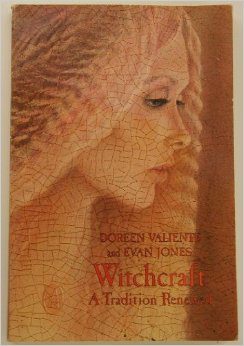 As a writer Jones’s best work is Witchcraft: A Tradition Renewed (featuring an extended introduction by Doreen Valiente). This is the best “101” style book available on Cochrane-style Witchcraft and it’s important to remember that Jones studied with the witch in black himself. Upon re-reading this book last month I was struck by just how good of a Witchcraft book this is. Whether or not you have any interest in Cochrane is immaterial, this is a fantastic next level sort of book that had me doing double takes in several places. Also of interest in our current discussion is Sacred Mask, Sacred Dance (written with Chas Clifton). It’s not about Cochrane’s Craft per se but the old Magister of the Clan of Tubal Cain makes several appearances.
[Also of note: A history of the Clan of Tubal Cain was assembled from Jones’s notes by author Shani Oates (see below) and released in 2012. At the time of this writing I have yet to read that book, The Star Crossed Serpent: Volume I, but I’ll get to it time and finances allowing.]
The best autobiographical sketch of Cochrane can be found in Doreen Valiente’s The Rebirth of Witchcraft. I think it’s the strongest (and most interesting) chapter in one of Witchcraft’s definitive histories. It also contains a few “sneak peaks” into the ritual workings of Cochrane and his coven, including some of the words used in ritual. Many of the elements described here will be familiar to most Witches (the knife in the cup Great Rite, four quarters, cakes and ale) but they all have a unique spin on them. The more I read about Cochrane’s rituals the more I want to include bits of them in my own.
Advanced Studies
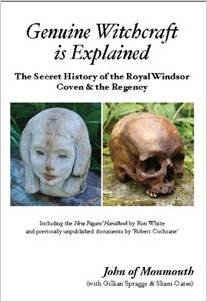 Perhaps the most important book to come out on Cochrane and his successors is Genuine Witchcraft is Explained: The Secret History of the Royal Windsor Coven and the Regency by John of Monmouth with Gillian Spraggs and Shani Oates. The first 150 pages are a detailed history of Cochrane’s coven (with literally hundreds of footnotes), one that I think will rewrite much of his legacy. In John’s detailed account much of Cochrane’s rituals were a collaborative effort between Bowers and coven mates Ronald “Chalky” White and George Stannard. It also includes copies of early draft documents from what would become Cochrane’s first coven. This is a fascinating book and one of the most significant history books to be released since Philip Heselton’s Wiccan Roots. John also gives detailed descriptions of Cochrane’s rituals. If you are interested in Cochrane this book is a “must own.”
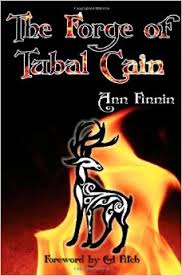 The Forge of Tubal Cain by Ann Finnin is about the establishment of the Clan in the United States beginning in the mid 1970’s. Much of the book is dedicated to the history of Finnin’s group but there’s also a lot of good ritual material in here too, though how much of that ritual material is actually Cochrane’s is open to interpretation. To her credit though, Finnin is open and honest about using Cochrane as a starting point and then supplementing that with her own material. Like many who were inspired by Cochrane I often felt like Finnin was holding a middle finger to my face while I was reading the text, to be a follower of Cochrane is to be an outsider sometimes. There’s also a sort of “scolding tone” throughout the book with several broad generalizations of the Pagan Community I happen to disagree with. Finnin is not politically correct, but I enjoyed her book none the less.
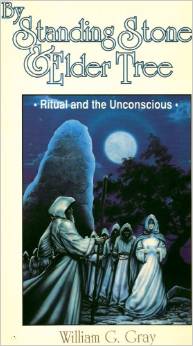 By Standing Stone and and Elder Tree: Ritual and the Unconscious (originally published as The Rollright Ritual) by William “Bill” Grey is about a series of rituals conducted by Grey and some of his associates at the Rollright Stones back in the early 1960’s. One of the individuals involved in those rituals was Robert Cochrane. Grey himself was a respected occult figure who was often rather dismissive of Witchcraft but was an associate of Cochrane’s for several years. This is not a book about Cochrane, but is useful because Cochrane circled with Grey.
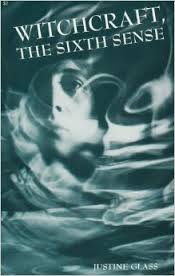 Published in 1965, Witchcraft, the Sixth Sense was one of the first books to write sympathetically about the Modern Craft revival. Cochrane actively collaborated with author Justine Glass on several chapters of the book, but according to witnesses Cochrane actively tried to “pull Glass’s leg” on a number of occasions. Because of this it’s hard to take anything in the book relating to Cochrane seriously. Maybe the stuff he helped her with is accurate, maybe it’s not? The problem is that nobody really knows if he was actually trying to help or have a little bit of “fun” at her expense. It’s a book that I think has to be on a list like this, but I can’t whole heartedly recommend it. It does have a few nice pictures in it, most notably one a version of the stang used in Cochrane’s rituals.
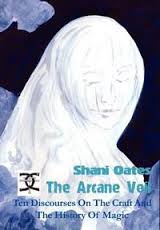 The most prolific Traditional Witchcraft author of the last decade has been Shani Oates. Through Evan John Junes she has lineage back to Cochrane’s original Clan of Tubal Cain, but the Craft she writes about often feels like something else entirely. One thing I really appreciate about Cochrane-style Craft is how it seems to continually evolve, and perhaps Oates’s take and understanding of Cochrane’s ideas represents that next leap forward in its evolution. I find many of her ideas interesting but they often feel a bit far from the original tree. I’ll admit to not having read all of her books, only Tupelo’s Green Fire and The Arcane Veil: Ten Discourses on the Craft and the History of Magic. In some ways reading Oates is like going full circle back to Robert Cochrane’s original letters. The chapters in Oates’s books often read like stand alone letters and not a part of a greater whole. I think they are important for understanding where Cochrane’s vision has led, though I’m not sure they offer a whole lot of insight into what he was doing in 1961.
The Non-Adept Should Make Sure to Read . . . . :
Cochrane’s original letters, especially those addressed to Joseph “Bearwalker” Wilson and William Grey.
Cochrane’s A Witches Esbat
Doreen Valiente’s chapter on Cochrane from The Rebirth of Witchcraft
Witchcraft: A Tradition Renewed by Evan John Jones
If you are a giant history nerd like myself you should run out and get Genuine Witchcraft is Explained immediately.
Cochrane was a genuine “character” in the history of Witchcraft, and one of the most influential. We probably wouldn’t have agreed on very much, but I respect him anyways.
*This alone makes the likelihood of Cochrane’s Craft being genuinely old less likely. The White Goddess was published in 1948. As way of contrast, the ideas presented in it are not central to Gardner’s understanding of The Goddess.
Previous Post

December 31, 2014
Pagan Superlatives 2014
Next Post

January 7, 2015 Finding Pagan Space . . . In January
Browse Our Archives
Select a Category Editorializing Gateways to Paganism Guest Posts Holiday Histories Led Zeppelin News and Views Occult Pagan Pagan TV Club Paganism polytheism Ramble On Reviews Ritual Strange Days Uncategorized
Select a Month August 2026 March 2026 February 2026 November 2025 September 2025 August 2025 April 2025 August 2024 April 2024 February 2024 December 2023 October 2023 August 2023 June 2023 May 2023 January 2023 October 2022 August 2022 July 2022 June 2022 May 2022 April 2022 March 2022 February 2022 January 2022 December 2021 November 2021 October 2021 September 2021 August 2021 July 2021 June 2021 April 2021 March 2021 February 2021 January 2021 December 2020 November 2020 October 2020 August 2020 July 2020 June 2020 May 2020 April 2020 March 2020 February 2020 January 2020 December 2019 November 2019 October 2019 September 2019 August 2019 July 2019 June 2019 May 2019 April 2019 March 2019 February 2019 January 2019 December 2018 November 2018 October 2018 September 2018 August 2018 July 2018 June 2018 May 2018 April 2018 March 2018 February 2018 January 2018 December 2017 November 2017 October 2017 September 2017 August 2017 July 2017 June 2017 May 2017 April 2017 March 2017 February 2017 January 2017 December 2016 November 2016 October 2016 September 2016 August 2016 July 2016 June 2016 May 2016 April 2016 March 2016 February 2016 January 2016 December 2015 November 2015 October 2015 September 2015 August 2015 July 2015 June 2015 May 2015 April 2015 March 2015 February 2015 January 2015 December 2014 November 2014 October 2014 September 2014 August 2014 July 2014 June 2014 May 2014 April 2014 March 2014 February 2014 January 2014 December 2013 November 2013 October 2013 September 2013 August 2013 July 2013 June 2013 May 2013 April 2013 March 2013 February 2013 January 2013 December 2012 November 2012 October 2012 September 2012 August 2012 July 2012 June 2012 April 2012 October 2011 September 2011 August 2011
Follow Us!
TAKE THE
Religious Wisdom Quiz
What book comes after Proverbs?
Select your answer to see how you score.
Isaiah Daniel Ecclesiastes Psalms
Related posts from Raise the Horns

What Makes a Good Ritualist? No Idea

Witchcraft Remembrances & Appreciation at Samhaintide

Raymond Buckland & The Big Blue Book

TRENDING AT PATHEOS Pagan

Janie Learns the Way of the Cross: A...
Teaching children about Jesus' Passion can be challenging. Many parents and educators...

Looking For Good Catholic Writing - October 2026
He alone extends the heavens, and he walks upon the waves of...

In "Irreplaceable," our book on vocation and technology, Trevor Sutton and I...

I was strolling through the top floor of the brand new Parthenon...

What Does Gêvâh Mean For Kimberley Guifoyle &...
This week, a lot of the news is focused on Kimberly Guilfoyle....

INNER CIRCLE: Profound Mystery (Of Christ In All...
Ephesians 5:31-32 “For this reason, a man will leave his father and...
view all Pagan blogs
Ad-Free & Subscriber Log-In Subscription Support
- About Us
- 2026 Calendar
- Videos
- Podcasts
- Library of World Religions
- Faith In Media Tracker
- Advertise With Us
- Write for Us
- Privacy Policy
- Terms of Service
- Do Not Sell My Data
- Contact Us
- Radiant Digital
- Manage Newsletter Subscriptions
- Unsubscribe From Notifications
- Sitemap
Copyright 2008-2026, Patheos. All rights reserved.
Subscription Support Ad-Free & Subscriber Log-In
Follow Patheos