
BuddhistCatholicContemplativeEvangelicalGeneral ChristianHinduJewishLatter-day SaintMuslimNew VisionsProgressive Christian
Beliefs
- Buddhist
- Catholic
- Contemplative
- Evangelical
- General Christian
- Hindu
- Jewish
- Latter-day Saint
- More Voices
- Muslim
- New Visions
- Pagan
- Progressive Christian
Topics
- Religion News
- Food and Religion
- Sports and Religion
- Religious Art
- Religious Music and Entertainment
- Religious Events
- History and Religion
- Style and Religion
- Politics and Religion
- Women in Religion
- Recreation Outdoors and Religion
- Business Finance and Religion
- Careers Workplace and Religion
- Education and Religion
- Family Parenting and Religion
- Health Fitness and Religion
- Home and Religion
- Relationships and Religion
- Technology and Religion
- Travel and Religion
Columnists
- Buddhist Columnists
- Business Finance and Religion Columnists
- Careers Workplace and Religion Columnists
- Catholic Columnists
- Contemplative Columnists
- Education and Religion Columnists
- Evangelists Columnists
- Family Parenting and Religion Columnists
- General Christian Columnists
- Health Fitness and Religion Columnists
- Hindu Columnists
- History and Religion Columnists
- Home and Religion Columnists
- Jewish Columnists
- More Voices Columnists
- Latter Day Columnists
- Muslim Columnists
- New Visions Columnists
- Nonreligious Columnists
- Pagan Columnists
- Politics and Religion Columnists
- Progressive Columnists
- Recreation Outdoors and Religion Columnists
- Relationships and Religion Columnists
- Religion News Columnists
- Religious Art Columnists
- Religious Events Columnists
- Religious Music and Entertainment Columnists
- Sports and Religion Columnists
- Style and Religion Columnists
- Technology and Religion Columnists
- Travel and Religion Columnists
- Women in Religion Columnists
Resource Library
- 2026 Calendar
- Library of World Religions
- The 100 Most Holy Places on Earth
- Patheos Answers
- Podcasts
- Videos
- Faith Leaders Database
- Anglican Episcopalian
- Bahai
- Baptist
- Buddhism
- Christianity
- Confucianism
- Eastern Orthodoxy
- Hinduism
- Holiness and Pentecostal
- ISKCON
- Islam
- Judaism
- Lutheran
- Methodist
- The Church of Jesus Christ of Latter-day Saints
- New Age
- Paganism
- Presbytarian and Reformed
- Protestantism
- Religion Behind the Scenes
- Roman Catholic
- Scientology
- Shia Islam
- Sikhism
- Sufism
- Sunni Islam
- Taoism
- Zen
- See all religions
Research Tools
 Ad-Free & Subscriber Log-In Subscription Support
Ad-Free & Subscriber Log-In Subscription Support
Follow Patheos 

- Trending:
- Forgiveness
- |
- Marriage
- |
- Consciousness
- |
- Death Penalty
- |
- Election
- |
- Halloween

- HOME
- Me and the Blog
- Defining Pagan
- Rituals & Holidays
- All Posts
- Blogroll
- Publications
- FREE NEWSLETTER
- Home
- Pagan
- Pagan Pilgrimage: The Roman Baths
Pagan Pilgrimage: The Roman Baths
Last updated on: November 24, 2014 at 5:03 pm by Jason Mankey
Pagan Pilgrimage: The Roman Baths 2014-11-24T17:03:05-07:00 Jason Mankey
Patheos Explore the world's faith through different perspectives on religion and spirituality! Patheos has the views of the prevalent religions and spiritualities of the world.
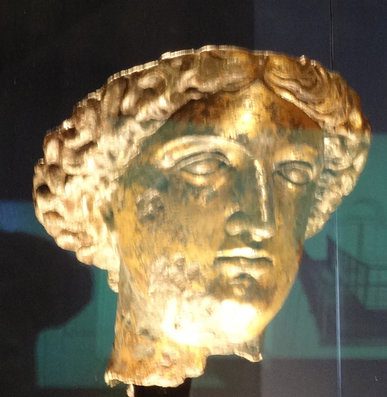 I’m fascinated with history and sacred spots. I was lucky enough to recently visit the United Kingdom and wanted to share some of my experiences there on Raise the Horns. Instead of a boring travelogue I thought I’d provide a little context on the places I was able to visit and perhaps offer some tips to the next Pagan traveller.
Previous entries in this series include trips to Rosslyn Chapel, Glastonbury, and Stonehenge.
Before our trip: Our trip to Bath was the third part of a bus tour that also took us to Stonehenge and the village of Lacock. To be honest when I heard we were going to Bath as a part of our UK trip I shrugged my shoulders. The main event was going to be Stonehenge, right? Bath was just filler.
As I shared plans of our trip with friends I was told I’d love Bath. I think Gwion Raven was really emphatic on that point, which made me reconsider my ho-hum attitude. Gwion was right too, Ari and I loved Bath and it was a highlight of our trip (spiritually speaking, second only to the White Spring).
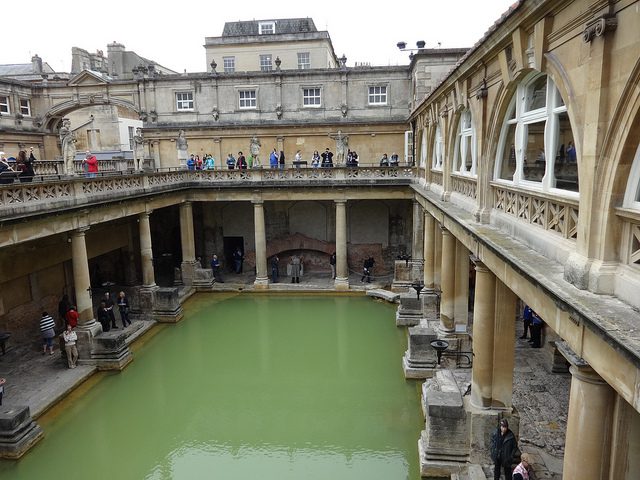 What are the Roman Baths?: The Roman Baths are well, baths. The bathhouse was built on a hot-spring, and before the arrival of the Romans the same site had been home to a Celtic shrine. The baths are about more than being clean, the complex also contained a temple dedicated to Minerva (Athena). Some of the baths survived, but sadly not the temple. On a positive note a lot of the temple has been recovered, those remains are what made our trip there so memorable.
People have been living around the baths (and attendant hot spring) for over 2000 years, but the site as was we know it today was massively refurbished during the 19th Century. It was at that point when statues of Roman emperors associated with Britain were added around the central bath. If you aren’t familiar with Bath, I think it’s important to point out that the bath you are looking at is lined with lead. Because of that no one is allowed to drink or bathe in the bath.
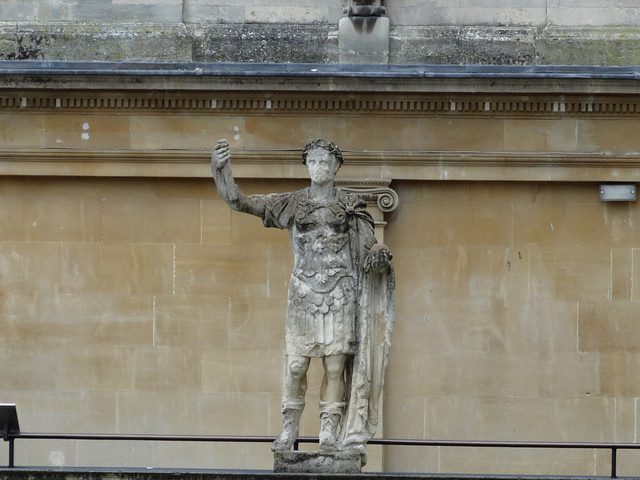 The Central Bath is Interesting, But . . . A visit to the baths starts in an old concert hall that overlooks the lead lined bath. There’s some museumy things in there before you head outdoors to the bath. I’m a history nerd so this was pretty cool. I also love the grandeur of Ancient Rome, and even though the Emperor statues are of fairly recent vintage they feel as if they belong there.
There are also some re-enactors who wander around the pool, dressed up as Roman centurions and the like. I always find such things ridiculous and unnecessary, but judging by the amount of tourists around them apparently I’m alone in my opinion. The remains of the bath shown here are in pretty great shape for something that’s 2000 years old. So this part of the tour is fine and all, but it’s all just a prelude for what comes after.
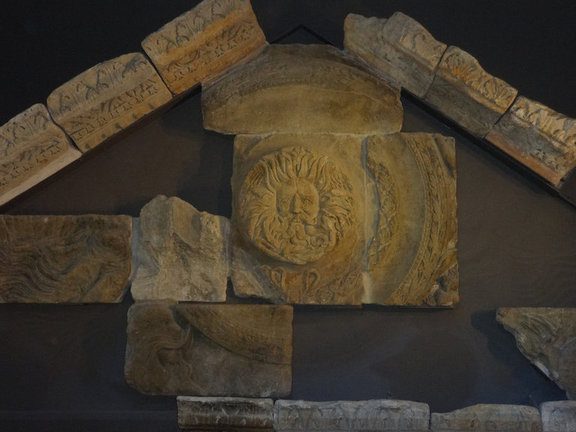
. . . The Temple Remains Are What Rock: After a walk around the outdoor pool we headed into the museum. This is when Bath started to blow my mind and things got super spiritual for my wife and I. The picture above is what would have greeted worshippers as they entered the Roman Temple near the baths. It’s hanging on a wall in all of its life-size glory in the museum and it’s incredibly awe inspiring. I sat in front of it for a good five minutes just paying homage to the figure in front of me.
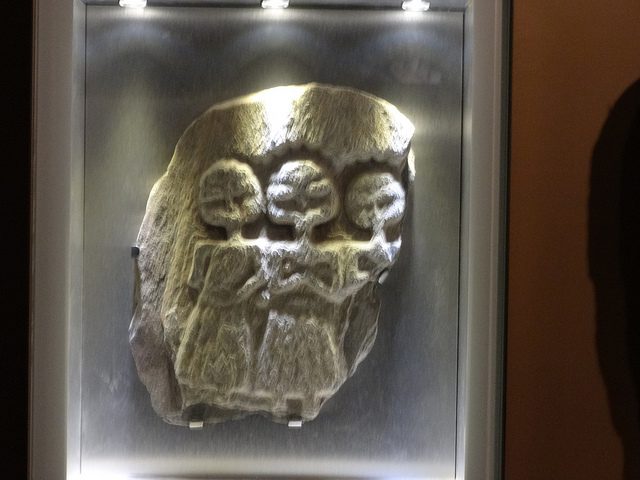 Speaking of the face in the middle of the temple’s outside, no one is completely sure what or who it’s supposed to be. It’s often said to be a gorgon (as in Medusa with snakes for hair) but I’m not completely sold on that idea. It reminds me a lot of a solar deity, but that’s just my interpretation. Whatever it is, it’s powerful, and I found myself kneeling before it not giving a damn what the other tourists around me thought. I didn’t kneel at Stonehenge, I did at Bath.
One of the things I found so powerful at Bath were the various pagan traditions all represented there. There were Roman gods of course, but most of those Roman gods all share a history and mythology with Greek deities. In addition Celtic gods and goddesses are represented at Bath as well. The “Three Mother Goddesses” shown just above and to the right were common among the Celts, though their names often changed from place to place. We were so taken with the Mother Goddesses that we took home a wall plaque with their likeness on it.
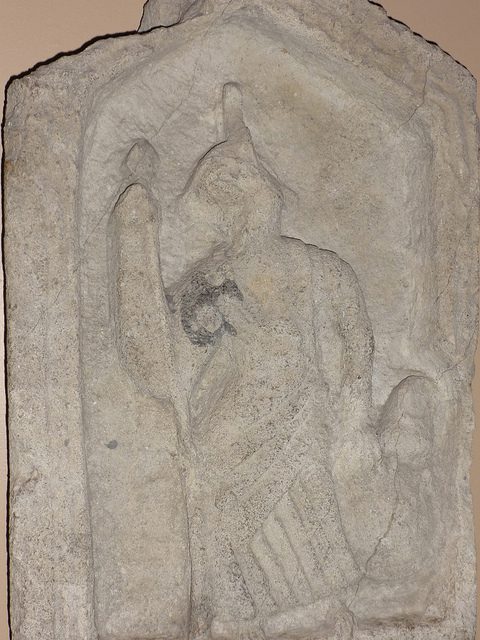 As our museum tour continued it dawned on my wife and I just why we were falling so hard for Bath. The Greek and Roman gods represented there were our gods. Carvings of Dionysus, Hermes, Athena, Hercules, and Apollo greeted us around every corner and we could still feel just a bit of their presence. Stonehenge a few hours before had been fascinating and all, but we have no idea what was worshipped there. At Bath I was surrounded by old friends.
The temple’s original courtyard featured several carvings dedicated to the moon goddess Luna and the sun gold Sol. That the two were purposefully placed near one another reminds me a lot of my own Wiccan practice. In pictures of Sol I can see my own Lord of the Sun, with obviously Luna as the Mistress of the Moon. I know the Romans didn’t necessarily see them as I do, but it still felt holy to be so near a place that at least superficially mirrors some of my own worship.
 Getting to Bath: With the exception of Rosslyn Chapel, Bath is probably the easiest pilgrimage place to visit in the UK. There are tour buses that leave from London daily, but Bath is also accessible by rail.
Admission Prices & The Gift Shop: Tickets are 13.50 pounds per person, and 50 cents more in July and August. Instead of a tour guide you can pick up a free Audioguide, available in several different languages. There are two gift shops at the baths, one in the middle of the tour and one at the end. I was in such a hurry to take a pice of the baths home with me that I bought things from the first shop. As a Pagan that first shop was all I needed. There were reproductions of artifacts there, and of course water bottled from the spring. We didn’t get to take advantage of it, but there’s also a twilight tour that comes with a three course dinner. Next time we visit we are going to go that route (38 pounds).
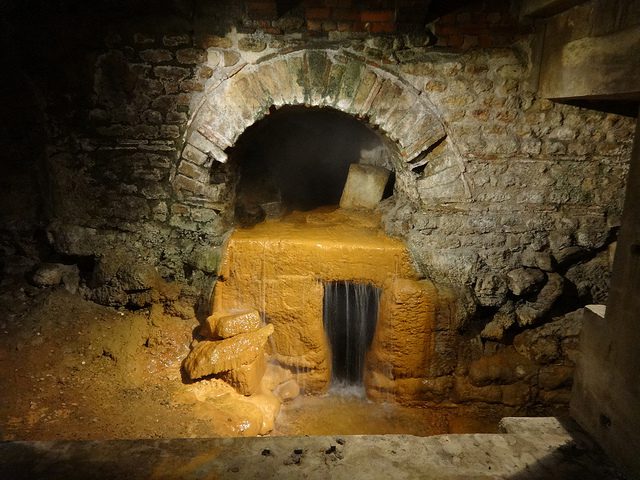 Drinking from the Spring: Unlike Glastonbury’s Chalice Well which features cool and refreshing water, the water at Bath is warm and full of minerals. I didn’t mind at all, but it’s not everyone’s cup of tea (or glass of water).
Anything Else?: Since we visited Bath as part of a tour group we were not on our own time schedule. We got just a little bit over an hour in Bath, not nearly long enough. If it had been left up to us we would have dithered around the museum for at least another hour, and the city its self is charming and historic in its own right. When we departed the bus our guide told us we could see the baths in a half an hour or so. Fat chance of that, they took up most of our time, and could have taken up more.
Our time in Bath was short, but the memories and feelings will last a lifetime!
PHOTOS
1. Bronze head of Sulis-Minerva. Sulis was a local goddess, and Minerva is of course Athena.
2. The central pool.
3. 19th Century statue.
4. Outside of the Temple, my favorite artifact from the Roman Baths.
5. Celtic Triple Mother Goddesses
6. Minerva (Athena)
7. Luna, moon goddess
8. The spring. The “museum” contains a lot of what remains of the “other baths” away from the main pool.
Previous Post
November 18, 2014
Witch Rock: A Primer
Next Post

November 25, 2014 Pagan Things Made By Pagans For Pagans
Browse Our Archives
Select a Category Editorializing Gateways to Paganism Guest Posts Holiday Histories Led Zeppelin News and Views Occult Pagan Pagan TV Club Paganism polytheism Ramble On Reviews Ritual Strange Days Uncategorized
Select a Month August 2026 March 2026 February 2026 November 2025 September 2025 August 2025 April 2025 August 2024 April 2024 February 2024 December 2023 October 2023 August 2023 June 2023 May 2023 January 2023 October 2022 August 2022 July 2022 June 2022 May 2022 April 2022 March 2022 February 2022 January 2022 December 2021 November 2021 October 2021 September 2021 August 2021 July 2021 June 2021 April 2021 March 2021 February 2021 January 2021 December 2020 November 2020 October 2020 August 2020 July 2020 June 2020 May 2020 April 2020 March 2020 February 2020 January 2020 December 2019 November 2019 October 2019 September 2019 August 2019 July 2019 June 2019 May 2019 April 2019 March 2019 February 2019 January 2019 December 2018 November 2018 October 2018 September 2018 August 2018 July 2018 June 2018 May 2018 April 2018 March 2018 February 2018 January 2018 December 2017 November 2017 October 2017 September 2017 August 2017 July 2017 June 2017 May 2017 April 2017 March 2017 February 2017 January 2017 December 2016 November 2016 October 2016 September 2016 August 2016 July 2016 June 2016 May 2016 April 2016 March 2016 February 2016 January 2016 December 2015 November 2015 October 2015 September 2015 August 2015 July 2015 June 2015 May 2015 April 2015 March 2015 February 2015 January 2015 December 2014 November 2014 October 2014 September 2014 August 2014 July 2014 June 2014 May 2014 April 2014 March 2014 February 2014 January 2014 December 2013 November 2013 October 2013 September 2013 August 2013 July 2013 June 2013 May 2013 April 2013 March 2013 February 2013 January 2013 December 2012 November 2012 October 2012 September 2012 August 2012 July 2012 June 2012 April 2012 October 2011 September 2011 August 2011
Follow Us!
TAKE THE
Religious Wisdom Quiz
Who was healed from leprosy after obeying Elisha's command to wash in the Jordan?
Select your answer to see how you score.
Jehu Naaman Jeroboam Hazael
Related posts from Raise the Horns


The Return of the Pagan Scapegoats

Magickal & Pagan Gathers: Some Thoughts
TRENDING AT PATHEOS Pagan

Methodist Central Hall and Westminster Abbey
Situated on the same square is Methodist Central Hall and Westminster Abbey. ...

57th Dove Awards Honor Dolly Parton, Crown New...
On gospel music’s biggest night, the 57th annual GMA Dove Awards honored...

The First Eucharistic Controversy: Christ’s Real Presence
For Catholics, the Eucharist is the source and summit of the Christian...

What a Stop Sign Can Teach Us About...
How to Make a Decision When You Can't Hear God Main point:...

Archdiocese Hosts Military Marriage Retreat in Germany
RASTATT, Germany — The transient military lifestyle, with its frequent deployments and...

Nearly every morning, I make the drive to Detroit with my high-school-age...
view all Pagan blogs
Ad-Free & Subscriber Log-In Subscription Support
- About Us
- 2026 Calendar
- Videos
- Podcasts
- Library of World Religions
- Faith In Media Tracker
- Advertise With Us
- Write for Us
- Privacy Policy
- Terms of Service
- Do Not Sell My Data
- Contact Us
- Radiant Digital
- Manage Newsletter Subscriptions
- Unsubscribe From Notifications
- Sitemap
Copyright 2008-2026, Patheos. All rights reserved.
Subscription Support Ad-Free & Subscriber Log-In
Follow Patheos