
BuddhistCatholicContemplativeEvangelicalGeneral ChristianHinduJewishLatter-day SaintMuslimNew VisionsProgressive Christian
Beliefs
- Buddhist
- Catholic
- Contemplative
- Evangelical
- General Christian
- Hindu
- Jewish
- Latter-day Saint
- More Voices
- Muslim
- New Visions
- Pagan
- Progressive Christian
Topics
- Religion News
- Food and Religion
- Sports and Religion
- Religious Art
- Religious Music and Entertainment
- Religious Events
- History and Religion
- Style and Religion
- Politics and Religion
- Women in Religion
- Recreation Outdoors and Religion
- Business Finance and Religion
- Careers Workplace and Religion
- Education and Religion
- Family Parenting and Religion
- Health Fitness and Religion
- Home and Religion
- Relationships and Religion
- Technology and Religion
- Travel and Religion
Columnists
- Buddhist Columnists
- Business Finance and Religion Columnists
- Careers Workplace and Religion Columnists
- Catholic Columnists
- Contemplative Columnists
- Education and Religion Columnists
- Evangelists Columnists
- Family Parenting and Religion Columnists
- General Christian Columnists
- Health Fitness and Religion Columnists
- Hindu Columnists
- History and Religion Columnists
- Home and Religion Columnists
- Jewish Columnists
- More Voices Columnists
- Latter Day Columnists
- Muslim Columnists
- New Visions Columnists
- Nonreligious Columnists
- Pagan Columnists
- Politics and Religion Columnists
- Progressive Columnists
- Recreation Outdoors and Religion Columnists
- Relationships and Religion Columnists
- Religion News Columnists
- Religious Art Columnists
- Religious Events Columnists
- Religious Music and Entertainment Columnists
- Sports and Religion Columnists
- Style and Religion Columnists
- Technology and Religion Columnists
- Travel and Religion Columnists
- Women in Religion Columnists
Resource Library
- 2026 Calendar
- Library of World Religions
- The 100 Most Holy Places on Earth
- Patheos Answers
- Podcasts
- Videos
- Faith Leaders Database
- Anglican Episcopalian
- Bahai
- Baptist
- Buddhism
- Christianity
- Confucianism
- Eastern Orthodoxy
- Hinduism
- Holiness and Pentecostal
- ISKCON
- Islam
- Judaism
- Lutheran
- Methodist
- The Church of Jesus Christ of Latter-day Saints
- New Age
- Paganism
- Presbytarian and Reformed
- Protestantism
- Religion Behind the Scenes
- Roman Catholic
- Scientology
- Shia Islam
- Sikhism
- Sufism
- Sunni Islam
- Taoism
- Zen
- See all religions
Research Tools
 Ad-Free & Subscriber Log-In Subscription Support
Ad-Free & Subscriber Log-In Subscription Support
Follow Patheos 

- Trending:
- Forgiveness
- |
- Marriage
- |
- Consciousness
- |
- Death Penalty
- |
- Election
- |
- Halloween

- HOME
- Me and the Blog
- Defining Pagan
- Rituals & Holidays
- All Posts
- Blogroll
- Publications
- FREE NEWSLETTER
- Home
- Pagan
- Witches Toolbox: The Book of Shadows
Witches Toolbox: The Book of Shadows
Last updated on: December 4, 2017 at 9:22 pm by Jason Mankey
Witches Toolbox: The Book of Shadows 2017-12-04T21:22:42-07:00 Jason Mankey
Patheos Explore the world's faith through different perspectives on religion and spirituality! Patheos has the views of the prevalent religions and spiritualities of the world.
 Few working tools sound more evocative than the Book of Shadows. It’s a title that simply sounds witchy, and instantly conjures up images of spell-craft kept secret for centuries. The phrase its self is less than 100 years old, but the idea of a “magic book” is centuries, perhaps millennia, old.
Up until the early 1970’s the only way to get ahold of Witch-ritual (outside of making up one’s own) was to be initiated into a coven and/or tradition. While today’s Books of Shadow vary in content and definition, forty and fifty years ago they weren’t just the transmission of a tradition they were the only “how to” books available! Receiving Witch-rituals from a BoS not only signified being an initiate it was a sacred trust. As Modern Witchcraft evolved beyond the “initiate only” structure the definition of BoS was expanded for solitaries.
The phrase Book of Shadows can have several meanings depending on context, and I personally have (and use) several different BoS’s depending on what type of ritual I’m taking part in. Generally a Book of Shadows refers to an individual Witch’s collection of spells and rituals, though this can vary. Most BoS’s fit somewhere into the following three categories:
1. A traditional coven’s working rituals and instructions about their specific practice. Usually a coven’s BoS can only be added to by the High Priestess or High Priest. In addition to spells and rituals a BoS of this type sometimes contain poetry and chants. A BoS kept by a coven might also include rites of passage.
2. A collection of spells and rituals by a working Witch. If one is a solitary then this type of BoS mostly sums up their individual practice. If the individual Witch is part of a tradition they may have a personal BoS designed to supplement the BoS of their coven and/or tradition. Sometimes a BoS of this type is referred to as a “cook book.”
3. A Witch’s diary or dream journal, perhaps supplemented with additional material. This is not a definition of the BoS that I’m comfortable with, but I’ve seen such magical journals labeled as a BoS in some books and online materials.
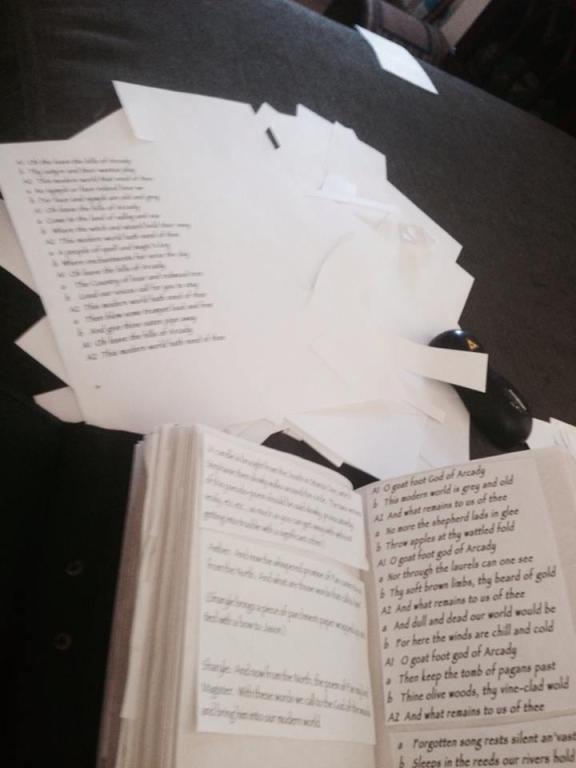 My house currently has five very different BoS’s in it. My first BoS is a collection of spells, rituals, and poems that I began putting together 15 years ago. Everything in that book is written by (my mostly illegible) hand. It’s my prettiest BoS and the one I feel most attached to since I’ve had it longer than any of the others. My wife has one of a similar nature. Recently I purchased a new BoS specifically to place sabbat rituals in. Instead of copying those rituals down by hand it mostly consists of printouts glued into my book with rubber cement. It’s an impressive looking book, and far more legible than my first BoS.
My current (non-traditional) coven has its own BoS full of ritual, poetry, and other odds and ends that I thought were useful. It also includes an explanation of the ritual we use and some extended histories on things like The Charge of the Goddess. It’s contents are not an oathbound secret (and it does include a few Raise the Horns articles, like this one on the Wiccan Rede), but we don’t widely share it with a whole lot of folks. I also have part of a BoS from a tradition I’m initiated into which stays locked up and out of sight.
 The non-traditional coven’s BoS was assembled on a desktop computer and then printed in book form. This is probably not typical of most BoS’s today but appealed to me. Many people still write and/or copy their BoS’s by hand (paper and ink), and the practice is still required in some traditional covens. I had a roommate who worked at Kinko’s (now FedEx) years ago and his BoS was almost all photocopied directly from books and magazines. Written, copied, printed, or pasted, what’s most important in a BoS is functionality. As long as it works for the individual Witch or coven it’s probably fair game.
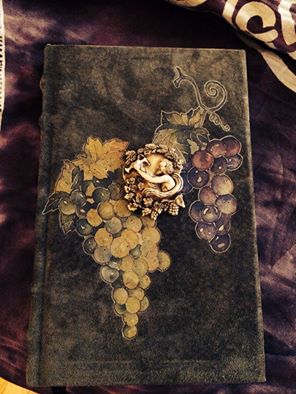
I will admit there’s a certain magic involved with writing out parts of a BoS. A coven-mate of mine recently gave me a new BoS (it’s the one with grapes and Pan on it) and I’m planning to write out my coven’s opening and closing ritual on its pages. Not only does writing provide a link to earlier times, it also serves to help reinforce the material one is jotting down. There’s a reason teachers made us copy things when we were kids, and one of the best ways to commit something to memory is by writing it down. I can’t imagine writing down everything in my current BoS’s, but I do want some of my rituals in my own handwriting. (Ritual in my own handwriting is nearly the equivalent of writing in cypher.)
Many BoS’s are elaborate constructions or at least “pretty books” but with a BoS functionality is always more important than looks. In fact a rather nondescript looking BoS has certain advantages; no one is going to “accidentally” pick up your BoS if they think it’s a collection of old college notes! I was with a friend recently and she showed me one of her BoS’s that she kept in a three ring binder. The binder allowed her to take things out of her book and then move them around wherever (and whenever) she wanted (very practical!). My first BoS was designed to be a journal and not a collection of rituals and spells. One can basically use anything as a BoS.
The term Book of Shadows is of rather recent vintage first showing up in magical works in 1949. It’s most celebrated appearance that year was in Gerald Gardner’s High Magic’s Aid, a fiction novel that contained elements of Modern Witchcraft. Before Gardner’s novel the term also appeared in a copy of the Occult Observer (magazine) where it was used to refer to a book about Sanskrit divination. Both the magazine and the book shared the same publisher (Michael Houghton) the then owner of the Atlantis Bookshop in London. (1)
 Ancient pagan religions had their own “secret books” (or scrolls) of ritual, which is one of the reasons so few intact ancient rites from that era exist today. Often those books were limited to temple priests. The Medieval Period saw the rise of the grimoire, usually a collection of spells and ceremonies. Early grimoires were often copied by hand and then passed down over the generations. With the arrival of the printing press many of those grimoires went into print, and were then followed by additional titles.
The most famous Renaissance era grimoire is probably The Key of Solomon, a collection of ceremonial magic falsely attributed to King Solomon and probably put together sometime in the 14th Century. Within 200 years of its composition it was being published in several different languages and also continued to be copied by hand. (The exact number and influence of “magic books” can often be hard to determine because of how often they, and pieces of them, were copied by hand. Magic books rarely went out of print, but depending on location they could be difficult to get.) Magicians who used The Key often wrote copious notes in the book’s margins, a practice that was popular with many folks who used magic books. The popularity of the Key of Solomon has continued into the present day and shows up in Gardner’s High Magic’s Aid. The most common translation today is that of Liddell MacGregor Mathers from 1889.
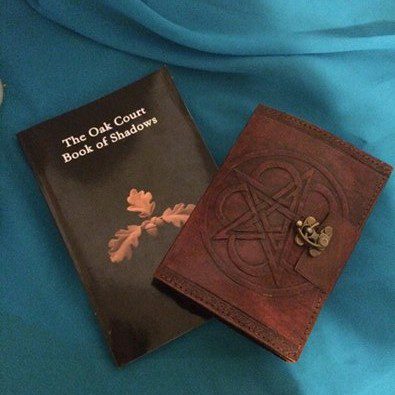 Books of magic were especially popular among English Cunning-folk. Their traditions were just as likely to be from books as they were from oral sources. They too often wrote in the margins, and sometimes collected their wisdom and practices in personal books that were then passed on from generation to generation. Such personal books contained information gleaned from other printed materials, oral sources, and individual trial and error.
The Pennsylvania Dutch grimore The Long Lost Friend (wrtten by Joh Hohman and first published, in German, in 1820) was one of America’s earliest grimoires and is still influential nearly two hundred years later. Some of the spells within it were hundreds of years old at the time of its initial publication. Like many magic books The Friend was thought to contain its own power and many believed that keeping a copy on one’s person could prevent physical harm.
What’s interesting to me about about the history of grimoires and other magical books is that it shows that the Book of Shadows is not a modern invention. If anything it’s a direct continuation of a tradition that is centuries old. The name might be rather new but not the ideas behind it.
However one chooses to utilize a Book of Shadows, what’s most important is that its contents speak directly to the individual Witch. The materials in all of my BoS’s are sacred to me, but not in a fundamentalist, crazy sort of way. Every BoS is a product of the human hand and mind and because of that isn’t an infallible document. One of the best things about Witchcraft is that it offers every Witch an individual path to the divine, a good BoS documents that journey and offers some help along the way, but can’t take you there on its own.
If you enjoyed this article you might also like Witches Toolbox: Athame. (Actually you’ll probably like that one even better!)
1. Wicca: Magical Beginnings by Sortia d’Este and David Rankine. Avalonia Press, 2008. page 44
2. Triumph of the Moon by Ronald Hutton, Oxford University Press, 1999. page 92
Do you like Raise the Horns? Even if you don’t how about humoring a harmless blond-haired guy? Like RtH on Facebook, and also like Patheos Pagan for more great articles most of them far better than this one. Are you a Pagan living in the UK? Jason will be in London and Edinburgh this September and October, send him a message if you’d like to get a cup of tea or a pint of cider.
Previous Post
September 1, 2014
Paganism & The New Age
Next Post
September 8, 2014 Not My Elder
Browse Our Archives
Select a Category Editorializing Gateways to Paganism Guest Posts Holiday Histories Led Zeppelin News and Views Occult Pagan Pagan TV Club Paganism polytheism Ramble On Reviews Ritual Strange Days Uncategorized
Select a Month August 2026 March 2026 February 2026 November 2025 September 2025 August 2025 April 2025 August 2024 April 2024 February 2024 December 2023 October 2023 August 2023 June 2023 May 2023 January 2023 October 2022 August 2022 July 2022 June 2022 May 2022 April 2022 March 2022 February 2022 January 2022 December 2021 November 2021 October 2021 September 2021 August 2021 July 2021 June 2021 April 2021 March 2021 February 2021 January 2021 December 2020 November 2020 October 2020 August 2020 July 2020 June 2020 May 2020 April 2020 March 2020 February 2020 January 2020 December 2019 November 2019 October 2019 September 2019 August 2019 July 2019 June 2019 May 2019 April 2019 March 2019 February 2019 January 2019 December 2018 November 2018 October 2018 September 2018 August 2018 July 2018 June 2018 May 2018 April 2018 March 2018 February 2018 January 2018 December 2017 November 2017 October 2017 September 2017 August 2017 July 2017 June 2017 May 2017 April 2017 March 2017 February 2017 January 2017 December 2016 November 2016 October 2016 September 2016 August 2016 July 2016 June 2016 May 2016 April 2016 March 2016 February 2016 January 2016 December 2015 November 2015 October 2015 September 2015 August 2015 July 2015 June 2015 May 2015 April 2015 March 2015 February 2015 January 2015 December 2014 November 2014 October 2014 September 2014 August 2014 July 2014 June 2014 May 2014 April 2014 March 2014 February 2014 January 2014 December 2013 November 2013 October 2013 September 2013 August 2013 July 2013 June 2013 May 2013 April 2013 March 2013 February 2013 January 2013 December 2012 November 2012 October 2012 September 2012 August 2012 July 2012 June 2012 April 2012 October 2011 September 2011 August 2011
Follow Us!
TAKE THE
Religious Wisdom Quiz
What spice was brought by the wise men to Jesus?
Select your answer to see how you score.
Cinnamon Pepper Mint Myrrh
Related posts from Raise the Horns

What Makes a Good Ritualist? No Idea

Raymond Buckland & The Big Blue Book


The Return of the Pagan Scapegoats
TRENDING AT PATHEOS Pagan

The Sermon on the Mount, Part I: Matthew...
The Sermon on the Mount, Part I (Matthew 4:12-5:12) St. Matthew moves...

What's up from Crossway: Reviewing some of their latest A few weeks...

Janie Learns the Way of the Cross: A...
Teaching children about Jesus' Passion can be challenging. Many parents and educators...

Looking For Good Catholic Writing - October 2026
He alone extends the heavens, and he walks upon the waves of...

In "Irreplaceable," our book on vocation and technology, Trevor Sutton and I...

I was strolling through the top floor of the brand new Parthenon...
view all Pagan blogs
Ad-Free & Subscriber Log-In Subscription Support
- About Us
- 2026 Calendar
- Videos
- Podcasts
- Library of World Religions
- Faith In Media Tracker
- Advertise With Us
- Write for Us
- Privacy Policy
- Terms of Service
- Do Not Sell My Data
- Contact Us
- Radiant Digital
- Manage Newsletter Subscriptions
- Unsubscribe From Notifications
- Sitemap
Copyright 2008-2026, Patheos. All rights reserved.
Subscription Support Ad-Free & Subscriber Log-In
Follow Patheos