
BuddhistCatholicContemplativeEvangelicalGeneral ChristianHinduJewishLatter-day SaintMuslimNew VisionsProgressive Christian
Beliefs
- Buddhist
- Catholic
- Contemplative
- Evangelical
- General Christian
- Hindu
- Jewish
- Latter-day Saint
- More Voices
- Muslim
- New Visions
- Pagan
- Progressive Christian
Topics
- Religion News
- Food and Religion
- Sports and Religion
- Religious Art
- Religious Music and Entertainment
- Religious Events
- History and Religion
- Style and Religion
- Politics and Religion
- Women in Religion
- Recreation Outdoors and Religion
- Business Finance and Religion
- Careers Workplace and Religion
- Education and Religion
- Family Parenting and Religion
- Health Fitness and Religion
- Home and Religion
- Relationships and Religion
- Technology and Religion
- Travel and Religion
Columnists
- Buddhist Columnists
- Business Finance and Religion Columnists
- Careers Workplace and Religion Columnists
- Catholic Columnists
- Contemplative Columnists
- Education and Religion Columnists
- Evangelists Columnists
- Family Parenting and Religion Columnists
- General Christian Columnists
- Health Fitness and Religion Columnists
- Hindu Columnists
- History and Religion Columnists
- Home and Religion Columnists
- Jewish Columnists
- More Voices Columnists
- Latter Day Columnists
- Muslim Columnists
- New Visions Columnists
- Nonreligious Columnists
- Pagan Columnists
- Politics and Religion Columnists
- Progressive Columnists
- Recreation Outdoors and Religion Columnists
- Relationships and Religion Columnists
- Religion News Columnists
- Religious Art Columnists
- Religious Events Columnists
- Religious Music and Entertainment Columnists
- Sports and Religion Columnists
- Style and Religion Columnists
- Technology and Religion Columnists
- Travel and Religion Columnists
- Women in Religion Columnists
Resource Library
- 2026 Calendar
- Library of World Religions
- The 100 Most Holy Places on Earth
- Patheos Answers
- Podcasts
- Videos
- Faith Leaders Database
- Anglican Episcopalian
- Bahai
- Baptist
- Buddhism
- Christianity
- Confucianism
- Eastern Orthodoxy
- Hinduism
- Holiness and Pentecostal
- ISKCON
- Islam
- Judaism
- Lutheran
- Methodist
- The Church of Jesus Christ of Latter-day Saints
- New Age
- Paganism
- Presbytarian and Reformed
- Protestantism
- Religion Behind the Scenes
- Roman Catholic
- Scientology
- Shia Islam
- Sikhism
- Sufism
- Sunni Islam
- Taoism
- Zen
- See all religions
Research Tools
 Ad-Free & Subscriber Log-In Subscription Support
Ad-Free & Subscriber Log-In Subscription Support
Follow Patheos 

- Trending:
- Forgiveness
- |
- Marriage
- |
- Consciousness
- |
- Death Penalty
- |
- Election
- |
- Halloween

- HOME
- Me and the Blog
- Defining Pagan
- Rituals & Holidays
- All Posts
- Blogroll
- Publications
- FREE NEWSLETTER
- Home
- Pagan
- (Un)Wilding Witchcraft
(Un)Wilding Witchcraft
Last updated on: August 27, 2014 at 10:15 am by Jason Mankey
(Un)Wilding Witchcraft 2014-08-27T10:15:33-06:00 Jason Mankey
Patheos Explore the world's faith through different perspectives on religion and spirituality! Patheos has the views of the prevalent religions and spiritualities of the world.
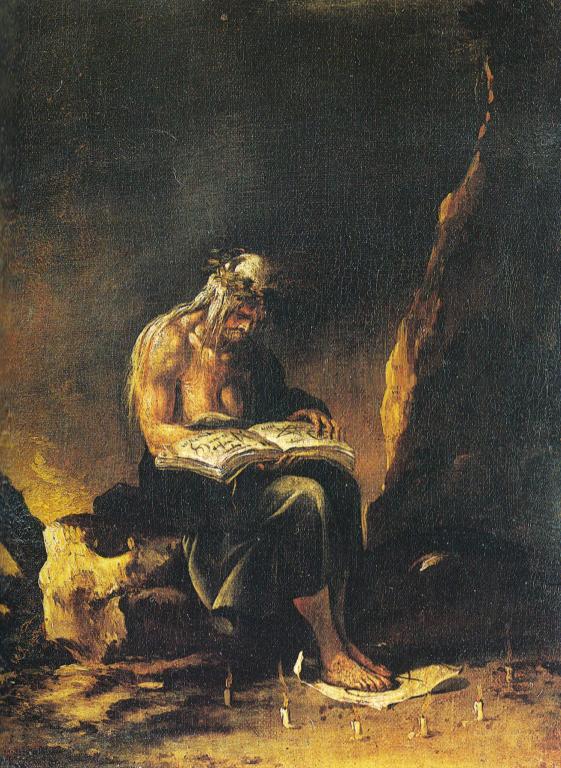 Over the last several months I’ve noticed a lot of online articles about Witchcraft that make use of the word Wild. The most common iteration along those lines has been Rewilding Witchcraft a lovely turn of phrase that apparently resonates with a lot of folks. Historically witches are often viewed as outsiders, and few things are more wild than the outsider.
I’ve always had trouble with the idea of a wild Witchcraft because my Witchcraft is not wild. There’s a method to my madness in circle and I tend to think of it as measured and controlled. We cleanse the coven, say a prayer, cast a circle, light the temple, call the quarters, welcome everyone to ritual, invoke deity, have a working, celebrate cakes and ale, and then say goodbye to the energies raised and powers invoked. We’ve got a ritual outline we stick to and a Book of Shadows that does a pretty good job of spelling out all the “hows and whys” of our rituals.
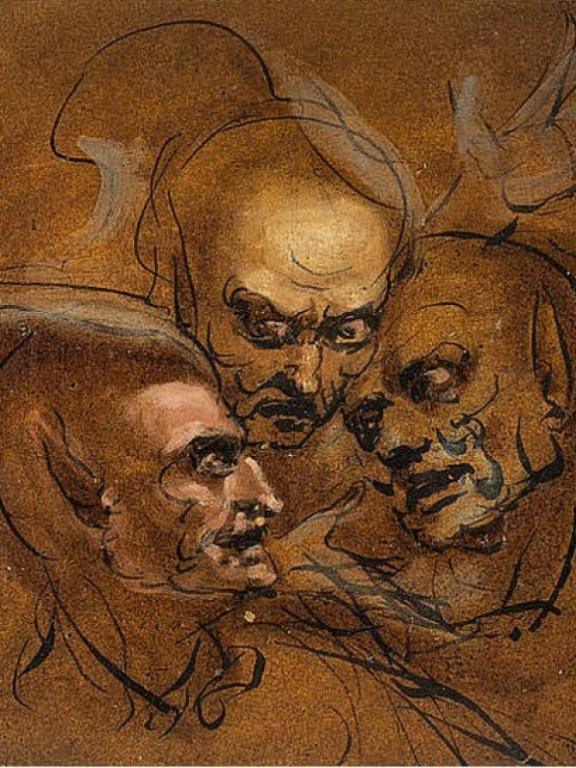 Because wild has several definitions and has been used in conjunction with Witchcraft by a variety of writers the mechanism that rewilds Witchcraft can vary from person to person. Often it’s about getting in touch with the Earth, and doing so on a very primal level. I had a friend tell me that she has always felt more at home in the woods (“the wild”) than in a city; that nature offers a level of comfort and even protection for her that she doesn’t find anywhere else. I completely understand those impulses and the feelings that come with being in the wilderness, and I’ve always found those experiences exhilarating, but not necessarily wild.
For nearly our entire history as humans we haven’t so much lived in harmony with nature as we’ve tried to control it. Even when my friend goes into the woods she brings civilization with her, certainly in tiny pieces, but it’s there. Maybe she’s wearing deet to deter the mosquitos, and most likely there’s a phone buzzing in her pocket. Even the shoes she wears are illustrative of how humans have shaped the natural world to their own end. Unless one randomly wanders into the woods completely naked and empty-handed we tend to venture into nature in a controlled and measured sort of way. That’s not to say that we all enter the woods as conquerors, only that we bend the rules slightly to make a day in the forest easier on ourselves. We aren’t any different from our forebears in this regard. They manipulated wood and stone to make weapons, and wore animal skins and furs, all things that required a degree of civilization and cooperation.
 Some of the most wild places on Earth have been shaped by human hands. Many scientists today believe that at least large chunks of the Amazonian Rainforest were human-made. In the Amazon there’s a type of soil known as terra preta, most likely engineered by the Native Americans who lived there before Columbus. That’s not wilding the wilderness that’s taming and shaping the environment in a positive and sustainable manner. Today’s GMO’s are created in laboratories but we’ve been genetically modifying plants and animals for 12,000 years or longer. Corn (maize) has been so manipulated that scientists can’t quite agree on where it came from! I want to live in harmony with the Earth, and I want wild places to exist, it’s just that when I visit those wild places I expect to wield a level of control while in them.
Wilding Witchcraft is usually about more than just a beautifully messy ritual or the environment, it’s often reference to working with the dead or spirits. This has never been a part of my practice on a regular basis. That’s not to say that I ignore the dead, but my focus has nearly always been on deity. My first prayer as a Pagan was to the Goddess, not a whispered devotion to a long removed ancestor. We have an area in our ritual room devoted to the Mighty Dead but we don’t actively invite those spirits to ritual. If Auntie Doreen and Uncle Gerald want to show up we’ll be glad to have them, it’s an open invitation, not the centerpiece of our work.
For some a Wild Witchcraft is a politically active Witchcraft, and I’d be lying if I said that my political choices weren’t directly informed by my spirituality. I vote for (and support) candidates that I believe have the best chance of “doing good” for the Earth. I boycott groups and businesses that treat their employees like cattle or attempt to weasel out of paying taxes (giving up Burger King is not much of a burden!). I don’t write about my politics on this blog because I assume all Pagans agree with these things even if they believe that another path will eventually take us there. My decisions in the political arena are often like my Witchcraft, cautious and measured. Instead of responding simply with outrage I want to understand the problem and then try and figure out the best way to contribute to solving it.
 Perhaps it’s a matter of definition but I’ve always failed to see how a “wild” approach to environmental issues is beneficial. My reactions to our environmental challenges are usually extremely precise. Living in drought plagued California my plan is to consciously limit water use. I do that by taking shorter showers, letting my front lawn turn a lovely shade of brown, and using water saving appliances (we are blessed to own both an energy efficient dishwasher and washing machine). Will this single handedly save the planet? Of course not, but I don’t understand what furious rage and anger are going to do either. I guess one could curse the Koch Brothers but again I’m not sure that solves anything. In addition as someone who believes in the law of return that just doesn’t seem like a very good plan.
I’ve been lucky enough to have several experiences that correlate to the idea of religious ecstasy. I worship ecstatic gods (Pan! Dionysus!) so it figures that I’d have incidents that transcend the mundane world. Some might look at those experiences as “wild,” but there’s a part of me that disagrees. I have had great experiences with Dionysus and Pan because I took the time to build a relationship with them. “Drawing down” Dionysus has never been a random act, it’s always been a conscious planned activity. Even when he’s visited at times I was unprepared for him I still had to willingly surrender to his power. There’s a relationship between my gods and myself, and even though they are gods and can do as they please, they seem to honor it. In the case of Pan that means behaving in an appropriate manner. Even Pan at his most primal tends to carry a piece of civilization with him, that wine doesn’t make its self.
I believe that Modern Witchcraft has some of its origins in Ceremonial Magic, a very precise and un-wild practice. Most ceremonial magicians are careful practitioners, aware of astrological circumstances, the precise way their tools work, and well versed in the powers they conjure up. That’s not to say a precise science like ceremonial magic is incapable of experimentation, only that the experimentation is likely to take place in controlled circumstances. We all change our rituals and spellwork up depending on circumstance, but I prefer to mix it up in a way similar to how a great chef prepares a meal. That chef is usually going to have a pretty good idea of how things are going to turn out when they add a little extra cumin or garlic.
For those that see their origins in the Village Wise Woman or Healer instead of the magician I’d argue that the degrees of separation aren’t all that different. Both disciplines require a working knowledge of the mechanisms being used to achieve the desired result. Whether that comes from books or oral sources doesn’t matter, both are evidence of civilization. In addition to the knowing, the growing of herbs is an example of shaping the world to one’s own liking.
 My biggest problem with the idea of a “wild” Witchcraft is that I believe Witchcraft and the powers that go along with it are very real things. Invoking the gods isn’t simply a matter of procedure, it’s a physical event. I would never characterize my Witchcraft as “wild” because it’s something I believe should be approached with caution, reverence, awe, and a very clear plan of action. If I’m going to call “the ancestors” during a ritual I want to know who those ancestors are and how they might act within my circle. I don’t think the souls of the dead are something to screw around with. The idea that I would allow a “wild” entity into my practice feels irresponsible. As a High Priest the safety of the coven is important to me, and safety means knowing what’s likely to happen and being prepared for it.
One of my frequent sparring partners on social media often argues that Witchcraft has lost its “darkness” and that a cautious approach to our art adds to that erosion. I could not disagree more. Others may wish to trifle with the gods or spirits but not me. I recognize the wild that exists within my faith but I honor that wild by acknowledging its existence and then proceeding in an informed manner. There’s a reason Trad Witchcraft involves training, I’d even go so far as to say that books exist for much the same reason. A powerful Witch knows what they are doing and directs the energy they raise in a precise and exact way. My Witchcraft isn’t wild but it is effective.
Like what you’ve read? How about liking Raise the Horns on Facebook, or perhaps sending a little love the way of Patheos Pagan, home to a whole host of great articles, many of them a lot better than this one! Are you a Pagan living in the UK? Jason will be in London and Edinburgh this September and October, send him a message if you’d like to get a cup of tea or a pint of cider.
Previous Post

August 23, 2014
The Margins of Pagan History
Next Post

September 1, 2014 Paganism & The New Age
Browse Our Archives
Select a Category Editorializing Gateways to Paganism Guest Posts Holiday Histories Led Zeppelin News and Views Occult Pagan Pagan TV Club Paganism polytheism Ramble On Reviews Ritual Strange Days Uncategorized
Select a Month August 2026 March 2026 February 2026 November 2025 September 2025 August 2025 April 2025 August 2024 April 2024 February 2024 December 2023 October 2023 August 2023 June 2023 May 2023 January 2023 October 2022 August 2022 July 2022 June 2022 May 2022 April 2022 March 2022 February 2022 January 2022 December 2021 November 2021 October 2021 September 2021 August 2021 July 2021 June 2021 April 2021 March 2021 February 2021 January 2021 December 2020 November 2020 October 2020 August 2020 July 2020 June 2020 May 2020 April 2020 March 2020 February 2020 January 2020 December 2019 November 2019 October 2019 September 2019 August 2019 July 2019 June 2019 May 2019 April 2019 March 2019 February 2019 January 2019 December 2018 November 2018 October 2018 September 2018 August 2018 July 2018 June 2018 May 2018 April 2018 March 2018 February 2018 January 2018 December 2017 November 2017 October 2017 September 2017 August 2017 July 2017 June 2017 May 2017 April 2017 March 2017 February 2017 January 2017 December 2016 November 2016 October 2016 September 2016 August 2016 July 2016 June 2016 May 2016 April 2016 March 2016 February 2016 January 2016 December 2015 November 2015 October 2015 September 2015 August 2015 July 2015 June 2015 May 2015 April 2015 March 2015 February 2015 January 2015 December 2014 November 2014 October 2014 September 2014 August 2014 July 2014 June 2014 May 2014 April 2014 March 2014 February 2014 January 2014 December 2013 November 2013 October 2013 September 2013 August 2013 July 2013 June 2013 May 2013 April 2013 March 2013 February 2013 January 2013 December 2012 November 2012 October 2012 September 2012 August 2012 July 2012 June 2012 April 2012 October 2011 September 2011 August 2011
Follow Us!
TAKE THE
Religious Wisdom Quiz
What does "Jireh" mean in Hebrew?
Select your answer to see how you score.
Provider Redeemer Savior Protector
Related posts from Raise the Horns
The Great God Pan Among the Stars

What Makes a Good Ritualist? No Idea

Raymond Buckland & The Big Blue Book

TRENDING AT PATHEOS Pagan

The Sermon on the Mount, Part I: Matthew...
The Sermon on the Mount, Part I (Matthew 4:12-5:12) St. Matthew moves...

What's up from Crossway: Reviewing some of their latest A few weeks...

Janie Learns the Way of the Cross: A...
Teaching children about Jesus' Passion can be challenging. Many parents and educators...

Looking For Good Catholic Writing - October 2026
He alone extends the heavens, and he walks upon the waves of...

In "Irreplaceable," our book on vocation and technology, Trevor Sutton and I...

I was strolling through the top floor of the brand new Parthenon...
view all Pagan blogs
Ad-Free & Subscriber Log-In Subscription Support
- About Us
- 2026 Calendar
- Videos
- Podcasts
- Library of World Religions
- Faith In Media Tracker
- Advertise With Us
- Write for Us
- Privacy Policy
- Terms of Service
- Do Not Sell My Data
- Contact Us
- Radiant Digital
- Manage Newsletter Subscriptions
- Unsubscribe From Notifications
- Sitemap
Copyright 2008-2026, Patheos. All rights reserved.
Subscription Support Ad-Free & Subscriber Log-In
Follow Patheos