
BuddhistCatholicContemplativeEvangelicalGeneral ChristianHinduJewishLatter-day SaintMuslimNew VisionsProgressive Christian
Beliefs
- Buddhist
- Catholic
- Contemplative
- Evangelical
- General Christian
- Hindu
- Jewish
- Latter-day Saint
- More Voices
- Muslim
- New Visions
- Pagan
- Progressive Christian
Topics
- Religion News
- Food and Religion
- Sports and Religion
- Religious Art
- Religious Music and Entertainment
- Religious Events
- History and Religion
- Style and Religion
- Politics and Religion
- Women in Religion
- Recreation Outdoors and Religion
- Business Finance and Religion
- Careers Workplace and Religion
- Education and Religion
- Family Parenting and Religion
- Health Fitness and Religion
- Home and Religion
- Relationships and Religion
- Technology and Religion
- Travel and Religion
Columnists
- Buddhist Columnists
- Business Finance and Religion Columnists
- Careers Workplace and Religion Columnists
- Catholic Columnists
- Contemplative Columnists
- Education and Religion Columnists
- Evangelists Columnists
- Family Parenting and Religion Columnists
- General Christian Columnists
- Health Fitness and Religion Columnists
- Hindu Columnists
- History and Religion Columnists
- Home and Religion Columnists
- Jewish Columnists
- More Voices Columnists
- Latter Day Columnists
- Muslim Columnists
- New Visions Columnists
- Nonreligious Columnists
- Pagan Columnists
- Politics and Religion Columnists
- Progressive Columnists
- Recreation Outdoors and Religion Columnists
- Relationships and Religion Columnists
- Religion News Columnists
- Religious Art Columnists
- Religious Events Columnists
- Religious Music and Entertainment Columnists
- Sports and Religion Columnists
- Style and Religion Columnists
- Technology and Religion Columnists
- Travel and Religion Columnists
- Women in Religion Columnists
Resource Library
- 2026 Calendar
- Library of World Religions
- The 100 Most Holy Places on Earth
- Patheos Answers
- Podcasts
- Videos
- Faith Leaders Database
- Anglican Episcopalian
- Bahai
- Baptist
- Buddhism
- Christianity
- Confucianism
- Eastern Orthodoxy
- Hinduism
- Holiness and Pentecostal
- ISKCON
- Islam
- Judaism
- Lutheran
- Methodist
- The Church of Jesus Christ of Latter-day Saints
- New Age
- Paganism
- Presbytarian and Reformed
- Protestantism
- Religion Behind the Scenes
- Roman Catholic
- Scientology
- Shia Islam
- Sikhism
- Sufism
- Sunni Islam
- Taoism
- Zen
- See all religions
Research Tools
 Ad-Free & Subscriber Log-In Subscription Support
Ad-Free & Subscriber Log-In Subscription Support
Follow Patheos 

- Trending:
- Forgiveness
- |
- Marriage
- |
- Consciousness
- |
- Death Penalty
- |
- Election
- |
- Halloween

- HOME
- Me and the Blog
- Defining Pagan
- Rituals & Holidays
- All Posts
- Blogroll
- Publications
- FREE NEWSLETTER
- Home
- Pagan
- Pagan Time Capsule: 1980’s
Pagan Time Capsule: 1980’s
Last updated on: August 23, 2014 at 9:23 am by Jason Mankey
Pagan Time Capsule: 1980’s 2014-08-23T09:23:47-06:00 Jason Mankey
Patheos Explore the world's faith through different perspectives on religion and spirituality! Patheos has the views of the prevalent religions and spiritualities of the world.
 This year marks the 60th Anniversary of Public Paganism. Back in 1954 Gerald Gardner released the first book documenting a living, breathing, and long-lasting Witch tradition. Gifted with an introduction by Dr. Margaret Murray Witchcraft Today launched a now world-wide religious movement. I’m sure that Witches and other Pagans existed and practiced before Gardner, but Gardner made his (and by extension our) presence known in a big way. Modern Paganism would most likely have existed without Gardner but perhaps in a very different and/or diminished form.
In celebration of sixty years and seven decades of Public Paganism I’ll be breaking down the essentials of Paganism decade by decade. I’ll take a look a the books, the music, and movies that have driven (and continue to drive) Modern Paganism. The items contained in many of our early Pagan Time Capsules will be a bit Witchcraft-Centric, but that will change as the decades move along. In each time capsule I’ll be placing five to six books, one movie, a few songs, and one bonus item. Compiling this list I started wondering if the 80’s were perhaps Paganism’s “lost decade?” Compared to its predecessor the 1980’s doesn’t feel as compelling, but great things happened during the decade as Modern Paganism continued its forward march.
Other editions of Pagan Time Capsule: The Fabulous Fifties, the Swinging Sixties, Shagging Seventies, Ecstatic Eighties, and The Nifty Nineties. The entire series is also summed up here in Pagan History on the Margins.
BOOKS
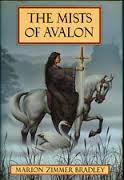 So much of this series has focused on non-fiction books, but one of the most important “Pagan books” of all time is a fiction novel. The Mists of Avalon* (1983) created a new entry-point for spiritual seekers and in doing so became as influential as any “101” kind of book. Marrying Goddess worship, Druids, and King Arthur, Marion Zimmer Bradley created a romanticized Celtic world that turned the conventional tale of Arthur on its head. Gerald Gardner’s first book was a fantasy novel, and science fiction writers like Robert Heinlein were influential in many Pagan circles, but Bradley’s book was one of the first books with an explicitly Pagan tone and feel to cross into the New York Times Bestseller List.
A few weeks ago an acquaintance online argued that Scott Cunningham’s Wicca: A Guide for the Solitary Practitioner (1989) was the first “101” Witch book ever published. I don’t agree by any means, but it was influential. One of the most influential parts of the book is the word Wicca in the title. Cunningham’s book wasn’t the first to use the “W word” in its title, but it was the first mass-distributed-show-up-in-every-bookstore sort of book to use the word. Cunningham (and Llewellyn) opened a floodgate and made the use of the word Wicca fair game for publishers and authors. It probably didn’t hurt that Cunningham’s book was also easy to understand, very well written, and offered a “way in” for those without an established Pagan community.
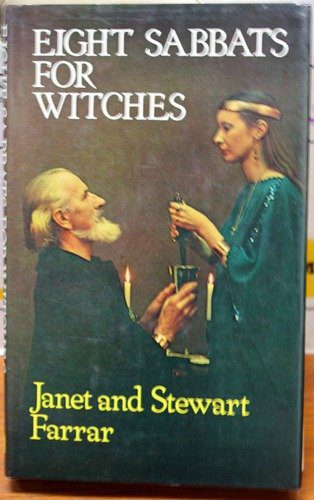 Before Cunningham’s book English authors Janet and Stewart Farrar published their own “how to” books. Eight Sabbats For Witches (1981) and The Witches Way (1986) provided complete instructions for creating a coven and ritual structure in the style of Witches like Alex and Maxine Sanders. (Many people are more familiar with Eight Sabbats and Way as a combined volume: A Witches’ Bible. Additionally Way was a reworked version of Stewart’s earlier work What Witches Do, first published in 1971.) The Farrar’s work in the Eighties remain the Witchcraft books I consult if I’m stuck somewhere. Never before had anyone written so exhaustively about British Trad-style Witchcraft.
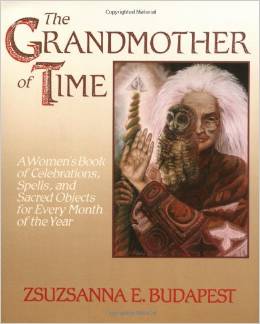 1989 also saw the publication of another sort of Witchcraft 101 book, this one dealing exclusively with Feminist Witchcraft. Z Budapest’s The Holy Book of Women’s Mysteries: Feminist Witchcraft, Goddess Rituals, Spellcasting and Other Womanly Arts is just as its title describes it and had the added bonus of being readily available at the mall. Holy Book is a reworked edition of Budapest’s The Feminist Book of Lights and Shadows, but was also something completely different. Lights and Shadows was hard to find and not generally available at the average bookstore, Holy Book was and such things make a big difference. The clout of Witchcraft as a profitable-force in publishing was cemented by another Budapest book. The Grandmother of Time: A Woman’s Book of Celebrations, Spells, and Sacred Objects for Every Month of the Year was published by the mainstream Harper Collins. Grandmother wasn’t the first Witchcraft book to have that distinction, but the idea of Dianic Witchcraft being promoted by a mainstream publisher does make me a smile a bit.
MOVIES
I’m not sure how I feel about three Witches summoning Lucifer to be their love interest, but there are worse movies than The Witches of Eastwick. At least the Witches from Eastwick are sexy (one can’t go wrong with Cher, Michelle Pfieffer, and Susan Sarandon) instead of grotesque (no green skin and warts here). More importantly the movie illustrates that magic has consequences and offers up the possibility that someone next door might very well be practicing the occult arts.
https://www.youtube.com/watch?v=ip1a-QEJY3Q
The 1980’s were a fertile period for celluloid fantasy. I have very fond memories of B movies like Dragonslayer and The Beast Master, but the fantasy movie that best puts its left pinky toe into Modern Paganism might be The Labyrinth from 1986. You might be right if you think I’m just using Labyrinth as an excuse to get David Bowie on this page, but there’s something fairty-tale-Pagan to me about going from this world into an otherworldly one simply because of a wish. The Fey have long been a part of many Pagan traditions (ancient and modern) and while Bowie’s Goblin King is certainly not an accurate portrait of the royalty from those realms its always entertaining. I’m probably a bigger fan of Jim Henson’s earlier fantasy-puppet tale The Dark Crystal (1982) but there’s something far more Pagan about going from this world to that other one.
MUSIC
I’ve been including full albums in most of these Time Capsule pieces, but damn it there’s no way I can’t include Hymn to Her by the Pretenders (1986) and written by Meg Keene. The song is just so explicitly Pagan that it deserves to be bere. It also reached #8 on the British Pop Charts and has been a part of every subsequent “Best of” release by the band.
The 80’s also saw the continued release of Pagan music by and for Pagans. One of the earliest and most influential was The Witching Hour by Lady Isadora with Lord Pan from 1981. Perhaps more so than Gwydion Pendderwen’s first album, Isadora and Pan just sound Witchy to me. The Witching Hour has a mystic and ethereal quality to it that makes it the perfect compliment to reflective ritual. I’m sure Isadora’s sweet yet commanding voice has a lot to do with how I feel about this album too.
1981 also saw the release of Catch the Fire by Charlie Murphy which contained the anthem The Burning Times. Before putting this together I hadn’t heard The Burning Times in years and had forgotten just how powerful it is. There’s that “Isis, Astarte, Diana, Hecate, Demeter, Kali, Inanna . . .” chant but the drum sound is nearly menacing while bordering on the hypnotic. If there’s a Stairway to Heaven of Pagan Music it might very well be The Burning Times.
As the decades roll by in this series it gets harder and harder to limit my musical selections to just a few choices, so I’m going to finish off the 80’s time capsule with two pieces of shimmering English pop. In a Pagan Place (1984) by the Waterboys has the most Pagan-sounding title of my final two records, but it’s Skylarking by XTC (1986) that has always sounded the most Pagan to me. Both records contain glorious hymns to nature that have been overlooked for decades now in many Pagan circles. Skylarking is probably most known for the angry atheist letter Dear God, but to me it’s the songs Summer’s Cauldron/Grass and Season’s Cycle that are the real heart of the album. If summer has a soundtrack it’s the majority of Skylarking. Church Not Made With Hands by the Waterboys is a Pagan-pop gem that deserves a wider audience.
https://www.youtube.com/watch?v=MCOsYs41PaQ
BONUS
It’s hard to imagine Modern Paganism without festivals, and the 1980’s saw an increase in festivals across North America. The first Pan Pagan Festival took place in 1976 and was followed by several others over the next few years. Circle Sanctuary started Pagan Spirit Gathering back in 1980 and Cleveland’s ACE sponsored the first Starwood Festival one year later. For this time capsule I’m including Starwood 1982’s Program Guide (which you can see at this link). Presenters that year included Ray Buckland and Selena Fox with the entire program providing a great jog through Pagan history.
Next: The 1990’s!
*The works of Marion Zimmer Bradley in the Pagan Community are the source of some controversy. Bradley the human being did things that are just flat out wrong, however I feel as if ignoring The Mists of Avalon paints an incomplete portrait of Pagan history so I’m including it here.
Do you like Raise the Horns? Even if you don’t how about humoring a harmless blond-haired guy? Like RtH on Facebook, and also like Patheos Pagan for more great articles most of them far better than this one. Are you a Pagan living in the UK? Jason will be in London and Edinburgh this September and October, send him a message if you’d like to get a cup of tea or a pint of cider.
Previous Post
August 7, 2014
Pagan Time Capsule: 1970's
Next Post

August 12, 2014 Pagan Time Capsule: 1990's
Browse Our Archives
Select a Category Editorializing Gateways to Paganism Guest Posts Holiday Histories Led Zeppelin News and Views Occult Pagan Pagan TV Club Paganism polytheism Ramble On Reviews Ritual Strange Days Uncategorized
Select a Month August 2026 March 2026 February 2026 November 2025 September 2025 August 2025 April 2025 August 2024 April 2024 February 2024 December 2023 October 2023 August 2023 June 2023 May 2023 January 2023 October 2022 August 2022 July 2022 June 2022 May 2022 April 2022 March 2022 February 2022 January 2022 December 2021 November 2021 October 2021 September 2021 August 2021 July 2021 June 2021 April 2021 March 2021 February 2021 January 2021 December 2020 November 2020 October 2020 August 2020 July 2020 June 2020 May 2020 April 2020 March 2020 February 2020 January 2020 December 2019 November 2019 October 2019 September 2019 August 2019 July 2019 June 2019 May 2019 April 2019 March 2019 February 2019 January 2019 December 2018 November 2018 October 2018 September 2018 August 2018 July 2018 June 2018 May 2018 April 2018 March 2018 February 2018 January 2018 December 2017 November 2017 October 2017 September 2017 August 2017 July 2017 June 2017 May 2017 April 2017 March 2017 February 2017 January 2017 December 2016 November 2016 October 2016 September 2016 August 2016 July 2016 June 2016 May 2016 April 2016 March 2016 February 2016 January 2016 December 2015 November 2015 October 2015 September 2015 August 2015 July 2015 June 2015 May 2015 April 2015 March 2015 February 2015 January 2015 December 2014 November 2014 October 2014 September 2014 August 2014 July 2014 June 2014 May 2014 April 2014 March 2014 February 2014 January 2014 December 2013 November 2013 October 2013 September 2013 August 2013 July 2013 June 2013 May 2013 April 2013 March 2013 February 2013 January 2013 December 2012 November 2012 October 2012 September 2012 August 2012 July 2012 June 2012 April 2012 October 2011 September 2011 August 2011
Follow Us!
TAKE THE
Religious Wisdom Quiz
How long did the judges rule before kings?
Select your answer to see how you score.
200 years Approximately 350 years 300 years 400 years
Related posts from Raise the Horns

What Makes a Good Ritualist? No Idea

Witchcraft Remembrances & Appreciation at Samhaintide

Raymond Buckland & The Big Blue Book

TRENDING AT PATHEOS Pagan

The Sermon on the Mount, Part I: Matthew...
The Sermon on the Mount, Part I (Matthew 4:12-5:12) St. Matthew moves...

What's up from Crossway: Reviewing some of their latest A few weeks...

Janie Learns the Way of the Cross: A...
Teaching children about Jesus' Passion can be challenging. Many parents and educators...

Looking For Good Catholic Writing - October 2026
He alone extends the heavens, and he walks upon the waves of...

In "Irreplaceable," our book on vocation and technology, Trevor Sutton and I...

I was strolling through the top floor of the brand new Parthenon...
view all Pagan blogs
Ad-Free & Subscriber Log-In Subscription Support
- About Us
- 2026 Calendar
- Videos
- Podcasts
- Library of World Religions
- Faith In Media Tracker
- Advertise With Us
- Write for Us
- Privacy Policy
- Terms of Service
- Do Not Sell My Data
- Contact Us
- Radiant Digital
- Manage Newsletter Subscriptions
- Unsubscribe From Notifications
- Sitemap
Copyright 2008-2026, Patheos. All rights reserved.
Subscription Support Ad-Free & Subscriber Log-In
Follow Patheos