
BuddhistCatholicContemplativeEvangelicalGeneral ChristianHinduJewishLatter-day SaintMuslimNew VisionsProgressive Christian
Beliefs
- Buddhist
- Catholic
- Contemplative
- Evangelical
- General Christian
- Hindu
- Jewish
- Latter-day Saint
- More Voices
- Muslim
- New Visions
- Pagan
- Progressive Christian
Topics
- Religion News
- Food and Religion
- Sports and Religion
- Religious Art
- Religious Music and Entertainment
- Religious Events
- History and Religion
- Style and Religion
- Politics and Religion
- Women in Religion
- Recreation Outdoors and Religion
- Business Finance and Religion
- Careers Workplace and Religion
- Education and Religion
- Family Parenting and Religion
- Health Fitness and Religion
- Home and Religion
- Relationships and Religion
- Technology and Religion
- Travel and Religion
Columnists
- Buddhist Columnists
- Business Finance and Religion Columnists
- Careers Workplace and Religion Columnists
- Catholic Columnists
- Contemplative Columnists
- Education and Religion Columnists
- Evangelists Columnists
- Family Parenting and Religion Columnists
- General Christian Columnists
- Health Fitness and Religion Columnists
- Hindu Columnists
- History and Religion Columnists
- Home and Religion Columnists
- Jewish Columnists
- More Voices Columnists
- Latter Day Columnists
- Muslim Columnists
- New Visions Columnists
- Nonreligious Columnists
- Pagan Columnists
- Politics and Religion Columnists
- Progressive Columnists
- Recreation Outdoors and Religion Columnists
- Relationships and Religion Columnists
- Religion News Columnists
- Religious Art Columnists
- Religious Events Columnists
- Religious Music and Entertainment Columnists
- Sports and Religion Columnists
- Style and Religion Columnists
- Technology and Religion Columnists
- Travel and Religion Columnists
- Women in Religion Columnists
Resource Library
- 2026 Calendar
- Library of World Religions
- The 100 Most Holy Places on Earth
- Patheos Answers
- Podcasts
- Videos
- Faith Leaders Database
- Anglican Episcopalian
- Bahai
- Baptist
- Buddhism
- Christianity
- Confucianism
- Eastern Orthodoxy
- Hinduism
- Holiness and Pentecostal
- ISKCON
- Islam
- Judaism
- Lutheran
- Methodist
- The Church of Jesus Christ of Latter-day Saints
- New Age
- Paganism
- Presbytarian and Reformed
- Protestantism
- Religion Behind the Scenes
- Roman Catholic
- Scientology
- Shia Islam
- Sikhism
- Sufism
- Sunni Islam
- Taoism
- Zen
- See all religions
Research Tools
 Ad-Free & Subscriber Log-In Subscription Support
Ad-Free & Subscriber Log-In Subscription Support
Follow Patheos 

- Trending:
- Forgiveness
- |
- Marriage
- |
- Consciousness
- |
- Death Penalty
- |
- Election
- |
- Halloween

- HOME
- Me and the Blog
- Defining Pagan
- Rituals & Holidays
- All Posts
- Blogroll
- Publications
- FREE NEWSLETTER
- Home
- Pagan
- How the West Didn’t Lose God
How the West Didn’t Lose God
Last updated on: June 18, 2014 at 8:09 am by Jason Mankey
How the West Didn’t Lose God 2014-06-18T08:09:28-06:00 Jason Mankey
Patheos Explore the world's faith through different perspectives on religion and spirituality! Patheos has the views of the prevalent religions and spiritualities of the world.
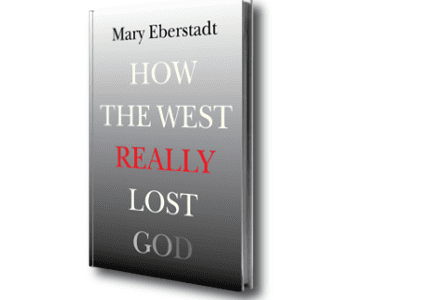
 I’m a team player, so when someone on Patheos asked if I would be interested in reading and reviewing a book called How the West Really Lost God (by Mary Eberstadt, Templeton Press, 2013) I signed right up. I like reading about religion, any religion really, and while I didn’t think I’d end up agreeing with all of the book I thought I’d at least get something out of it. There’s some good information in this book, and reading the various theories as to why Christianity is in decline was at least interesting, but I vehemently disagreed with most of Eberstadt’s arguments. It’s a rare day when I literally throw a book down in disgust, but that’s what happened here, and I’ve even reviewed a Sarah Palin cash-grab book for this blog.
To sum up the major thesis of the book, the disintegration of the traditional family is what’s causing the erosion of Christianity in the Western World. Eberstadt comes up with some interesting information to support her argument, but much of it can be dismissed rather easily with a little critical thinking. At one point in the book she points out that college educated one man/one woman families with children are more likely to go to church. I’m sure that they are, since with two college educations they likely have more money than their less educated peers. More money leads to more leisure time, and church can certainly be seen as “leisure time.” When you are forced to work in retail to pay the bills you probably end up working on Sunday. Hard to go to church when you’ve got to greet the people coming into Wal-Mart. (Not a diss on Wal-Mart employees, I know some and they work very hard for far less than money than they are worth.)
Eberstadt calls her thesis on the decline of Christianity in the West the “Family Factor” and she seems quite proud of it. The phrase is parroted throughout out the book like a talking point on the (Bill) O’Reilly Factor. Also random sentences are often italicized as if the words contained within them are making sweeping pronouncements on why Christianity is in decline and also just how smart Mary Eberstadt is for coming up with the phrase the Family Factor. I have no doubt that Mary Eberstadt is smart, but when I can dismiss most of your arguments pretty quickly, well it means you probably aren’t as smart as you think you are.
 I’ll never understand why some people continually seek to link “religiosity” to church attendance. As a former church-goer I can tell you that a great deal of my former (Christian) congregation went for reasons outside of the spiritual. Some of them enjoyed using the gym, many more of them went because it was most likely expected of them. It was the American South, you went to church. Comparing a choice-less Nineteenth Century to 2012 isn’t exactly honest. We are more readily able to identify “religious nones” and “atheists” today than we were fifty or one hundred years ago, but much of that is probably because it’s now socially acceptable to identify that way. I’m rather sure that there have always been atheists and folks who don’t really care about organized religion, but probably felt an obligation to go to church for purposes of socialization or “fitting in.”
Since it’s impossible to survey the human heart, it’s impossible to say that “the West has lost God.” What’s happening today is that people are experiencing God (and gods and spirituality) in completely new and different ways. Perhaps people are no longer flocking to establishment churches, but religion in America is as strong (and as popular) as ever. In a few places Eberstadt pulls the “woe is me, it’s hard to be a Christian in 2013” card. I had a pretty good chuckle reading those passages, mostly because I had The American Bible Challenge* on in the background. If anything Christianity is louder in our culture than it’s been in decades. It shapes our politics, fills our multiplexes, makes up a large part of best-seller lists, and is a major part of websites like this one. If Christianity is being oppressed in the United States I’d hate to see it when it’s free from the closest its been poorly hiding in.
One of the biggest problems with Eberstadt’s book is that it mocks the idea of choice and lacks context for the past. Certainly children of divorce have it tougher than kids raised in a two parent home (and of course Eberstadt doesn’t have a whole lot of room for families with Mom and Mom or Dad and Dad), but divorce shouldn’t be a dirty word. Eberstadt nearly makes it so, laying out a case against divorce that made me angry while reading it. Certainly marriage as an institution shouldn’t be treated lightly, but just because instances of divorce were lower one hundred years ago doesn’t mean those marriages were better than the ones of today. How many women in 1850 were married to abusive spouses? How many people were forced to stay in broken marriages due to lack of choice? My mother was an alcoholic, should my father have stayed married to her while she refused help and drug both him and his children down with her?
 Eberstadt blames some of Christianity’s decline on lower (Western) birth rates. That’s probably true, but what does it say about Christianity? When the only way to make new members of your local congregation is to birth them and then indoctrinate them in the faith, well your faith is pretty weak. If Christianity were the vital and important religion Eberstadt seems to think it should be, it should be able to make its own arguments regardless of how many Christians one breeds. Modern Paganism keeps chugging along and it’s not because all of us are having dozens of kids, it’s because people find it as adults.
Christianity is in decline to some degree, but that doesn’t mean “God is dead,” it only means that God is being redefined, reimagined, and experienced in different ways. There’s a spiritual impulse present in all sorts of people (I know atheists who go to “worship” services) and due to greater choice (yay Modern World) people are free to experience the divine how they choose. Families are changing, and lots of people are having less babies, but “the family” has always been in flux. Marriage as an institution has always been an evolving one, and families are not something that should be defined by society, they should be defined by those within them.
*That’s a TV show full of really hard Bible trivia, hosted by former “You might be a redneck if . .” guy Jeff Foxworthy. As I said before, I like religion.
Previous Post

June 12, 2014
The Ancient Nature of Midsummer
Next Post

June 17, 2014 A Midsummer Ritual: Solar Wheels & The Fey
Browse Our Archives
Select a Category Editorializing Gateways to Paganism Guest Posts Holiday Histories Led Zeppelin News and Views Occult Pagan Pagan TV Club Paganism polytheism Ramble On Reviews Ritual Strange Days Uncategorized
Select a Month August 2026 March 2026 February 2026 November 2025 September 2025 August 2025 April 2025 August 2024 April 2024 February 2024 December 2023 October 2023 August 2023 June 2023 May 2023 January 2023 October 2022 August 2022 July 2022 June 2022 May 2022 April 2022 March 2022 February 2022 January 2022 December 2021 November 2021 October 2021 September 2021 August 2021 July 2021 June 2021 April 2021 March 2021 February 2021 January 2021 December 2020 November 2020 October 2020 August 2020 July 2020 June 2020 May 2020 April 2020 March 2020 February 2020 January 2020 December 2019 November 2019 October 2019 September 2019 August 2019 July 2019 June 2019 May 2019 April 2019 March 2019 February 2019 January 2019 December 2018 November 2018 October 2018 September 2018 August 2018 July 2018 June 2018 May 2018 April 2018 March 2018 February 2018 January 2018 December 2017 November 2017 October 2017 September 2017 August 2017 July 2017 June 2017 May 2017 April 2017 March 2017 February 2017 January 2017 December 2016 November 2016 October 2016 September 2016 August 2016 July 2016 June 2016 May 2016 April 2016 March 2016 February 2016 January 2016 December 2015 November 2015 October 2015 September 2015 August 2015 July 2015 June 2015 May 2015 April 2015 March 2015 February 2015 January 2015 December 2014 November 2014 October 2014 September 2014 August 2014 July 2014 June 2014 May 2014 April 2014 March 2014 February 2014 January 2014 December 2013 November 2013 October 2013 September 2013 August 2013 July 2013 June 2013 May 2013 April 2013 March 2013 February 2013 January 2013 December 2012 November 2012 October 2012 September 2012 August 2012 July 2012 June 2012 April 2012 October 2011 September 2011 August 2011
Follow Us!
TAKE THE
Religious Wisdom Quiz
What root attitude does Paul say is the "root of all kinds of evil"?
Select your answer to see how you score.
Love of money Love of animals Love of wisdom Love of music
Related posts from Raise the Horns


The Return of the Pagan Scapegoats


Magickal & Pagan Gathers: Some Thoughts
TRENDING AT PATHEOS Pagan

The Brazilian Remake of Kendricks' 'Flywheel' Opens in...
“Flywheel,” the story that launched the Kendrick Brothers’ filmmaking career is getting...

The Dangers of Gradual Accommodation (Winking at Sin)
Recently, the “law of gradualness” resurfaced during the opening of a weeklong,...

The Iron Gates and the Lion of the...
Yesterday, I didn't finish my report about, well, yesterday. So I'll...

Dolly Parton’s Last Song Wins Dove Award with...
Bluegrass band The Grascals, speaking on the red carpet at the 57th...

The Image: On the Horror of Capitalism and...
The Image Then went the Pharisees, and took counsel how they might...

We are approaching the date of our new American national holiday: October...
view all Pagan blogs
Ad-Free & Subscriber Log-In Subscription Support
- About Us
- 2026 Calendar
- Videos
- Podcasts
- Library of World Religions
- Faith In Media Tracker
- Advertise With Us
- Write for Us
- Privacy Policy
- Terms of Service
- Do Not Sell My Data
- Contact Us
- Radiant Digital
- Manage Newsletter Subscriptions
- Unsubscribe From Notifications
- Sitemap
Copyright 2008-2026, Patheos. All rights reserved.
Subscription Support Ad-Free & Subscriber Log-In
Follow Patheos