
BuddhistCatholicContemplativeEvangelicalGeneral ChristianHinduJewishLatter-day SaintMuslimNew VisionsProgressive Christian
Beliefs
- Buddhist
- Catholic
- Contemplative
- Evangelical
- General Christian
- Hindu
- Jewish
- Latter-day Saint
- More Voices
- Muslim
- New Visions
- Pagan
- Progressive Christian
Topics
- Religion News
- Food and Religion
- Sports and Religion
- Religious Art
- Religious Music and Entertainment
- Religious Events
- History and Religion
- Style and Religion
- Politics and Religion
- Women in Religion
- Recreation Outdoors and Religion
- Business Finance and Religion
- Careers Workplace and Religion
- Education and Religion
- Family Parenting and Religion
- Health Fitness and Religion
- Home and Religion
- Relationships and Religion
- Technology and Religion
- Travel and Religion
Columnists
- Buddhist Columnists
- Business Finance and Religion Columnists
- Careers Workplace and Religion Columnists
- Catholic Columnists
- Contemplative Columnists
- Education and Religion Columnists
- Evangelists Columnists
- Family Parenting and Religion Columnists
- General Christian Columnists
- Health Fitness and Religion Columnists
- Hindu Columnists
- History and Religion Columnists
- Home and Religion Columnists
- Jewish Columnists
- More Voices Columnists
- Latter Day Columnists
- Muslim Columnists
- New Visions Columnists
- Nonreligious Columnists
- Pagan Columnists
- Politics and Religion Columnists
- Progressive Columnists
- Recreation Outdoors and Religion Columnists
- Relationships and Religion Columnists
- Religion News Columnists
- Religious Art Columnists
- Religious Events Columnists
- Religious Music and Entertainment Columnists
- Sports and Religion Columnists
- Style and Religion Columnists
- Technology and Religion Columnists
- Travel and Religion Columnists
- Women in Religion Columnists
Resource Library
- 2026 Calendar
- Library of World Religions
- The 100 Most Holy Places on Earth
- Patheos Answers
- Podcasts
- Videos
- Faith Leaders Database
- Anglican Episcopalian
- Bahai
- Baptist
- Buddhism
- Christianity
- Confucianism
- Eastern Orthodoxy
- Hinduism
- Holiness and Pentecostal
- ISKCON
- Islam
- Judaism
- Lutheran
- Methodist
- The Church of Jesus Christ of Latter-day Saints
- New Age
- Paganism
- Presbytarian and Reformed
- Protestantism
- Religion Behind the Scenes
- Roman Catholic
- Scientology
- Shia Islam
- Sikhism
- Sufism
- Sunni Islam
- Taoism
- Zen
- See all religions
Research Tools
 Ad-Free & Subscriber Log-In Subscription Support
Ad-Free & Subscriber Log-In Subscription Support
Follow Patheos 

- Trending:
- Forgiveness
- |
- Marriage
- |
- Consciousness
- |
- Death Penalty
- |
- Election
- |
- Halloween

- HOME
- Me and the Blog
- Defining Pagan
- Rituals & Holidays
- All Posts
- Blogroll
- Publications
- FREE NEWSLETTER
- Home
- Pagan
- The Wizard and the Witch: A Book Review
The Wizard and the Witch: A Book Review
Last updated on: February 4, 2014 at 2:04 pm by Jason Mankey
The Wizard and the Witch: A Book Review 2014-02-04T14:04:11-07:00 Jason Mankey
Patheos Explore the world's faith through different perspectives on religion and spirituality! Patheos has the views of the prevalent religions and spiritualities of the world.
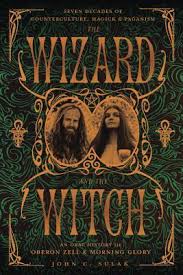 The Wizard and the Witch Seven Decades of Counterculture, Magick & Paganism (an Oral History of Oberon Zell and Morning Glory) by John C. Sulak with Oberon Zell-Ravenheart and Morning Glory Zell-Ravenheart. Llewellyn Publications 2014. Retail Price: $24.95 Out now as an e-book and in physical bookstores Saturday February 8.
It’s weird to write a review of what is essentially the memoir of Oberon and Morning Glory Zell. In my early Pagan days Oberon Zell was a near-legendary figure in my mind. In those days he was the Publisher of The Green Egg (in its second incarnation) and came across as the coolest Pagan-dude on the planet. He was out in the wilds of California living in an intentional polyamorous community and engaging in what felt to me like back-to-the-Earth-hippy-Pagandom. He was everything I dreamed of being, minus the beard.
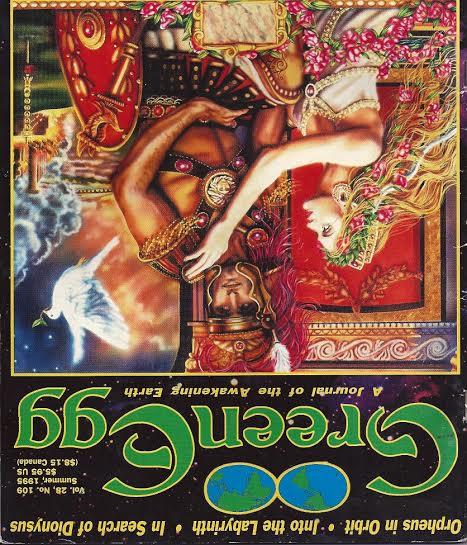 His magazine was also my first window into a Pagan Community greater than my bookshelf. The Green Egg was a revelation to me. Paganism was more than a sea of Witchcraft, it was a giant ocean of different ideas and faiths. Oberon’s church, The Church of All Worlds, was a presence in my early Pagan days though I was never an official member. I had friends who were members and their influence made many of the rites and beliefs of CAW a part of my own personal practice. I ate Cheez-Its because people in the CAW did (and I even wrote a story about them, the Cheez-Its, not the Church).
Since the start of this century Oberon and I have often been in the same place at the same time and we finally connected on a meaningful level this past September. We ended up speaking at the same two Pagan gatherings over consecutive weekends (one in California and one in Ohio), even sharing a cabin at the second one. It was both strange and gratifying to be able to give a truly influential figure in my own spirituality a giant hug. I hugged a Wizard! If you had told me I was going to do that twenty years I would have laughed at you.
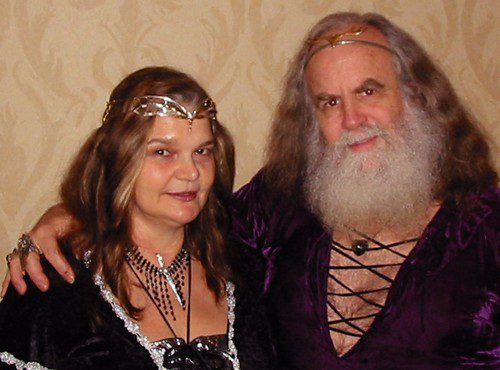 Over the years I’ve become less and less of a fanboy when it comes to the writers and thinkers who have influenced my Paganism, but there will always be a bit of it there. As I look around my living room it’s littered with statues from the Zell’s Mythic Images collection. I’m not sure it’s possible for me to objectively review the Zell’s life-story, but if this book were crap I like to think I’d be honest enough to say so. Luckily enough for me I absolutely loved this book and will probably be giving it thorough second and third readings in the coming months.
It’s easy to take for granted just how easy Paganism is in 2014. If somebody up and decides they want to do a Pagan ritual all they have to do is jump online. In the early sixties when Oberon was beginning his journey there were barely any books available on the subject and certainly no internet. The Pagans of the 1960’s (especially in the United States) were true pioneers, basically creating rites, rituals, and ideas from a tiny pool of information. We don’t really know how religious traditions like Gardnerian Wicca arose, but CAW’s origins are available from the Primate’s mouth (Primate is a title in the CAW). Reading how Oberon assembled the philosophies that became a part of his church is fascinating, and like cat-nip for readers like myself who are obsessed with the origins of Contemporary Paganism.
A lot of Modern Pagan history tends to focus on Great Britain and Wicca, and it’s good to read something that speaks to the more organic and pastiche nature of early American Paganism. Oberon offers a different take on history than what many of us are used to:
“Today many folks think that Witches founded the Pagan community, but it wasn’t that way at all-at least not in the United States. Here the Witches came into a Pagan community that had already existed for at least a decade . . . . The Pagan Community today has roots in what were at the time very separate communities.”
 I’ll admit to my own British Witchcraft-centered version of history, but Oberon is right in many ways. In addition to Zell’s own Church of All Worlds there was Feraferia and the Witchcraft of Victor and Cora Anderson back in those days nearly half a century ago. Sure, Wicca is the largest faith under the Pagan Umbrella, but it’s not the only one, and never has been, especially in the United States.
The Wizard and the Witch is an oral history featuring a diverse number of views and generally held together by John Sulak who acts as the book’s narrator. Because it’s an oral history there’s never any doubt as to who is doing the recollecting and while reading OZ’s parts I could literally hear his voice rattling around in my brain. Often times people don’t exactly write like they talk, that’s not the case here, and it makes everything feel intimate. As a reader I felt like I was right in the middle of every story.
In many ways The Wizard and the Witch is a love story, though perhaps the first public love-story featuring a whole bouquet of lovers. (The Zells have always been polyamorous, with Morning Glory even coming up with the word.*) The story of Morning Glory and Oberon’s first meeting might be one of the most beautiful and magical things I’ve ever read:
OZ on his first meeting with Morning Glory back in 1973:
“There was a room full of people, including Robert Anton Wilson. I presented my ‘TheaGenesis Paper’ paper. And at the end of of the presentation they all came rushing up to talk to me. And this girl was at the head of the line. She said ‘We have to talk.’ And I said ‘Right.’ I grabbed her ahnd and just walked out of the room, leaving everyone else standing there watching us go . . . . As we turned to look each other face to face, suddenly, for both of us, the whole rest of the world just disappeared . . . . . her name was Morning Glory.”
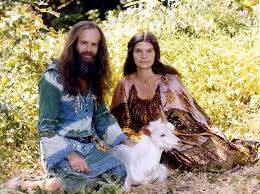 As sappy as it sounds my heart melted while reading that. Oberon and Morning Glory recount several warm stories involving their many lovers, but there’s a respect and glow that’s present only when they speak of each other. For those who say polyamorous and open-relationships are doomed to failure the Zell’s prove otherwise.
One of the things that I liked best about TWatW was that it presented MG and OZ as truly human. Mistakes are shared and reflected upon and those who have had falling outs with the Zells are permitted to share their own version of events. It’s a kind of raw honesty often absent from autobiographical projects. OZ and MG’s openness to sharing their failures made me like them even more.
Modern Paganism is of an age where it’s possible to feel both far removed and incredibly close to its history. By the time the book gets around to the mid 90’s I felt like I was reliving some things. When references were made to players not named due to legal reasons I knew exactly who was being written about. It’s a reminder of just how small the Pagan Community was twenty years ago, and in some ways, still is.
I’d be remiss if I didn’t add something about “the book” outside of is central narrative. This is a well put together and thoughtful package. There are 16 full color pages in the book’s middle and several appendices that help tie everything together. I’ve been hearing about “Oberon’s memoirs” for years now and it’s been well worth the wait, though I probably would have loved to read the 1100 page version. Even with that little quibble this is still a 400 page book, I certainly didn’t feel like I was getting just a part of the story.
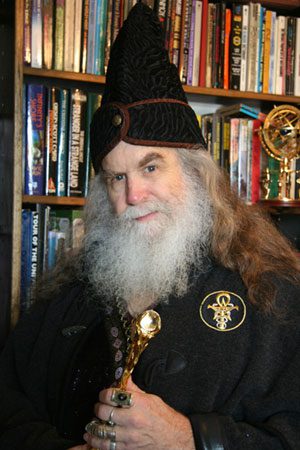 The Wizard and the Witch works as a Pagan history book because of the participants and it’s honest documentation of events, but it works on several other levels too. It’s must reading for the polyamory community and anyone interested in a more sex-positive world, but it’s also a chronicle of continual rebirth. In the book Oberon often speaks of The Green Egg and CAW as phoenixes rising again and again from the ashes, but in truth it’s OZ and MG who are the true phoenixes. Theirs is a story of continual, organic reinvention, and it’s the type of story that could only be lived by two true pioneers of Modern Paganism.
(Just for the record, I was provided with a free copy for review by Llewellyn Publications, but I contacted them about it.)
*There are some who attribute the creation of the word polyamory to other people, but since I’m reviewing Morning Glory’s memoirs I’m going with her as the creatrix today.
Pictures:
1. The book cover, duh.
2. My first issue of The Green Egg, scanned just for you!
3. Oberon and Morning Glory
4. An early issue of the the Egg from the 1970’s.
5. A Witch, a Wizard, the 80’s, and a unicorn! (You have to read the book.)
6. Oberon pretty recently.
Previous Post

January 29, 2014
Catching Up With American Horror Story Coven
Next Post

February 5, 2014 Festival Season 2014
Browse Our Archives
Select a Category Editorializing Gateways to Paganism Guest Posts Holiday Histories Led Zeppelin News and Views Occult Pagan Pagan TV Club Paganism polytheism Ramble On Reviews Ritual Strange Days Uncategorized
Select a Month August 2026 March 2026 February 2026 November 2025 September 2025 August 2025 April 2025 August 2024 April 2024 February 2024 December 2023 October 2023 August 2023 June 2023 May 2023 January 2023 October 2022 August 2022 July 2022 June 2022 May 2022 April 2022 March 2022 February 2022 January 2022 December 2021 November 2021 October 2021 September 2021 August 2021 July 2021 June 2021 April 2021 March 2021 February 2021 January 2021 December 2020 November 2020 October 2020 August 2020 July 2020 June 2020 May 2020 April 2020 March 2020 February 2020 January 2020 December 2019 November 2019 October 2019 September 2019 August 2019 July 2019 June 2019 May 2019 April 2019 March 2019 February 2019 January 2019 December 2018 November 2018 October 2018 September 2018 August 2018 July 2018 June 2018 May 2018 April 2018 March 2018 February 2018 January 2018 December 2017 November 2017 October 2017 September 2017 August 2017 July 2017 June 2017 May 2017 April 2017 March 2017 February 2017 January 2017 December 2016 November 2016 October 2016 September 2016 August 2016 July 2016 June 2016 May 2016 April 2016 March 2016 February 2016 January 2016 December 2015 November 2015 October 2015 September 2015 August 2015 July 2015 June 2015 May 2015 April 2015 March 2015 February 2015 January 2015 December 2014 November 2014 October 2014 September 2014 August 2014 July 2014 June 2014 May 2014 April 2014 March 2014 February 2014 January 2014 December 2013 November 2013 October 2013 September 2013 August 2013 July 2013 June 2013 May 2013 April 2013 March 2013 February 2013 January 2013 December 2012 November 2012 October 2012 September 2012 August 2012 July 2012 June 2012 April 2012 October 2011 September 2011 August 2011
Follow Us!
TAKE THE
Religious Wisdom Quiz
What does "Levi" mean in Hebrew?
Select your answer to see how you score.
Joined Chosen Set apart God is my strength
Related posts from Raise the Horns


The Return of the Pagan Scapegoats


Magickal & Pagan Gathers: Some Thoughts
TRENDING AT PATHEOS Pagan

When Halloween Unmasks Married Hearts
Written by Dr. David K. Ewen from Eternal Truth Bible College Behind...

Aristotle. He’s been called the father of logic, the father of the...

Methodist Central Hall and Westminster Abbey
Situated on the same square is Methodist Central Hall and Westminster Abbey. ...

57th Dove Awards Honor Dolly Parton, Crown New...
On gospel music’s biggest night, the 57th annual GMA Dove Awards honored...

The First Eucharistic Controversy: Christ’s Real Presence
For Catholics, the Eucharist is the source and summit of the Christian...

What a Stop Sign Can Teach Us About...
How to Make a Decision When You Can't Hear God Main point:...
view all Pagan blogs
Ad-Free & Subscriber Log-In Subscription Support
- About Us
- 2026 Calendar
- Videos
- Podcasts
- Library of World Religions
- Faith In Media Tracker
- Advertise With Us
- Write for Us
- Privacy Policy
- Terms of Service
- Do Not Sell My Data
- Contact Us
- Radiant Digital
- Manage Newsletter Subscriptions
- Unsubscribe From Notifications
- Sitemap
Copyright 2008-2026, Patheos. All rights reserved.
Subscription Support Ad-Free & Subscriber Log-In
Follow Patheos