
BuddhistCatholicContemplativeEvangelicalGeneral ChristianHinduJewishLatter-day SaintMuslimNew VisionsProgressive Christian
Beliefs
- Buddhist
- Catholic
- Contemplative
- Evangelical
- General Christian
- Hindu
- Jewish
- Latter-day Saint
- More Voices
- Muslim
- New Visions
- Pagan
- Progressive Christian
Topics
- Religion News
- Food and Religion
- Sports and Religion
- Religious Art
- Religious Music and Entertainment
- Religious Events
- History and Religion
- Style and Religion
- Politics and Religion
- Women in Religion
- Recreation Outdoors and Religion
- Business Finance and Religion
- Careers Workplace and Religion
- Education and Religion
- Family Parenting and Religion
- Health Fitness and Religion
- Home and Religion
- Relationships and Religion
- Technology and Religion
- Travel and Religion
Columnists
- Buddhist Columnists
- Business Finance and Religion Columnists
- Careers Workplace and Religion Columnists
- Catholic Columnists
- Contemplative Columnists
- Education and Religion Columnists
- Evangelists Columnists
- Family Parenting and Religion Columnists
- General Christian Columnists
- Health Fitness and Religion Columnists
- Hindu Columnists
- History and Religion Columnists
- Home and Religion Columnists
- Jewish Columnists
- More Voices Columnists
- Latter Day Columnists
- Muslim Columnists
- New Visions Columnists
- Nonreligious Columnists
- Pagan Columnists
- Politics and Religion Columnists
- Progressive Columnists
- Recreation Outdoors and Religion Columnists
- Relationships and Religion Columnists
- Religion News Columnists
- Religious Art Columnists
- Religious Events Columnists
- Religious Music and Entertainment Columnists
- Sports and Religion Columnists
- Style and Religion Columnists
- Technology and Religion Columnists
- Travel and Religion Columnists
- Women in Religion Columnists
Resource Library
- 2026 Calendar
- Library of World Religions
- The 100 Most Holy Places on Earth
- Patheos Answers
- Podcasts
- Videos
- Faith Leaders Database
- Anglican Episcopalian
- Bahai
- Baptist
- Buddhism
- Christianity
- Confucianism
- Eastern Orthodoxy
- Hinduism
- Holiness and Pentecostal
- ISKCON
- Islam
- Judaism
- Lutheran
- Methodist
- The Church of Jesus Christ of Latter-day Saints
- New Age
- Paganism
- Presbytarian and Reformed
- Protestantism
- Religion Behind the Scenes
- Roman Catholic
- Scientology
- Shia Islam
- Sikhism
- Sufism
- Sunni Islam
- Taoism
- Zen
- See all religions
Research Tools
 Ad-Free & Subscriber Log-In Subscription Support
Ad-Free & Subscriber Log-In Subscription Support
Follow Patheos 

- Trending:
- Forgiveness
- |
- Marriage
- |
- Consciousness
- |
- Death Penalty
- |
- Election
- |
- Halloween

- HOME
- Me and the Blog
- Defining Pagan
- Rituals & Holidays
- All Posts
- Blogroll
- Publications
- FREE NEWSLETTER
- Home
- Pagan
- The Questions of Polytheism
The Questions of Polytheism
Last updated on: January 28, 2014 at 2:37 pm by Jason Mankey
The Questions of Polytheism 2014-01-28T14:37:31-07:00 Jason Mankey
Patheos Explore the world's faith through different perspectives on religion and spirituality! Patheos has the views of the prevalent religions and spiritualities of the world.
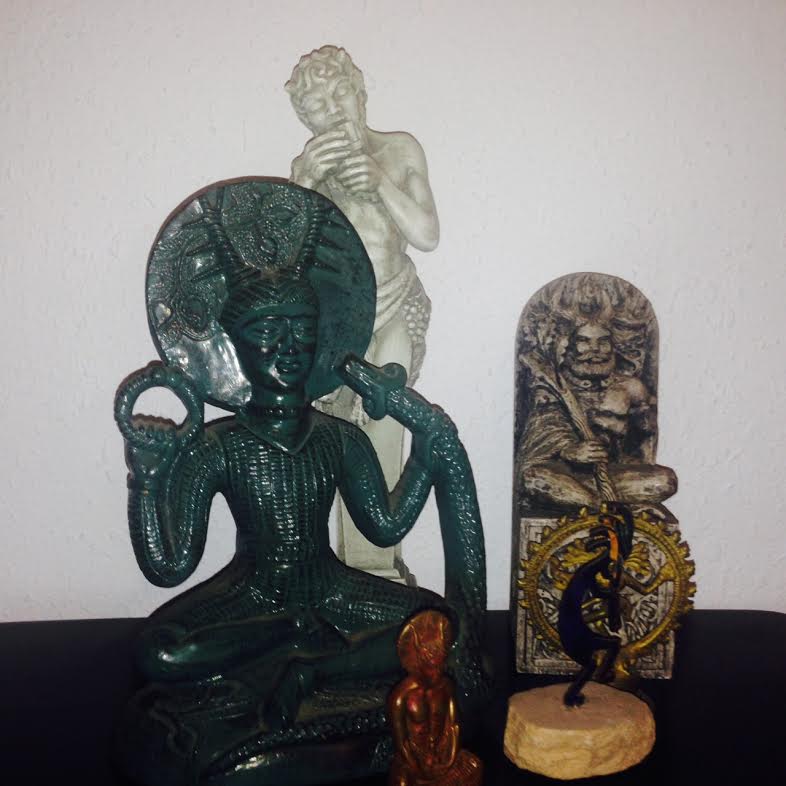 For the last twenty years I’ve called myself a polytheist. I’ve always felt comfortable with the title because I worship and honor many gods in my own personal practice. Often I’m associated with the Horned God archetype, and while I sometimes refer affectionately to Old Horn Head, I’ve always felt closer to specific horned and antlered gods. Pan has long been my favorite, he’s also been the loudest and most insistent about being a part of my life, but there are others. I’d feel incomplete without Cernunnos in the background (he’s very quiet, but his presence is huge), and Dionysus has been around for many of my most spiritual moments. There are other horned and horny gods in my life too: Shiva, Kokopelli, the Green Man, and Herne (when he’s not busy chastising me). I also honor several goddesses with regularity: Aphrodite, Ariadne, Hestia, Aradia, and Brighid; and a few more on specific occasions. (There are a lot of links in this paragraph but they are all worth reading, so go ahead and do it, we’ll wait for you.)
While it’s easy and convenient to group deities according to superficial characteristics, they are generally more complicated than that. One of the mantras in my life is “Pan is not Cernunnos.” They both have “things” on top of their heads, but after that the similarities cease. Pan is a god of wild places, panic, and often the wine-skin. Cernunnos is a god of hunting and wealth. One of them sports a 24-hour erection, the other one sits quietly in the woods. Pan has a well developed mythology and a Homeric Hymn in his honor, there are no Cernunnos myths or poems. They are about as different from one another as two gods can be and yet they are still lumped together as a part “The Horned God.”
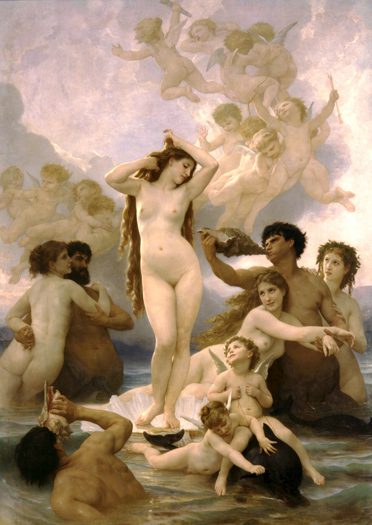 I’ve always called myself a polytheist, but over the last year the label has grown more troublesome. It’s no longer enough to call yourself a polytheist, a lot of people want that polytheism defined, and as a mere mortal that’s hard for me to do. I worship the gods as separate and distinct beings, but I also don’t seek to limit them. In ritual my wife and I are careful about who we invite to our circles, Hera doesn’t want to go bowling with Thor. We don’t invite deities willy-nilly because they are all different and bring disparate energies to our proceedings. I believe one can have conversations and interactions with deity and when it’s Aphrodite doing the talking it’s very obviously Aphrodite, and not some sort of construct created by putting Diana’s bow over Venus’s shoulder, but that doesn’t mean I discount more “archetypal” interpretations of deity like Maiden, Mother, and Crone.
I see the gods as unique, but I can also see them as a part of a larger whole. History tells us that no deity is formed in a vacuum. Look through the historical and archeological record and you’ll see gods evolving out of gods; foundations continually built upon even older foundations. I’ve been putting together a workshop about male gods in Modern Witchcraft and part of my research has included going back to the Mother and Father of many Western pantheons, the religion of the Indo-European peoples. If you aren’t familiar with the term “Indo-European” it’s mostly a reference to language, though there’s a common culture deep within the heart of it. All of the Romance Languages (French, Italian, Latin, Spanish) are Indo-European, as are the Germanic Languages (with English being one of those), there are also Indo-European languages in India, China, and the Mediterranean. The original Indo-Europeans have had a tremendous impact on the world, and they also had gods, gods that became (or are related to) many of the ones we know today.
Deities that evolved from the Indo-European all share common word roots. In Modern Greek the word pan translates as “everything or all” but the god Pan derived his name from the Indo-European root “pa” which is sometimes linked to the word shepherd but is more accurately defined as “to watch over” or “guard” (which is what shepherds do of course). Through the root of pa Pan can be linked the the Vedic Pusan, whose name also contains the pa root. The similarities don’t end there either, both are pastoral gods and have an affinity for goats. Pan has the legs of a goat, Pusan has goats who pull his chariot. Both gods have bushy beards and the sacrifice of goats appears in the cult of both deities. (1) It’s logical to assume from all of this that both of them share a common ancestor. Does that mean both gods are a part of something bigger than themselves? Are they connected to their shared root while remaining separate beings?
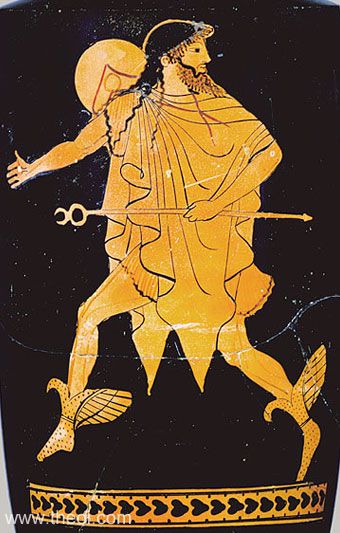 This is where polytheism gets muddy for me, and where I end up having trouble with people who want me to define what sort of polytheism I practice. The historical record is clear, gods change over time, and distinct forms of deity have origins in other gods, both known, unknown, and lost. In Greek Mythology Pan is generally seen as the son of Hermes, but both gods most likely have a common ancestor. Like Pusan, Hermes is a guardian of flocks and herds; also like Pusan he’s good at finding hidden things. Both are gods of gain and abundance and both conduct souls to the underworld. Pan developed in one of the more isolated parts of Greece (Arcadia) while the reach of Hermes extended throughout more easily traversed areas of the country. I’ve had experiences with both Hermes and Pan, but history tells me they had a common ancestor and became different through geography. Does this make me a bad polytheist because I can see the point of origin? (2)
In a lot of my rituals I use archetypal language, and those rituals work not just for me but for everyone else in my coven. Is my polytheism broken because I use such language? Obviously something is showing up. The archetype of The Horned God is a combination of many distinct deities, but it’s also something that’s been influenced by the writings of people like James Frazer, Margaret Murray, and Robert Graves (all great writers and thinkers, but great writers whose conclusions are no longer generally accepted within academia*). Our conception of Old Horn Head exists due to influences both ancient and modern, but when I call to Him he answers.
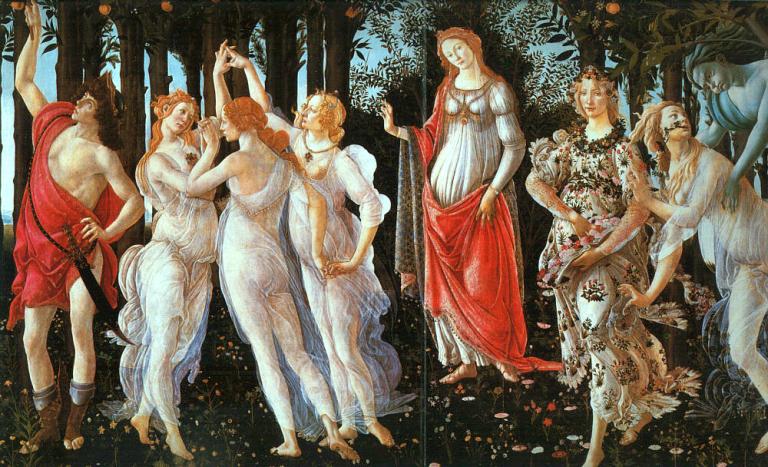 When I’m pressed for a definition of “my polytheism” I sometimes reply with a half-hearted answer of Neo-Platonism. I’m guessing that the various deities worshipped throughout the world are linked in some way with some sort of energy at the center of it all, but I have no way of knowing that for sure. Deity is greater than me, as a result I have to assume it can morph, change, and exist in ways different from we mere mortals. Whose to say that Pan, Cernunnos and a few other gods didn’t get together one day to help shape the Modern Horned God? If something works and is there when we interact with it who cares what its origins are? (For those of you who are wailing “but that’s personal gnosis!” maybe, but I’m not the only one who has called to “The Horned God” over the years, millions of people have, and they wouldn’t be doing it if they weren’t getting anything out of the experience.)
I understand wanting to define the various interpretations of polytheism, but don’t ask me to do it for myself. Aren’t our relationships with the gods what’s most important? If I happen to think Pan is a part of something greater than himself (and the historical record suggests he is) why is that some sort of polytheistic tragedy? That’s between the two of us, and like all divine mysteries, it defies easy explanation.
*It seems dishonest to group them together, but all three were huge influences on the Modern Pagan movement because of their varying interpretations of mythology, folklore, and history. Even without the academic credentials Graves was still (and sometimes still is) seen as an “authority” on the subject of The Goddess.
1. See Indo-European Poetry and Myth by M.L. West, published by Oxford Press in 2007. The bits on Pan, Hermes, and Pusan all occur over pages 281-283.
2. See note one.
Previous Post

January 22, 2014
5 Ways to Celebrate Imbolc
Next Post

January 29, 2014 Catching Up With American Horror Story Coven
Browse Our Archives
Select a Category Editorializing Gateways to Paganism Guest Posts Holiday Histories Led Zeppelin News and Views Occult Pagan Pagan TV Club Paganism polytheism Ramble On Reviews Ritual Strange Days Uncategorized
Select a Month August 2026 March 2026 February 2026 November 2025 September 2025 August 2025 April 2025 August 2024 April 2024 February 2024 December 2023 October 2023 August 2023 June 2023 May 2023 January 2023 October 2022 August 2022 July 2022 June 2022 May 2022 April 2022 March 2022 February 2022 January 2022 December 2021 November 2021 October 2021 September 2021 August 2021 July 2021 June 2021 April 2021 March 2021 February 2021 January 2021 December 2020 November 2020 October 2020 August 2020 July 2020 June 2020 May 2020 April 2020 March 2020 February 2020 January 2020 December 2019 November 2019 October 2019 September 2019 August 2019 July 2019 June 2019 May 2019 April 2019 March 2019 February 2019 January 2019 December 2018 November 2018 October 2018 September 2018 August 2018 July 2018 June 2018 May 2018 April 2018 March 2018 February 2018 January 2018 December 2017 November 2017 October 2017 September 2017 August 2017 July 2017 June 2017 May 2017 April 2017 March 2017 February 2017 January 2017 December 2016 November 2016 October 2016 September 2016 August 2016 July 2016 June 2016 May 2016 April 2016 March 2016 February 2016 January 2016 December 2015 November 2015 October 2015 September 2015 August 2015 July 2015 June 2015 May 2015 April 2015 March 2015 February 2015 January 2015 December 2014 November 2014 October 2014 September 2014 August 2014 July 2014 June 2014 May 2014 April 2014 March 2014 February 2014 January 2014 December 2013 November 2013 October 2013 September 2013 August 2013 July 2013 June 2013 May 2013 April 2013 March 2013 February 2013 January 2013 December 2012 November 2012 October 2012 September 2012 August 2012 July 2012 June 2012 April 2012 October 2011 September 2011 August 2011
Follow Us!
TAKE THE
Religious Wisdom Quiz
How many men did Gideon initially gather?
Select your answer to see how you score.
20,000 15,000 10,000 32,000
Related posts from Raise the Horns
The Great God Pan Among the Stars

What Makes a Good Ritualist? No Idea

TRENDING AT PATHEOS Pagan

The Sermon on the Mount, Part I: Matthew...
The Sermon on the Mount, Part I (Matthew 4:12-5:12) St. Matthew moves...

What's up from Crossway: Reviewing some of their latest A few weeks...

Janie Learns the Way of the Cross: A...
Teaching children about Jesus' Passion can be challenging. Many parents and educators...

Looking For Good Catholic Writing - October 2026
He alone extends the heavens, and he walks upon the waves of...

In "Irreplaceable," our book on vocation and technology, Trevor Sutton and I...

I was strolling through the top floor of the brand new Parthenon...
view all Pagan blogs
Ad-Free & Subscriber Log-In Subscription Support
- About Us
- 2026 Calendar
- Videos
- Podcasts
- Library of World Religions
- Faith In Media Tracker
- Advertise With Us
- Write for Us
- Privacy Policy
- Terms of Service
- Do Not Sell My Data
- Contact Us
- Radiant Digital
- Manage Newsletter Subscriptions
- Unsubscribe From Notifications
- Sitemap
Copyright 2008-2026, Patheos. All rights reserved.
Subscription Support Ad-Free & Subscriber Log-In
Follow Patheos