
BuddhistCatholicContemplativeEvangelicalGeneral ChristianHinduJewishLatter-day SaintMuslimNew VisionsProgressive Christian
Beliefs
- Buddhist
- Catholic
- Contemplative
- Evangelical
- General Christian
- Hindu
- Jewish
- Latter-day Saint
- More Voices
- Muslim
- New Visions
- Pagan
- Progressive Christian
Topics
- Religion News
- Food and Religion
- Sports and Religion
- Religious Art
- Religious Music and Entertainment
- Religious Events
- History and Religion
- Style and Religion
- Politics and Religion
- Women in Religion
- Recreation Outdoors and Religion
- Business Finance and Religion
- Careers Workplace and Religion
- Education and Religion
- Family Parenting and Religion
- Health Fitness and Religion
- Home and Religion
- Relationships and Religion
- Technology and Religion
- Travel and Religion
Columnists
- Buddhist Columnists
- Business Finance and Religion Columnists
- Careers Workplace and Religion Columnists
- Catholic Columnists
- Contemplative Columnists
- Education and Religion Columnists
- Evangelists Columnists
- Family Parenting and Religion Columnists
- General Christian Columnists
- Health Fitness and Religion Columnists
- Hindu Columnists
- History and Religion Columnists
- Home and Religion Columnists
- Jewish Columnists
- More Voices Columnists
- Latter Day Columnists
- Muslim Columnists
- New Visions Columnists
- Nonreligious Columnists
- Pagan Columnists
- Politics and Religion Columnists
- Progressive Columnists
- Recreation Outdoors and Religion Columnists
- Relationships and Religion Columnists
- Religion News Columnists
- Religious Art Columnists
- Religious Events Columnists
- Religious Music and Entertainment Columnists
- Sports and Religion Columnists
- Style and Religion Columnists
- Technology and Religion Columnists
- Travel and Religion Columnists
- Women in Religion Columnists
Resource Library
- 2026 Calendar
- Library of World Religions
- The 100 Most Holy Places on Earth
- Patheos Answers
- Podcasts
- Videos
- Faith Leaders Database
- Anglican Episcopalian
- Bahai
- Baptist
- Buddhism
- Christianity
- Confucianism
- Eastern Orthodoxy
- Hinduism
- Holiness and Pentecostal
- ISKCON
- Islam
- Judaism
- Lutheran
- Methodist
- The Church of Jesus Christ of Latter-day Saints
- New Age
- Paganism
- Presbytarian and Reformed
- Protestantism
- Religion Behind the Scenes
- Roman Catholic
- Scientology
- Shia Islam
- Sikhism
- Sufism
- Sunni Islam
- Taoism
- Zen
- See all religions
Research Tools
 Ad-Free & Subscriber Log-In Subscription Support
Ad-Free & Subscriber Log-In Subscription Support
Follow Patheos 

- Trending:
- Forgiveness
- |
- Marriage
- |
- Consciousness
- |
- Death Penalty
- |
- Election
- |
- Halloween

- HOME
- Me and the Blog
- Defining Pagan
- Rituals & Holidays
- All Posts
- Blogroll
- Publications
- FREE NEWSLETTER
- Home
- Pagan
- Wicca 202: A Next Level Book List
Wicca 202: A Next Level Book List
Last updated on: September 17, 2013 at 7:30 pm by Jason Mankey
Wicca 202: A Next Level Book List 2013-09-17T19:30:11-06:00 Jason Mankey
Patheos Explore the world's faith through different perspectives on religion and spirituality! Patheos has the views of the prevalent religions and spiritualities of the world.
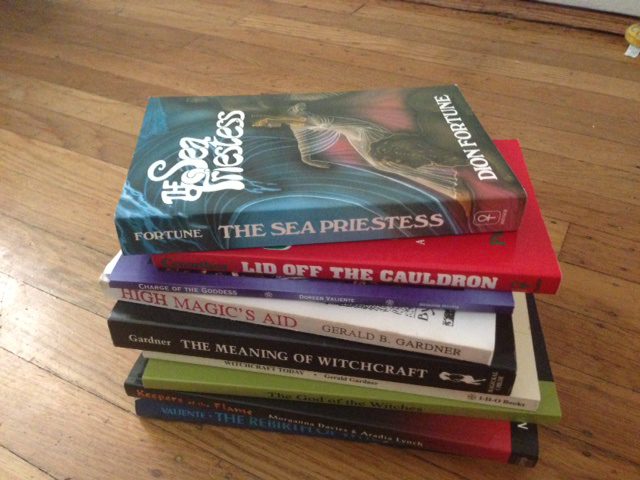 This past weekend I came across a person asking about “next level Wicca books” or “things outside of Wicca 101.” When I sat down to answer the question I ended up numbly staring at my keyboard for several minutes unable to come up with anything. Most books about Wicca are “101” books because Wicca is a religion that’s best experienced. You can read the ritual of Drawing Down the Moon but eventually you have to do it (or be around someone who does it) to understand the process. Even books that claim to be “second level” usually just rehash the same material over and over.
This is not the space to get into the debate on whether or not initiation is necessary for one to call themselves “Wiccan” (we’ve done that on Raise the Horns, it’s right here), but I will say that a well trained teacher makes a huge difference. I was a boot-strap Wiccan for a good decade before encountering an established coven, and the things I learned in that group had a profound influence on my Wiccan practice. I know that not everyone can find a teacher, but if it’s possible to I highly recommend it.
Like almost all words in the Pagan-sphere “Wiccan” is extremely problematic and has been used in a variety of ways over the last few decades. For my purposes here “Wicca” is defined as a magickal religious tradition whose origins can be traced back to Gerald Gardner. Pretty much anyone who calls the quarters, invokes a Goddess and God, celebrates Cakes & Wine/Ale, celebrates the eight traditional sabbats, and self identifies as a Witch or a Wiccan owes something to Gerald Gardner. Due to the definition being employed here the books mentioned in this article have a very “British Traditional Slant,” besides the point of this is to recommend books that people haven’t read before. (I’ve done the “Pagan 101” list before, it’s right here.)
With my caveats in place, let’s get to the list.
 If you really want to tackle Wicca, sometimes it’s best to start at the very beginning, which means Gerald Brosseau Gardner. By recommending Gardner, I’m not claiming that his books are coherent or well written, just that the content of those books has been an influence for the last sixty years or so. For our purposes, there are three books by the “Grand Old Man of Witchcraft” worth reading. The first is a novel, High Magic’s Aid, originally published in 1949. High Magic’s Aid is not a hidden literary gem, it’s a mostly slow moving adventure novel, but it does contain some magic and ritual (owing far more to Ceremonial Magic than the Witchcraft Gardner would reveal just a few years later) that were a huge influence on the Modern Craft.
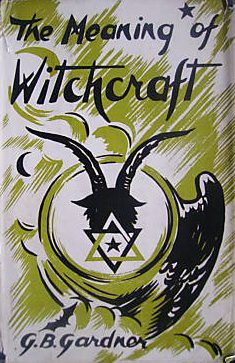
When it comes to Gardner, High Magic’s Aid is probably the high point when it comes to reading, but no Witch’s library is complete without The Meaning of Witchcraft (1959) and Witchcraft Today (1954). Both books are full of outdated history and make some large leaps in logic, but they offer strong insight into how the people we would come to call Modern Pagans thought in the 1950’s/early 60’s. The Witchcraft Gardner writes about can be traced back to the Stone Age and has links to nearly every magical tradition ever celebrated. It’s Wicca as a system somehow connected to the Knight’s Templar and King Arthur’s Holy Grail; a complete hodgepodge of magical and occult tradition all in one place.
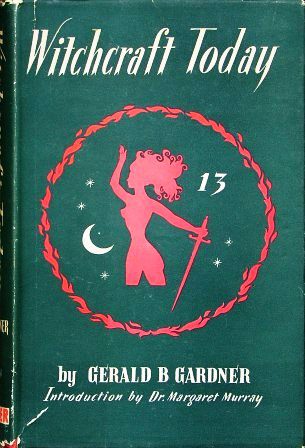 Much of what Gardner writes about has little bearing on Modern Wicca, but there are moments when his prose captures an idea or image. The Goddess and God he writes about are instantly recognizable, and he gives them a romantic history that links them to ancient Babylon and the witches of the Middle Ages. As much as I dislike much of what is in Gardner’s books, I still find myself drawn to them on occasion. When I’m trying to capture the essence of an idea (and I’m not at all concerned about historical accuracy) I consult Gardner.
(It was pointed out to me in the comments below that I sound extremely harsh in regards to Gardner’s works. I’m actually a big Gardner fan, but as a writer he leaves a lot to be desired. There are great moments in Gardner’s published writings, especially when’s he’s writing about things that are familiar to practitioners of Modern Wicca. The problems arise when he’s writing about dwarves in ancient Europe or fragments of history that modern historians have discounted. It’s important to remember that he was writing in the early 1950’s and was attempting to tackle a subject that had never been written about before. It shouldn’t be a surprise that his books are laborious to read, but that doesn’t diminish my respect for him as a person or the importance of some of the ideas in his non-fiction books and novels.)
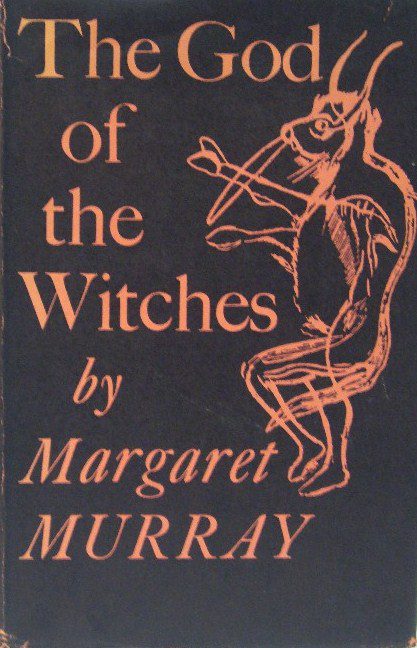 The forward to Gardner’s Witchcraft Today was written by Dr. Margaret Murray and her books are very similar to Gardner’s in that the ideas within them are far better than the history they attempt to tell. As history, Murray’s The God of the Witches is pretty awful (Pan is not Robin Goodfellow), but as the foundation for an entire archetype it’s a tour de force. I don’t think it’s an overstatement to write that Murray basically creates The Horned God archetype in TGotW. She links a varied array of gods together and then adds Robin Hood for good measure. She calls Cernunnos “one of the greatest gods” and follows that up with the idea that he might have been the “supreme deity” of Gaul, cementing his importance to Modern Pagans. (For the record, it’s highly unlikely Cernunnos was “one of the greatest gods” of Gaul, and I say that as a fan and a follower.) Even while I disagree with much of her history, it’s impossible not to get swept up in the sheer joy that is her take on the God of the Witches.
Dion Fortune has been influencing Modern Witchcraft since the 1930’s with both her fiction and non-fiction books. Her The Mystical Qabalah (1935) is considered a classic on the subject, but it’s her fiction books which have probably had the biggest impact. The Sea Priestess (1938) is more than just an occult novel, it’s an early blueprint for Witch ritual, full of gorgeous rites and invocations. Some of her other fiction books are worth a read too, especially The Goat-Foot God (1936).
 I’ve always believed that if you want to know about something you should go straight to the source, after Gardner (and often times far more clear and intelligible) the best sources are some of his early High Priestesses. Patricia Crowther’s memoirs are a fascinating mix of history, reflection, insight, and ritual. Her first memoir, Witch Blood (1974), has been out of print for several decades now and is currently selling for over 200 dollars online, luckily her later memoir High Priestess (published as One Witch’s World in Britain) (1998) is still in print and easily available. 2009’s Covensense is also worth tracking down, as is 1985’s Lid Off the Cauldron. All of Crowther’s books contain information generally not available elsewhere (though finding it is sometimes like panning for gold).
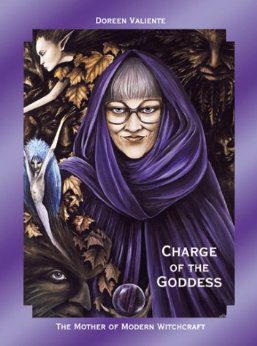 Gardner’s most famous High Priestess is undoubtedly Doreen Valiente, and I’d be remiss if I left her out of this conversation. As a first person history of early Paganism nothing tops The Rebirth of Witchcraft (1989). From Gardner to Cochrane and everything in between Valiente was everywhere the word “Witch” was. 2000’s The Charge of the Goddess: The Mother of Modern Witchcraft (currently out of print . . . . gods I have been blessed with a good library) is a collection of Valiente’s poetry along with her own hand-written notes and several seldom seen pictures. The poetry is what makes the book, and her words speak to the greater secrets and truths within The Craft of the Wise. The poems are also pretty awesome and I often find myself sneaking them into my own rituals.
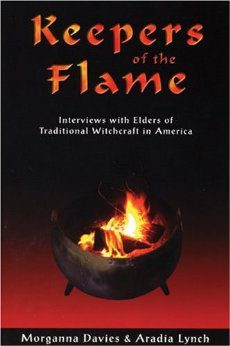 Another out of print book that I’m a big fan of is Keepers of the Flame (2006) by Morganna Davies and Aradia Lynch. Keepers is a collection of interviews with various American Craft elders and contains a lot of information and ideas generally absent from most books on Modern Wicca. In a similar vein is Wiccan Wisdomkeepers (2002) by Sally Griffyn which is another collection of interviews with various Craft elders (similar too in that it’s also out of print). Wisdomkeepers is worth tracking down for the pictures alone, but the interviews are interesting too. The diversity of traditions is better in Flame, but Wisdomkeepers features more big name rock star like Pagans if that’s your thing.
That’s fourteen or so books right there which should keep you pretty busy from now until Samhain. If you missed my Reading Modern Pagan History post that list also contains several books that should be in every good Witch’s 202 library. As always, happy reading!
Previous Post

September 12, 2013
The Myth of Atlantis
Next Post
September 18, 2013 Witches and Fall Television 2013
Browse Our Archives
Select a Category Editorializing Gateways to Paganism Guest Posts Holiday Histories Led Zeppelin News and Views Occult Pagan Pagan TV Club Paganism polytheism Ramble On Reviews Ritual Strange Days Uncategorized
Select a Month August 2026 March 2026 February 2026 November 2025 September 2025 August 2025 April 2025 August 2024 April 2024 February 2024 December 2023 October 2023 August 2023 June 2023 May 2023 January 2023 October 2022 August 2022 July 2022 June 2022 May 2022 April 2022 March 2022 February 2022 January 2022 December 2021 November 2021 October 2021 September 2021 August 2021 July 2021 June 2021 April 2021 March 2021 February 2021 January 2021 December 2020 November 2020 October 2020 August 2020 July 2020 June 2020 May 2020 April 2020 March 2020 February 2020 January 2020 December 2019 November 2019 October 2019 September 2019 August 2019 July 2019 June 2019 May 2019 April 2019 March 2019 February 2019 January 2019 December 2018 November 2018 October 2018 September 2018 August 2018 July 2018 June 2018 May 2018 April 2018 March 2018 February 2018 January 2018 December 2017 November 2017 October 2017 September 2017 August 2017 July 2017 June 2017 May 2017 April 2017 March 2017 February 2017 January 2017 December 2016 November 2016 October 2016 September 2016 August 2016 July 2016 June 2016 May 2016 April 2016 March 2016 February 2016 January 2016 December 2015 November 2015 October 2015 September 2015 August 2015 July 2015 June 2015 May 2015 April 2015 March 2015 February 2015 January 2015 December 2014 November 2014 October 2014 September 2014 August 2014 July 2014 June 2014 May 2014 April 2014 March 2014 February 2014 January 2014 December 2013 November 2013 October 2013 September 2013 August 2013 July 2013 June 2013 May 2013 April 2013 March 2013 February 2013 January 2013 December 2012 November 2012 October 2012 September 2012 August 2012 July 2012 June 2012 April 2012 October 2011 September 2011 August 2011
Follow Us!
TAKE THE
Religious Wisdom Quiz
What happened when Peter tried to walk on water?
Select your answer to see how you score.
He ran ahead of Jesus He led other disciples out He sank when he doubted The Spirit descended upon him
Related posts from Raise the Horns

What Makes a Good Ritualist? No Idea

Witchcraft Remembrances & Appreciation at Samhaintide

Raymond Buckland & The Big Blue Book

TRENDING AT PATHEOS Pagan

The Sermon on the Mount, Part I: Matthew...
The Sermon on the Mount, Part I (Matthew 4:12-5:12) St. Matthew moves...

What's up from Crossway: Reviewing some of their latest A few weeks...

Janie Learns the Way of the Cross: A...
Teaching children about Jesus' Passion can be challenging. Many parents and educators...

Looking For Good Catholic Writing - October 2026
He alone extends the heavens, and he walks upon the waves of...

In "Irreplaceable," our book on vocation and technology, Trevor Sutton and I...

I was strolling through the top floor of the brand new Parthenon...
view all Pagan blogs
Ad-Free & Subscriber Log-In Subscription Support
- About Us
- 2026 Calendar
- Videos
- Podcasts
- Library of World Religions
- Faith In Media Tracker
- Advertise With Us
- Write for Us
- Privacy Policy
- Terms of Service
- Do Not Sell My Data
- Contact Us
- Radiant Digital
- Manage Newsletter Subscriptions
- Unsubscribe From Notifications
- Sitemap
Copyright 2008-2026, Patheos. All rights reserved.
Subscription Support Ad-Free & Subscriber Log-In
Follow Patheos