
BuddhistCatholicContemplativeEvangelicalGeneral ChristianHinduJewishLatter-day SaintMuslimNew VisionsProgressive Christian
Beliefs
- Buddhist
- Catholic
- Contemplative
- Evangelical
- General Christian
- Hindu
- Jewish
- Latter-day Saint
- More Voices
- Muslim
- New Visions
- Pagan
- Progressive Christian
Topics
- Religion News
- Food and Religion
- Sports and Religion
- Religious Art
- Religious Music and Entertainment
- Religious Events
- History and Religion
- Style and Religion
- Politics and Religion
- Women in Religion
- Recreation Outdoors and Religion
- Business Finance and Religion
- Careers Workplace and Religion
- Education and Religion
- Family Parenting and Religion
- Health Fitness and Religion
- Home and Religion
- Relationships and Religion
- Technology and Religion
- Travel and Religion
Columnists
- Buddhist Columnists
- Business Finance and Religion Columnists
- Careers Workplace and Religion Columnists
- Catholic Columnists
- Contemplative Columnists
- Education and Religion Columnists
- Evangelists Columnists
- Family Parenting and Religion Columnists
- General Christian Columnists
- Health Fitness and Religion Columnists
- Hindu Columnists
- History and Religion Columnists
- Home and Religion Columnists
- Jewish Columnists
- More Voices Columnists
- Latter Day Columnists
- Muslim Columnists
- New Visions Columnists
- Nonreligious Columnists
- Pagan Columnists
- Politics and Religion Columnists
- Progressive Columnists
- Recreation Outdoors and Religion Columnists
- Relationships and Religion Columnists
- Religion News Columnists
- Religious Art Columnists
- Religious Events Columnists
- Religious Music and Entertainment Columnists
- Sports and Religion Columnists
- Style and Religion Columnists
- Technology and Religion Columnists
- Travel and Religion Columnists
- Women in Religion Columnists
Resource Library
- 2026 Calendar
- Library of World Religions
- The 100 Most Holy Places on Earth
- Patheos Answers
- Podcasts
- Videos
- Faith Leaders Database
- Anglican Episcopalian
- Bahai
- Baptist
- Buddhism
- Christianity
- Confucianism
- Eastern Orthodoxy
- Hinduism
- Holiness and Pentecostal
- ISKCON
- Islam
- Judaism
- Lutheran
- Methodist
- The Church of Jesus Christ of Latter-day Saints
- New Age
- Paganism
- Presbytarian and Reformed
- Protestantism
- Religion Behind the Scenes
- Roman Catholic
- Scientology
- Shia Islam
- Sikhism
- Sufism
- Sunni Islam
- Taoism
- Zen
- See all religions
Research Tools
 Ad-Free & Subscriber Log-In Subscription Support
Ad-Free & Subscriber Log-In Subscription Support
Follow Patheos 

- Trending:
- Forgiveness
- |
- Marriage
- |
- Consciousness
- |
- Death Penalty
- |
- Election
- |
- Halloween

- HOME
- Me and the Blog
- Defining Pagan
- Rituals & Holidays
- All Posts
- Blogroll
- Publications
- FREE NEWSLETTER
- Home
- Pagan
- Rustic Paganism
Rustic Paganism
Last updated on: August 21, 2013 at 6:15 am by Jason Mankey
Rustic Paganism 2013-08-21T06:15:19-06:00 Jason Mankey
Patheos Explore the world's faith through different perspectives on religion and spirituality! Patheos has the views of the prevalent religions and spiritualities of the world.
 A few weekends ago at an extensive photo shoot* with some friends I ended up in a discussion about the word “pagan.” It was a mostly congenial chat but it took a nasty turn when I mentioned something about Morris Dancing not being an ancient pagan tradition but a practice that felt pagan** none the less. The moment those words left my mouth a member of our party informed me that I was completely incorrect (and that it was one of the reasons she’s not a Raise the Horns reader).
For the record, my information was correct; Morris Dancing is simply not an ancient pagan practice. It began as a court dance in the Fifteenth Century before eventually moving into the countryside and becoming a dance of the common folk a few decades later. In the early 1900’s several individuals began to argue that Morris Dancing was a pagan practice, most notably Sir James Frazier (author of The Golden Bough) and musician/music collector Cecil Sharp. Up until the 1970’s Morris as pagan was simply accepted as gospel truth, even though the idea had been widely dismissed in academic circles. (1)
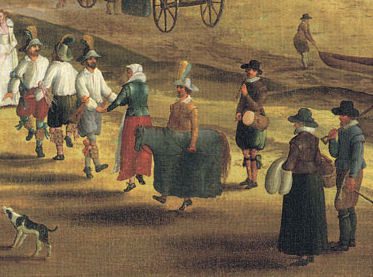 Sadly, if I had been allowed to complete my original thought, we probably would have come to an understanding that afternoon, but it was not to be. Morris Dancing might not be an ancient pagan dance, but it’s obviously a dance that resonates with many Modern Pagans, and certainly feels Pagan. I was up at an hour not generally suited for goatboys this past Beltane to watch a few local Morris teams and it was wonderful. The dances may not have stretched back to pagan antiquity, but they still gave voice to my own (Pagan) feelings. In the book Electric Eden author Rob Young describes Morris Dancing in near ecstatic terms:
“To those that actually practise (sic) it, morris dance has an elemental quality, an ancient ritual magic comparable to the whirling dervish dance of Sufism, the Native American ghost dance or the spiritual movements developed by G.I. Gurdjieff. Its gestures are designed to act as a lightning conductor for spiritual energies to unite the universe with the earth and replicate the seasonal cycles of growth, death, and rebirth. Morris dancers’ tatter jackets act as symbolic antennae; clogs dash against the ground, awakening slumbering earth gods . . . . .”
While Morris may not be pagan in the sense my friend wanted it to be, it is pagan in a different sense. It’s a great example of what I like to call rustic paganism.
Morris dancing feels pagan because it contains echoes of an earlier era and, in the minds of many, holds a fixed spot on the Wheel of the Year. We associate Morris with Beltane, and that association makes it feel like a seasonal tradition. It’s true that ancient pagans celebrated a holiday in early May. That doesn’t mean all the customs practiced on that day are pagan, but it’s an easy assumption to make. I’m of the opinion that human beings have a deep psychological need to connect with the world around them regardless of religion. The trappings of most major Christian holidays reflect seasonal changes, and while some of them do come from ancient pagan sources, the majority do not, but all kinds of people believe they do.
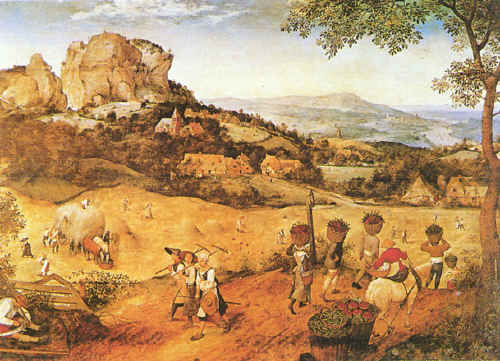 Agricultural celebrations (and their mementos) are not always pagan in a religious sense, but they are a pagan in the way they feel. When writing about Pagan Music I often add the caveat that something is Pagan when it feels Pagan. The celebration of bread that many of us observe at Lammas began as a Christian rite, but works perfectly within a Pagan worldview. It’s a connection to nature and that idea of the golden, eternal countryside where everyone lives in harmony with the Earth. It’s pagan in the sense that being one with nature is pagan, and it’s an association that even many of our critics make. Perhaps the classical definition of pagan as a person of the countryside still has some resonance.
When asked about their favorite season a lot of Modern Pagans tend to reply with Halloween/Samhain/Late Autumn, and it’s easy to understand why. It’s a major transition period on the Wheel of the Year and it’s filled with customs and traditions that many of us think of as pagan. We aren’t alone in that line of thinking either, a whole mess of people believe that things like carving pumpkins and playing dress-up are intimately connected with a “pagan Halloween.” The truth is something else entirely, as both of those customs arose in Christian Europe. That doesn’t stop ignorant Christians from protesting Halloween though, as they’ve become thoroughly convinced that the majority of Halloween tricks and treats come from our ancestors.
 I always get a kick out of people who try to replace Halloween (a mostly Catholic holiday in origin) with “Harvest Festivals,” which were truly the first real pagan holidays. At this point trying to argue that “Halloween isn’t entirely pagan” just results in blank looks, Halloween and its customs have become examples of rustic paganism because of the ghosts they stir up inside of us. I honestly feel like there are a whole lot of non-Pagans out there who are jealous of how we relate to the world, and therefore attempt to demonize practices that come naturally to people regardless of gods or God.
When my wife and I visit local craft fairs we are always struck by just how pagan they feel to us. There are vendors selling antique looking brooms, hand-dipped candles, and goblets that just scream “ritual chalice.” None of it is explicitly designed for Modern Pagans, but it all feels pagan because much of it seems to reflect a simpler era. Old fashioned doesn’t necessarily imply paganism, but items that fit into a seasonal motif often do. Cinnamon brooms conjure up images of fall and hand dipped organic candles just seem like the thing to use on Imbolc, and it’s easy to imagine both items in the cottage of a village witch. There’s nothing obviously pagan in either item, but they are the kinds of things we might associate with a pagan household of any era. For me it’s another example of rustic paganism.
When something moves you, when it touches your soul, its origins no longer truly matter. I think it’s important to know where we come from, but it’s sometimes even more important to know where we are now. The echoes of other eras draw us closer to nature, so we celebrate them no matter their origins. To get back to the original discussion I was having a few weeks ago, Morris Dancing isn’t an ancient pagan practice, but it’s a practice that feels pagan, and in a sense has become one, a rustic pagan one.
1. Historian Ronald Hutton offers a brief but thorough history of Morris Dancing in his book Stations of the Sun (published by Oxford University Press in 1996). That’s where my information on Morris not being pagan is coming from.
*I really wanted to have some photos of people engaging in ritual to use on Raise the Horns, hence the photo shoot. Some of the results showed up in this article.
**There are many different definitions of the word pagan. In my own writing when I refer to Modern Pagans I capitalize the word, for the other definitions of the word I use the lower-case. As you read, this may or may not make sense to you.
Previous Post
August 15, 2013
The Charge of the God
Next Post

August 27, 2013 Hand to Hand, Face to Face
Browse Our Archives
Select a Category Editorializing Gateways to Paganism Guest Posts Holiday Histories Led Zeppelin News and Views Occult Pagan Pagan TV Club Paganism polytheism Ramble On Reviews Ritual Strange Days Uncategorized
Select a Month August 2026 March 2026 February 2026 November 2025 September 2025 August 2025 April 2025 August 2024 April 2024 February 2024 December 2023 October 2023 August 2023 June 2023 May 2023 January 2023 October 2022 August 2022 July 2022 June 2022 May 2022 April 2022 March 2022 February 2022 January 2022 December 2021 November 2021 October 2021 September 2021 August 2021 July 2021 June 2021 April 2021 March 2021 February 2021 January 2021 December 2020 November 2020 October 2020 August 2020 July 2020 June 2020 May 2020 April 2020 March 2020 February 2020 January 2020 December 2019 November 2019 October 2019 September 2019 August 2019 July 2019 June 2019 May 2019 April 2019 March 2019 February 2019 January 2019 December 2018 November 2018 October 2018 September 2018 August 2018 July 2018 June 2018 May 2018 April 2018 March 2018 February 2018 January 2018 December 2017 November 2017 October 2017 September 2017 August 2017 July 2017 June 2017 May 2017 April 2017 March 2017 February 2017 January 2017 December 2016 November 2016 October 2016 September 2016 August 2016 July 2016 June 2016 May 2016 April 2016 March 2016 February 2016 January 2016 December 2015 November 2015 October 2015 September 2015 August 2015 July 2015 June 2015 May 2015 April 2015 March 2015 February 2015 January 2015 December 2014 November 2014 October 2014 September 2014 August 2014 July 2014 June 2014 May 2014 April 2014 March 2014 February 2014 January 2014 December 2013 November 2013 October 2013 September 2013 August 2013 July 2013 June 2013 May 2013 April 2013 March 2013 February 2013 January 2013 December 2012 November 2012 October 2012 September 2012 August 2012 July 2012 June 2012 April 2012 October 2011 September 2011 August 2011
Follow Us!
TAKE THE
Religious Wisdom Quiz
Who prophesied against Tyre, predicting it would become a bare rock?
Select your answer to see how you score.
Daniel Ezekiel Joel Amos
Related posts from Raise the Horns
The Embers (September-December)


The Return of the Pagan Scapegoats

TRENDING AT PATHEOS Pagan

Janie Learns the Way of the Cross: A...
Teaching children about Jesus' Passion can be challenging. Many parents and educators...

Looking For Good Catholic Writing - October 2026
He alone extends the heavens, and he walks upon the waves of...

In "Irreplaceable," our book on vocation and technology, Trevor Sutton and I...

I was strolling through the top floor of the brand new Parthenon...

What Does Gêvâh Mean For Kimberley Guifoyle &...
This week, a lot of the news is focused on Kimberly Guilfoyle....

INNER CIRCLE: Profound Mystery (Of Christ In All...
Ephesians 5:31-32 “For this reason, a man will leave his father and...
view all Pagan blogs
Ad-Free & Subscriber Log-In Subscription Support
- About Us
- 2026 Calendar
- Videos
- Podcasts
- Library of World Religions
- Faith In Media Tracker
- Advertise With Us
- Write for Us
- Privacy Policy
- Terms of Service
- Do Not Sell My Data
- Contact Us
- Radiant Digital
- Manage Newsletter Subscriptions
- Unsubscribe From Notifications
- Sitemap
Copyright 2008-2026, Patheos. All rights reserved.
Subscription Support Ad-Free & Subscriber Log-In
Follow Patheos