
BuddhistCatholicContemplativeEvangelicalGeneral ChristianHinduJewishLatter-day SaintMuslimNew VisionsProgressive Christian
Beliefs
- Buddhist
- Catholic
- Contemplative
- Evangelical
- General Christian
- Hindu
- Jewish
- Latter-day Saint
- More Voices
- Muslim
- New Visions
- Pagan
- Progressive Christian
Topics
- Religion News
- Food and Religion
- Sports and Religion
- Religious Art
- Religious Music and Entertainment
- Religious Events
- History and Religion
- Style and Religion
- Politics and Religion
- Women in Religion
- Recreation Outdoors and Religion
- Business Finance and Religion
- Careers Workplace and Religion
- Education and Religion
- Family Parenting and Religion
- Health Fitness and Religion
- Home and Religion
- Relationships and Religion
- Technology and Religion
- Travel and Religion
Columnists
- Buddhist Columnists
- Business Finance and Religion Columnists
- Careers Workplace and Religion Columnists
- Catholic Columnists
- Contemplative Columnists
- Education and Religion Columnists
- Evangelists Columnists
- Family Parenting and Religion Columnists
- General Christian Columnists
- Health Fitness and Religion Columnists
- Hindu Columnists
- History and Religion Columnists
- Home and Religion Columnists
- Jewish Columnists
- More Voices Columnists
- Latter Day Columnists
- Muslim Columnists
- New Visions Columnists
- Nonreligious Columnists
- Pagan Columnists
- Politics and Religion Columnists
- Progressive Columnists
- Recreation Outdoors and Religion Columnists
- Relationships and Religion Columnists
- Religion News Columnists
- Religious Art Columnists
- Religious Events Columnists
- Religious Music and Entertainment Columnists
- Sports and Religion Columnists
- Style and Religion Columnists
- Technology and Religion Columnists
- Travel and Religion Columnists
- Women in Religion Columnists
Resource Library
- 2026 Calendar
- Library of World Religions
- The 100 Most Holy Places on Earth
- Patheos Answers
- Podcasts
- Videos
- Faith Leaders Database
- Anglican Episcopalian
- Bahai
- Baptist
- Buddhism
- Christianity
- Confucianism
- Eastern Orthodoxy
- Hinduism
- Holiness and Pentecostal
- ISKCON
- Islam
- Judaism
- Lutheran
- Methodist
- The Church of Jesus Christ of Latter-day Saints
- New Age
- Paganism
- Presbytarian and Reformed
- Protestantism
- Religion Behind the Scenes
- Roman Catholic
- Scientology
- Shia Islam
- Sikhism
- Sufism
- Sunni Islam
- Taoism
- Zen
- See all religions
Research Tools
 Ad-Free & Subscriber Log-In Subscription Support
Ad-Free & Subscriber Log-In Subscription Support
Follow Patheos 

- Trending:
- Forgiveness
- |
- Marriage
- |
- Consciousness
- |
- Death Penalty
- |
- Election
- |
- Halloween

- HOME
- Me and the Blog
- Defining Pagan
- Rituals & Holidays
- All Posts
- Blogroll
- Publications
- FREE NEWSLETTER
- Home
- Pagan
- I Read I Write: Academic Edition
I Read I Write: Academic Edition
Last updated on: August 31, 2013 at 10:51 am by Jason Mankey
I Read I Write: Academic Edition 2013-08-31T10:51:53-06:00 Jason Mankey
Patheos Explore the world's faith through different perspectives on religion and spirituality! Patheos has the views of the prevalent religions and spiritualities of the world.
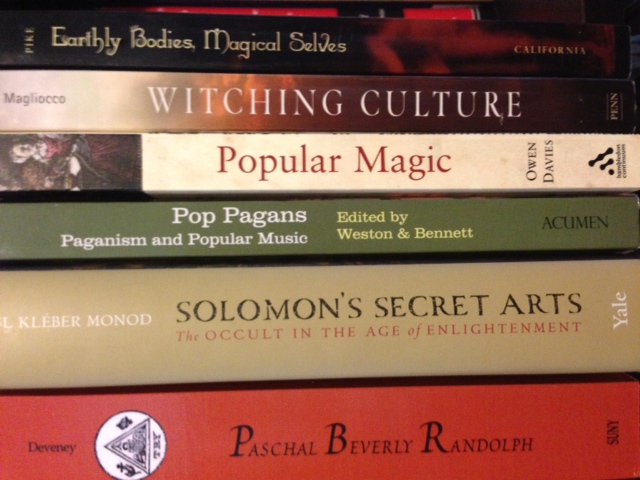 (As I’ve grown as a Pagan and changed as a person, the types of “Pagan reading” I like to engage in have changed as well. Like most individuals starting out on the Pagan Path I initially read a lot of beginner material from Llewellyn along with a lot of other popular titles generally found at the mall. Over the last ten years or so I’ve gravitated more towards academic works, especially those dealing with early Modern Paganism and the Western Magical Tradition (I’ve also got a soft spot for Capall Bann Publishing, they release a lot of great titles!). Scholarly stuff is not for everyone, but can be well worth the effort when you are extremely interested in a particular subject and want to go a bit deeper than most.)
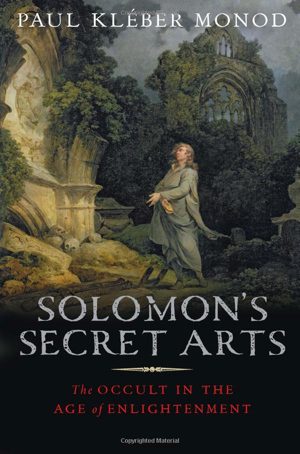 The Seventeenth and Eighteenth Centuries are not generally seen as “sexy” when it comes to magical practices. The Nineteenth Century kicked off the Modern Pagan Revival, and the Renaissance reintroduced (high) magic and the “old gods” to Europe. Due to those factors, magic during the period of the English Enlightenment is often overlooked. Thankfully that’s all been rectified by Solomon’s Secret Arts: The Occult in the Age of Enlightenment by by Paul Kleber Monod (Yale University Press, May 2013). While Monod’s book is not as comprehensive as I might have liked (there’s not a lot of material on practices outside of urban areas for instance), there’s still a lot of great material here. It’s one of those volumes I didn’t know I needed until I finished reading it.
Of particular interest to me were the sections dealing with alternative and secret Masonic rites and degrees, many of which had alleged ancient pagan pedigrees. As my own studies into history continue, I’ll be curious to see if any of those practices had a direct influence on Modern Paganism. (Would I have been interested in being an initiate of the mostly bogus Egyptian Rite in 1786? Most certainly!) In addition to the sections on Freemasonry, Monod does a great job of articulating the scientific establishment’s interest in magic, and then chronicling when the two sides mostly go their separate ways. I was also astonished by the sheer number of people who were interested in astrology in Eighteenth Century England.
Most modern history books overlook just how important magic and other occult practices were centuries ago. To ignore such things is to ignore just how creative and intellectually curious our ancestors were. Knowing that people wrestled with the concept of Neoplatonism in the Seventeenth Century makes me feel better about our past. Couple that with the knowledge that great thinkers like Sir Issac Newton had more than a passing interest in occult theory and you’ve got me thinking that Modern Paganism (a flowering of the Western Magical Tradition) has an even more distinguished pedigree than I ever could have imagined. Monod’s book is a “must have” for anyone interested in astrology, alchemy, or the history of magic. This is one I’ll be turning to time and time again over the next couple of decades.
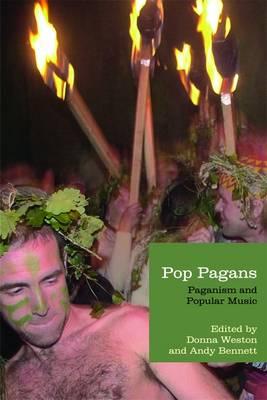 Perhaps I live too close to the source material, or maybe my expectations were overly high, but I’ll admit to being mildly disappointed by Pop Pagans: Paganism and Popular Music (Studies in Contemporary and Historical Paganism) edited by Donna Weston and Andy Bennett (Acumen Publishing, May 2013). I’ve always found academic anthologies to be a mixed bag. Sometimes individual articles live up to the title of the book, and other times they are only tangentially related. Some articles become vital research material, and others feel as if they are just taking up space. I sympathize with the editors because they can only publish what’s submitted to them, but I just felt as if there were so many more stories to tell on the subject articulated by the book’s title.
With a title like Pop Pagans I expected information on songs like Hymn to Her by The Pretenders or more than just a couple of sentences on the band XTC. And nothing on Julian Cope or Graham Bond? I found many of these omissions completely perplexing. Hopefully we’ll get a second volume that will include some of these things.
Despite my criticisms there are some really excellent articles in Pop Pagans. Jason Pitzl-Waters’ “The Darker Shade of Pagan” had me taking notes, looking up bands, and downloading music (I admit it, I’m listening to Inkubus Sukkubus as I right this). In just fourteen pages Jason had me angry at myself for overlooking Pagan-goth music while at the same time making me feel well versed in it. Deena Wenstein’s “Pagan Metal” was equally interesting (though a lot more familiar), and also had me looking up bands and contemplating future articles on RtH. It was nice to see Led Zeppelin pop up on several occasions, most notably in an article on “Paganism and the Counter-Culture” by (editor) Andy Bennett and again in (editor) Donna Weston’s “Rememberings of a Pagan Past.” (Good to know that I’m not the only one who thinks Led Zeppelin is important in this context.)
Word of caution, Pop Pagans is not always an easy read, and it embraces a wide range of disciplines. Since every chapter in the book is of a “stand alone” nature, each author has to spend several pages explaining how they define certain words. For readers of academic work, this is pretty standard stuff, but it can also be a bit tedious, especially for the lay reader. I don’t mean to sound so completely negative, there is some great work in this volume. For the student or fan of Pagan Music it’s definitely worth picking up, and at only thirty dollars (list price) it’s reasonably priced for an academic work. It can also be difficult to evaluate a work of this nature because it’s likely that articles I found less than scintillating will hold more interest to me in the future. Jason’s article on Goth Music alone is worth ten dollars, so while this may not be the most enthusiastic review ever, you will get your money’s worth.
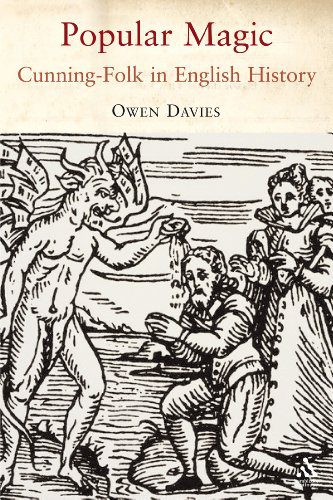 Owen Davies is rapidly becoming one of my favorite writers (and scholars) of the occult and the Western Magical Tradition. Grimoires: A History of Magic Books has been a favorite of mine the last couple of years. Even more enjoyable is 2003’s Popular Magic: Cunning-folk in English History (Continuum, published in August 2007). Davies is the rare academic who can write for the academy while also crafting a narrative easily understood (and devoured) by the lay reader. Popular Magic reads like a popular volume, but doesn’t skimp on detail or context. I really loved this book.
Unlike more popular treatments of cunning-folk Davies doesn’t romanticize. He presents the cunning-folk as they were, practitioners capable of great deception along with incredible acts of empathy and skill (as he points out, visiting a cunning-man was just as effective as visiting a doctor, if not more so, for several centuries). Davies paints a picture of cunning-folk as literate tradespeople, a picture often at odds with popular images of cunning-folk as rural illiterates. He also writes about them as a class of magicians who bridged the gap between more rustic practices and the high magic of the grimoire tradition.
Instead of a chronological history of cunning-folk Davies’ book is divided into chapters dealing with certain practices and attributes. It’s a bit jarring in places to go from an example in 1615 to one in 1857 but somehow he makes it all work. Though not one of the book’s goals, it’s interesting to read how the word “witch” has been used over the centuries. As a student of Modern Paganism the last chapter dealing with cunning-folk in the Twentieth Century was of particular interest. I can’t say enough good things about this book, put it on your short-list now.
Happy Reading!
Previous Post

August 27, 2013
Hand to Hand, Face to Face
Next Post

September 3, 2013 What if We Really Had Religious Choice?
Browse Our Archives
Select a Category Editorializing Gateways to Paganism Guest Posts Holiday Histories Led Zeppelin News and Views Occult Pagan Pagan TV Club Paganism polytheism Ramble On Reviews Ritual Strange Days Uncategorized
Select a Month August 2026 March 2026 February 2026 November 2025 September 2025 August 2025 April 2025 August 2024 April 2024 February 2024 December 2023 October 2023 August 2023 June 2023 May 2023 January 2023 October 2022 August 2022 July 2022 June 2022 May 2022 April 2022 March 2022 February 2022 January 2022 December 2021 November 2021 October 2021 September 2021 August 2021 July 2021 June 2021 April 2021 March 2021 February 2021 January 2021 December 2020 November 2020 October 2020 August 2020 July 2020 June 2020 May 2020 April 2020 March 2020 February 2020 January 2020 December 2019 November 2019 October 2019 September 2019 August 2019 July 2019 June 2019 May 2019 April 2019 March 2019 February 2019 January 2019 December 2018 November 2018 October 2018 September 2018 August 2018 July 2018 June 2018 May 2018 April 2018 March 2018 February 2018 January 2018 December 2017 November 2017 October 2017 September 2017 August 2017 July 2017 June 2017 May 2017 April 2017 March 2017 February 2017 January 2017 December 2016 November 2016 October 2016 September 2016 August 2016 July 2016 June 2016 May 2016 April 2016 March 2016 February 2016 January 2016 December 2015 November 2015 October 2015 September 2015 August 2015 July 2015 June 2015 May 2015 April 2015 March 2015 February 2015 January 2015 December 2014 November 2014 October 2014 September 2014 August 2014 July 2014 June 2014 May 2014 April 2014 March 2014 February 2014 January 2014 December 2013 November 2013 October 2013 September 2013 August 2013 July 2013 June 2013 May 2013 April 2013 March 2013 February 2013 January 2013 December 2012 November 2012 October 2012 September 2012 August 2012 July 2012 June 2012 April 2012 October 2011 September 2011 August 2011
Follow Us!
TAKE THE
Religious Wisdom Quiz
What Christian tradition has a worldwide leader known as the Ecumenical Patriarch?
Select your answer to see how you score.
Eastern Orthodox Anglican Lutheran Catholic
Related posts from Raise the Horns


The Return of the Pagan Scapegoats

Magickal & Pagan Gathers: Some Thoughts
TRENDING AT PATHEOS Pagan

In "Irreplaceable," our book on vocation and technology, Trevor Sutton and I...

I was strolling through the top floor of the brand new Parthenon...

What Does Gêvâh Mean For Kimberley Guifoyle &...
This week, a lot of the news is focused on Kimberly Guilfoyle....

INNER CIRCLE: Profound Mystery (Of Christ In All...
Ephesians 5:31-32 “For this reason, a man will leave his father and...

Do Not Rejoice When Your Enemy Falls: The...
Turning an execution into a public spectacle is a disturbing expression of...

'The Chosen' S6 Trailer: The Passion Gets Very...
Not many watching 'The Chosen' worry about spoilers, but just because they...
view all Pagan blogs
Ad-Free & Subscriber Log-In Subscription Support
- About Us
- 2026 Calendar
- Videos
- Podcasts
- Library of World Religions
- Faith In Media Tracker
- Advertise With Us
- Write for Us
- Privacy Policy
- Terms of Service
- Do Not Sell My Data
- Contact Us
- Radiant Digital
- Manage Newsletter Subscriptions
- Unsubscribe From Notifications
- Sitemap
Copyright 2008-2026, Patheos. All rights reserved.
Subscription Support Ad-Free & Subscriber Log-In
Follow Patheos