
BuddhistCatholicContemplativeEvangelicalGeneral ChristianHinduJewishLatter-day SaintMuslimNew VisionsProgressive Christian
Beliefs
- Buddhist
- Catholic
- Contemplative
- Evangelical
- General Christian
- Hindu
- Jewish
- Latter-day Saint
- More Voices
- Muslim
- New Visions
- Pagan
- Progressive Christian
Topics
- Religion News
- Food and Religion
- Sports and Religion
- Religious Art
- Religious Music and Entertainment
- Religious Events
- History and Religion
- Style and Religion
- Politics and Religion
- Women in Religion
- Recreation Outdoors and Religion
- Business Finance and Religion
- Careers Workplace and Religion
- Education and Religion
- Family Parenting and Religion
- Health Fitness and Religion
- Home and Religion
- Relationships and Religion
- Technology and Religion
- Travel and Religion
Columnists
- Buddhist Columnists
- Business Finance and Religion Columnists
- Careers Workplace and Religion Columnists
- Catholic Columnists
- Contemplative Columnists
- Education and Religion Columnists
- Evangelists Columnists
- Family Parenting and Religion Columnists
- General Christian Columnists
- Health Fitness and Religion Columnists
- Hindu Columnists
- History and Religion Columnists
- Home and Religion Columnists
- Jewish Columnists
- More Voices Columnists
- Latter Day Columnists
- Muslim Columnists
- New Visions Columnists
- Nonreligious Columnists
- Pagan Columnists
- Politics and Religion Columnists
- Progressive Columnists
- Recreation Outdoors and Religion Columnists
- Relationships and Religion Columnists
- Religion News Columnists
- Religious Art Columnists
- Religious Events Columnists
- Religious Music and Entertainment Columnists
- Sports and Religion Columnists
- Style and Religion Columnists
- Technology and Religion Columnists
- Travel and Religion Columnists
- Women in Religion Columnists
Resource Library
- 2026 Calendar
- Library of World Religions
- The 100 Most Holy Places on Earth
- Patheos Answers
- Podcasts
- Videos
- Faith Leaders Database
- Anglican Episcopalian
- Bahai
- Baptist
- Buddhism
- Christianity
- Confucianism
- Eastern Orthodoxy
- Hinduism
- Holiness and Pentecostal
- ISKCON
- Islam
- Judaism
- Lutheran
- Methodist
- The Church of Jesus Christ of Latter-day Saints
- New Age
- Paganism
- Presbytarian and Reformed
- Protestantism
- Religion Behind the Scenes
- Roman Catholic
- Scientology
- Shia Islam
- Sikhism
- Sufism
- Sunni Islam
- Taoism
- Zen
- See all religions
Research Tools
 Ad-Free & Subscriber Log-In Subscription Support
Follow Patheos 

- Trending:
- Advent
- |
- Forgiveness
- |
- Thanksgiving
- |
- Election
- |
- Seasonal Holidays
- |
- Marriage

- HOME
- Me and the Blog
- Defining Pagan
- Rituals & Holidays
- All Posts
- Blogroll
- Publications
- FREE NEWSLETTER
- Home
- Pagan
- Looking for Lughnassa
Looking for Lughnassa
Last updated on: July 31, 2013 at 7:28 pm by Jason Mankey
Looking for Lughnassa 2013-07-31T19:28:47-06:00 Jason Mankey
Patheos Explore the world's faith through different perspectives on religion and spirituality! Patheos has the views of the prevalent religions and spiritualities of the world.
 I began planting my fall garden today. Sunflowers, lettuce, spinach, and pumpkins will all hopefully be rising from the dirt soon. I realize that I began my gardening a little late, but I didn’t have much choice in the matter. For the last two and a half years I’ve been (in theory) sharing a backyard.* With my neighbor in the process of moving out my wife and I decided to “reclaim” the bit of backyard that’s allegedly ours. Part of that yard is a garden bed, and planting seeds seemed like a neighborly way to mark our territory.
As I was digging around in the soil it dawned on me just how odd it was to be planting on the eve of the first harvest. For many Pagans Lughnassa or Lughnasadh is looked at as the first of three harvest celebrations (the other two being the Fall Equinox and then Samhain). Like most Pagan holidays the roots of Lughnassa are in the British Isles where early August apparently marks the start of the harvest.
Like its cousin Imbolc on the Wheel of the Year Lughnassa has always felt like a holiday out of time and space. Growing up in the Midwest the first grain harvests were always in September, not early August. Moving to California hasn’t helped much either because here it’s always harvest season, and the corn (and soybean) fields of my youth are only memories. When I pass a farm these days it’s full of baby lettuces or artichokes, never grain.
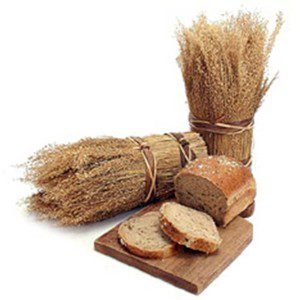 Grain associations are a common theme when it comes to Lughnasadh. Christians celebrated this particular sabbat as Lammas and many of the things we associate with the holiday are Christian and not pagan in the origin. Lammas which means “loaf mass” is the celebration of the first bread, something honored in many a Pagan circle this time of year. It’s certainly possible that ancient pagans celebrated Lughnassa as the first harvest too, but there’s no evidence to support it. To me it’s never mattered much who did what first, seasonal celebrations will always be pagan to me.
If ancient pagans didn’t celebrate the feast of the loaves on Lughnassa what were they doing on that day? There’s no doubt that the holiday was celebrated in pagan antiquity, but what was celebrated remains an open question. Most Pagans associate the Celtic god Lugh with Lughnassa which is an easy association. The sabbat has his name in its title after all, but much like the root “bel” in Beltane the “lugh” in Lughnassa might simply be a root word (1). Lugh means “bright” or “shining” (2) and because of this the god is often misrepresented as a solar deity, which is not how the ancient Celts perceived him.
One of the odd things about Lammas is that it’s never been a solar holiday. Within both Beltane and Midsummer there are the bones of an ancient fire festival. If Lugh was truly a sun god it stands to reason that there would be a little bit of fire involved with his holiday, but that doesn’t seem to be the case. There were no great bonfires for the celebration of the First Fruits (yet another name for this sabbat), the only fires to mark its arrival were in the hearths of Christians centuries later.
 The Roman god most associated with Lugh was Mercury, who was neither a sun god or a god of the harvest. Mercury was the god of travelers, thieves, commerce, golden tongues, and because of all those things was often described as a trickster figure. Lugh seems to also inhabit many of those same realms, and several others. Unlike Mercury Lugh was also a god of war, his spear being a particular noteworthy accessory. Ronald Hutton describes Lugh as “the patron of all human skills,” which certainly encompasses a great many attributes.
If there’s a time of year that calls for a great many skills it’s certainly early August. Harvesting cereal crops takes many different talents. There are the tools needed for the gathering of the grain and then there’s the process of drying out and storing that grain for the coming winter. Harvesting crops is hard work, not to mention all of the other preparations needed to survive the coming winter months. Perhaps Lugh’s association with early August is due to the gifts he shared with humankind, the gifts that make civilization possible?
 I find it interesting that in the Middle Ages Lammas was associated with more than just bread. It was a time for fairs, the payment of rents, elections, and the opening of public lands. (3) Money and elections certainly wouldn’t be foreign to a god often equated with Mercury. Local fairs are also great opportunities to show off a skill set. Even today there are a lot of county fairs in late July and throughout August where people show off livestock, produce, and their skills at baking. (Growing up down South my local county fair had an award for best cherry pie.) Perhaps the Lugh in Lughnassa is easier to find than I thought it would be.
My favorite celebrations of Lughnassa have always been a combination of its various attributes. There was a Saturday night spent in a cornfield making corn dollies while staring up at the moon. Last year I donned a lion costume to celebrate a Wizard of Oz inspired Lammas ritual, a rite that required many skills. I also have fond memories of Druid-inspired rituals this time of year, and moments of just pure exhaustion where a deep breath was my only marking of the turn of the Wheel. (Some of my favorite festivals used to end the last week of July and we often ended up skipping Lughnassa to unpack.)
This year I’m probably going to focus on grain, most specifically corn. One of my backyard neighbors parting gifts was the remnants of her garden. In what is now my garden there’s a lonely stalk of corn growing next to two tomato plants. I could be wrong, but the sweet corn she left us looks ready for the harvest.
*Northern California sort of stacks people on top of people. If a garage can be converted into a one bedroom apartment it will be. Sometimes that results in a shared backyard being taken over by one person.
1. Celtic Gods, Celtic Goddesses by R.J. Stewart, Sterling Publishing 1990. page 117.
2. Stations of the Sun by Ronald Hutton, Oxford Press 1996. page 327
3. Hutton page 331
Previous Post
July 25, 2013
Occult in America: Albert Pike & Freemasonry
Next Post

August 2, 2013 Why Millennials Love Paganism
Browse Our Archives
Select a Category Editorializing Gateways to Paganism Guest Posts Holiday Histories Led Zeppelin News and Views Occult Pagan Pagan TV Club Paganism polytheism Ramble On Reviews Ritual Strange Days Uncategorized
Select a Month August 2026 March 2026 February 2026 November 2025 September 2025 August 2025 April 2025 August 2024 April 2024 February 2024 December 2023 October 2023 August 2023 June 2023 May 2023 January 2023 October 2022 August 2022 July 2022 June 2022 May 2022 April 2022 March 2022 February 2022 January 2022 December 2021 November 2021 October 2021 September 2021 August 2021 July 2021 June 2021 April 2021 March 2021 February 2021 January 2021 December 2020 November 2020 October 2020 August 2020 July 2020 June 2020 May 2020 April 2020 March 2020 February 2020 January 2020 December 2019 November 2019 October 2019 September 2019 August 2019 July 2019 June 2019 May 2019 April 2019 March 2019 February 2019 January 2019 December 2018 November 2018 October 2018 September 2018 August 2018 July 2018 June 2018 May 2018 April 2018 March 2018 February 2018 January 2018 December 2017 November 2017 October 2017 September 2017 August 2017 July 2017 June 2017 May 2017 April 2017 March 2017 February 2017 January 2017 December 2016 November 2016 October 2016 September 2016 August 2016 July 2016 June 2016 May 2016 April 2016 March 2016 February 2016 January 2016 December 2015 November 2015 October 2015 September 2015 August 2015 July 2015 June 2015 May 2015 April 2015 March 2015 February 2015 January 2015 December 2014 November 2014 October 2014 September 2014 August 2014 July 2014 June 2014 May 2014 April 2014 March 2014 February 2014 January 2014 December 2013 November 2013 October 2013 September 2013 August 2013 July 2013 June 2013 May 2013 April 2013 March 2013 February 2013 January 2013 December 2012 November 2012 October 2012 September 2012 August 2012 July 2012 June 2012 April 2012 October 2011 September 2011 August 2011
Follow Us!
TAKE THE
Religious Wisdom Quiz
Which parable features a Pharisee and a tax collector praying?
Select your answer to see how you score.
The Pharisee and the Tax Collector The Wise Virgins The Lost Sheep The Sower
Related posts from Raise the Horns

The Return of the Pagan Scapegoats
Magickal & Pagan Gathers: Some Thoughts
TRENDING AT PATHEOS Pagan

Rock N' Roll-- Morphing into/for a New Generation...
Well, should we be grateful, or is rock n' roll just dead? ...

Ansley Gordon Brings Faith and Fresh Stories to...
For screenwriter and actress Ansley Gordon, Christmas has always been about more...

Chris Pratt on Veterans, Faith, “The Way of...
For Chris Pratt, service is not something that ends when a person...

Chapter 5, Sarah: The Quest for Safety in...
Open and Relational Theology & Social Psychology About this series: This series...

When Worry Gets You Nowhere, How Can Faith...
Sometimes, we think that by worrying, we can somehow predict the future....

The Wasp And I: Meditations on Repentance
How can we enter the power and joy of the repentant self...
view all Pagan blogs
Ad-Free & Subscriber Log-In Subscription Support
- About Us
- 2026 Calendar
- Videos
- Podcasts
- Library of World Religions
- Faith In Media Tracker
- Advertise With Us
- Write for Us
- Privacy Policy
- Terms of Service
- Do Not Sell My Data
- Contact Us
- Radiant Digital
- Manage Newsletter Subscriptions
- Unsubscribe From Notifications
- Sitemap
Copyright 2008-2026, Patheos, part of the Radiant Digital network of media brands. All rights reserved.
Subscription Support Ad-Free & Subscriber Log-In
Follow Patheos