
BuddhistCatholicContemplativeEvangelicalGeneral ChristianHinduJewishLatter-day SaintMuslimNew VisionsProgressive Christian
Beliefs
- Buddhist
- Catholic
- Contemplative
- Evangelical
- General Christian
- Hindu
- Jewish
- Latter-day Saint
- More Voices
- Muslim
- New Visions
- Pagan
- Progressive Christian
Topics
- Religion News
- Food and Religion
- Sports and Religion
- Religious Art
- Religious Music and Entertainment
- Religious Events
- History and Religion
- Style and Religion
- Politics and Religion
- Women in Religion
- Recreation Outdoors and Religion
- Business Finance and Religion
- Careers Workplace and Religion
- Education and Religion
- Family Parenting and Religion
- Health Fitness and Religion
- Home and Religion
- Relationships and Religion
- Technology and Religion
- Travel and Religion
Columnists
- Buddhist Columnists
- Business Finance and Religion Columnists
- Careers Workplace and Religion Columnists
- Catholic Columnists
- Contemplative Columnists
- Education and Religion Columnists
- Evangelists Columnists
- Family Parenting and Religion Columnists
- General Christian Columnists
- Health Fitness and Religion Columnists
- Hindu Columnists
- History and Religion Columnists
- Home and Religion Columnists
- Jewish Columnists
- More Voices Columnists
- Latter Day Columnists
- Muslim Columnists
- New Visions Columnists
- Nonreligious Columnists
- Pagan Columnists
- Politics and Religion Columnists
- Progressive Columnists
- Recreation Outdoors and Religion Columnists
- Relationships and Religion Columnists
- Religion News Columnists
- Religious Art Columnists
- Religious Events Columnists
- Religious Music and Entertainment Columnists
- Sports and Religion Columnists
- Style and Religion Columnists
- Technology and Religion Columnists
- Travel and Religion Columnists
- Women in Religion Columnists
Resource Library
- 2026 Calendar
- Library of World Religions
- The 100 Most Holy Places on Earth
- Patheos Answers
- Podcasts
- Videos
- Faith Leaders Database
- Anglican Episcopalian
- Bahai
- Baptist
- Buddhism
- Christianity
- Confucianism
- Eastern Orthodoxy
- Hinduism
- Holiness and Pentecostal
- ISKCON
- Islam
- Judaism
- Lutheran
- Methodist
- The Church of Jesus Christ of Latter-day Saints
- New Age
- Paganism
- Presbytarian and Reformed
- Protestantism
- Religion Behind the Scenes
- Roman Catholic
- Scientology
- Shia Islam
- Sikhism
- Sufism
- Sunni Islam
- Taoism
- Zen
- See all religions
Research Tools
 Ad-Free & Subscriber Log-In Subscription Support
Ad-Free & Subscriber Log-In Subscription Support
Follow Patheos 

- Trending:
- Forgiveness
- |
- Marriage
- |
- Consciousness
- |
- Death Penalty
- |
- Election
- |
- Halloween

- HOME
- Me and the Blog
- Defining Pagan
- Rituals & Holidays
- All Posts
- Blogroll
- Publications
- FREE NEWSLETTER
- Home
- Pagan
- Wicca and the Fork in the Road
Wicca and the Fork in the Road
Last updated on: May 4, 2013 at 12:41 pm by Jason Mankey
Wicca and the Fork in the Road 2013-05-04T12:41:23-06:00 Jason Mankey
Patheos Explore the world's faith through different perspectives on religion and spirituality! Patheos has the views of the prevalent religions and spiritualities of the world.
 It sometimes feels as if every word used to describe someone of the Pagan Persuasion is problematic. The word Pagan is so full of problems that people have been running from it the last few years. Witch isn’t much better, having several different definitions depending on the circumstance. (I’m not implying that all Witches are Pagans or vice versa, simply that both words have several meanings.) The word Wicca has become just as problematic as Pagan and Witch, something that a recent post on Sermons From the Mound brought home with vivid clarity.
Weirdly, Yvonne’s post had nothing to do with the definitions of words and wasn’t meant to be a critique of how the word Wicca is used, but that’s what I got out of it. Several times in the piece Yvonne makes references to “watered down Wicca,” “bastardization,” and the “misinterpretation of real Wicca.” I don’t think Yvonne is purposefully trying to be offensive, and as an initiated Witch, I’m completely sympathetic to what she’s articulating, I just don’t agree with it.
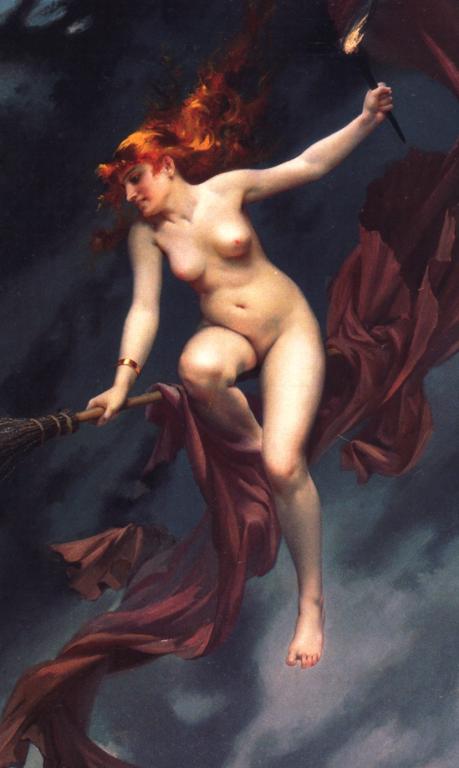 Wicca was originally meant to be a term that applied only to people who were initiated into a specific tradition of Witchcraft. There was no way to become a “Wiccan” (or become one of “the Wicca”) without an initiation. This was the system of Gerald Gardner (or perhaps his initiators), his initiates, and later his imitators and admirers. Almost every “Wiccan Tradition” owes a tip of the hat to Gardner, his system became the dominant one (even in traditions that might have predated Gardner, this is called the “Gardnerian Magnet” by scholars), and most groups that use the word “Wicca” can trace their origins to Gardner, one of his followers, or his Book of Shadows.
In certain situations the idea that the word Wiccan can only refer to an initiate is perfectly acceptable. If I’m on an “Alexandrians Only” Facebook group and their definition of the word Wicca only includes lineaged* initiates than I have to run with that definition. It’s the original definition of the word, and it’s what I agreed to when I signed up for. I may not completely agree with it, but in that certain situation I have to accept it. The problem occurs when someone tries to police the word Wicca outside of that specific context. What might be “watered down Wicca” to some might also be an extremely important and valid form of religious expression to someone else.
There are a few definite “fork in the road” moments when it comes to the use of the word Wicca. The first one occurred in the early 1970’s when the first “how to” books began to appear. Now nearly anyone could get their hands on a version of Gardner’s system, which was especially appealing in the United States, a country far too big to make an “initiation only” Witchcraft viable. (We are certainly not “Gardnerians All,” but the influence of Gardner’s system is impossible to ignore.) By 1975 there were complete collections of Witch Rituals available, most notably Raymond Buckland’s The Tree (which uses the term Seax-Wica in the title), Ed Fitch’s Magical Rites From the Crystal Well, and Lady Sheba’s Grimoire. It became completely possible to create your own Wiccan Tradition in the privacy of your living room, as long as you were willing to change the definition of the word Wicca.
 And that’s exactly what happened, during the late 1980’s, the definition of Wicca essentially changed (especially in the United States, less so in Great Britain). A lot of that change can probably be attributed to Llewellyn Publications which released Wicca: A Guide For the Solitary Practitioner by Scott Cunningham in 1988. (Cunningham’s book was not the first to feature the word Wicca in the title, but it’s been the most enduring and influential. The first book to use Wicca in the title appeared in 1981 and was entitled Wicca: The Ancient Way.) After that, the flood gates opened up and now there are probably hundreds of books with the word Wicca in them, all of them basically articulating the idea that Wicca is a spiritual practice that doesn’t require an initiation.
To put it bluntly, it’s impossible to control the definition of a word. Once the black cat got out of the box there was no getting it back in there. What we have now are essentially two different definitions of the word Wicca, both equally valid depending on the context. Wicca is both an initiatory tradition and a form of spirituality which can be practiced by almost anyone. If someone has thirty books with the word “Wicca” on the spine of them you certainly can’t blame them for thinking they are justified in their use of the word. The only way to put the cat back in the box would be to essentially burn every book with the word Wicca in the title, and shut down all the webpages too. That’s obviously not going to happen, and it’s probably just best to accept that things have changed and move on.
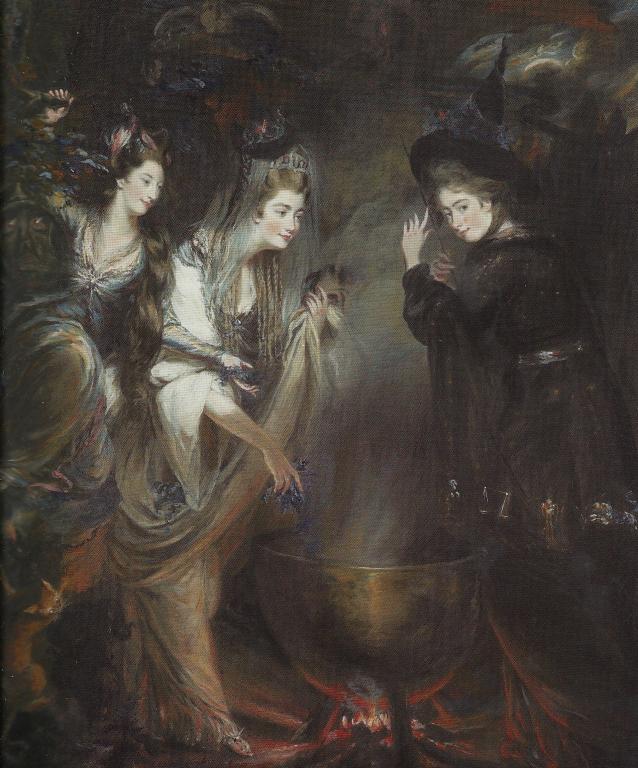 Eclectic Wicca isn’t watered down or bastardized, it’s just different from the traditional version. To the people who practice the non-initiatory forms of Wicca their rituals and rites are just as vital and real as anyone else’s. Besides, I don’t think everyone is meant to walk down the path of the initiate anyways, what everyone should do is find the system that works best for them and then use it. If someone’s version of Wicca feels a little less “serious” than my own, who cares? I don’t have to practice it that way. If there was only one proper way to practice Wicca there wouldn’t be dozens of initiatory traditions, Eclectic Wicca is simply another step along that journey. No one is suggesting that anyone can be an Alexandrian or Gardnerian**, and I believe that initiatory traditions have a long and bright future ahead of them, but it’s hard for me to see Wicca as existing only in that context. I sympathize with my cohorts who prefer the original definition of the word, change is hard, but it’s also inevitable and impossible to escape from.
Given that some of Wicca’s ritual structure (and terminology) owe a great deal to Freemasonry it’s not surprising that initiation plays an important part in many Wiccan traditions. Initiation is in the very DNA of Modern Witchcraft, but it’s also possible that Wicca has grown in ways that have taken it further and further from its origins. It’s hard to picture Gerald Gardner imagining just how many Wiccan traditions have evolved (and prospered) since the 1950’s. Wicca launched a full-scale Pagan Revival that shows no signs of stopping, we’ve come an incredibly long way in just 70 years.
We’ve reached another fork in the road and with it new questions. Is Wicca a spirituality ready to take its seat at the table with the other great religions of the world? Or is it a secret society with a complex set of rituals? If it’s a faith then it’s subject to all the watering downs and bastardizations that have befallen (and often benefitted) all of the world’s other religious paths. I understand The Wicca who walk the path of the initiate and bemoan the changes that have taken place in the last couple of decades, but I also see the hearts who have benefitted from that change. Who am I to tell them they don’t have a seat at the table?
*lineaged is not a real word, but it sounds like it should be so I’m running with it.
**I’ve seen Gardnerian spelled with both an “a” and an “e,” my first draft used the “a” spelling, but after some constructive criticism (and checking a few email lists) I’ve reverted to the e spelling.
Previous Post

April 30, 2013
Doing (and Writing About) Pagan Things
Next Post

May 8, 2013 Gateways to Paganism: Silver RavenWolf
Browse Our Archives
Select a Category Editorializing Gateways to Paganism Guest Posts Holiday Histories Led Zeppelin News and Views Occult Pagan Pagan TV Club Paganism polytheism Ramble On Reviews Ritual Strange Days Uncategorized
Select a Month August 2026 March 2026 February 2026 November 2025 September 2025 August 2025 April 2025 August 2024 April 2024 February 2024 December 2023 October 2023 August 2023 June 2023 May 2023 January 2023 October 2022 August 2022 July 2022 June 2022 May 2022 April 2022 March 2022 February 2022 January 2022 December 2021 November 2021 October 2021 September 2021 August 2021 July 2021 June 2021 April 2021 March 2021 February 2021 January 2021 December 2020 November 2020 October 2020 August 2020 July 2020 June 2020 May 2020 April 2020 March 2020 February 2020 January 2020 December 2019 November 2019 October 2019 September 2019 August 2019 July 2019 June 2019 May 2019 April 2019 March 2019 February 2019 January 2019 December 2018 November 2018 October 2018 September 2018 August 2018 July 2018 June 2018 May 2018 April 2018 March 2018 February 2018 January 2018 December 2017 November 2017 October 2017 September 2017 August 2017 July 2017 June 2017 May 2017 April 2017 March 2017 February 2017 January 2017 December 2016 November 2016 October 2016 September 2016 August 2016 July 2016 June 2016 May 2016 April 2016 March 2016 February 2016 January 2016 December 2015 November 2015 October 2015 September 2015 August 2015 July 2015 June 2015 May 2015 April 2015 March 2015 February 2015 January 2015 December 2014 November 2014 October 2014 September 2014 August 2014 July 2014 June 2014 May 2014 April 2014 March 2014 February 2014 January 2014 December 2013 November 2013 October 2013 September 2013 August 2013 July 2013 June 2013 May 2013 April 2013 March 2013 February 2013 January 2013 December 2012 November 2012 October 2012 September 2012 August 2012 July 2012 June 2012 April 2012 October 2011 September 2011 August 2011
Follow Us!
TAKE THE
Religious Wisdom Quiz
How many books in the Bible are named after women?
Select your answer to see how you score.
1 10 5 2
Related posts from Raise the Horns

What Makes a Good Ritualist? No Idea

Witchcraft Remembrances & Appreciation at Samhaintide

Raymond Buckland & The Big Blue Book

TRENDING AT PATHEOS Pagan

Letters on Living the Faith by C.S. Lewis
Most of us met C.S. Lewis as a public intellectual. Mere Christianity....

When Halloween Unmasks Married Hearts
Written by Dr. David K. Ewen from Eternal Truth Bible College Behind...

Aristotle. He’s been called the father of logic, the father of the...

Methodist Central Hall and Westminster Abbey
Situated on the same square is Methodist Central Hall and Westminster Abbey. ...

57th Dove Awards Honor Dolly Parton, Crown New...
On gospel music’s biggest night, the 57th annual GMA Dove Awards honored...

The First Eucharistic Controversy: Christ’s Real Presence
For Catholics, the Eucharist is the source and summit of the Christian...
view all Pagan blogs
Ad-Free & Subscriber Log-In Subscription Support
- About Us
- 2026 Calendar
- Videos
- Podcasts
- Library of World Religions
- Faith In Media Tracker
- Advertise With Us
- Write for Us
- Privacy Policy
- Terms of Service
- Do Not Sell My Data
- Contact Us
- Radiant Digital
- Manage Newsletter Subscriptions
- Unsubscribe From Notifications
- Sitemap
Copyright 2008-2026, Patheos. All rights reserved.
Subscription Support Ad-Free & Subscriber Log-In
Follow Patheos