
BuddhistCatholicContemplativeEvangelicalGeneral ChristianHinduJewishLatter-day SaintMuslimNew VisionsProgressive Christian
Beliefs
- Buddhist
- Catholic
- Contemplative
- Evangelical
- General Christian
- Hindu
- Jewish
- Latter-day Saint
- More Voices
- Muslim
- New Visions
- Pagan
- Progressive Christian
Topics
- Religion News
- Food and Religion
- Sports and Religion
- Religious Art
- Religious Music and Entertainment
- Religious Events
- History and Religion
- Style and Religion
- Politics and Religion
- Women in Religion
- Recreation Outdoors and Religion
- Business Finance and Religion
- Careers Workplace and Religion
- Education and Religion
- Family Parenting and Religion
- Health Fitness and Religion
- Home and Religion
- Relationships and Religion
- Technology and Religion
- Travel and Religion
Columnists
- Buddhist Columnists
- Business Finance and Religion Columnists
- Careers Workplace and Religion Columnists
- Catholic Columnists
- Contemplative Columnists
- Education and Religion Columnists
- Evangelists Columnists
- Family Parenting and Religion Columnists
- General Christian Columnists
- Health Fitness and Religion Columnists
- Hindu Columnists
- History and Religion Columnists
- Home and Religion Columnists
- Jewish Columnists
- More Voices Columnists
- Latter Day Columnists
- Muslim Columnists
- New Visions Columnists
- Nonreligious Columnists
- Pagan Columnists
- Politics and Religion Columnists
- Progressive Columnists
- Recreation Outdoors and Religion Columnists
- Relationships and Religion Columnists
- Religion News Columnists
- Religious Art Columnists
- Religious Events Columnists
- Religious Music and Entertainment Columnists
- Sports and Religion Columnists
- Style and Religion Columnists
- Technology and Religion Columnists
- Travel and Religion Columnists
- Women in Religion Columnists
Resource Library
- 2026 Calendar
- Library of World Religions
- The 100 Most Holy Places on Earth
- Patheos Answers
- Podcasts
- Videos
- Faith Leaders Database
- Anglican Episcopalian
- Bahai
- Baptist
- Buddhism
- Christianity
- Confucianism
- Eastern Orthodoxy
- Hinduism
- Holiness and Pentecostal
- ISKCON
- Islam
- Judaism
- Lutheran
- Methodist
- The Church of Jesus Christ of Latter-day Saints
- New Age
- Paganism
- Presbytarian and Reformed
- Protestantism
- Religion Behind the Scenes
- Roman Catholic
- Scientology
- Shia Islam
- Sikhism
- Sufism
- Sunni Islam
- Taoism
- Zen
- See all religions
Research Tools
 Ad-Free & Subscriber Log-In Subscription Support
Ad-Free & Subscriber Log-In Subscription Support
Follow Patheos 

- Trending:
- Forgiveness
- |
- Marriage
- |
- Consciousness
- |
- Death Penalty
- |
- Election
- |
- Halloween

- HOME
- Me and the Blog
- Defining Pagan
- Rituals & Holidays
- All Posts
- Blogroll
- Publications
- FREE NEWSLETTER
- Home
- Pagan
- Reading Modern Pagan History
Reading Modern Pagan History
Last updated on: May 14, 2013 at 10:44 pm by Jason Mankey
Reading Modern Pagan History 2013-05-14T22:44:55-06:00 Jason Mankey
Patheos Explore the world's faith through different perspectives on religion and spirituality! Patheos has the views of the prevalent religions and spiritualities of the world.
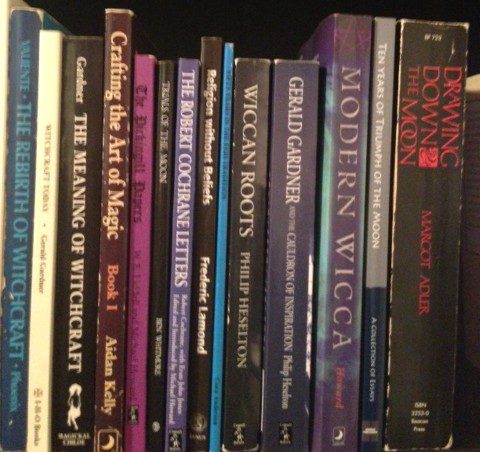 When I’m not at my desk writing rituals and posts for Raise the Horns I sometimes venture out into the broader Pagan world where I often lecture and ramble about various esoteric subjects. One of those topics is often history, specifically the histories of Modern Paganism and the Western Magical Tradition. Some of my more ambitious presentations include L. Ron Hubbard and Joseph Smith, but usually I’m happy enough to simply chat about Gerald Gardner, Dion Fortune, and Margaret Murray. When I’m done with those talks I’m often asked about where to go for further information on the topic. This is my extended answer to that question.
Periodically I’ll have someone come up to me questioning my interpretation or understanding of a particular thing, and depending on the question/criticism that can be either positive or negative. It can be a positive when I learn something I wasn’t aware of before, or someone provides a twist on a theory or whatever. I don’t have all the answers, and I love talking about this stuff, so such interactions are all for the good. Things can take a pretty negative turn when people like to act as if they have some sort of “secret knowledge” that is in disagreement with what I’m saying. If the knowledge is secret, and you aren’t going to share it with me, how can you expect me to know it? And if you don’t feel like sharing it (and providing sources) then you should just keep your mouth shut because you aren’t really contributing to the conversation. I have a unicorn in my backyard too, but you aren’t allowed to see it and I can’t show you photographs either.
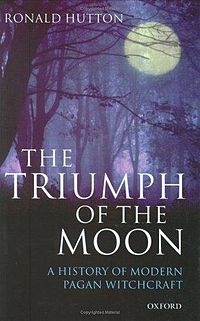 This all makes writing (and speaking) about Modern Paganism kind of difficult. A historian or a researcher can only write about what they have seen. If there are documents linking Gardner to an earlier Witch group a historian has to see them before they can say he was initiated into a coven back in 1939. That’s why historians like Ronald Hutton have to be conservative with what they write, whatever they say has to be backed up (that doesn’t mean I always agree with Hutton, but we’ll get into that later). The more conservative approach to Modern Pagan History (and yes, much of that history has revolved almost exclusively around Modern Witchcraft, just remember we are only seventy years in, that will change) is probably less fun than the alternative, but it’s how The Academy works. Mainstream scholars don’t argue that Jesus came back from the dead either.
Ronald Hutton is really where any discussion of what to read when it comes to the origins of Modern Paganism has to begin. Almost fifteen years after its initial publication (1999), Triumph of the Moon remains an important and vital text. It was the first scholarly attempt printed by an academic press to document the origins and influences in Modern Paganism, and in that regard the book succeeds brilliantly. There was an entire menagerie of factors and moments that helped to get us to where we are today and Hutton goes through every one, slowly and methodically building his case. From Swiss Judges to folklorists to Victorian Poets it all comes together in the 1940’s and 50’s, and every time I pick up Triumph I find something new to explore and ponder. Even if you find yourself disagreeing with Hutton you’ll still find something interesting in Triumph.
I was on an email list (in what feels like a lifetime ago) where we discussed Triumph of the Moon chapter by chapter. That list contained a lot of initiated Traditional Witches who disagreed with much of what Hutton was saying, especially when we got to the second part of the book dealing with the first public Witches (people like Gerald Gardner and Doreen Valiente). To this day I find Hutton’s characterization of Gardner sympathetic, even though Hutton didn’t exactly write what I wanted to read. Of course I wanted Hutton to say that evidence exists for Gardner’s initiation in 1939, but he didn’t, and that’s OK because scholars are limited as to what they can write. Hutton never calls Gardner a phony or a fraud, he simply writes about the evidence that’s available to him.
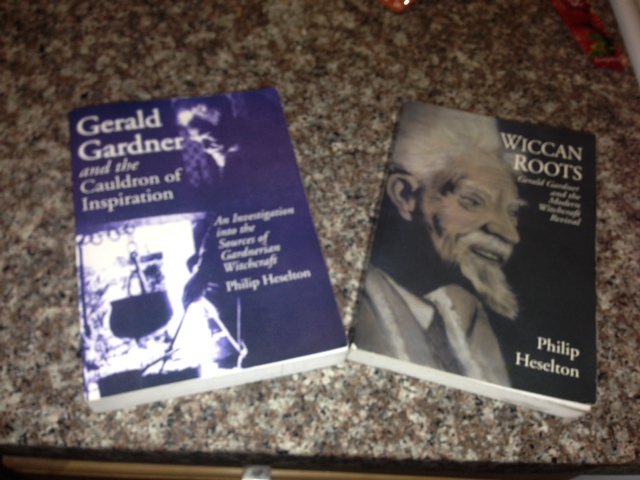 If there’s a problem with Triumph it’s that Hutton probably didn’t do enough digging around Gerald Gardner’s base of operations in the 1930’s and 40’s, New Forest England. Fortunately for us author Philip Heselton did dig around New Forest and what he found is borderline amazing. In Wiccan Roots: Gerald Gardner and the Modern Witchcraft Revival (2000) Heselton makes a pretty solid case for Gardner being initiated back in 1939. The New Forest area certainly had enough magickally talented (and eccentric) individuals around to make the prospect of a Witch coven there in the 1930’s completely plausible.
Sadly though, most of what Heselton has to offer in Wiccan Roots is speculation. There’s no smoking gun out there providing the evidence to determine exactly what happened in New Forest England back in the late 1930’s, but the case Heselton does build up is pretty convincing. I think he probably makes a couple of big leaps too many, but that’s part of the fun. In addition to Wiccan Roots, Heselton’s follow-up Gerald Gardner and the Cauldron of Inspiration (2003) is also essential reading. In fact the first third of Cauldron is just as importnat as anything in Roots.
Heselton’s exploration into the life of Gerald Gardner was too big to be limited to simply two books. In 2012 he released his Gardner-biography-duology Witchfather: A Life of Gerald Gardner, Volume 1-Into the Witch Cult and Volume 2-From Witchcult to Wicca. Sadly, I have not yet read either book as they were only available as e-books for several months and I desperately wanted both of them in print. (I’m weird about my Pagan library.)
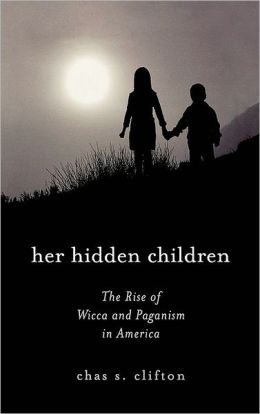 While I’m not sure the definitive history of American Paganism has been written yet, Her Hidden Children: The Rise of Wicca and Paganism in America (2006) by Chas Clifton comes pretty damn close. While I wasn’t as initially impressed with Children as I was with Hutton’s Triumph, it’s grown on me over over the years and has turned into essential reference material. At first I was bothered by amount the amount of “book histories” contained within it, but books are essentially how American Paganism grew, to not write about them would be to skip a large chunk of our history. Like Hutton and Heselton the focus is on Witchcraft (though less exclusively so), but that’s probably to be expected at this point. Like I said earlier, that wil change, just give it some time.
One of the earliest attempts to put Modern Witchcraft into a scholarly context was Aidan Kelly’s Crafting the Art of Magic (1991). There are a lot of people who dislike Crafting, but Kelly deserves at least a little (and possibly more) credit for the attempt. No Pagan history library is complete without a copy of Kelly’s book. While it’s been out of print for almost two decades now it’s still easily picked up online.
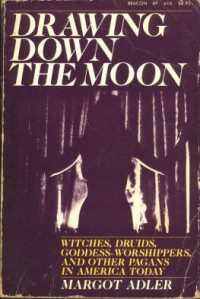 Still important after all these year’s is Margot Adler’s (1979) Drawing Down the Moon, the first comprehensive look into American Paganism. Adler, who works for National Public Radio, approaches DDtM as an interested journalist which allows her to be thorough with her history while also being extremely sympathetic towards the people she’s writing about. There are parts of DDtM that feel a bit dated in 2013 (some of the Paganisms she writes about don’t really exist today) but as a history book it’s impossible to put down. There are passages in DDtM that foreshadow the work of Hutton and Clifton and much of what Adler writes about is only present in her work. You can’t be a Modern Pagan History buff and not have read Drawing Down the Moon.
 One of the most interesting things about being a part of a modern religious movement is that many who created our history have written about it. The most obvious pioneer to have recounted her experiences is Doreen Valiente in her book The Rebirth of Witchcraft. While Valiente writes a little about Witchcraft predecessors, it’s her first hand accounts of working with both Gerald Gardner and Robert Cochrane that have always been the most interesting to me (especially the Cochrane chapter). It’s also interesting to note the changes in Valiente as she recounts her various experiences. This is an important first hand account from one of the most influential Witches in history.
Important first hand accounts from Witchcraft’s early days aren’t limited to Valiente either. Lots of first and second generation Pagans have written important memoirs. Patrica Crowther’s High Priestess is interesting because of the player’s involved and her take on Alex Sanders. In a similar vein I also whole-heartedly recommend Frederic Lamond’s Fifty Years of Wicca (2005) written by one of Gardner’s early initiates. Americans have also been busy writing about what happened on this side of the pond. On my “to read pile” is Merry Meet Again: Lessons, Life & Love on the Path of a Wiccan High Priestess by Deborah Lipp (2013) which has gotten a lot of solid reviews thus far. The one I’m really waiting for is Oberon Zell-Ravenheart’s autobiography which is currently in the “editing” stage.
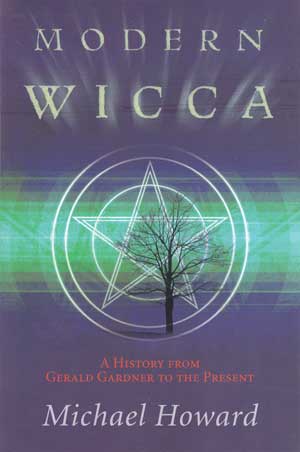 My favorite first hand account of Pagan History since Valiente is Michael Howard’s Modern Wicca: A History From Gerald Gardner to the Present (2010). I don’t necessarily agree with everything in it (or Howard’s motivations in certain instances) but it’s all fascinating to read. What gives Howard’s story a large degree of substance is that he’s the longtime editor and publisher of Britain’s The Cauldron magazine. He was in the catbird’s chair during a lot of significant moments in Pagan history.
 A complete 180° turn from most of the books here is Wicca Magickal Beginnings – A Study of the Possible Origins of the Rituals and Practices Found in This Modern Tradition of Pagan Witchcraft and Magick by Sorita D’este and David Rankine (it also wins an award for longest title). Magickal Beginnings is an investigation into the origins of the language used in early Wiccan ritual. Answering questions about which bits came from Crowley and which bits came from Kipling. There’s also some fantastic speculation and history about several magickal tools. This is a really great (and often overlooked) book that deserves a bigger audience.
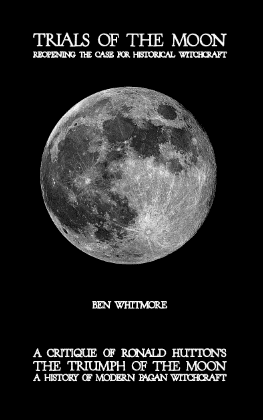
When it comes to Modern Pagan History book essentials there are several titles that I’m not necessarily a huge fan that I still think people should read. Ben Whitmore’s Trails of the Moon (2010) was written as a critique of a Hutton and while I don’t agree with some of the assertions, is still contains some intriguing history. Just because I’m mostly in the Hutton-camp doesn’t mean that I don’t think people should read differing opinions. In a similar vein is The Pickingill Papers: The Origin of the Gardnerian Craft by E.W. Liddel (1994) which attempts to link both Gerald Gardner and Aleister Crowley to English cunning-man George Picnkingill. I personally don’t put much stock in what’s written in The Papers, but alternative theories on the development of Modern Paganism and Witchcraft should at least be looked at.
 In the next few years I expect even more histories and memoirs that will shed light on Modern Paganism. While there is never as much material available as I might like, Pagan history was barely a genre even twenty years ago. We’ve come a long way and I love reading the chronicles of that journey.
Previous Post

May 14, 2013
I Read, I Write . . Book Reviews
Next Post

May 16, 2013 Do Pagans Proselytize?
Browse Our Archives
Select a Category Editorializing Gateways to Paganism Guest Posts Holiday Histories Led Zeppelin News and Views Occult Pagan Pagan TV Club Paganism polytheism Ramble On Reviews Ritual Strange Days Uncategorized
Select a Month August 2026 March 2026 February 2026 November 2025 September 2025 August 2025 April 2025 August 2024 April 2024 February 2024 December 2023 October 2023 August 2023 June 2023 May 2023 January 2023 October 2022 August 2022 July 2022 June 2022 May 2022 April 2022 March 2022 February 2022 January 2022 December 2021 November 2021 October 2021 September 2021 August 2021 July 2021 June 2021 April 2021 March 2021 February 2021 January 2021 December 2020 November 2020 October 2020 August 2020 July 2020 June 2020 May 2020 April 2020 March 2020 February 2020 January 2020 December 2019 November 2019 October 2019 September 2019 August 2019 July 2019 June 2019 May 2019 April 2019 March 2019 February 2019 January 2019 December 2018 November 2018 October 2018 September 2018 August 2018 July 2018 June 2018 May 2018 April 2018 March 2018 February 2018 January 2018 December 2017 November 2017 October 2017 September 2017 August 2017 July 2017 June 2017 May 2017 April 2017 March 2017 February 2017 January 2017 December 2016 November 2016 October 2016 September 2016 August 2016 July 2016 June 2016 May 2016 April 2016 March 2016 February 2016 January 2016 December 2015 November 2015 October 2015 September 2015 August 2015 July 2015 June 2015 May 2015 April 2015 March 2015 February 2015 January 2015 December 2014 November 2014 October 2014 September 2014 August 2014 July 2014 June 2014 May 2014 April 2014 March 2014 February 2014 January 2014 December 2013 November 2013 October 2013 September 2013 August 2013 July 2013 June 2013 May 2013 April 2013 March 2013 February 2013 January 2013 December 2012 November 2012 October 2012 September 2012 August 2012 July 2012 June 2012 April 2012 October 2011 September 2011 August 2011
Follow Us!
TAKE THE
Religious Wisdom Quiz
What empire was in power when Jesus was born?
Select your answer to see how you score.
Persian Greek Roman Babylonian
Related posts from Raise the Horns

What Makes a Good Ritualist? No Idea

Witchcraft Remembrances & Appreciation at Samhaintide

Raymond Buckland & The Big Blue Book

TRENDING AT PATHEOS Pagan

A new article, written by Jeff Lindsay and Gale L. Pooley,...

Swimfan: Forgotten Aughts Pleasures
This is a recovery effort. In 2002, My Big Fat Greek Wedding...

Top Three Anti-Catholic Lies About Catholicism
This is my initial transcript for the video, "THE 3 WORST...

Pope Leo Celebrates Mass for Nurses & Docs...
I don't have any idea how he did it, but Pope Leo...

The Sermon on the Mount, Part I: Matthew...
The Sermon on the Mount, Part I (Matthew 4:12-5:12) St. Matthew moves...

What's up from Crossway: Reviewing some of their latest A few weeks...
view all Pagan blogs
Ad-Free & Subscriber Log-In Subscription Support
- About Us
- 2026 Calendar
- Videos
- Podcasts
- Library of World Religions
- Faith In Media Tracker
- Advertise With Us
- Write for Us
- Privacy Policy
- Terms of Service
- Do Not Sell My Data
- Contact Us
- Radiant Digital
- Manage Newsletter Subscriptions
- Unsubscribe From Notifications
- Sitemap
Copyright 2008-2026, Patheos. All rights reserved.
Subscription Support Ad-Free & Subscriber Log-In
Follow Patheos