
BuddhistCatholicContemplativeEvangelicalGeneral ChristianHinduJewishLatter-day SaintMuslimNew VisionsProgressive Christian
Beliefs
- Buddhist
- Catholic
- Contemplative
- Evangelical
- General Christian
- Hindu
- Jewish
- Latter-day Saint
- More Voices
- Muslim
- New Visions
- Pagan
- Progressive Christian
Topics
- Religion News
- Food and Religion
- Sports and Religion
- Religious Art
- Religious Music and Entertainment
- Religious Events
- History and Religion
- Style and Religion
- Politics and Religion
- Women in Religion
- Recreation Outdoors and Religion
- Business Finance and Religion
- Careers Workplace and Religion
- Education and Religion
- Family Parenting and Religion
- Health Fitness and Religion
- Home and Religion
- Relationships and Religion
- Technology and Religion
- Travel and Religion
Columnists
- Buddhist Columnists
- Business Finance and Religion Columnists
- Careers Workplace and Religion Columnists
- Catholic Columnists
- Contemplative Columnists
- Education and Religion Columnists
- Evangelists Columnists
- Family Parenting and Religion Columnists
- General Christian Columnists
- Health Fitness and Religion Columnists
- Hindu Columnists
- History and Religion Columnists
- Home and Religion Columnists
- Jewish Columnists
- More Voices Columnists
- Latter Day Columnists
- Muslim Columnists
- New Visions Columnists
- Nonreligious Columnists
- Pagan Columnists
- Politics and Religion Columnists
- Progressive Columnists
- Recreation Outdoors and Religion Columnists
- Relationships and Religion Columnists
- Religion News Columnists
- Religious Art Columnists
- Religious Events Columnists
- Religious Music and Entertainment Columnists
- Sports and Religion Columnists
- Style and Religion Columnists
- Technology and Religion Columnists
- Travel and Religion Columnists
- Women in Religion Columnists
Resource Library
- 2026 Calendar
- Library of World Religions
- The 100 Most Holy Places on Earth
- Patheos Answers
- Podcasts
- Videos
- Faith Leaders Database
- Anglican Episcopalian
- Bahai
- Baptist
- Buddhism
- Christianity
- Confucianism
- Eastern Orthodoxy
- Hinduism
- Holiness and Pentecostal
- ISKCON
- Islam
- Judaism
- Lutheran
- Methodist
- The Church of Jesus Christ of Latter-day Saints
- New Age
- Paganism
- Presbytarian and Reformed
- Protestantism
- Religion Behind the Scenes
- Roman Catholic
- Scientology
- Shia Islam
- Sikhism
- Sufism
- Sunni Islam
- Taoism
- Zen
- See all religions
Research Tools
 Ad-Free & Subscriber Log-In Subscription Support
Ad-Free & Subscriber Log-In Subscription Support
Follow Patheos 

- Trending:
- Forgiveness
- |
- Marriage
- |
- Consciousness
- |
- Death Penalty
- |
- Election
- |
- Halloween

- HOME
- Me and the Blog
- Defining Pagan
- Rituals & Holidays
- All Posts
- Blogroll
- Publications
- FREE NEWSLETTER
- Home
- Pagan
- Pagans of the Books
Pagans of the Books
Last updated on: March 19, 2013 at 12:04 pm by Jason Mankey
Pagans of the Books 2013-03-19T12:04:59-06:00 Jason Mankey
Patheos Explore the world's faith through different perspectives on religion and spirituality! Patheos has the views of the prevalent religions and spiritualities of the world.
 Monotheistic faiths often use the term “people of the book” to describe certain religious adherents. The term is most familiar to me from Islam, and the Koran uses that turn of phrase when referring to Jews, Christians, and Zoroastrians. It’s also sometimes used in Judaism in a self-referential sort of way. One group that the term has never been applied to are Pagans, both Modern and Classical, which is fine with me. We aren’t people of the book. Sure, we have books of ritual, and we sometimes pass down oath-bound materials, but our books of ritual are never absolutes, and if initiatory traditions simply stored all of their information on written pages the reasons for initiation would be a lot less. Most Pagans lack the one book that serves as the inspiration for all argument and all ways of doing things.
That’s not to say we don’t adore books. Many Pagans love books, and I would go so far as to say that we Pagans are a “people of the books,” in ways that other religious traditions are not. I’ve always kind of felt that way, but it was really brought home to me after reviewing my “Top 25 Pagans” list(s). Nearly all of the folks listed there are authors, or involved with print/media in some way. (Alex Sanders being the major exception.) When taken to task on the names I didn’t include, almost all of those folks were authors as well, but only almost.
I had one very astute individual ask why my list didn’t include a cross-section of composers, poets, and artists. A work such as Stravinsky’s The Rite of Spring is an amazingly pagan work, and it’s certainly the kind of art that can make someone feel pagan. What it doesn’t do though is express how to act on those feelings. It’s one thing to feel pagan, another to perform rites and to express a spirituality that are Pagan. It’s a subtle difference, but it’s the difference between being thought of as a bohemian and having a religious identity removed from Christianity (or any of the other major monotheistic faiths).
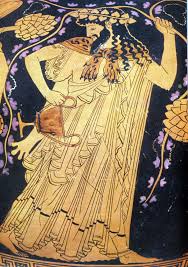 Books have been a huge influence on Paganism, because until very recently, they were the only way to get information about Paganism. We live in an era that with the click of a mouse or a quick voice-command to Siri we can find out about all kinds of Pagan things, and even talk to other Pagans no matter where we live. That wasn’t always the case, and for many of us, our first exposure to Paganism was via books. I can look back on my life now and think “Yup, I was always meant to walk this path,” but I wouldn’t have figured out how to do ritual without first reading a few books. I’m not beholden to any one particular book, but writers have certainly helped to shape my Pagan thoughts and views. I certainly wouldn’t have ever thought of using the phrase “Blessed Be” unless I’d been introduced to it through books.
There’s always been a romantic notion out there when it comes to the idea of how magickal material is handed down from one generation to another. Despite the very cool idea of secret knowledge only being shared orally, magickal material was almost always written down and put into books. There are books of cunning craft in England which were passed down (and continually added to) for generations. The grimoire tradition in Europe and the United States is especially strong, with printed books serving as a continual manual on how to practice ceremonial magick. Most magick users never had to wait for a teacher, books were a gateway into immediate doing. Secret societies and initiatory traditions could certainly be a part of the experience, but you could get your foot through the door simply by reading. People like “to do” and books have always provided a gateway into the magickal community, besides if you erect a barrier someone will find a way around it.
It’s hard to tell an American to “wait” to do anything, and the history of Modern Paganism in this country is a great example of that. In the 1960’s and 70’s when people were first becoming aware of the terms “Pagan” and “Witch” as being acceptable forms of religious practice, they turned the more English structure of “find a group, find a teacher, be initiated” on its head. The local Priestess wasn’t just a few hours away, she might be half a continent away, or so deeply hidden in the broom closet as to live on another planet. Instead of giving up, people used books to “make up their own” varieties of Paganism.
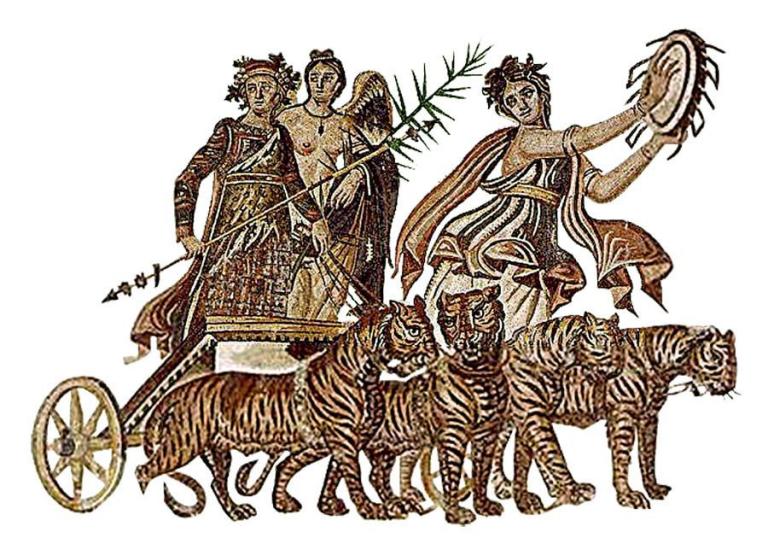 In the fall of November 2011 I was lucky enough to visit the Graduate Theological Union in Berkeley CA where I got to look through the papers of (our own) Aidan Kelly. Aidan was one of the founders of the New Reformed Orthodox Order of the Golden Dawn, and wrote a lot of its early material. In the late 1970’s Kelly donated a diary and copies of his early rituals to the GTU. Those were the materials I was lucky enough to peek at, and they illustrated just how much Pagans have become “people of the books.”
All of NROOGD’s early rites were put together though material found from books and personal inspiration. There were no books of ritual in 1969, just bare bones material from Gardner, Leyland, Fortune, and Murray. Looking through NROOGD’s earliest rituals there was much that was familiar, and even more that was different. As the group progressed, and “101” books became available for the first time in the early 1970’s it was easy to see how their ritual evolved to take in this newer material. That sort of process wasn’t new to Paganism in 1972 and it’s not alien now, most of us continually push forward with our rites and rituals, incorporating whatever threads of wisdom inspire us. To never add anything to our practices would make us a “people of the book” instead of a “people of the books.”
Certainly with the rise of the internet the importance of books has diminished a bit. You can find great rituals online (and many of them are often better than what’s on the printed page), and participate in communities that instruct and teach. It’s possible to ask someone “what’s a stang?” and receive ten or fifteen answers within a few seconds. Heck, because of the internet we might all one day pronounce athame the same way (being from the Midwest I pronounce it ahth-uh-may, on the West Coast it’s said uh-tha-mee, and some people rhyme it with “whammy”). Those various prononciations are precisely because we are a people of the books, with people practicing Paganism with information gleaned from books instead of passed down from individual to individual.
Without an official book of prayer, and no one sanctioned “road map to deity” the Modern Pagan Community will continue to search for individual truths no matter where they hide. For the last two centuries many of those truths existed on the printed page, where they inspired and were then incorporated into magick and rituals. As the internet becomes a more primary source of information the power of the traditional book might diminish, but the power of written words, from a wide variety of sources, will remain.
Previous Post

March 14, 2013
Pope Watch 2013
Next Post
March 20, 2013 Jesus and Pagans: A Tired and Divisive Debate
Browse Our Archives
Select a Category Editorializing Gateways to Paganism Guest Posts Holiday Histories Led Zeppelin News and Views Occult Pagan Pagan TV Club Paganism polytheism Ramble On Reviews Ritual Strange Days Uncategorized
Select a Month August 2026 March 2026 February 2026 November 2025 September 2025 August 2025 April 2025 August 2024 April 2024 February 2024 December 2023 October 2023 August 2023 June 2023 May 2023 January 2023 October 2022 August 2022 July 2022 June 2022 May 2022 April 2022 March 2022 February 2022 January 2022 December 2021 November 2021 October 2021 September 2021 August 2021 July 2021 June 2021 April 2021 March 2021 February 2021 January 2021 December 2020 November 2020 October 2020 August 2020 July 2020 June 2020 May 2020 April 2020 March 2020 February 2020 January 2020 December 2019 November 2019 October 2019 September 2019 August 2019 July 2019 June 2019 May 2019 April 2019 March 2019 February 2019 January 2019 December 2018 November 2018 October 2018 September 2018 August 2018 July 2018 June 2018 May 2018 April 2018 March 2018 February 2018 January 2018 December 2017 November 2017 October 2017 September 2017 August 2017 July 2017 June 2017 May 2017 April 2017 March 2017 February 2017 January 2017 December 2016 November 2016 October 2016 September 2016 August 2016 July 2016 June 2016 May 2016 April 2016 March 2016 February 2016 January 2016 December 2015 November 2015 October 2015 September 2015 August 2015 July 2015 June 2015 May 2015 April 2015 March 2015 February 2015 January 2015 December 2014 November 2014 October 2014 September 2014 August 2014 July 2014 June 2014 May 2014 April 2014 March 2014 February 2014 January 2014 December 2013 November 2013 October 2013 September 2013 August 2013 July 2013 June 2013 May 2013 April 2013 March 2013 February 2013 January 2013 December 2012 November 2012 October 2012 September 2012 August 2012 July 2012 June 2012 April 2012 October 2011 September 2011 August 2011
Follow Us!
TAKE THE
Religious Wisdom Quiz
Who said, "But I tell you, love your enemies and pray for those who persecute you"?
Select your answer to see how you score.
John Peter Jesus Paul
Related posts from Raise the Horns


The Return of the Pagan Scapegoats


Magickal & Pagan Gathers: Some Thoughts
TRENDING AT PATHEOS Pagan

In one sense walking into Westminster Abbey is like walking down the...

'Super Scam Me' Exposes AI Jon Bon Jovi...
Leslie Pickett believed she was in a relationship with Jon Bon Jovi....

The Brazilian Remake of Kendricks' 'Flywheel' Opens in...
“Flywheel,” the story that launched the Kendrick Brothers’ filmmaking career is getting...

The Dangers of Gradual Accommodation (Winking at Sin)
Recently, the “law of gradualness” resurfaced during the opening of a weeklong,...

The Iron Gates and the Lion of the...
Yesterday, I didn't finish my report about, well, yesterday. So I'll...

The Image: On the Horror of Capitalism and...
The Image Then went the Pharisees, and took counsel how they might...
view all Pagan blogs
Ad-Free & Subscriber Log-In Subscription Support
- About Us
- 2026 Calendar
- Videos
- Podcasts
- Library of World Religions
- Faith In Media Tracker
- Advertise With Us
- Write for Us
- Privacy Policy
- Terms of Service
- Do Not Sell My Data
- Contact Us
- Radiant Digital
- Manage Newsletter Subscriptions
- Unsubscribe From Notifications
- Sitemap
Copyright 2008-2026, Patheos. All rights reserved.
Subscription Support Ad-Free & Subscriber Log-In
Follow Patheos