
BuddhistCatholicContemplativeEvangelicalGeneral ChristianHinduJewishLatter-day SaintMuslimNew VisionsProgressive Christian
Beliefs
- Buddhist
- Catholic
- Contemplative
- Evangelical
- General Christian
- Hindu
- Jewish
- Latter-day Saint
- More Voices
- Muslim
- New Visions
- Pagan
- Progressive Christian
Topics
- Religion News
- Food and Religion
- Sports and Religion
- Religious Art
- Religious Music and Entertainment
- Religious Events
- History and Religion
- Style and Religion
- Politics and Religion
- Women in Religion
- Recreation Outdoors and Religion
- Business Finance and Religion
- Careers Workplace and Religion
- Education and Religion
- Family Parenting and Religion
- Health Fitness and Religion
- Home and Religion
- Relationships and Religion
- Technology and Religion
- Travel and Religion
Columnists
- Buddhist Columnists
- Business Finance and Religion Columnists
- Careers Workplace and Religion Columnists
- Catholic Columnists
- Contemplative Columnists
- Education and Religion Columnists
- Evangelists Columnists
- Family Parenting and Religion Columnists
- General Christian Columnists
- Health Fitness and Religion Columnists
- Hindu Columnists
- History and Religion Columnists
- Home and Religion Columnists
- Jewish Columnists
- More Voices Columnists
- Latter Day Columnists
- Muslim Columnists
- New Visions Columnists
- Nonreligious Columnists
- Pagan Columnists
- Politics and Religion Columnists
- Progressive Columnists
- Recreation Outdoors and Religion Columnists
- Relationships and Religion Columnists
- Religion News Columnists
- Religious Art Columnists
- Religious Events Columnists
- Religious Music and Entertainment Columnists
- Sports and Religion Columnists
- Style and Religion Columnists
- Technology and Religion Columnists
- Travel and Religion Columnists
- Women in Religion Columnists
Resource Library
- 2026 Calendar
- Library of World Religions
- The 100 Most Holy Places on Earth
- Patheos Answers
- Podcasts
- Videos
- Faith Leaders Database
- Anglican Episcopalian
- Bahai
- Baptist
- Buddhism
- Christianity
- Confucianism
- Eastern Orthodoxy
- Hinduism
- Holiness and Pentecostal
- ISKCON
- Islam
- Judaism
- Lutheran
- Methodist
- The Church of Jesus Christ of Latter-day Saints
- New Age
- Paganism
- Presbytarian and Reformed
- Protestantism
- Religion Behind the Scenes
- Roman Catholic
- Scientology
- Shia Islam
- Sikhism
- Sufism
- Sunni Islam
- Taoism
- Zen
- See all religions
Research Tools
 Ad-Free & Subscriber Log-In Subscription Support
Ad-Free & Subscriber Log-In Subscription Support
Follow Patheos 

- Trending:
- Forgiveness
- |
- Marriage
- |
- Consciousness
- |
- Death Penalty
- |
- Election
- |
- Halloween

- HOME
- Me and the Blog
- Defining Pagan
- Rituals & Holidays
- All Posts
- Blogroll
- Publications
- FREE NEWSLETTER
- Home
- Pagan
- Deity Calls, We Listen (Just Like Ancient Pagans)
Deity Calls, We Listen (Just Like Ancient Pagans)
Last updated on: March 28, 2013 at 8:49 am by Jason Mankey
Deity Calls, We Listen (Just Like Ancient Pagans) 2013-03-28T08:49:06-06:00 Jason Mankey
Patheos Explore the world's faith through different perspectives on religion and spirituality! Patheos has the views of the prevalent religions and spiritualities of the world.
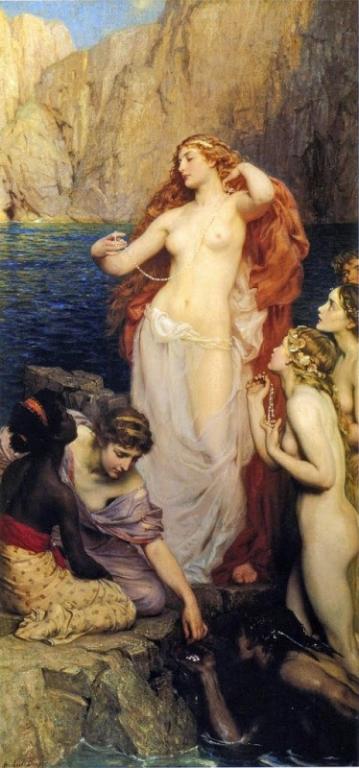 . . . . Bloggers writing about misappropriation and what gods are off limits to Pagans has me in a philosophical mood about the nature of deity. More to come . . . .
There’s a natural tendency to think of the gods as old, perhaps even as eternal and changeless, but the worship of deity has always been one of evolution. Some gods change, adding attributes and characteristics that stand in stark contrast to how that god was originally worshipped. Other gods get swept up in the flow of history, their worship perhaps absorbed by the name of another deity, and others are lost entirely, until they are no more than a forgotten name or artifact to an unknown deity. Gods rise, gods fall, gods are created, and gods are recreated.
About a month ago before a ritual at my house a friend of mine asked me “just how many statues do you and Ari (my wife) have of Aphrodite?” I stopped to think about it for a moment and eventually came up with the number eight, though that could have been an under-estimate. My wife and I love Aphrodite, she’s the goddess par excellance of our household, and my wife often speaks to her much like I speak to Pan, which means in a very personal and straightforward manner. I’m sure there are people who see our devotion to Aphrodite as perhaps a bit silly. After all, in a lot of Greek mythology she wasn’t taken all that seriously. She’s not a huntress like Artemis or a scholar like Athena, and often seems to be more about pleasure and superficial qualities than serious pursuits.
Beyond the realm of mythology Aphrodite stands as a complex and empowering figure. Her origins lie on the island of Cyprus where she was originally worshipped as a bird goddess alongside a male lord of animals. That early version of Aphrodite, whose name has been lost to history, was a goddess of birds, childbirth, sex, and perhaps even war as bronze was sacred to her. (Warfare and battle would also be seen as sacred to later versions of Aphrodite, especially on the island of Cythera and in the city-state of Sparta.)
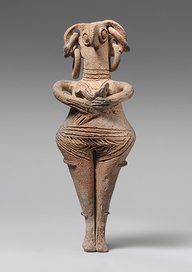 Cyprus, as an island nation, was settled by three diverse groups who all left a mark on the goddess that we would come to know as Aphrodite. The island’s first inhabitants worshipped her as described above. When people from the Middle East colonized the island they added bits and pieces of goddesses like Inanna and Astarte to the stew. When the Greeks eventually colonized the island they added their own traditions to the Cypriot Bird Goddess, gave her some additional mythology and a Greek name, and voila-Aphrodite! (1)
Sort of voila, because the worship of Aphrodite was always uneasy in many parts of Greece. Aphrodite was a goddess of freedom and because of that attribute was seen by many as a threat to the social order. We laugh and giggle at her sexual exploits today, but back in Ancient Greece women were not allowed to have sex outside of marriage, and there was Aphrodite encouraging such behavior! No wonder I love her so much, she’s a goddess who questions the accepted social order and rebels against it when she disagrees. We still live in an era where many of our friends and family are prohibited from marrying, we apparently need Aphrodite now more than ever.
 I bring up Aphrodite because she’s a good example of how deity evolves, and how that evolution can be traced through the archeological record. She has a specific “origin point” before spreading out and eventually becoming a part of a foreign pantheon. When making sweeping statements about deity, it’s important to remember that how we see them on the printed page (whether in mythology or a religious text) only represents how they were seen by one person or group. For every Aphrodite myth out there, they are probably two or three more that have been lost to history. Aphrodite was also a goddess that was at some point “new” to the religions of Ancient Greece. Pagan religions, both then and now, have a long history of adding deity to their pantheons from all sorts of sources and for all kinds of different reasons.
The history of almost every deity involves change and adaptation. The gods don’t come to us with a manual saying “here’s what I look like, here’s how I should be worshipped, and these are the things that are important to me.” All three of those things can change over time, and often do. Only a silly human would look at something as magnificent as deity and deny it the power to evolve. How deity evolves or why it calls to certain people might not make sense to us sometimes, but who am I to question such goings on?
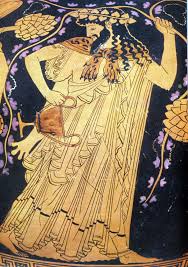
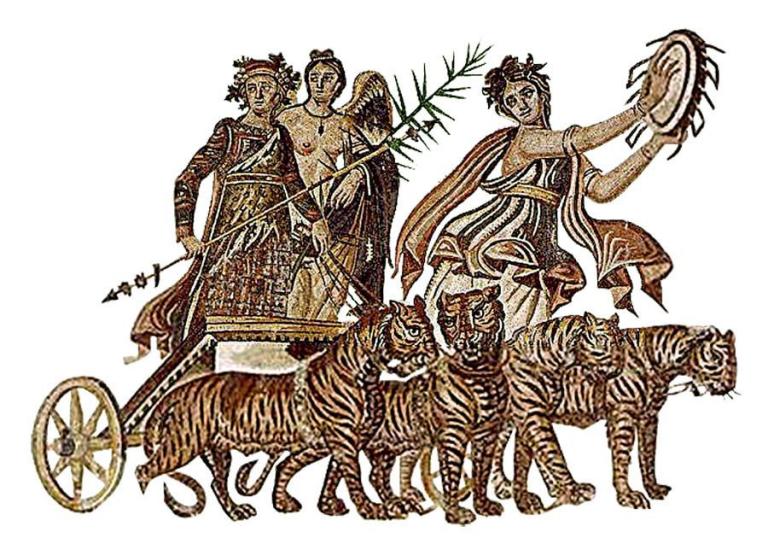
Dionysus was once pictured with a long beard, and then later he was depicted as being clean shaven. It’s a small thing, but it’s still an adaptation. He had a beard at some point because that beard meant something to his followers, just like being clean shaven meant something to other followers later. Some gods were first depicted as animals, or humans with animal like features, for many of them that changed over the centuries. Because I look to the pagans of antiquity for inspiration and occasional guidance it’s natural for me to see deity as something that constantly evolves, because the archeological record proves just that.
 In Modern Paganism we often stand aghast when one someone worships a god outside of a few accepted European and Middle Eastern pantheons, but why is that? Almost all of the people I know who worship Greek gods aren’t Greek (myself included, though Jason is a Greek name), but no one gets up in arms about it. Romans killed Druids, but worshipping Jove doesn’t piss off the people in ADF. The picking and choosing sometimes seems pretty arbitrary to me.
Many of the ancients honored deities regardless of origin point. The worship of Isis was popular throughout the Roman Empire. It wasn’t limited to Egyptians or Greeks, but could be celebrated by anyone. If deity calls to someone aren’t they supposed to listen? Is there a master list of deities Modern Pagans can and can’t talk to? Perhaps honoring Shiva and Kokopelli in my Wiccan circle are examples of misappropriation, but their signals came to me loud and clear. I’m not pretending to be Native American or Hindu when honoring them (and I’m not inserting footnotes into my ritual either to explain their origins), a god called, I listened. That’s what ancient pagans did, so it’s good enough for me as a Modern one.
1. For more on Aphrodite and the evolution of her worship I suggest picking up The Origin of Aphrodite by Stephanie Budin. It’s a challenging read and not meant for the layperson, but it’s a great read on the origins of my favorite goddess.
Previous Post

March 25, 2013
The Gods They Are a Changing
Next Post

March 28, 2013 Why I am a Pagan
Browse Our Archives
Select a Category Editorializing Gateways to Paganism Guest Posts Holiday Histories Led Zeppelin News and Views Occult Pagan Pagan TV Club Paganism polytheism Ramble On Reviews Ritual Strange Days Uncategorized
Select a Month August 2026 March 2026 February 2026 November 2025 September 2025 August 2025 April 2025 August 2024 April 2024 February 2024 December 2023 October 2023 August 2023 June 2023 May 2023 January 2023 October 2022 August 2022 July 2022 June 2022 May 2022 April 2022 March 2022 February 2022 January 2022 December 2021 November 2021 October 2021 September 2021 August 2021 July 2021 June 2021 April 2021 March 2021 February 2021 January 2021 December 2020 November 2020 October 2020 August 2020 July 2020 June 2020 May 2020 April 2020 March 2020 February 2020 January 2020 December 2019 November 2019 October 2019 September 2019 August 2019 July 2019 June 2019 May 2019 April 2019 March 2019 February 2019 January 2019 December 2018 November 2018 October 2018 September 2018 August 2018 July 2018 June 2018 May 2018 April 2018 March 2018 February 2018 January 2018 December 2017 November 2017 October 2017 September 2017 August 2017 July 2017 June 2017 May 2017 April 2017 March 2017 February 2017 January 2017 December 2016 November 2016 October 2016 September 2016 August 2016 July 2016 June 2016 May 2016 April 2016 March 2016 February 2016 January 2016 December 2015 November 2015 October 2015 September 2015 August 2015 July 2015 June 2015 May 2015 April 2015 March 2015 February 2015 January 2015 December 2014 November 2014 October 2014 September 2014 August 2014 July 2014 June 2014 May 2014 April 2014 March 2014 February 2014 January 2014 December 2013 November 2013 October 2013 September 2013 August 2013 July 2013 June 2013 May 2013 April 2013 March 2013 February 2013 January 2013 December 2012 November 2012 October 2012 September 2012 August 2012 July 2012 June 2012 April 2012 October 2011 September 2011 August 2011
Follow Us!
TAKE THE
Religious Wisdom Quiz
Who is credited with predicting Cyrus by name, who would rebuild Jerusalem?
Select your answer to see how you score.
Isaiah Ezekiel Jeremiah Zechariah
Related posts from Raise the Horns


The Return of the Pagan Scapegoats


Magickal & Pagan Gathers: Some Thoughts
TRENDING AT PATHEOS Pagan

The Sermon on the Mount, Part I: Matthew...
The Sermon on the Mount, Part I (Matthew 4:12-5:12) St. Matthew moves...

What's up from Crossway: Reviewing some of their latest A few weeks...

Janie Learns the Way of the Cross: A...
Teaching children about Jesus' Passion can be challenging. Many parents and educators...

Looking For Good Catholic Writing - October 2026
He alone extends the heavens, and he walks upon the waves of...

In "Irreplaceable," our book on vocation and technology, Trevor Sutton and I...

I was strolling through the top floor of the brand new Parthenon...
view all Pagan blogs
Ad-Free & Subscriber Log-In Subscription Support
- About Us
- 2026 Calendar
- Videos
- Podcasts
- Library of World Religions
- Faith In Media Tracker
- Advertise With Us
- Write for Us
- Privacy Policy
- Terms of Service
- Do Not Sell My Data
- Contact Us
- Radiant Digital
- Manage Newsletter Subscriptions
- Unsubscribe From Notifications
- Sitemap
Copyright 2008-2026, Patheos. All rights reserved.
Subscription Support Ad-Free & Subscriber Log-In
Follow Patheos