
BuddhistCatholicContemplativeEvangelicalGeneral ChristianHinduJewishLatter-day SaintMuslimNew VisionsProgressive Christian
Beliefs
- Buddhist
- Catholic
- Contemplative
- Evangelical
- General Christian
- Hindu
- Jewish
- Latter-day Saint
- More Voices
- Muslim
- New Visions
- Pagan
- Progressive Christian
Topics
- Religion News
- Food and Religion
- Sports and Religion
- Religious Art
- Religious Music and Entertainment
- Religious Events
- History and Religion
- Style and Religion
- Politics and Religion
- Women in Religion
- Recreation Outdoors and Religion
- Business Finance and Religion
- Careers Workplace and Religion
- Education and Religion
- Family Parenting and Religion
- Health Fitness and Religion
- Home and Religion
- Relationships and Religion
- Technology and Religion
- Travel and Religion
Columnists
- Buddhist Columnists
- Business Finance and Religion Columnists
- Careers Workplace and Religion Columnists
- Catholic Columnists
- Contemplative Columnists
- Education and Religion Columnists
- Evangelists Columnists
- Family Parenting and Religion Columnists
- General Christian Columnists
- Health Fitness and Religion Columnists
- Hindu Columnists
- History and Religion Columnists
- Home and Religion Columnists
- Jewish Columnists
- More Voices Columnists
- Latter Day Columnists
- Muslim Columnists
- New Visions Columnists
- Nonreligious Columnists
- Pagan Columnists
- Politics and Religion Columnists
- Progressive Columnists
- Recreation Outdoors and Religion Columnists
- Relationships and Religion Columnists
- Religion News Columnists
- Religious Art Columnists
- Religious Events Columnists
- Religious Music and Entertainment Columnists
- Sports and Religion Columnists
- Style and Religion Columnists
- Technology and Religion Columnists
- Travel and Religion Columnists
- Women in Religion Columnists
Resource Library
- 2026 Calendar
- Library of World Religions
- The 100 Most Holy Places on Earth
- Patheos Answers
- Podcasts
- Videos
- Faith Leaders Database
- Anglican Episcopalian
- Bahai
- Baptist
- Buddhism
- Christianity
- Confucianism
- Eastern Orthodoxy
- Hinduism
- Holiness and Pentecostal
- ISKCON
- Islam
- Judaism
- Lutheran
- Methodist
- The Church of Jesus Christ of Latter-day Saints
- New Age
- Paganism
- Presbytarian and Reformed
- Protestantism
- Religion Behind the Scenes
- Roman Catholic
- Scientology
- Shia Islam
- Sikhism
- Sufism
- Sunni Islam
- Taoism
- Zen
- See all religions
Research Tools
 Ad-Free & Subscriber Log-In Subscription Support
Ad-Free & Subscriber Log-In Subscription Support
Follow Patheos 

- Trending:
- Forgiveness
- |
- Marriage
- |
- Consciousness
- |
- Death Penalty
- |
- Election
- |
- Halloween

- HOME
- Me and the Blog
- Defining Pagan
- Rituals & Holidays
- All Posts
- Blogroll
- Publications
- FREE NEWSLETTER
- Home
- Pagan
- 25 Most Influential People in the Birth of Modern Paganism (Top 5)
25 Most Influential People in the Birth of Modern Paganism (Top 5)
Last updated on: March 7, 2013 at 12:07 pm by Jason Mankey
25 Most Influential People in the Birth of Modern Paganism (Top 5) 2013-03-07T12:07:34-07:00 Jason Mankey
Patheos Explore the world's faith through different perspectives on religion and spirituality! Patheos has the views of the prevalent religions and spiritualities of the world.
 The response to this series has far exceeded my expectations, which is of course both flattering and terrifying. If you are just coming aboard you are at the end of a 3-part series highlighting the people I think have been most important to Modern Paganism over the last 200 years. Part one looked at ten European pioneers, while part two focused on their eleven American cousins. Interspersed with those two lists were some smaller lists featuring people who just missed the cut or might make the cut fifteen years from now.
I’ve had a few people question my methodology so I thought I would explain how I made my selections. The most important question posed to myself while putting together this list was “Out of the 75 or so candidates, which of them affect how Pagans think and practice on a day to day and moment to moment basis?” That’s why someone like Philip Heselton isn’t on this list and Helena Blavatsky is. Most of us aren’t wondering if Gerald Gardner was initiated back in 1939 on a day to day basis, but we are probably contemplating the ideas of karma or reincarnation.
A lot of the list is also about what people have read, or will read in the future. Personally I adore Patricia Crowther, but the simple fact remains that more people have read Janet and Stewart Farrar. Their reach on Pagandom is bigger as a result of that. Including Wren Walker and Jason Pitzl-Waters is a reflection of that criteria, the traffic at their websites indicates that they have a lot of readers.
I also firmly believe that Modern Paganism is a direct descendant of the Western Magickal Tradition. The English branches of both Druidry and Witchcraft are tied directly and indirectly to institutions such as Freemasonry and the Golden Dawn. Many Pagans have moved away from the practice of Ceremonial Magick, but it’s still there anytime someone casts a circle or calls the Quarters.
I certainly don’t expect everyone to agree with my choices, but I like to think I made a valiant case for each. I think four of my top five are all very obvious choices, I expect a lot of disagreement about numbers three and four. Thanks for reading all three parts, all the comments, and sharing them all on social media.
 No 5. Aleister Crowley (1875-1947)
Why he’s on this list: The hoofprints of the Great Beast are all over Modern Paganism. From the way Crowley refined the magickal rituals of the Golden Dawn to his poetry and language, Uncle Al has had a huge impact on what most of us do on a day to day basis. Much of Crowley’s language and poetry was “borrowed” by both Gerald Gardner and Doreen Valiente when assembling much of the liturgy that would come to define British Traditional Witchcraft. While there’s a lot of doubt about just how religious and spiritual Crowley was, poems like Hymn to Pan capture the Horned God at his randiest, and Crowley’s work also call out to female deity, most notably “Sweet Nuit” in The Book of the Law.
Many of Crowley’s idea were inserted nearly whole scale into early Witchcraft, most certainly “an it harm none, do what you will” is a re-imagining of “do what thou wilt shall be the whole of the law.” Crowley’s re-writing of OTO Ritual was almost certainly influenced many English Witches. His practice of sex magick may have led to practices such as The Great Rite.
Why Crowley is not ranked higher: I think there is a case for Crowley at number one, and certainly in the top three, but I’m going to argue against it. Time has not been as kind to Crowley as it has to the others on this list. Books like Magick in Theory and Practice have a rather limited appeal, and while we often use fragments of Crowley’s words and writings in ritual, the context is often different. I’d probably make the argument that Crowley gave much of Modern Paganism its structure and spine along with certain ambiance, but he didn’t become our heart or soul.
No. 4 Doreen Valiente (1922-1999)
 Why she’s on this list: To put it simply Valiente is the most important liturgist in the history of Modern Pagandom. Sure not everyone recites her Charge of the Goddess but it’s familiar to just about everyone. Valiente took some of the rather rudimentary rituals of early Witchcraft and turned them into poetry. Her influence on how we speak the language of Paganism will still be felt in a hundred years, and that’s an amazing achievement.
Valiente is not on this list just because of her early work with Gerald Gardner, she’s here because she’s one of the unifying threads of Modern Paganism. She researched the beginnings of Modern Witchcraft with Stewart and Janet Farrar, and worked with Robert Cochrane. She was one of our first historians, when it comes to Pagan History Books Valiente’s The Rebirth of Witchcraft is an essential text (and a book I treasure and have re-read at least a dozen times). She was also a leading light in the attempt to build Pagan Community in Great Britain. When Valiente is called “The Mother of Modern Witchcraft” it’s not an exaggeration.
Why she’s not ranked higher: I don’t have a good answer for that, if anything Valiente is the soul of Modern Paganism; she’s what many of us aspire to. I have no doubt that Valiente would have been fully capable of creating her own Witchcraft Tradition had she chosen to do so, but she seemed to mainly refine and polish the Paganisms she encountered. I don’t mean that as an insult, because it takes real genius to make what was already good into something truly great.
 No. 3 Starhawk (1951-present)
Why she’s on this list: The first draft of this list had Starhawk listed at number five, but upon further consideration I decided that the ranking was just too low. I know it probably makes more sense to put Valiente in the number three spot, but hear me out. The influence of Starhawk (and people like her) is what changed British Witchcraft into Paganism. Starhawk wasn’t the first person to fuse political action, feminism, and Witchcraft, but she did it better (and more articulately) than anyone else. Starhawk brought new ideas and passions into Paganism and made them feel as if they had always been there.
Over thirty years after its initial publication The Spiral Dance (1979) remains a vital “how to” book. Sure Raymond Buckland might have done it first, but The Tree feels incomplete when compared to Dance. Starhawk also introduced concepts from Victor and Cora Anderson’s Feri Tradition to the wider world, she bridged the worlds between American and European Witchcraft. If that wasn’t enough she helped to found the Reclaiming Tradition, and has been an active participant in religious dialogue on a global scale.
Why she’s not higher: I think in some ways that Starhawk is the heart of Modern Paganism. Her gifts to the umbrella were those of awareness and activism. She certainly changed what was already there, but she didn’t create it, she only added to it.
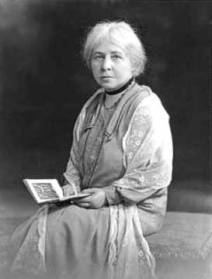 No. 2 Margaret Murray (1863-1963)
Why she’s on this list: If there’s a surprise inclusion on this list it’s Murray. Talking to friends the last 48 hours she was the one figure that everyone trying to figure out my “Top 5” seemed to forget about. Murray was a well respected Egyptologist and mostly a serious academic (books like God of the Witches were obviously meant for a general audience) but is a major figure in the Modern Pagan Revival because of her books on Witchcraft and the Horned God.
It’s easy in retrospect to dismiss Murray’s Witch-cult in Western Europe (1921). Murray’s hypothesis that the innocents killed in Europe’s “Witch Trials” represented a secret underground pagan religion has been dismissed by a majority of scholars today, but the theory continues to hold a lot of power in Modern Paganism. Regardless of how factual the Murray hypothesis is, it became one of the founding myths of Witchcraft, and as a result Modern Paganism. In addition to providing a mythology, Murray provided the terminology that would become a part of many Pagan traditions. We use words like coven and esbat because they were words that Murray used.
Murray redeemed and legitimized the word “witch.” After reading Murray you want to practice Witchcraft and you want to be a Pagan. Her history of the Horned God in God of the Witches is everything you want a Pagan archetype to be. She traces the worship of Old Horny back to the Cave of the Three Brothers in France and its portrait of “The Sorcerer” to Pan and Cernunnos and then later Robin Hood. Murray’s Witch Religion is a faith of joy and exuberance and I’m certain that it influenced countless people to want to be Witches. She also endorsed Gardner’s version of Witchcraft writing the introduction to Witchcraft Today back in 1954.
Why she’s not higher: There’s only one person who could be number one on this list, but it’s important not to overlook Murray. Without Murray it’s possible that early Pagans might have all called themselves Druids or Heathens and the empowering mantle of witch would have never been worn in Contemporary Paganism. Certainly the influence of Murray’s “Witch-cult Hypothesis” will continue to fade in the coming decades, but her other contributions to Modern Paganism will continue. Besides even if Murray’s theory isn’t exactly true in the literal sense I think many of us will continue to feel a kinship with the women (and men) who were needlessly murdered in the name of religion centuries ago.
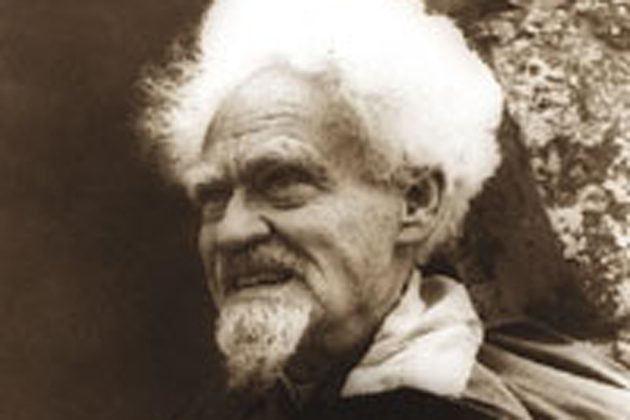 No. 1 Gerald Gardner (1884-1964)
Why he’s here: I don’t think there was any real suspense about the number one spot on this list. Even Gardner’s detractors (and there are many) can’t deny his accomplishments. To put it simply Gardner was the first person to share with the world what would become a long-lasting religious and/or magickal tradition that most of us today would recognize as Pagan. His “Wica” had four quarters, a magick circle, a Goddess, a God, and a High Priestess. All of those elements existed before Gardner, but had never endured together for decades until Gardner.
It also doesn’t matter if Gardner was initiated into a coven back in 1939 or completely made his Witch Religion up. If he was initiated and his faith tradition traces back to that group then he’s the great revealer, sharing a new religion with the rest of the world. If he simply assembled the various pieces that make up Modern Witchcraft then he’s the great architect, the creator of a religious tradition that has now taken a seat next to the other great religions of the world. If you were to ask my opinion, I think Gardner exists somewhere between revealer and architect, someone who was probably initiated into something back in 1939 and then added to it.
I know my Top 5 is rather “Wicca-centered” but that’s only because Wicca has been the most dominant branch of the Pagan tree for the last 70 years. If it makes any of you feel better, Gardner himself was no doubt influenced by Druids like Ross Nichols and most likely encountered New Orleans Voodoo when he visited the United States back in 1947-48. Gardner’s interests were wide-ranging and he absorbed influences from various spiritualities. Gardner’s version of Witchcraft was the first public and long-lasting religion Pagan religion of the 20th Century, as such it’s going to have a high place on lists such as this one.
—
Thanks for reading and feel free to share your own “Top 5” list in the comments section.
Next Post

March 12, 2013 Eostre, Easter, Ostara, Eggs, and Bunnies
Browse Our Archives
Select a Category Editorializing Gateways to Paganism Guest Posts Holiday Histories Led Zeppelin News and Views Occult Pagan Pagan TV Club Paganism polytheism Ramble On Reviews Ritual Strange Days Uncategorized
Select a Month August 2026 March 2026 February 2026 November 2025 September 2025 August 2025 April 2025 August 2024 April 2024 February 2024 December 2023 October 2023 August 2023 June 2023 May 2023 January 2023 October 2022 August 2022 July 2022 June 2022 May 2022 April 2022 March 2022 February 2022 January 2022 December 2021 November 2021 October 2021 September 2021 August 2021 July 2021 June 2021 April 2021 March 2021 February 2021 January 2021 December 2020 November 2020 October 2020 August 2020 July 2020 June 2020 May 2020 April 2020 March 2020 February 2020 January 2020 December 2019 November 2019 October 2019 September 2019 August 2019 July 2019 June 2019 May 2019 April 2019 March 2019 February 2019 January 2019 December 2018 November 2018 October 2018 September 2018 August 2018 July 2018 June 2018 May 2018 April 2018 March 2018 February 2018 January 2018 December 2017 November 2017 October 2017 September 2017 August 2017 July 2017 June 2017 May 2017 April 2017 March 2017 February 2017 January 2017 December 2016 November 2016 October 2016 September 2016 August 2016 July 2016 June 2016 May 2016 April 2016 March 2016 February 2016 January 2016 December 2015 November 2015 October 2015 September 2015 August 2015 July 2015 June 2015 May 2015 April 2015 March 2015 February 2015 January 2015 December 2014 November 2014 October 2014 September 2014 August 2014 July 2014 June 2014 May 2014 April 2014 March 2014 February 2014 January 2014 December 2013 November 2013 October 2013 September 2013 August 2013 July 2013 June 2013 May 2013 April 2013 March 2013 February 2013 January 2013 December 2012 November 2012 October 2012 September 2012 August 2012 July 2012 June 2012 April 2012 October 2011 September 2011 August 2011
Follow Us!
TAKE THE
Religious Wisdom Quiz
What was the name of the first murderer in the Bible?
Select your answer to see how you score.
Ishmael Lamech Esau Cain
Related posts from Raise the Horns

Raymond Buckland & The Big Blue Book


The Return of the Pagan Scapegoats

TRENDING AT PATHEOS Pagan

The Sermon on the Mount, Part I: Matthew...
The Sermon on the Mount, Part I (Matthew 4:12-5:12) St. Matthew moves...

What's up from Crossway: Reviewing some of their latest A few weeks...

Janie Learns the Way of the Cross: A...
Teaching children about Jesus' Passion can be challenging. Many parents and educators...

Looking For Good Catholic Writing - October 2026
He alone extends the heavens, and he walks upon the waves of...

In "Irreplaceable," our book on vocation and technology, Trevor Sutton and I...

I was strolling through the top floor of the brand new Parthenon...
view all Pagan blogs
Ad-Free & Subscriber Log-In Subscription Support
- About Us
- 2026 Calendar
- Videos
- Podcasts
- Library of World Religions
- Faith In Media Tracker
- Advertise With Us
- Write for Us
- Privacy Policy
- Terms of Service
- Do Not Sell My Data
- Contact Us
- Radiant Digital
- Manage Newsletter Subscriptions
- Unsubscribe From Notifications
- Sitemap
Copyright 2008-2026, Patheos. All rights reserved.
Subscription Support Ad-Free & Subscriber Log-In
Follow Patheos