
BuddhistCatholicContemplativeEvangelicalGeneral ChristianHinduJewishLatter-day SaintMuslimNew VisionsProgressive Christian
Beliefs
- Buddhist
- Catholic
- Contemplative
- Evangelical
- General Christian
- Hindu
- Jewish
- Latter-day Saint
- More Voices
- Muslim
- New Visions
- Pagan
- Progressive Christian
Topics
- Religion News
- Food and Religion
- Sports and Religion
- Religious Art
- Religious Music and Entertainment
- Religious Events
- History and Religion
- Style and Religion
- Politics and Religion
- Women in Religion
- Recreation Outdoors and Religion
- Business Finance and Religion
- Careers Workplace and Religion
- Education and Religion
- Family Parenting and Religion
- Health Fitness and Religion
- Home and Religion
- Relationships and Religion
- Technology and Religion
- Travel and Religion
Columnists
- Buddhist Columnists
- Business Finance and Religion Columnists
- Careers Workplace and Religion Columnists
- Catholic Columnists
- Contemplative Columnists
- Education and Religion Columnists
- Evangelists Columnists
- Family Parenting and Religion Columnists
- General Christian Columnists
- Health Fitness and Religion Columnists
- Hindu Columnists
- History and Religion Columnists
- Home and Religion Columnists
- Jewish Columnists
- More Voices Columnists
- Latter Day Columnists
- Muslim Columnists
- New Visions Columnists
- Nonreligious Columnists
- Pagan Columnists
- Politics and Religion Columnists
- Progressive Columnists
- Recreation Outdoors and Religion Columnists
- Relationships and Religion Columnists
- Religion News Columnists
- Religious Art Columnists
- Religious Events Columnists
- Religious Music and Entertainment Columnists
- Sports and Religion Columnists
- Style and Religion Columnists
- Technology and Religion Columnists
- Travel and Religion Columnists
- Women in Religion Columnists
Resource Library
- 2026 Calendar
- Library of World Religions
- The 100 Most Holy Places on Earth
- Patheos Answers
- Podcasts
- Videos
- Faith Leaders Database
- Anglican Episcopalian
- Bahai
- Baptist
- Buddhism
- Christianity
- Confucianism
- Eastern Orthodoxy
- Hinduism
- Holiness and Pentecostal
- ISKCON
- Islam
- Judaism
- Lutheran
- Methodist
- The Church of Jesus Christ of Latter-day Saints
- New Age
- Paganism
- Presbytarian and Reformed
- Protestantism
- Religion Behind the Scenes
- Roman Catholic
- Scientology
- Shia Islam
- Sikhism
- Sufism
- Sunni Islam
- Taoism
- Zen
- See all religions
Research Tools
 Ad-Free & Subscriber Log-In Subscription Support
Ad-Free & Subscriber Log-In Subscription Support
Follow Patheos 

- Trending:
- Forgiveness
- |
- Marriage
- |
- Consciousness
- |
- Death Penalty
- |
- Election
- |
- Halloween

- HOME
- Me and the Blog
- Defining Pagan
- Rituals & Holidays
- All Posts
- Blogroll
- Publications
- FREE NEWSLETTER
- Home
- Pagan
- Whither the Word Witch
Whither the Word Witch
Last updated on: January 31, 2013 at 3:43 pm by Jason Mankey
Whither the Word Witch 2013-01-31T15:43:41-07:00 Jason Mankey
Patheos Explore the world's faith through different perspectives on religion and spirituality! Patheos has the views of the prevalent religions and spiritualities of the world.
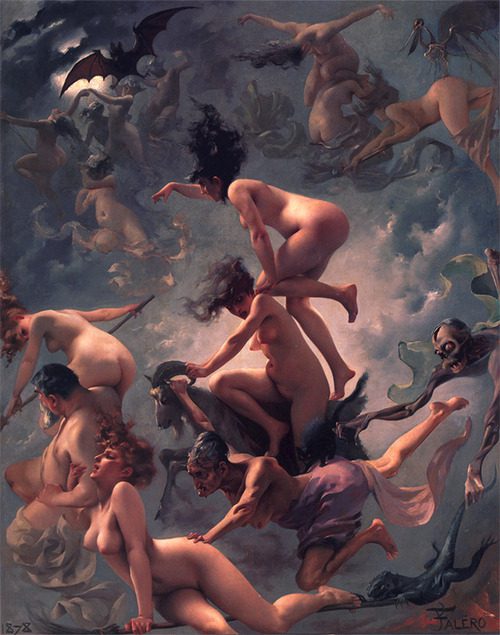 A friend of mine sent me a message the other day conveying outrage over the use of the word “witch” in the movie Hansel and Gretel: Witch Hunters. She was upset because Hollywood would never dare make a movie called Hansel and Gretel: Christian Hunters, so why was it OK to hunt witches? I certainly hope we are free and clear of witch hunts in 2013, but I can’t find it in myself to get upset over the use of the word witch in (what I assume is) a bad movie. (It was dumped on the public in January, usually that’s all I need to know about a film.)
For the record, I love the word Witch. Like many other folks, I find it empowering, but I reserve its use for special occasions. In ritual I think of it sort of like Dave’s Insanity Sauce*, a few well placed drops are all that’s needed. When I want to elicit a shiver and connect with a ritual uppercut I bring out the W word. It’s also a word I use to describe myself and my own practice. I’m a Pagan who practices Witchcraft and I’m damn proud of that, but witch is a problematic word, perhaps even more so than Pagan, and that’s saying a lot.
The reason I can’t get upset about the title Hansel and Gretel: Witch Hunters, is because “witch” has several definitions. For most people the word witch means what it always has “one that is credited with usually malignant supernatural powers; especially : a woman practicing usually black witchcraft often with the aid of a devil or familiar” (from Merriam-Webster). That definition doesn’t match-up with anyone I know who calls themselves a witch, but it’s the definition that most of the English speaking world has been using for centuries.
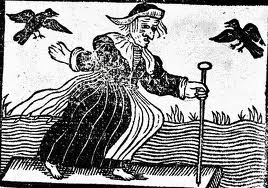 Until relatively recently, the word witch was nearly always used in a negative context. Witches were people who worked negative magic. The word witch usually didn’t signify a religious practice, it simply meant “bad magic user, usually female. These are the witches of fairy-tales, and some elements of pop culture. Witch is not necessarily a synonym for “magic user” either, the “negative magic” part is essential for understanding how the word witch was (and still is in some contexts) used.
A lot of folks suffer under the misconception that magic went away in the English speaking world until the formation of the Golden Dawn. Nothing could be further from the truth. Throughout the Middle Ages, the Renaissance, and even now all kinds of people were (and are) using magic. Early 19th Century magic users, for example, would have never thought of themselves as witches. In fact they used their magic to oppose witches. You can find examples of this in the Renaissance too. Magic was not inherently bad, but witches were people (and often supernatural specter-like entities) who made it bad. In Voodoo and Hoodoo traditions this was also true, witchcraft was nearly always thought of as a negative.
There were certainly a lot of Christians who found the use of anything magical to be a form of “witchcraft” and indeed, even today anything that people don’t understand or are fearful of sometimes gets labeled as witchcraft. (I can’t help but think of Ricky Bobby from the movie Talladega Nights screaming “Tom Cruise, help me with your witchcraft!”) Christians who used magic thought of themselves as Christians who used magic. It was just another tool in the toolbox, magic and religion were separate things.
The word began to take on more romantic connotations in the late 19th Century, with that process really picking up steam after the publication of Margaret Murray’s Witch Cult in Western Europe in 1921. Murray turned witchcraft into Witchcraft; it wasn’t just a term for negative magic (or Satan worship) but for a religion, and Murray’s Witch Religion was something that a lot of people found appealing. (For the record, a lot of Murray’s ideas were borrowed from Jules Michelet’s La Sorcière.) Murray’s book provided the impetus for people to want to call themselves Witches in the 20th Century.
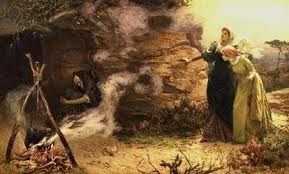 My argument that Murray (and a few others) began the use of the word “Witch” in a religious context doesn’t mean that I necessarily doubt the “oldness” of some Modern Pagan traditions, it just means that I don’t think the people practicing those things would have thought of themselves as witches. Magical practices are extremely resilient, and certainly could have been passed down in families for generations (and you can see this with some centuries old cunningcraft books), but use of magic doesn’t mean someone self identifies as a witch. That’s an important distinction to remember.
In the 1950’s Gerald Gardner began to use the word Witchcraft to describe Wiccan religion (or as Gardner spelled it in those early days, Wica). Though it’s hard to be certain how much Gardner actually believed in deities, I feel comfortable in my belief that Gardner was using the word Witchcraft to describe a religious practice. The books are called Witchcraft Today (1954) and The Meaning of Witchcraft (1959), and they aren’t spell books. Gardner’s version** of Witchcraft is a practice and a faith. As an initiated Gardnarian Witch I think of what I do as a religious practice.
 I bring this up because I often run into people who get upset when Witch is used as a synonym for Wiccan. What I do falls under the umbrella of British Traditional Witchcraft, and in my practice I use Wicca and Witchcraft to mean the same thing. As language is a living thing, I do believe that the word witch is evolving to mean “empowered magic user” in many circles. Pop culture is full of beautiful young women practicing magic and calling themselves witches. It almost always seems void of a religious center (though a lot of the trappings do resemble things we see in Modern Witchcraft the religion), but that’s fine. I know people who call themselves Christian Witches because they’ve begun to associate the use of positive magic with the word witch while still going to church, etc. I’m sure we all know kitchen witches too, people who seem to put magic into everything they touch, definitely witches too.
Words are capable of several different definitions, and the dictionary I quoted earlier contains about five. When using the word witch I try to be careful about speaking in absolutes (and this comes up often in my writing and speaking). When someone tells me that “Witch” and “Wiccan” aren’t synonyms they can both be right and wrong. If I choose to use them that way I feel completely justified in doing so, as they are synonyms in my own personal practice. I also realize that not everyone uses the word witch exactly like I do, which is completely fine. I don’t own the definition of the word anymore than you do. I’m perfectly comfortable with a word having multiple meanings, and I’m reasonably certain that we are all smart enough to understand the context.
That brings me back to Hansel and Gretel: Witch Hunters. Words have multiple meanings and the “witches” being hunted by Hansel and Gretel aren’t the witches that make up my community. Now if Hansel and Gretel were to start hunting goddess worshippers who aren’t out to hurt anyone, then we would have a problem. At that point they are attacking a particular religious belief system and that’s certainly bollocks. With the word witch many of us are embracing a word with centuries of tradition and baggage behind it. We cherish it because we find it empowers and speaks to us, but you have to accept the good with the bad. No one is trying to tar and feather Modern Witchcraft, they are just using a definition of the word witch that’s been around long before we were on the scene.
*Not a paid endorsement, though I do like the hot sauce.
**I write that very much with the belief that Gardner was initiated into something in 1939.
Previous Post

January 29, 2013
Refusing to Paint With Broad Strokes
Next Post

February 5, 2013 My Gods are Gay, My Gods are Straight (And Everything in Between)
Browse Our Archives
Select a Category Editorializing Gateways to Paganism Guest Posts Holiday Histories Led Zeppelin News and Views Occult Pagan Pagan TV Club Paganism polytheism Ramble On Reviews Ritual Strange Days Uncategorized
Select a Month August 2026 March 2026 February 2026 November 2025 September 2025 August 2025 April 2025 August 2024 April 2024 February 2024 December 2023 October 2023 August 2023 June 2023 May 2023 January 2023 October 2022 August 2022 July 2022 June 2022 May 2022 April 2022 March 2022 February 2022 January 2022 December 2021 November 2021 October 2021 September 2021 August 2021 July 2021 June 2021 April 2021 March 2021 February 2021 January 2021 December 2020 November 2020 October 2020 August 2020 July 2020 June 2020 May 2020 April 2020 March 2020 February 2020 January 2020 December 2019 November 2019 October 2019 September 2019 August 2019 July 2019 June 2019 May 2019 April 2019 March 2019 February 2019 January 2019 December 2018 November 2018 October 2018 September 2018 August 2018 July 2018 June 2018 May 2018 April 2018 March 2018 February 2018 January 2018 December 2017 November 2017 October 2017 September 2017 August 2017 July 2017 June 2017 May 2017 April 2017 March 2017 February 2017 January 2017 December 2016 November 2016 October 2016 September 2016 August 2016 July 2016 June 2016 May 2016 April 2016 March 2016 February 2016 January 2016 December 2015 November 2015 October 2015 September 2015 August 2015 July 2015 June 2015 May 2015 April 2015 March 2015 February 2015 January 2015 December 2014 November 2014 October 2014 September 2014 August 2014 July 2014 June 2014 May 2014 April 2014 March 2014 February 2014 January 2014 December 2013 November 2013 October 2013 September 2013 August 2013 July 2013 June 2013 May 2013 April 2013 March 2013 February 2013 January 2013 December 2012 November 2012 October 2012 September 2012 August 2012 July 2012 June 2012 April 2012 October 2011 September 2011 August 2011
Follow Us!
TAKE THE
Religious Wisdom Quiz
What woman became a queen and saved her people?
Select your answer to see how you score.
Hannah Esther Deborah Miriam
Related posts from Raise the Horns

What Makes a Good Ritualist? No Idea

Witchcraft Remembrances & Appreciation at Samhaintide

Raymond Buckland & The Big Blue Book

TRENDING AT PATHEOS Pagan

The Sermon on the Mount, Part I: Matthew...
The Sermon on the Mount, Part I (Matthew 4:12-5:12) St. Matthew moves...

What's up from Crossway: Reviewing some of their latest A few weeks...

Janie Learns the Way of the Cross: A...
Teaching children about Jesus' Passion can be challenging. Many parents and educators...

Looking For Good Catholic Writing - October 2026
He alone extends the heavens, and he walks upon the waves of...

In "Irreplaceable," our book on vocation and technology, Trevor Sutton and I...

I was strolling through the top floor of the brand new Parthenon...
view all Pagan blogs
Ad-Free & Subscriber Log-In Subscription Support
- About Us
- 2026 Calendar
- Videos
- Podcasts
- Library of World Religions
- Faith In Media Tracker
- Advertise With Us
- Write for Us
- Privacy Policy
- Terms of Service
- Do Not Sell My Data
- Contact Us
- Radiant Digital
- Manage Newsletter Subscriptions
- Unsubscribe From Notifications
- Sitemap
Copyright 2008-2026, Patheos. All rights reserved.
Subscription Support Ad-Free & Subscriber Log-In
Follow Patheos