
BuddhistCatholicContemplativeEvangelicalGeneral ChristianHinduJewishLatter-day SaintMuslimNew VisionsProgressive Christian
Beliefs
- Buddhist
- Catholic
- Contemplative
- Evangelical
- General Christian
- Hindu
- Jewish
- Latter-day Saint
- More Voices
- Muslim
- New Visions
- Pagan
- Progressive Christian
Topics
- Religion News
- Food and Religion
- Sports and Religion
- Religious Art
- Religious Music and Entertainment
- Religious Events
- History and Religion
- Style and Religion
- Politics and Religion
- Women in Religion
- Recreation Outdoors and Religion
- Business Finance and Religion
- Careers Workplace and Religion
- Education and Religion
- Family Parenting and Religion
- Health Fitness and Religion
- Home and Religion
- Relationships and Religion
- Technology and Religion
- Travel and Religion
Columnists
- Buddhist Columnists
- Business Finance and Religion Columnists
- Careers Workplace and Religion Columnists
- Catholic Columnists
- Contemplative Columnists
- Education and Religion Columnists
- Evangelists Columnists
- Family Parenting and Religion Columnists
- General Christian Columnists
- Health Fitness and Religion Columnists
- Hindu Columnists
- History and Religion Columnists
- Home and Religion Columnists
- Jewish Columnists
- More Voices Columnists
- Latter Day Columnists
- Muslim Columnists
- New Visions Columnists
- Nonreligious Columnists
- Pagan Columnists
- Politics and Religion Columnists
- Progressive Columnists
- Recreation Outdoors and Religion Columnists
- Relationships and Religion Columnists
- Religion News Columnists
- Religious Art Columnists
- Religious Events Columnists
- Religious Music and Entertainment Columnists
- Sports and Religion Columnists
- Style and Religion Columnists
- Technology and Religion Columnists
- Travel and Religion Columnists
- Women in Religion Columnists
Resource Library
- 2026 Calendar
- Library of World Religions
- The 100 Most Holy Places on Earth
- Patheos Answers
- Podcasts
- Videos
- Faith Leaders Database
- Anglican Episcopalian
- Bahai
- Baptist
- Buddhism
- Christianity
- Confucianism
- Eastern Orthodoxy
- Hinduism
- Holiness and Pentecostal
- ISKCON
- Islam
- Judaism
- Lutheran
- Methodist
- The Church of Jesus Christ of Latter-day Saints
- New Age
- Paganism
- Presbytarian and Reformed
- Protestantism
- Religion Behind the Scenes
- Roman Catholic
- Scientology
- Shia Islam
- Sikhism
- Sufism
- Sunni Islam
- Taoism
- Zen
- See all religions
Research Tools
 Ad-Free & Subscriber Log-In Subscription Support
Ad-Free & Subscriber Log-In Subscription Support
Follow Patheos 

- Trending:
- Forgiveness
- |
- Marriage
- |
- Consciousness
- |
- Death Penalty
- |
- Election
- |
- Halloween

- HOME
- Me and the Blog
- Defining Pagan
- Rituals & Holidays
- All Posts
- Blogroll
- Publications
- FREE NEWSLETTER
- Home
- Pagan
- Noah’s Ark (Or Why Does Some Mythology Get a Free Pass?)
Noah’s Ark (Or Why Does Some Mythology Get a Free Pass?)
Last updated on: December 13, 2012 at 10:12 am by Jason Mankey
Noah’s Ark (Or Why Does Some Mythology Get a Free Pass?) 2012-12-13T10:12:49-07:00 Jason Mankey
Patheos Explore the world's faith through different perspectives on religion and spirituality! Patheos has the views of the prevalent religions and spiritualities of the world.
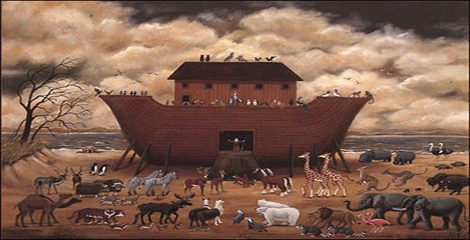 Just how dominant is Christianity in Western Culture? To find out, you don’t have to look much further than the recent stories about the “truth” of Noah’s Ark and the flood which were written about in the book of Genesis. There’s probably more evidence for the existence of Sasquatch than the existence of Noah and his ark, but our media always tends to treat folks like the mythical Noah as if they were actual flesh and blood people. If a character is “Biblical” they are afforded a level of historicity that individuals like King Arthur and Jason (of the Argonauts) are not.
I don’t consider calling something “mythical” an insult. I believe in many myths, and they form the foundation of my belief system, but I don’t have to believe them in a literal sense. In Greek myth, Dionysus married the mortal woman Ariadne and she became a goddess in her own right. I don’t believe that literally happened, but the myth points to the idea that by worshipping Dionysus one can gain a measure of immortality. It’s a story designed to illustrate a truth.
The story of Noah and his ark is designed to do the same thing, illustrate a truth in the form of a story. In the case of Noah, the point is don’t piss off Yahweh or he’ll (in his own words) “wipe from the face of the earth every living creature I have made.” Obviously things didn’t happen exactly like that. There are too many animals from too much varied genetic stock for all creatures to have come from one coupling. Noah’s mythical boat is thought to have been very big (and certainly very smelly), but there’s no way it could have been large enough for an entire menagerie of Earth’s animals. In some ways the story of Noah is kind of like one of Aesop’s Fables, it’s an attempt tell you something, with Noah being about as real as Aesop’s Town and Country Mouses.
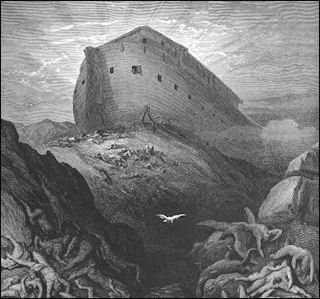 Mythology often has kernels of historical truth, and the story of Noah might be an example of that. Underneath the headlines about “The Biblical Flood” a different narrative emerges. Yes, it appears there was a giant flood affecting the area around the Black Sea 7000 years ago (5000 BCE), but that doesn’t make the flood “Biblical.” The researchers claim that a giant rush of water swept in from the Mediterranean Sea and poured into the Black Sea, causing a major flood extending for thousands of square miles. I’ve heard this theory before (I keep up on my religion news), and the science behind it seems pretty good (the main researcher in the current crop of stories is Robert Ballard, who discovered the remains of the Titanic in 1985), but a giant flood caused from glacial runoff is not “raining for forty days and forty nights.” It’s geological, not Biblical.
Stories of arks and floods appear in many cultures. A flood appears in the legend of Gilgamesh, but I don’t take that whole account literally, even though most historians think Gilgamesh was a real person. The Greeks had three different flood stories, and there were some told by the people of the Americas as well. This doesn’t mean a giant flood covered the world and that we are all the descendants of Noah and his family, it simply means that when great floods happened in antiquity, mythology arose to explain them. Trying to connect an ancient flood to a non-historical personage is intellectually dishonest. It probably helps drum up interest in a story, but I don’t think it makes good for science of history.
 The media is to blame for a lot of these problems, there’s big money in keeping Christians happy. If someone were to suggest that the story of Moses and the Exodus is more mythological than factual they might be met with protest. Scientists and researchers who have to constantly seek funding know that inserting language that implies The Bible is literally true will make people more likely to open up their wallets. (Many archeological digs are funded by Christian groups for the express purpose of “proving” the Bible, again that might make for interesting research, but it doesn’t make for good science.) I understand the importance of drawing eyeballs and coming up with funding (I really do!) but it all could be done in a much more honest sort of way. Every once in awhile I’d like to see a few quotes in there from The Skeptical Inquirer; at least bump the actual “facts” up a few paragraphs and tone down the hysteria please.
No one goes off looking for The Golden Fleece anymore, and if they did they’d probably be ridiculed. What our culture doesn’t ridicule are silly attempts to look for fictional objects like Noah’s Ark. This summer the search for Noah’s Ark by former Playboy model Donna D’Errico was all over the news. Strangely no one asked her the question “the ark was made of wood, don’t you think it would have rotted away by now?” But hey, it’s The Bible, the one piece of mythology our culture has decided is somehow literally true even when there’s no evidence for that being the case.
Previous Post

December 10, 2012
Pagans and The Hobbit
Next Post
December 14, 2012 Sometimes Faith Has No Answer
Browse Our Archives
Select a Category Editorializing Gateways to Paganism Guest Posts Holiday Histories Led Zeppelin News and Views Occult Pagan Pagan TV Club Paganism polytheism Ramble On Reviews Ritual Strange Days Uncategorized
Select a Month August 2026 March 2026 February 2026 November 2025 September 2025 August 2025 April 2025 August 2024 April 2024 February 2024 December 2023 October 2023 August 2023 June 2023 May 2023 January 2023 October 2022 August 2022 July 2022 June 2022 May 2022 April 2022 March 2022 February 2022 January 2022 December 2021 November 2021 October 2021 September 2021 August 2021 July 2021 June 2021 April 2021 March 2021 February 2021 January 2021 December 2020 November 2020 October 2020 August 2020 July 2020 June 2020 May 2020 April 2020 March 2020 February 2020 January 2020 December 2019 November 2019 October 2019 September 2019 August 2019 July 2019 June 2019 May 2019 April 2019 March 2019 February 2019 January 2019 December 2018 November 2018 October 2018 September 2018 August 2018 July 2018 June 2018 May 2018 April 2018 March 2018 February 2018 January 2018 December 2017 November 2017 October 2017 September 2017 August 2017 July 2017 June 2017 May 2017 April 2017 March 2017 February 2017 January 2017 December 2016 November 2016 October 2016 September 2016 August 2016 July 2016 June 2016 May 2016 April 2016 March 2016 February 2016 January 2016 December 2015 November 2015 October 2015 September 2015 August 2015 July 2015 June 2015 May 2015 April 2015 March 2015 February 2015 January 2015 December 2014 November 2014 October 2014 September 2014 August 2014 July 2014 June 2014 May 2014 April 2014 March 2014 February 2014 January 2014 December 2013 November 2013 October 2013 September 2013 August 2013 July 2013 June 2013 May 2013 April 2013 March 2013 February 2013 January 2013 December 2012 November 2012 October 2012 September 2012 August 2012 July 2012 June 2012 April 2012 October 2011 September 2011 August 2011
Follow Us!
TAKE THE
Religious Wisdom Quiz
What famous prophecy is given in Isaiah 53?
Select your answer to see how you score.
Cyrus the Great's reign The suffering servant Messiah Plague in Egypt Destruction of Edom
Related posts from Raise the Horns

The Great God Pan Among the Stars

What Makes a Good Ritualist? No Idea
TRENDING AT PATHEOS Pagan

Methodist Central Hall and Westminster Abbey
Situated on the same square is Methodist Central Hall and Westminster Abbey. ...

57th Dove Awards Honor Dolly Parton, Crown New...
On gospel music’s biggest night, the 57th annual GMA Dove Awards honored...

The First Eucharistic Controversy: Christ’s Real Presence
For Catholics, the Eucharist is the source and summit of the Christian...

What a Stop Sign Can Teach Us About...
How to Make a Decision When You Can't Hear God Main point:...

Archdiocese Hosts Military Marriage Retreat in Germany
RASTATT, Germany — The transient military lifestyle, with its frequent deployments and...

Nearly every morning, I make the drive to Detroit with my high-school-age...
view all Pagan blogs
Ad-Free & Subscriber Log-In Subscription Support
- About Us
- 2026 Calendar
- Videos
- Podcasts
- Library of World Religions
- Faith In Media Tracker
- Advertise With Us
- Write for Us
- Privacy Policy
- Terms of Service
- Do Not Sell My Data
- Contact Us
- Radiant Digital
- Manage Newsletter Subscriptions
- Unsubscribe From Notifications
- Sitemap
Copyright 2008-2026, Patheos. All rights reserved.
Subscription Support Ad-Free & Subscriber Log-In
Follow Patheos