
BuddhistCatholicContemplativeEvangelicalGeneral ChristianHinduJewishLatter-day SaintMuslimNew VisionsProgressive Christian
Beliefs
- Buddhist
- Catholic
- Contemplative
- Evangelical
- General Christian
- Hindu
- Jewish
- Latter-day Saint
- More Voices
- Muslim
- New Visions
- Pagan
- Progressive Christian
Topics
- Religion News
- Food and Religion
- Sports and Religion
- Religious Art
- Religious Music and Entertainment
- Religious Events
- History and Religion
- Style and Religion
- Politics and Religion
- Women in Religion
- Recreation Outdoors and Religion
- Business Finance and Religion
- Careers Workplace and Religion
- Education and Religion
- Family Parenting and Religion
- Health Fitness and Religion
- Home and Religion
- Relationships and Religion
- Technology and Religion
- Travel and Religion
Columnists
- Buddhist Columnists
- Business Finance and Religion Columnists
- Careers Workplace and Religion Columnists
- Catholic Columnists
- Contemplative Columnists
- Education and Religion Columnists
- Evangelists Columnists
- Family Parenting and Religion Columnists
- General Christian Columnists
- Health Fitness and Religion Columnists
- Hindu Columnists
- History and Religion Columnists
- Home and Religion Columnists
- Jewish Columnists
- More Voices Columnists
- Latter Day Columnists
- Muslim Columnists
- New Visions Columnists
- Nonreligious Columnists
- Pagan Columnists
- Politics and Religion Columnists
- Progressive Columnists
- Recreation Outdoors and Religion Columnists
- Relationships and Religion Columnists
- Religion News Columnists
- Religious Art Columnists
- Religious Events Columnists
- Religious Music and Entertainment Columnists
- Sports and Religion Columnists
- Style and Religion Columnists
- Technology and Religion Columnists
- Travel and Religion Columnists
- Women in Religion Columnists
Resource Library
- 2026 Calendar
- Library of World Religions
- The 100 Most Holy Places on Earth
- Patheos Answers
- Podcasts
- Videos
- Faith Leaders Database
- Anglican Episcopalian
- Bahai
- Baptist
- Buddhism
- Christianity
- Confucianism
- Eastern Orthodoxy
- Hinduism
- Holiness and Pentecostal
- ISKCON
- Islam
- Judaism
- Lutheran
- Methodist
- The Church of Jesus Christ of Latter-day Saints
- New Age
- Paganism
- Presbytarian and Reformed
- Protestantism
- Religion Behind the Scenes
- Roman Catholic
- Scientology
- Shia Islam
- Sikhism
- Sufism
- Sunni Islam
- Taoism
- Zen
- See all religions
Research Tools
 Ad-Free & Subscriber Log-In Subscription Support
Ad-Free & Subscriber Log-In Subscription Support
Follow Patheos 

- Trending:
- Forgiveness
- |
- Marriage
- |
- Consciousness
- |
- Death Penalty
- |
- Election
- |
- Halloween
 Pagan Tama
- Home
- Pagan
- Holy Well Pilgrimage: The Hidden Wells of St Gennys
Holy Well Pilgrimage: The Hidden Wells of St Gennys
Last updated on: September 4, 2018 at 8:12 pm by Megan Manson
Holy Well Pilgrimage: The Hidden Wells of St Gennys 2018-09-04T20:12:48+00:00 Megan Manson
Patheos Explore the world's faith through different perspectives on religion and spirituality! Patheos has the views of the prevalent religions and spiritualities of the world.
In my last post, I wrote about my pilgrimage to St Anne’s Well in Whitstone. My next visit on my Cornish well pilgrimage was St Genny’s Church, which is home to not one but two holy wells.
While the St Anne’s Well pilgrimage was a pretty easy trip, the St Genny’s visit involved a little more work. Partly because I walked the entire way from the cottage where my family were staying (which took over an hour), and partly because these wells were harder to find. This made the pilgrimage all the more rewarding.
St Genny’s is a tiny hamlet by the coastal village of Crackington Haven. Its 15th century church is located in a stunning location right on a high cliff, overlooking the sea.
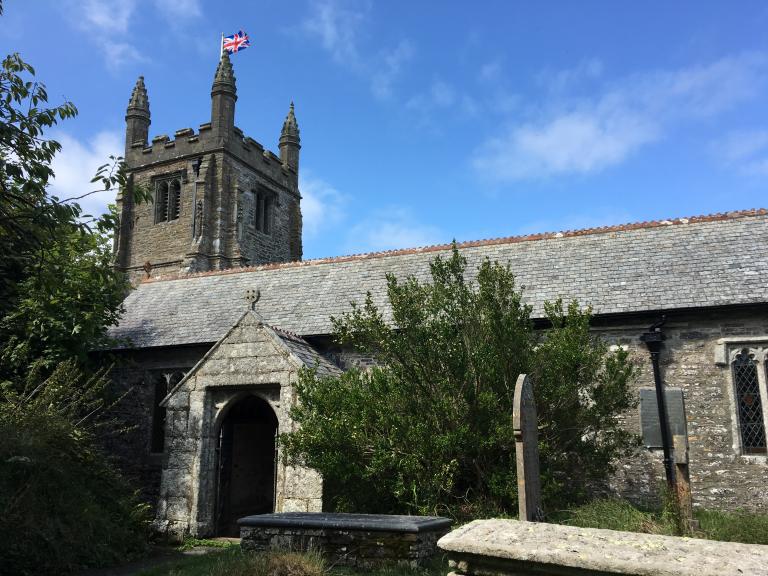
The name St Genny is thought to derive from St Genesius of Rome, to whom church is dedicated. St Genesius himself is an interesting figure. He is the patron saint of actors, lawyers, comedians, and other performing artists, and he was said to have been an actor himself. According to legend, he was once performing a play mocking Christianity, when he fell ill on stage and had a vision of angels who compelled him to be baptised. Naturally as a Pagan that’s not the ending I would’ve picked to this story, but there we are!
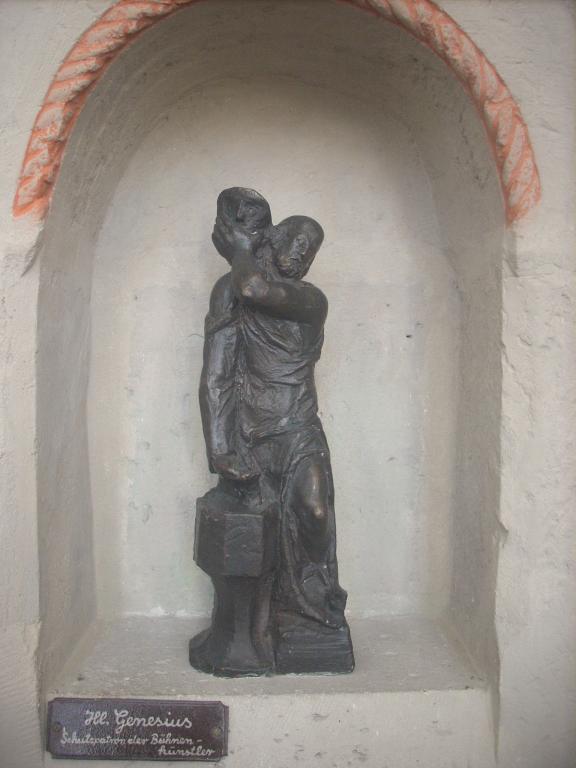
Statue of St. Genesius with mask and baptismal font in St. Giles Church in Braunschweig, Lower Saxony, Germany. By Rabanus Flavus [CC0], from Wikimedia Commons
I knew from researching St Genny’s Well that there are two wells by this church. There’s the “original” ancient well, and a second well that’s considered something of a “fake” as was apparently built in 1927 by the vicar in the hope of attracting more visitors.
I took a look at the church notice board, as churches with holy wells often mention these and where to find them. But there was nothing at all mentioned about the well. Clearly I’d have to work a bit to find them!
I found the “fake” holy well first. It’s tucked away at the side of the church, rather unceremoniously next to the piping and power lines.
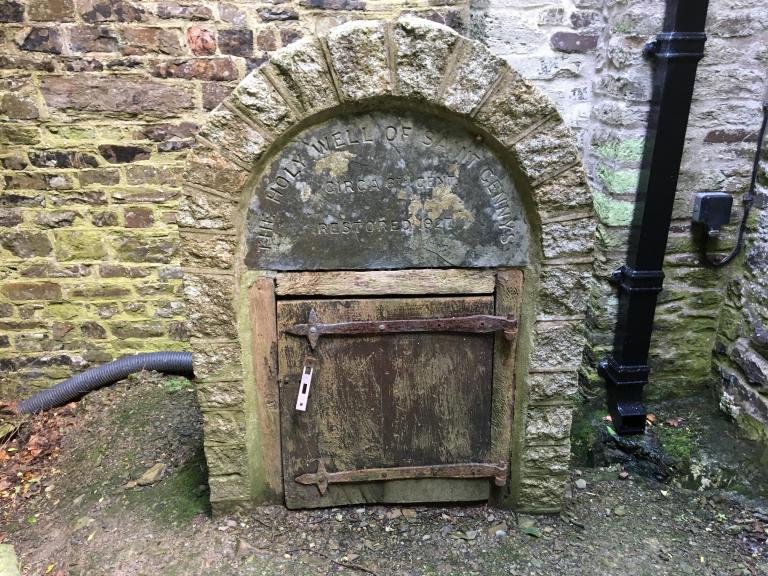
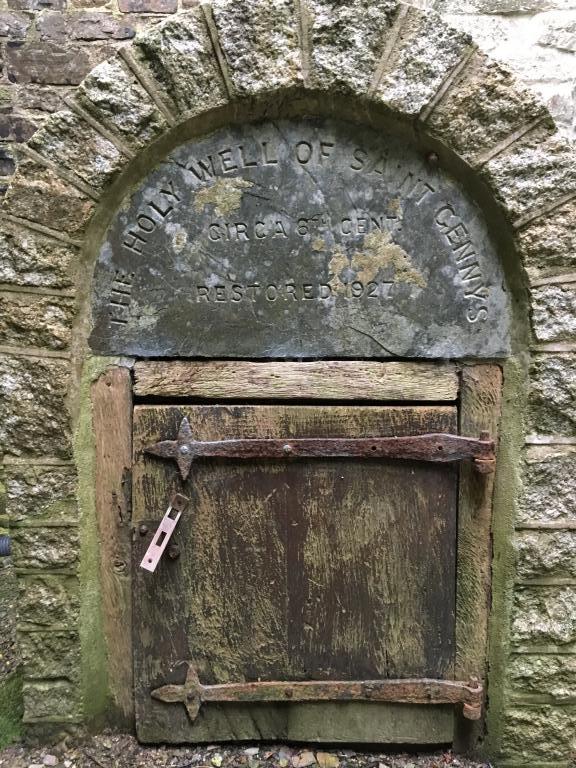
As you can see, the vicar who built the well was quite keen for visitors to believe that this is an original holy well from the 6th century. And who knows, perhaps it is built on the foundations of a more ancient site.
Despite my sources telling me that this well is dry most of the year, I opened the door and found that it did have some, albeit rather muddy, water.
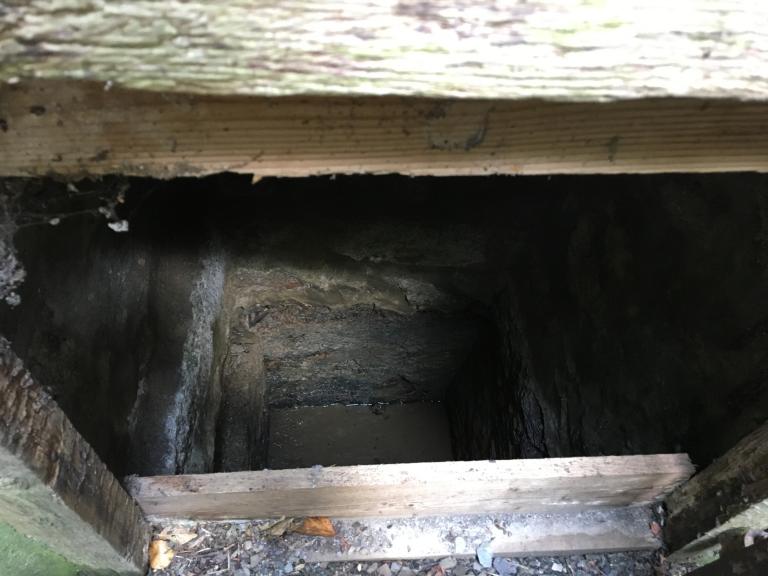
Unlike the other holy wells I’ve visited, I could find no offerings here. Perhaps it isn’t considered “holy” enough to leave an offering. Or perhaps it isn’t as well-known, and therefore not well visited. In some ways, it’s quite nice to know that I’d paid a visit to one of the lesser-known wells of Cornwall.
Now I tried to find the “genuine,” older well. I’d read that it was located within a sloping bank. I hunted around the grounds, which are comparatively large compared to the rather smallish church, but to no avail. No well was to be found.
I therefore decided to check in the church itself – perhaps I’d find a clue inside?
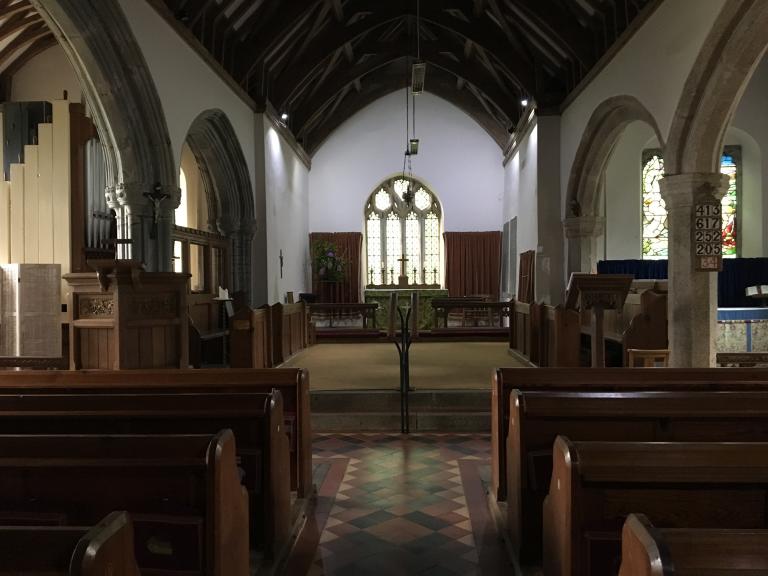
One thing I love about rural churches is that they are left open even when there’s no mass and no-one present in the church. It’s so safe here that no-one seems to worry about vandalism or theft. Where I live, in urban Kent, no-one would dream of leaving a church unlocked. Even when they are locked, it’s not uncommon for them to be broken into and have valuables stolen.
These rural churches even have “honesty boxes.” They have little goods like prayer cards and books for sale, and they trust visitors to put the stated price in the honesty box.
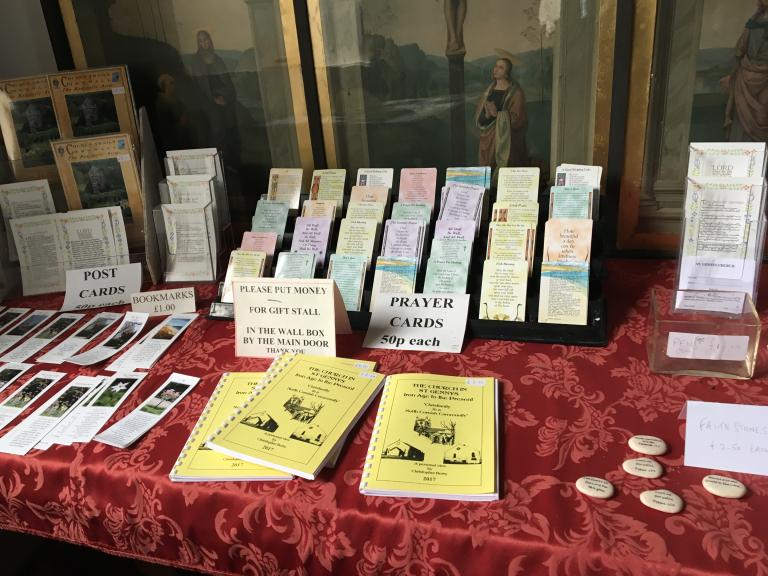
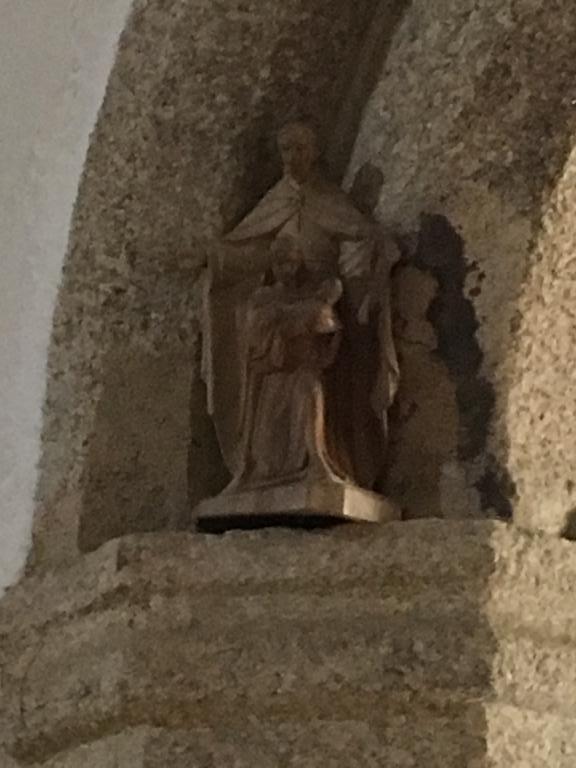
I enjoyed exploring the church. I spotted a little state tucked in a corner in the wall and thought it might be St Genesius, but I on closer inspection think it might meant to be Jesus Christ. I always think it’s a bit of a shame when churches don’t have imagery of the saint they’re dedicated to, but that might be something of a polytheist attitude on my part.
I still couldn’t find anything written about the holy wells in the church. I even took a look at the guest book (which I signed), but couldn’t find a reference to the wells there either.
A bit disappointed, I left the church and headed back up the path to the entrance to the churchyard.
And then, I saw it.
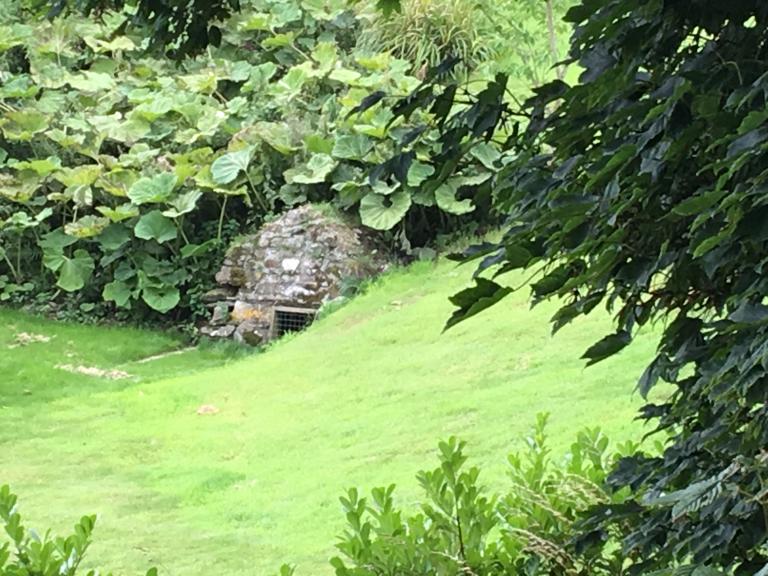
There, below the slope and outside the fence of the churchyard, lay the ancient holy well of St Genny.
While its location was probably part of the church’s land (curtilage, to use the correct term) at one point, the land now appears to be privately-owned, as part of a guesthouse. I wasn’t 100% sure if the land is private or public, but there was a fence around it so I assume it’s private. You can see the well quite clearly though from the churchyard.
As you can see, it does look much older than the modern well by the church. And it’s good to see that whoever does own the land where it is appear to be taking good care of it. And it’s location is certainly much prettier than the well by the church.
Out of all the wells I visited, these wells were perhaps the most mysterious because of their somewhat hidden nature, and the fact that little is recorded about their history. Why are they considered holy? What stories surround them? It all appears to be lost in the mists of time.
And I rather liked the “fake” modern well as well as the older well. It seems to me very appropriate that a patron saint of acting would have a modern well masquerading as an older well dedicated to him!
Sources and further reading:
Paul Broadhurst, Secret Shrines: In search of the holy wells of Cornwall, 1988
Wikipedia – Genesius of Rome
Megalithic – St Gennys Well

Next Post

September 10, 2018 Pagan & Shinto News: 'Starter Witch Kit' withdrawn following complaints
Browse Our Archives
Select a Category Art, Craft & Expression Musings & Miscellaneous Nature & Science News & Reviews Ritual & Festivals Secularism, Politics & Human Rights Shinto & Japanese Religion Uncategorized
Select a Month August 2023 July 2023 June 2023 May 2023 April 2023 March 2023 February 2023 January 2023 December 2022 November 2022 October 2022 September 2022 August 2022 July 2022 June 2022 May 2022 April 2022 March 2022 February 2022 January 2022 December 2021 November 2021 October 2021 September 2021 August 2021 July 2021 June 2021 May 2021 April 2021 March 2021 February 2021 January 2021 December 2020 November 2020 October 2020 September 2020 August 2020 July 2020 June 2020 May 2020 April 2020 March 2020 February 2020 January 2020 December 2019 November 2019 October 2019 September 2019 August 2019 July 2019 June 2019 May 2019 April 2019 March 2019 February 2019 January 2019 December 2018 November 2018 October 2018 September 2018 August 2018 July 2018 June 2018 May 2018 April 2018 March 2018 February 2018 January 2018 December 2017 August 2017 July 2017 June 2017 May 2017 April 2017 March 2017 February 2017 January 2017 December 2016 November 2016 October 2016 September 2016 August 2016 July 2016 June 2016 May 2016 April 2016 March 2016 February 2016 January 2016
Follow Us!
TAKE THE
Religious Wisdom Quiz
Who was the mother of John the Baptist?
Select your answer to see how you score.
Hannah Mary Elizabeth Deborah
Related posts from Pagan Tama

Three reasons why Pagans should support equality for...
Holy Well Pilgrimage: The Mysterious Face Of St...

Opposing Religious Discrimination At Schools: A (Mixed) Success

Garden Rituals: What Do Pagans Think?
TRENDING AT PATHEOS Pagan

I was recently chatting with someone on Instagram. She asked me what...

While there are many people who share their results, the end of...

On July 23, I saw Christopher Nolan's The Odyssey which is Homer’s...

As I write this two big events have just finished up. One...

Restoring the Watershed of Divine Love
Perhaps cooperation is not something we manufacture through legislation, ideology, or moral...

Many UUs don’t pray because of bad experiences in a previous religion,...
view all Pagan blogs
Ad-Free & Subscriber Log-In Subscription Support
- About Us
- 2026 Calendar
- Videos
- Podcasts
- Library of World Religions
- Faith In Media Tracker
- Advertise With Us
- Write for Us
- Privacy Policy
- Terms of Service
- Do Not Sell My Data
- Contact Us
- Radiant Digital
- Manage Newsletter Subscriptions
- Unsubscribe From Notifications
- Sitemap
Copyright 2008-2026, Patheos. All rights reserved.
Subscription Support Ad-Free & Subscriber Log-In
Follow Patheos