
BuddhistCatholicContemplativeEvangelicalGeneral ChristianHinduJewishLatter-day SaintMuslimNew VisionsProgressive Christian
Beliefs
- Buddhist
- Catholic
- Contemplative
- Evangelical
- General Christian
- Hindu
- Jewish
- Latter-day Saint
- More Voices
- Muslim
- New Visions
- Pagan
- Progressive Christian
Topics
- Religion News
- Food and Religion
- Sports and Religion
- Religious Art
- Religious Music and Entertainment
- Religious Events
- History and Religion
- Style and Religion
- Politics and Religion
- Women in Religion
- Recreation Outdoors and Religion
- Business Finance and Religion
- Careers Workplace and Religion
- Education and Religion
- Family Parenting and Religion
- Health Fitness and Religion
- Home and Religion
- Relationships and Religion
- Technology and Religion
- Travel and Religion
Columnists
- Buddhist Columnists
- Business Finance and Religion Columnists
- Careers Workplace and Religion Columnists
- Catholic Columnists
- Contemplative Columnists
- Education and Religion Columnists
- Evangelists Columnists
- Family Parenting and Religion Columnists
- General Christian Columnists
- Health Fitness and Religion Columnists
- Hindu Columnists
- History and Religion Columnists
- Home and Religion Columnists
- Jewish Columnists
- More Voices Columnists
- Latter Day Columnists
- Muslim Columnists
- New Visions Columnists
- Nonreligious Columnists
- Pagan Columnists
- Politics and Religion Columnists
- Progressive Columnists
- Recreation Outdoors and Religion Columnists
- Relationships and Religion Columnists
- Religion News Columnists
- Religious Art Columnists
- Religious Events Columnists
- Religious Music and Entertainment Columnists
- Sports and Religion Columnists
- Style and Religion Columnists
- Technology and Religion Columnists
- Travel and Religion Columnists
- Women in Religion Columnists
Resource Library
- 2026 Calendar
- Library of World Religions
- The 100 Most Holy Places on Earth
- Patheos Answers
- Podcasts
- Videos
- Faith Leaders Database
- Anglican Episcopalian
- Bahai
- Baptist
- Buddhism
- Christianity
- Confucianism
- Eastern Orthodoxy
- Hinduism
- Holiness and Pentecostal
- ISKCON
- Islam
- Judaism
- Lutheran
- Methodist
- The Church of Jesus Christ of Latter-day Saints
- New Age
- Paganism
- Presbytarian and Reformed
- Protestantism
- Religion Behind the Scenes
- Roman Catholic
- Scientology
- Shia Islam
- Sikhism
- Sufism
- Sunni Islam
- Taoism
- Zen
- See all religions
Research Tools
 Ad-Free & Subscriber Log-In Subscription Support
Ad-Free & Subscriber Log-In Subscription Support
Follow Patheos 

- Trending:
- Forgiveness
- |
- Marriage
- |
- Consciousness
- |
- Death Penalty
- |
- Election
- |
- Halloween
 Pagan Tama
- Home
- Pagan
- Should Pagans Demand Privileges, Or Equal Rights For All?
Should Pagans Demand Privileges, Or Equal Rights For All?
Last updated on: April 30, 2018 at 5:56 am by Megan Manson
Should Pagans Demand Privileges, Or Equal Rights For All? 2018-04-30T05:56:32+00:00 Megan Manson
Patheos Explore the world's faith through different perspectives on religion and spirituality! Patheos has the views of the prevalent religions and spiritualities of the world.
There were two separate news stories last week about Pagans jumping on the “religious privilege” bandwagon.
By “religious privilege”, I mean religious groups and individuals demanding special treatment that would not be afforded to the non-religious. This can be anything from getting exemptions from equality law allowing you to discriminate against LGBT people and people of a different religion, to being allowed to carry knives in places where they would ordinarily be banned, to having special places reserved for people of your religion in the highest offices in government.
One of the problems with religious privilege is that once you afford it to people of one religion, people of all other religions will, understandably, demand that they be treated specially too. So it’s not surprising that we’re beginning to see this phenomenon creep into the Pagan community.
Case 1: The bearded Heathen soldier

Stock image, Pixabay.
Last week, the world press focused on the story of a soldier who was granted permission to keep his beard due to his Heathen faith. The move was revealed in an undated memo from the 14th Military Police Brigade at Fort Leonard Wood, Missouri, saying: “In observance of your Heathen; Norse Pagan faith, you may wear a beard, in accordance with Army uniform and grooming standards for soldiers with approved religious accommodations.”
There is a precedent for this. In 2017, the US army authorised beards for soldiers of faith in response to a lawsuit from Sikhs demanding to keep their beards for religious reasons. It therefore seems only natural that people of other faiths would want the same treatment.
But this incident has prompted criticism from some members of the Pagan and Heathen community.
Many Heathens have pointed out that, while beards are popular among Heathen men, there is nothing in any of the texts (the Eddas or otherwise) that inform Heathenry that suggests that beards are a compulsory part of Heathen religion. Therefore, the army’s decision is codifying a “rule” of Heathenry that never was a rule to begin with.
Case 2: The ice cream-eating Wiccan prisoner

Pixabay
The second incident of a Pagan demanding special treatment to attract the attention of the world media was that of a Wiccan inmate suing a prison because, among other things, they didn’t provide her with ice cream.
Jennifer Ann Jasmaine’s complaints against Lanesboro Correctional Institution in North Carolina include not being provided ice cream and oatcakes at Beltane, or dried fruits at Midsummer. She has further demanded access to a wand, tarot cards, runes, candles, a bell, a black robe and a Book of Shadows. Furthermore, she demands that she be allowed to hold outdoor service twice a week, pointing out that Christians are allowed to have worship services six times a week and Native American inmates are allowed rituals three times a week. She also says that she has been denied the vegan catering afforded to Buddhists and Rastafarians.
The story has provoked embarrassment among some Pagans. Some of Jasamine’s demands, such as ice cream, are not a commonly recognised “requirement” of any Pagan path. Other Pagans would also argue that the items she has demanded, like tarot cards, are also not essential. Pagans with little money have been making do without fancy tools for years. Jasmaine also has a track record of making life difficult for prison staff. During her four years in jail, she is alleged to have committed 60 infractions including threatening staff, tampering with locks, disobeying orders, and committing sex acts (she was jailed for a second-degree sexual offense).
But some of Jasamine’s complaints have raised important questions, if her allegations against the prison are true. If vegan catering is possible in prison, why should it only be provided to people of specific faiths? And why should people of different faiths be allotted different amounts of time and resources for their acts of worship?
The fallacy of “religious requirements”
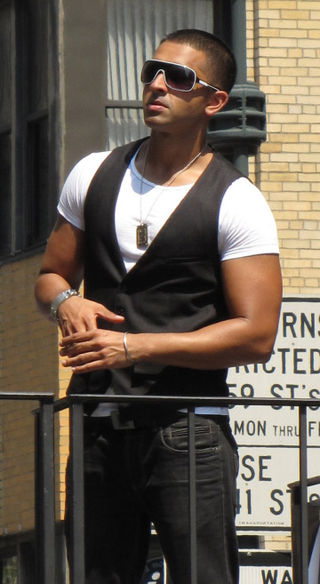
British musician Jay Sean, who is of Punjabi Sikh heritage. He wears the kara bracelet symbolic of Sikhism, but cuts his hair and shaves his beard. By Rivarix (Flickr) [CC BY 2.0 (https://creativecommons.org/licenses/by/2.0)], via Wikimedia Commons
I think there are a lot of problems regarding the idea of giving people exceptions to rules or special privileges because of “religious requirements.” One of those problems is the very concept of something being a “religious requirement.”
As the two cases above demonstrate, there is no consensus in Paganism as to what is a “religious requirement.” It appears that a significant proportion of Pagans agree that you do not need to have a beard to be a Heathen, and you do not need to eat ice cream at Beltane to be a Wiccan.
In fact, I think many Pagans would argue that the lack of concrete “requirements” is a hallmark of Paganism. With no set holy book or texts, there isn’t really anything that someone is required to do to be a Pagan. It is generally left up to the individual to decide what is required of them to live a spiritually-fulfilled life as a Pagan.
So conversely, if someone states that wearing a beard or eating ice cream is a required part of their own spiritual path, who are other people to argue with this? If we believe that each individual’s spiritual path should be equally valued, why should we deny that beards and ice cream are not a requirement?
This issue is not exclusive to Paganism. Although Paganism tends to be liberal and individualistic compared to many organised religions, the fact is followers of more mainstream paths also interpret their religion on a personal level. Many Sikh men choose not have beards, but still consider themselves to be Sikh. They may also decide to cut their hair or not wear the kirpan sword, even though these two actions would be “defying” Sikh rules according to orthodox interpretation. Should we judge them and say that they are “less Sikh” because of this?
The same applies to other controversial “religious requirements.” For example, increasing numbers of practising Jews are choosing not to circumcise their baby boys, because they think it is wrong to cut a person’s genitals without their consent. Should they be judged as “less Jewish” because they forego this ritual, even though they may have deep faith in Judaism? Should Muslim women who choose not to cover their hair be judged as “less Muslim” than one who does because this is defying orthodox modesty codes? Should Christians who have sex with someone of the same gender in spite of Christian teachings calling it a sin be thought of as “less Christian”?
Giving exclusive exemptions to religious people from the usual rules tacitly implies that certain practises are indeed “requirements”, and that someone cannot be a member of that religion without obeying those requirements. It helps to entrench certain traditions within religious communities that some members of those communities may in fact oppose, including genital cutting, modesty codes for women, and reduced rights for LGBT people.
Exclusion of the non-religious
Another problem with “religious exemptions” is that it completely excludes one very large section of society – the non-religious.
When people talk about “freedom of religion”, they very often forget that this freedom also extends to the non-religious. Their secular beliefs should be afforded the same level of protection as religious beliefs, and they should not be in any way disadvantaged simply because they have no faith.
Supposing an atheist who has a beard wants to join the army. He is extremely proud of his beard. His father has also always had a beard and is equally proud of it. He doesn’t remember the last time he saw a photo of himself without a beard. He loves the feeling and look of the beard, and he also likes that he doesn’t have to shave as much. His spouse loves his beard too and finds it sexy. In other words, his beard is extremely important to him and his identity.
So why, when he joins the army, is he told that he must shave off his beard, while his fellow Sikh and Heathen soldiers are allowed to keep theirs? He may not have spiritual reasons for wearing a beard, but nevertheless the beard is an important part of his identity. But he has no way to fight for the right to keep his beard and simultaneously be an open atheist. The only way he can keep his beard is by convincing the army that he has converted to a religion that is widely believes to require beards.
This doesn’t seem fair to me. We cannot have true equality if we say that religious reasons for keeping a beard are more valid than personal reasons, no matter how deeply felt.
The same applies to many other aspects of life in which the non-religious are given fewer rights than the religious. For example, in the UK, state-funded faith schools are allowed to discriminate against pupils and teachers who are not religious. But state schools that are not religious are not allowed to discriminate against pupils and teachers who are religious. And UK charities that have a religious character are allowed to refuse to let LGBT people (and people of a different religion or no religion) join or use their services. This would be unlawful for a non-religious charity.
Are rules really rules if they do not apply to all?

Exalibur, as used in the 1981 movie, at the London Film Museum. By Eduardo Otubo (London Film MuseumUploaded by SunOfErat) [CC BY 2.0 (https://creativecommons.org/licenses/by/2.0)], via Wikimedia Commons
I’m sure there are many fans of the 1981 movie Excalibur reading this. In that movie, a heartbroken King Arthur tells his wife Guinevere that he cannot champion her innocence because he is also her King and must be her judge. He tells her, “The laws, my laws, must bind everyone, high and low, or they are not laws at all.”
I believe the same should apply to the religious and non-religious: they should both be bound by the same laws. Laws and rules, by their very nature, restrict people for doing what they might want to do otherwise. If the laws and rules are just, they are only there because they are necessary. Protecting the freedom and welfare of others, and protecting the individual from personal harm, are two principle functions of just laws and rules.
We should only give people exemptions to rules when we have an incredibly good reason to do so. For example, I think its fair to give blind people with guide dogs an exemption to rules prohibiting dogs, because the dog is absolutely essential for giving the blind person a similar level of access and freedom as a sighted person.
A blind person is unable to choose how they manifest their blindness. But a religious person is able to choose how they manifest their religion; as we explored above, Sikh men can choose to go bearded or clean-shaven, and Jewish parents can choose to get their baby circumcised or not (significantly, the baby himself is denied the choice).
So when we start giving exemptions from rules to religious people, it may be an indication that the rules are not necessary in the first place. This could well be the case for beards in the army. The prohibition of beards probably relates in part to more archaic rules protecting soldiers from sparks from their own muskets, and from lice. Even when the army does permit beards, it still specifies that the beard must be less than 2 inches long and cannot be groomed with any petroleum-based products, probably for safety and hygiene reasons. If beards meeting these requirements are considered to present no more significant issues than going clean-shaven, why not allow all soldiers to have beards according to these requirements, regardless of their religion or belief?
In other cases, giving people special accommodations to cater to their “religious requirements” amounts to giving them more time and resources that would be given to other people. I think is may be the case for Jennifer Ann Jasmaine. It feels as if she may be using her religious affiliation as a trump card to get as much as she can from the prison system – and, to be honest, who can blame her? Particularly when there are other religious people around her who are also getting privileges. What we should be asking is whether we should be giving any religious people extra resources or time to meet their “religious requirements” at all, when these are not given to the non-religious.
It is true that Pagans are still denied certain rights afforded to people of other religions. Many Pagans are doing excellent work to challenge this, and I encourage them. But in fighting for our rights, we should be careful not to fight for privileges.
Instead of demanding that Pagans get particular rights, we must argue that all people, including the non-religious, are afforded these same rights, and we must ensure that those rights we demand are not violating the rights of others. If we want to see true equality in our society, we must see ourselves as members of the human race first, and as Pagans second.
If you believe in equality for people of all religions and none, please consider joining the Pagans for Secularism Facebook group!
Secularism, Politics & Human Rights


Browse Our Archives
Select a Category Art, Craft & Expression Musings & Miscellaneous Nature & Science News & Reviews Ritual & Festivals Secularism, Politics & Human Rights Shinto & Japanese Religion Uncategorized
Select a Month August 2023 July 2023 June 2023 May 2023 April 2023 March 2023 February 2023 January 2023 December 2022 November 2022 October 2022 September 2022 August 2022 July 2022 June 2022 May 2022 April 2022 March 2022 February 2022 January 2022 December 2021 November 2021 October 2021 September 2021 August 2021 July 2021 June 2021 May 2021 April 2021 March 2021 February 2021 January 2021 December 2020 November 2020 October 2020 September 2020 August 2020 July 2020 June 2020 May 2020 April 2020 March 2020 February 2020 January 2020 December 2019 November 2019 October 2019 September 2019 August 2019 July 2019 June 2019 May 2019 April 2019 March 2019 February 2019 January 2019 December 2018 November 2018 October 2018 September 2018 August 2018 July 2018 June 2018 May 2018 April 2018 March 2018 February 2018 January 2018 December 2017 August 2017 July 2017 June 2017 May 2017 April 2017 March 2017 February 2017 January 2017 December 2016 November 2016 October 2016 September 2016 August 2016 July 2016 June 2016 May 2016 April 2016 March 2016 February 2016 January 2016
Follow Us!
TAKE THE
Religious Wisdom Quiz
Who was thrown into a muddy cistern for prophesying Jerusalem's fall?
Select your answer to see how you score.
Micah Baruch Jeremiah Isaiah
Related posts from Pagan Tama

Three reasons why Pagans should support equality for...

Holy Well Pilgrimage: The Hidden Wells of St...

Holy Well Pilgrimage: The Mysterious Face Of St...

Opposing Religious Discrimination At Schools: A (Mixed) Success
TRENDING AT PATHEOS Pagan

I was recently chatting with someone on Instagram. She asked me what...

While there are many people who share their results, the end of...

On July 23, I saw Christopher Nolan's The Odyssey which is Homer’s...

As I write this two big events have just finished up. One...

Restoring the Watershed of Divine Love
Perhaps cooperation is not something we manufacture through legislation, ideology, or moral...

Many UUs don’t pray because of bad experiences in a previous religion,...
view all Pagan blogs
Ad-Free & Subscriber Log-In Subscription Support
- About Us
- 2026 Calendar
- Videos
- Podcasts
- Library of World Religions
- Faith In Media Tracker
- Advertise With Us
- Write for Us
- Privacy Policy
- Terms of Service
- Do Not Sell My Data
- Contact Us
- Radiant Digital
- Manage Newsletter Subscriptions
- Unsubscribe From Notifications
- Sitemap
Copyright 2008-2026, Patheos. All rights reserved.
Subscription Support Ad-Free & Subscriber Log-In
Follow Patheos