
BuddhistCatholicContemplativeEvangelicalGeneral ChristianHinduJewishLatter-day SaintMuslimNew VisionsProgressive Christian
Beliefs
- Buddhist
- Catholic
- Contemplative
- Evangelical
- General Christian
- Hindu
- Jewish
- Latter-day Saint
- More Voices
- Muslim
- New Visions
- Pagan
- Progressive Christian
Topics
- Religion News
- Food and Religion
- Sports and Religion
- Religious Art
- Religious Music and Entertainment
- Religious Events
- History and Religion
- Style and Religion
- Politics and Religion
- Women in Religion
- Recreation Outdoors and Religion
- Business Finance and Religion
- Careers Workplace and Religion
- Education and Religion
- Family Parenting and Religion
- Health Fitness and Religion
- Home and Religion
- Relationships and Religion
- Technology and Religion
- Travel and Religion
Columnists
- Buddhist Columnists
- Business Finance and Religion Columnists
- Careers Workplace and Religion Columnists
- Catholic Columnists
- Contemplative Columnists
- Education and Religion Columnists
- Evangelists Columnists
- Family Parenting and Religion Columnists
- General Christian Columnists
- Health Fitness and Religion Columnists
- Hindu Columnists
- History and Religion Columnists
- Home and Religion Columnists
- Jewish Columnists
- More Voices Columnists
- Latter Day Columnists
- Muslim Columnists
- New Visions Columnists
- Nonreligious Columnists
- Pagan Columnists
- Politics and Religion Columnists
- Progressive Columnists
- Recreation Outdoors and Religion Columnists
- Relationships and Religion Columnists
- Religion News Columnists
- Religious Art Columnists
- Religious Events Columnists
- Religious Music and Entertainment Columnists
- Sports and Religion Columnists
- Style and Religion Columnists
- Technology and Religion Columnists
- Travel and Religion Columnists
- Women in Religion Columnists
Resource Library
- 2026 Calendar
- Library of World Religions
- The 100 Most Holy Places on Earth
- Patheos Answers
- Podcasts
- Videos
- Faith Leaders Database
- Anglican Episcopalian
- Bahai
- Baptist
- Buddhism
- Christianity
- Confucianism
- Eastern Orthodoxy
- Hinduism
- Holiness and Pentecostal
- ISKCON
- Islam
- Judaism
- Lutheran
- Methodist
- The Church of Jesus Christ of Latter-day Saints
- New Age
- Paganism
- Presbytarian and Reformed
- Protestantism
- Religion Behind the Scenes
- Roman Catholic
- Scientology
- Shia Islam
- Sikhism
- Sufism
- Sunni Islam
- Taoism
- Zen
- See all religions
Research Tools
 Ad-Free & Subscriber Log-In Subscription Support
Ad-Free & Subscriber Log-In Subscription Support
Follow Patheos 

- Trending:
- Forgiveness
- |
- Marriage
- |
- Consciousness
- |
- Death Penalty
- |
- Election
- |
- Halloween
 Pagan Tama
- Home
- Pagan
- Secularist Deities: The Goddesses Of Liberal Values
Secularist Deities: The Goddesses Of Liberal Values
Last updated on: April 19, 2018 at 7:04 pm by Megan Manson
Secularist Deities: The Goddesses Of Liberal Values 2018-04-19T19:04:14+00:00 Megan Manson
Patheos Explore the world's faith through different perspectives on religion and spirituality! Patheos has the views of the prevalent religions and spiritualities of the world.
In this second part of an exploration of “Secularist Deities,” let’s look at the divinities that personify some of the ideals that secularism represents and aims to achieve in society.
Modern secularism is based on the idea of universal human rights and liberal, democratic values. Although the concepts of “secularism,” “human rights” and “liberal values” as we understand them today did not truly exist in ancient times, other ideas that came close to some of basic principles underlying these concepts did exist. The ancient Greeks and Romans loved to personify everything and anything, no matter how abstract, and so deities representing political and social ideas were born.
Here I’ve listed some of these deities. They’re all from the Greco-Roman pantheons, and they’re all goddesses. That concepts underpinning secularism, liberalism and human rights are overwhelmingly represented by female deities is in itself very interesting.
If you would like to hold rituals, offerings or prayers for human rights and mankind, you may wish to hold some of these goddesses in your mind.
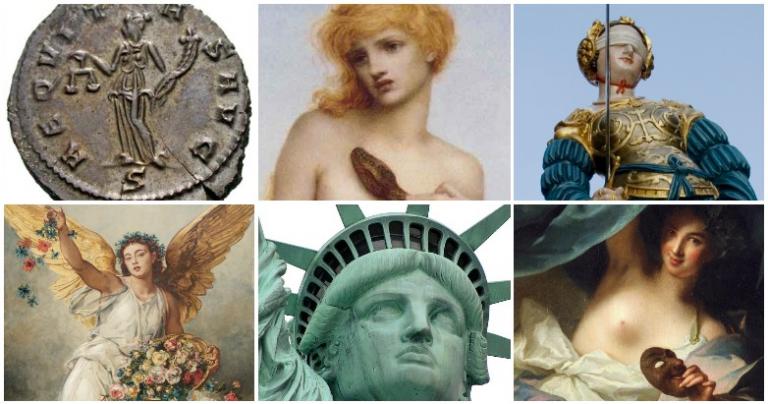
The Goddesses of Liberty

The Statue of Liberty (“Liberty Enlightening The World”), based on ancient goddesses of liberty.
We must start with the most fundamental concept of liberalism of all: personal freedom. Liberty is also at the heart of secularism. Secularism means freedom of religion, and freedom from religion. It means that anyone is free to have a religion, have no religion, to leave a religion and to change religion, and that no-one should be compelled into religious worship.
The Romans had several goddesses representing the concepts of liberty and freedom which all merged together to varying extents. One was Feronia, the goddess of wild places, fertility, health and abundance. She was also the patron of freed slaves and civil rights for those on the bottom rung of society, and so she was especially popular among commoners and freedmen. A stone at her shrine at Terracina, which was apparently a place where slaves would be set free, was inscribed “let deserving slaves sit down so that they may stand up free.” Freed women would reportedly collect money as a gift for Feronia.
Feronia became identified with another goddess of freedom, Libertas, whose Greek equivalent is Eleutheria. While Feronia appears to be a folk goddess, Libertas was endorsed by the Roman state. She was associated with the creation of the Roman republic and shrines to her were built by the Senate. She also appeared on Roman coins. Her symbols included the pileus, a felt cap worn by freed slaves, and the rod called the vindicta, which would be laid on the head of a slave as part of the process of granting freedom.
Another Roman goddess of freedom is Libera, daughter of the agricultural goddess Ceres and associated with wine and female fertility.
There is a male god of freedom too – Liber, the male equivalent and brother of Libera. Also known as Liber Pater (“father of freedom”), he too was associated with wine and therefore overlapped with the more well-known god Bacchus. He was celebrated at the festival of Liberalia on March 17, which became associated with free speech. His cult was particularly popular among the more marginalised members of Roman society: lower classes, women, the young, morally weak and effeminate males.
The Roman goddesses of liberty proved to be such powerful symbols that they resonate with modern states today. Both the American Statue of Liberty, and the French Marianne, are partly based on the Roman personifications of freedom.
Aequitas, Goddess of Equality & Fairness
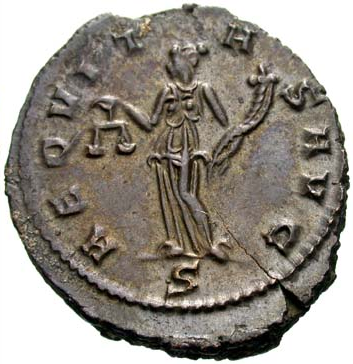
Coin depicting Aequitas, with the scales of equality in the left hand and the cornucopia of plenty in the right.
Equality and fairness are what secularism is all about. Everyone should be treated equally by the state regardless of their religion or belief. No one should be advantaged or disadvantaged because of their beliefs, or the beliefs of their parents.
The Romans personified the concept of fairness through the goddess Aequitas. She is depicted holding scales in one hand, representing equal measures, and a cornucopia in the other, representing prosperity. It symbolises that equality and wealth go hand in hand: a fair society is a prosperous one.
Dike, Goddess of Justice
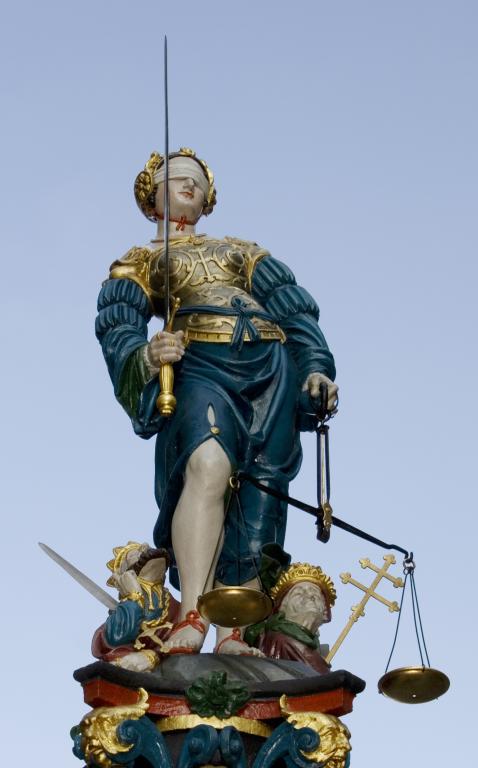
Lady Justice with sword, scales and blindfold, Switzerland
An important concept in secularism is the idea of one law for all. No-one should have special treatment or exemptions from the law because of their religion or belief, and no-one should be disadvantaged in legal matters because of their religion or belief. Additionally, laws should be made and enforced through democratic means, rather than religious codes. Finally, all citizens of the state should be subject to the same laws; we should not have parallel legal systems, based on religious codes or otherwise, that undermine the laws of the land.
Justice is represented through the Greek goddess Dike, known by the Romans as Iustitia. Importantly for secularists, she represents human justice, as opposed to her mother Themis who represents divine justice. She wears a laurel wreath to represent honour and victory, and like Aequitas she carries scales to symbolise fairness. The scales also hearken back to the weighting of the heart in ancient Egyptian religion. The Egyptians believes that in the afterlife, a person’s heart would be weighed with the feather of truth. If the heart was heavy with insincerity and wrongdoings, the soul of the deceased would devoured by the demon Ammit.
Like the goddesses of Liberty, the symbolism of Dike and Iustitia was so powerful that she her image is still used today throughout the world as a symbol of justice and the law. Usually known as Lady Justice, additional symbols have been added to her depiction over the years. Together with her scales, she often carries a sword representing authority and “swift and final” justice. She is also depicted blindfolded, symbolising impartiality and the ideal that justice should be applied without regard to wealth, power, or other status – including religious belief.
Harmonia, Goddesse of Harmony
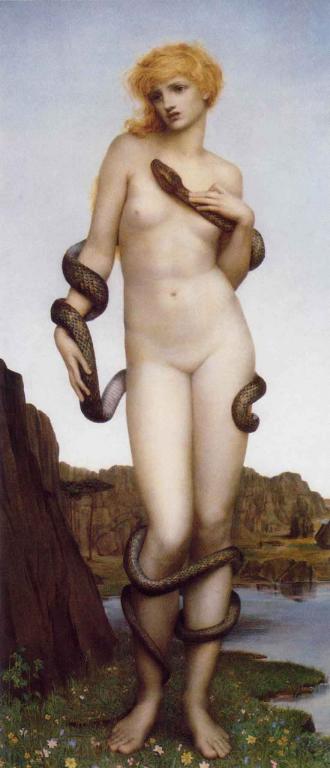
Cadmus and Harmonia, Evelyn de Morgan, 1877.
Secularism is about social cohesion. It’s about creating a society where a huge variety of people from all backgrounds, races and religious and philosophical belief can live together in harmony.
The Greek goddess of harmony and civic unity is Harmonia. Some accounts say she is the daughter of Ares and Aphrodite – the personifications of male and female, war and love.
Her Roman equivalent is Concordia, who also represents marital harmony and musical harmony. She is sometimes depicted with the cornucopia of plenty, or the caduceus wand of peace.
Eirene, Goddess of Peace
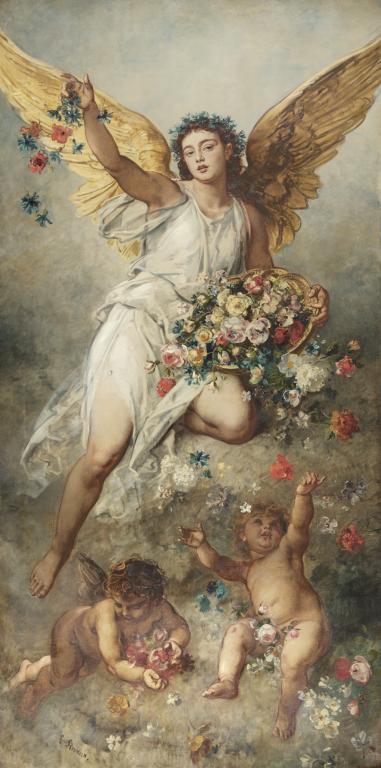
“Eirene”, Ludwig Knaus. Between circa 1850 and circa 1888
Secularism is about fostering and keeping peace. All too often, conflicts arise as a result of religious tribalism, or in the name of theocratic conquest. But a secular society that gives no advantage or disadvantage to religious groups is one that can more easily quench the flames of faith-based conflict.
The ancient Greek personification of peace is Eirene, the daughter of Zeus and Themis (goddess of divine justice). Her Roman counterpart is Pax. She too is often depicted with the cornucopia of prosperity, as well as olive branches which are still associated with peace today.
Thalia, Goddess of Comedy
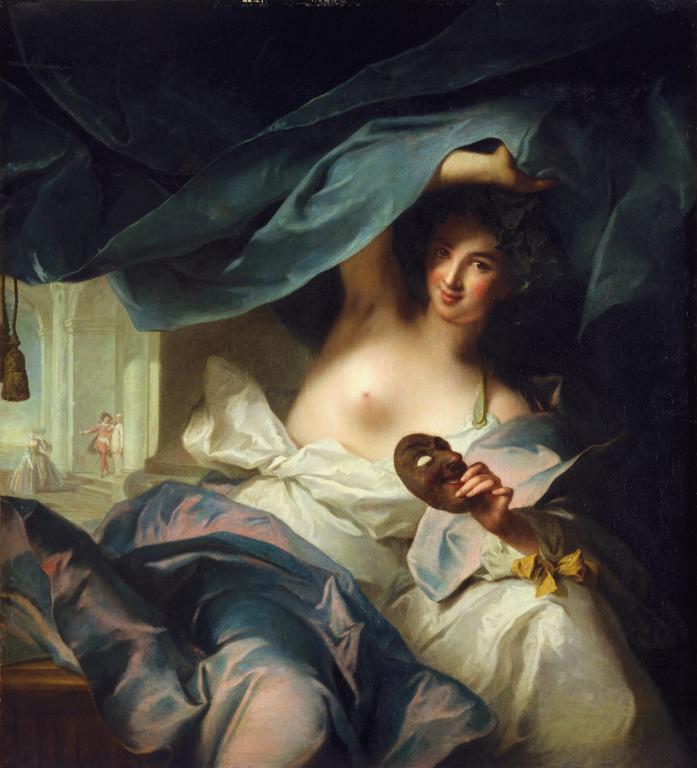
It might be strange to conclude this list of lofty ideals with comedy, but this too is a vital component of secularism and human rights. The right to free expression, to laugh, and to mock ideas and authorities – including religious ideas and authorities – is at the foundation of secularism. That’s why I thought it was so important to include Thalia, the goddess of comedy, as the final goddess in this list.
The muse of poetry as well as comedy, Thalia is usually depicted with a much more joyous, mischevious and exuberant air than the other, more austere goddesses in this list. She is often portrayed crowned with ivy – a symbol of Bacchus, also associated with free expression – and holding a comic mask in her hand. Thalia is the daughter of Zeus and Mnemosyne, goddess of memory. Her mother also relates to another important component of freedom – the freedom to remember truths, undistorted by propaganda.
Secularism, Politics & Human Rights
Previous Post

April 16, 2018
Secret 'Roman Bath' In Woods Given Its Magic Back

Browse Our Archives
Select a Category Art, Craft & Expression Musings & Miscellaneous Nature & Science News & Reviews Ritual & Festivals Secularism, Politics & Human Rights Shinto & Japanese Religion Uncategorized
Select a Month August 2023 July 2023 June 2023 May 2023 April 2023 March 2023 February 2023 January 2023 December 2022 November 2022 October 2022 September 2022 August 2022 July 2022 June 2022 May 2022 April 2022 March 2022 February 2022 January 2022 December 2021 November 2021 October 2021 September 2021 August 2021 July 2021 June 2021 May 2021 April 2021 March 2021 February 2021 January 2021 December 2020 November 2020 October 2020 September 2020 August 2020 July 2020 June 2020 May 2020 April 2020 March 2020 February 2020 January 2020 December 2019 November 2019 October 2019 September 2019 August 2019 July 2019 June 2019 May 2019 April 2019 March 2019 February 2019 January 2019 December 2018 November 2018 October 2018 September 2018 August 2018 July 2018 June 2018 May 2018 April 2018 March 2018 February 2018 January 2018 December 2017 August 2017 July 2017 June 2017 May 2017 April 2017 March 2017 February 2017 January 2017 December 2016 November 2016 October 2016 September 2016 August 2016 July 2016 June 2016 May 2016 April 2016 March 2016 February 2016 January 2016
Follow Us!
TAKE THE
Religious Wisdom Quiz
What does "Siloam" mean in Hebrew?
Select your answer to see how you score.
Peace Refreshing Sent Cleansing
Related posts from Pagan Tama

Three reasons why Pagans should support equality for...

Opposing Religious Discrimination At Schools: A (Mixed) Success

Garden Rituals: What Do Pagans Think?
Why I Don't Do Rituals In My Garden...
TRENDING AT PATHEOS Pagan

I was recently chatting with someone on Instagram. She asked me what...

While there are many people who share their results, the end of...

On July 23, I saw Christopher Nolan's The Odyssey which is Homer’s...

As I write this two big events have just finished up. One...

Restoring the Watershed of Divine Love
Perhaps cooperation is not something we manufacture through legislation, ideology, or moral...

Many UUs don’t pray because of bad experiences in a previous religion,...
view all Pagan blogs
Ad-Free & Subscriber Log-In Subscription Support
- About Us
- 2026 Calendar
- Videos
- Podcasts
- Library of World Religions
- Faith In Media Tracker
- Advertise With Us
- Write for Us
- Privacy Policy
- Terms of Service
- Do Not Sell My Data
- Contact Us
- Radiant Digital
- Manage Newsletter Subscriptions
- Unsubscribe From Notifications
- Sitemap
Copyright 2008-2026, Patheos. All rights reserved.
Subscription Support Ad-Free & Subscriber Log-In
Follow Patheos