
BuddhistCatholicContemplativeEvangelicalGeneral ChristianHinduJewishLatter-day SaintMuslimNew VisionsProgressive Christian
Beliefs
- Buddhist
- Catholic
- Contemplative
- Evangelical
- General Christian
- Hindu
- Jewish
- Latter-day Saint
- More Voices
- Muslim
- New Visions
- Pagan
- Progressive Christian
Topics
- Religion News
- Food and Religion
- Sports and Religion
- Religious Art
- Religious Music and Entertainment
- Religious Events
- History and Religion
- Style and Religion
- Politics and Religion
- Women in Religion
- Recreation Outdoors and Religion
- Business Finance and Religion
- Careers Workplace and Religion
- Education and Religion
- Family Parenting and Religion
- Health Fitness and Religion
- Home and Religion
- Relationships and Religion
- Technology and Religion
- Travel and Religion
Columnists
- Buddhist Columnists
- Business Finance and Religion Columnists
- Careers Workplace and Religion Columnists
- Catholic Columnists
- Contemplative Columnists
- Education and Religion Columnists
- Evangelists Columnists
- Family Parenting and Religion Columnists
- General Christian Columnists
- Health Fitness and Religion Columnists
- Hindu Columnists
- History and Religion Columnists
- Home and Religion Columnists
- Jewish Columnists
- More Voices Columnists
- Latter Day Columnists
- Muslim Columnists
- New Visions Columnists
- Nonreligious Columnists
- Pagan Columnists
- Politics and Religion Columnists
- Progressive Columnists
- Recreation Outdoors and Religion Columnists
- Relationships and Religion Columnists
- Religion News Columnists
- Religious Art Columnists
- Religious Events Columnists
- Religious Music and Entertainment Columnists
- Sports and Religion Columnists
- Style and Religion Columnists
- Technology and Religion Columnists
- Travel and Religion Columnists
- Women in Religion Columnists
Resource Library
- 2026 Calendar
- Library of World Religions
- The 100 Most Holy Places on Earth
- Patheos Answers
- Podcasts
- Videos
- Faith Leaders Database
- Anglican Episcopalian
- Bahai
- Baptist
- Buddhism
- Christianity
- Confucianism
- Eastern Orthodoxy
- Hinduism
- Holiness and Pentecostal
- ISKCON
- Islam
- Judaism
- Lutheran
- Methodist
- The Church of Jesus Christ of Latter-day Saints
- New Age
- Paganism
- Presbytarian and Reformed
- Protestantism
- Religion Behind the Scenes
- Roman Catholic
- Scientology
- Shia Islam
- Sikhism
- Sufism
- Sunni Islam
- Taoism
- Zen
- See all religions
Research Tools
 Ad-Free & Subscriber Log-In Subscription Support
Ad-Free & Subscriber Log-In Subscription Support
Follow Patheos 

- Trending:
- Forgiveness
- |
- Marriage
- |
- Consciousness
- |
- Death Penalty
- |
- Election
- |
- Halloween
 Pagan Tama
- Home
- Pagan
- What To Do If Your Child’s Forced To Pray At School
What To Do If Your Child’s Forced To Pray At School
Last updated on: March 25, 2018 at 10:17 am by Megan Manson
What To Do If Your Child’s Forced To Pray At School 2018-03-25T10:17:27+00:00 Megan Manson
Patheos Explore the world's faith through different perspectives on religion and spirituality! Patheos has the views of the prevalent religions and spiritualities of the world.
UK schools can be hostile environments for children from non-Christian families. Not only can faith schools refuse to admit them, but even non-religious schools may impose religious ideology or practises on children. An example of this is the law that requires all state-funded schools, even those of no faith ethos, to hold a daily act of collective worship. This must be “mainly of a Christian character” in non-faith schools, or reflect the ethos of the school in the case of faith schools.
If you’re not from Britain, you may be surprised that such a law exists. In fact, the UK is the only Western democracy to legally impose worship in publicly funded schools.
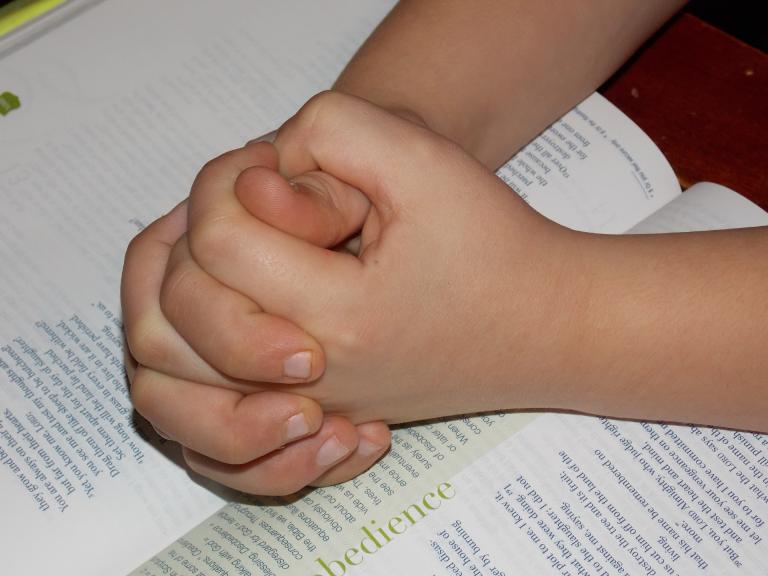
How this law is enforced from school to school varies. Some schools ignore the law entirely. At present, authorities are a soft touch when it comes to making sure schools are carrying out their collective worship duty. But since it’s written in law, they could choose to penalise a school for not holding Christian worship. And there are plenty of schools, including non-religious ones, that do carry out this duty.
In my line of work I’ve dealt with many cases of parents who are unhappy that their children are being forced into Christian worship. Some of these parents have children at Christian schools, others have them at secular schools. Most of the parents I’ve dealt with have been atheist, but I’ve also had a few Pagan cases. The form of worship varies, from children made to bow their heads during prayers, to children being made to sing hymns with creationist messages, to children being taken to church services.
There are many reasons why a parent might not want their child partaking in collective worship. The most fundamental reason is that many parents believe that children should develop their own beliefs about the world without indoctrination, and that schools shouldn’t be normalising compulsory worship. Another reason is that it can be an alienating and confusing experience for children who don’t come from Christian households. Many families, often Pagan families, have had negative experiences with Christianity and it’s distressing for them to find that their child is being made to partake in practises that are linked with traumatic and upsetting memories.
Fortunately there are steps you can take to counter compulsory worship. Forcing anyone into an act of worship is against Article 9 (freedom of thought, belief and religion) of the Human Rights Act, so there are things you can do if you’re not happy with the situation at your child’s school.
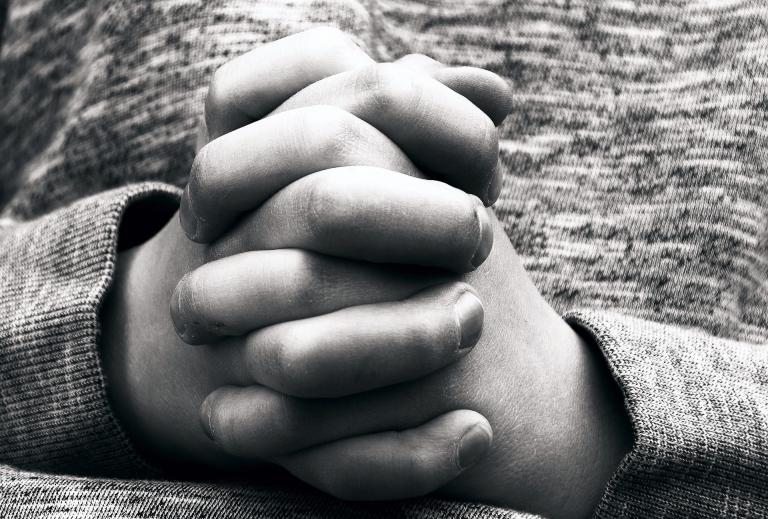
Right of Withdrawal
You have a statutory right to withdraw your child from acts of collective worship at a state school. This includes faith schools. Note that only the parents have right to withdraw their child. Children cannot independently withdraw from collective worship unless they are Sixth Formers. So for any children reading this who are not in Sixth Form, you’ll need to explain to your parents why you wish to withdraw from collective worship and ask them to contact the school on your behalf.
Here’s some steps you can take if you don’t want your child to participate in collective worship.
1.First, it is very important to enter into a constructive and friendly dialogue with the school. You want to try and establish good relations with the headteacher and other management, so be as polite and non-confrontational as possible.
Before talking about withdrawing your child from collective worship, get all the facts. Find out the exact nature of the collective worship by asking the school as well as your child and other parents. Then, if you have concerns, try to arrange to meet with the headteacher to discuss them. Say why you are unhappy with the current situation, and what the school could do to change things. It may be that you can reach some sort of informal mutual agreement that means you don’t have to invoke the right to withdraw. For example, you and the school may be content to have your child present during acts of worship, but not obliged to join hands, bow their head, close their eyes or say prayers.
It’s good to talk to other parents too, to see how they feel about the situation. If you find other parents who are unhappy, team up and raise your concerns together! Collective voices are always stronger.
2. If you still feel it’s necessary to withdraw your child, it’s best to do this in writing. This could be as simple as the message, “As parents of [Child’s name] we formally request that he/she is withdrawn from worship of any kind in future, without any detriment.” You are not obliged to give any reasons for withdrawing your child.
3. By law, the school must comply with your request. But sometimes, schools may try to find ways to block your requests. They may withdraw the child from some acts of worship but not others or (often in the case of faith schools) they may say that acts of worship are so ingrained in school life that it’s not practically possible to withdraw your child.
But these reasons do not relieve the school from its duty to respect your wishes. If you encounter resistance, politely remind the school of their duty to withdraw your child under Section 71 of the School Standards and Framework Act 1998 (as well as Education (Scotland) Act 1980 and Isle of Man Education Act 2001). You may wish to obtain a copy of the school’s Complaints Policy, if this isn’t available on their website.
Additionally, you can talk about the school’s duty to teach, and to comply with, the “fundamental British values”, which include “individual liberty” and “mutual respect and tolerance of those with different faiths and beliefs”. Point out that forcing someone to participate in an act of worship is not compatible with this values.
If you still encounter problems, the next stage depends on the type of school your child attends:
4. For local authority maintained schools (all state schools apart from academies and free schools): You can complain to the Chair of Governors. But sometimes this doesn’t work either, particularly if the Governors have a Christian agenda! In this case, you can make a complaint to the Local Authority. If this still doesn’t resolve matters, you can make a complaint to the Local Government Ombudsman (LGO).
5. For academies and free schools: Again, you can complain to the school’s governing body, but if that doesn’t work, you’ll need to go to the Education & Skills Funding Agency.
6. If you still have problems, you could try the Equality Advisory Support Service, or the National Secular Society. You can take legal action, but this is something of a “nuclear” option as it is likely to damage the relationship you have with the school. However, legal action might be your only option if your child attends an Independent School, where they don’t have to give you the right to withdraw from acts of worship and so you may have to fight your case on human rights grounds. You can get more advice from Child Law Advice.
7. If the issue is particularly unusual or is making lots of parents unhappy, you could go to the local press. Again, this can be detrimental to your relationship with the school, so use this option with caution. However, there are cases of parents successfully fighting against religious encroachment in their schools in this way.
8. Finally, note that very few parents exercise their right to withdraw their child from collective worship, even if they’re uncomfortable with their child having to pray at schools. Many parents are simply unaware that they have this right, and when they are aware, they are reluctant to separate their child from classmates. They’re also afraid that even questioning collective worship may lead to poor relations with the school, which may harm their children’s education. Also, while schools are supposed to keep worship separate from other elements of assembly there are schools that fail to do this, and parents may not wish for their child to miss the entire assembly.
That’s why the only way to really protect children’s fundamental right to freedom of belief is to abolish compulsory collective worship at state schools. The National Secular Society one of the organisations campaigning to get the law abolished. If you want to contribute to the campaign, you can sign a petition on their website to end collective worship. You can also read case studies of parents and pupils who’ve faced challenges related to collective worship at schools, and even submit you own case study to the NSS in order to spread the word!
Secularism, Politics & Human Rights
Previous Post
February 3, 2018
Otakiage: Cremation Ritual For Old Shinto Charms
Next Post

February 15, 2018 The Mystery Of The Lady In The Woods
Browse Our Archives
Select a Category Art, Craft & Expression Musings & Miscellaneous Nature & Science News & Reviews Ritual & Festivals Secularism, Politics & Human Rights Shinto & Japanese Religion Uncategorized
Select a Month August 2023 July 2023 June 2023 May 2023 April 2023 March 2023 February 2023 January 2023 December 2022 November 2022 October 2022 September 2022 August 2022 July 2022 June 2022 May 2022 April 2022 March 2022 February 2022 January 2022 December 2021 November 2021 October 2021 September 2021 August 2021 July 2021 June 2021 May 2021 April 2021 March 2021 February 2021 January 2021 December 2020 November 2020 October 2020 September 2020 August 2020 July 2020 June 2020 May 2020 April 2020 March 2020 February 2020 January 2020 December 2019 November 2019 October 2019 September 2019 August 2019 July 2019 June 2019 May 2019 April 2019 March 2019 February 2019 January 2019 December 2018 November 2018 October 2018 September 2018 August 2018 July 2018 June 2018 May 2018 April 2018 March 2018 February 2018 January 2018 December 2017 August 2017 July 2017 June 2017 May 2017 April 2017 March 2017 February 2017 January 2017 December 2016 November 2016 October 2016 September 2016 August 2016 July 2016 June 2016 May 2016 April 2016 March 2016 February 2016 January 2016
Follow Us!
TAKE THE
Religious Wisdom Quiz
Who fasted and prayed after reading the prophecy of Jeremiah's 70 years?
Select your answer to see how you score.
Joel Micah Hosea Daniel
Related posts from Pagan Tama

Three reasons why Pagans should support equality for...

Holy Well Pilgrimage: The Hidden Wells of St...

Holy Well Pilgrimage: The Mysterious Face Of St...

Opposing Religious Discrimination At Schools: A (Mixed) Success
TRENDING AT PATHEOS Pagan

I was recently chatting with someone on Instagram. She asked me what...

While there are many people who share their results, the end of...

On July 23, I saw Christopher Nolan's The Odyssey which is Homer’s...

As I write this two big events have just finished up. One...

Restoring the Watershed of Divine Love
Perhaps cooperation is not something we manufacture through legislation, ideology, or moral...

Many UUs don’t pray because of bad experiences in a previous religion,...
view all Pagan blogs
Ad-Free & Subscriber Log-In Subscription Support
- About Us
- 2026 Calendar
- Videos
- Podcasts
- Library of World Religions
- Faith In Media Tracker
- Advertise With Us
- Write for Us
- Privacy Policy
- Terms of Service
- Do Not Sell My Data
- Contact Us
- Radiant Digital
- Manage Newsletter Subscriptions
- Unsubscribe From Notifications
- Sitemap
Copyright 2008-2026, Patheos. All rights reserved.
Subscription Support Ad-Free & Subscriber Log-In
Follow Patheos