
BuddhistCatholicContemplativeEvangelicalGeneral ChristianHinduJewishLatter-day SaintMuslimNew VisionsProgressive Christian
Beliefs
- Buddhist
- Catholic
- Contemplative
- Evangelical
- General Christian
- Hindu
- Jewish
- Latter-day Saint
- More Voices
- Muslim
- New Visions
- Pagan
- Progressive Christian
Topics
- Religion News
- Food and Religion
- Sports and Religion
- Religious Art
- Religious Music and Entertainment
- Religious Events
- History and Religion
- Style and Religion
- Politics and Religion
- Women in Religion
- Recreation Outdoors and Religion
- Business Finance and Religion
- Careers Workplace and Religion
- Education and Religion
- Family Parenting and Religion
- Health Fitness and Religion
- Home and Religion
- Relationships and Religion
- Technology and Religion
- Travel and Religion
Columnists
- Buddhist Columnists
- Business Finance and Religion Columnists
- Careers Workplace and Religion Columnists
- Catholic Columnists
- Contemplative Columnists
- Education and Religion Columnists
- Evangelists Columnists
- Family Parenting and Religion Columnists
- General Christian Columnists
- Health Fitness and Religion Columnists
- Hindu Columnists
- History and Religion Columnists
- Home and Religion Columnists
- Jewish Columnists
- More Voices Columnists
- Latter Day Columnists
- Muslim Columnists
- New Visions Columnists
- Nonreligious Columnists
- Pagan Columnists
- Politics and Religion Columnists
- Progressive Columnists
- Recreation Outdoors and Religion Columnists
- Relationships and Religion Columnists
- Religion News Columnists
- Religious Art Columnists
- Religious Events Columnists
- Religious Music and Entertainment Columnists
- Sports and Religion Columnists
- Style and Religion Columnists
- Technology and Religion Columnists
- Travel and Religion Columnists
- Women in Religion Columnists
Resource Library
- 2026 Calendar
- Library of World Religions
- The 100 Most Holy Places on Earth
- Patheos Answers
- Podcasts
- Videos
- Faith Leaders Database
- Anglican Episcopalian
- Bahai
- Baptist
- Buddhism
- Christianity
- Confucianism
- Eastern Orthodoxy
- Hinduism
- Holiness and Pentecostal
- ISKCON
- Islam
- Judaism
- Lutheran
- Methodist
- The Church of Jesus Christ of Latter-day Saints
- New Age
- Paganism
- Presbytarian and Reformed
- Protestantism
- Religion Behind the Scenes
- Roman Catholic
- Scientology
- Shia Islam
- Sikhism
- Sufism
- Sunni Islam
- Taoism
- Zen
- See all religions
Research Tools
 Ad-Free & Subscriber Log-In Subscription Support
Ad-Free & Subscriber Log-In Subscription Support
Follow Patheos 

- Trending:
- Forgiveness
- |
- Marriage
- |
- Consciousness
- |
- Death Penalty
- |
- Election
- |
- Halloween
 Pagan Tama
- Home
- Pagan
- We Are Wild And We Are Free: Paganism And Liberty
We Are Wild And We Are Free: Paganism And Liberty
Last updated on: March 25, 2018 at 10:18 am by Megan Manson
We Are Wild And We Are Free: Paganism And Liberty 2018-03-25T10:18:10+00:00 Megan Manson
Patheos Explore the world's faith through different perspectives on religion and spirituality! Patheos has the views of the prevalent religions and spiritualities of the world.
I delivered the following speech at a multi-faith discussion event on the subject of Freedom at Chatham Unitarian Church on July 20th 2017.
I’d like to play you an excerpt from a song by British rock band Inkubus Sukkubus. This band is popular in the British Pagan community, as they frequently sing songs about nature worship, witchcraft and other songs with a Pagan theme.
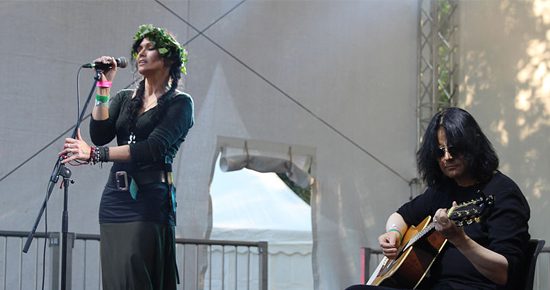
Inkubus Sukkubus at Inkubus Sukkubus at the Wave-Gotik-Treffen 2014. Ralf Lotys (Sicherlich), Wikimedia Commons

You can learn a lot about how Pagans view themselves, and the movement to which they belong, from listening to an excerpt of an Inkubus Sukkubus song called “Craft of the Wise.”
Excerpt from “Craft of the Wise”
Inkubus Sukkubus (1995)Across a thousand nations
And forty-thousand years
The teachers and the healers
We are the Craft of the Wise
The Old World and the New World
Remember the nature people
We who were persecuted
And we shall rise again
Chorus: And we dance round, hand in hand
We are at one with the tides and the land
We are wild and we are free
We are wild and we are free
But the tide is ever changing
The Wheel ever spinning round
And in the heart of the dying Empire
Was born the Church of Rome
And they did rise, but they shall fall
And all their lies shall be seen as lies
And the world shall be free from the yoke of guilt
And they shall be no more
The lyrics of this song reveal much about the Pagan mindset and ideology. It should be stressed that these ideas are not shared by all Pagans, and it also should be stressed that not of all these ideas are necessarily true. But they do reflect a narrative that is commonplace in the Pagan public mind, largely thanks to its repetition in popular Pagan culture such as songs like this.
So what ideas have been reflected in “Craft of the Wise?”
Firstly, Pagans believe themselves to have a deep, special connection to the natural environment – the “nature people” – and that thanks to this connection, Pagans have access to particular knowledge and wisdom.
Secondly is the idea that Paganism as a religion spans millennia – “forty thousand years,” if Inkubus Sukkubus are to be believed. Moreover, the modern Pagans today may see themselves as directly connected to those practicing nature worship in the past. They may see their religion as one that has continued more or less unbroken throughout the ages.
Thirdly is the idea that Pagans represent a persecuted people and that the main perpetrator of this persecution has been Christianity – the “Church of Rome,” as referenced in the song. Pagans see themselves as rebels, defying a religion that may once have persecuted them as heretics and sinners.
And fourthly, which is of course the main topic today, is the repetition of the notion of freedom: “We are wild and we are free,” as the song goes. Pagans believe that their path sets them free.
In this talk, I’d like to talk about some of the ideas raised in “Craft of the Wise,” as I believe that ultimately they all relate to this broader theme of freedom.
Introduction to Paganism
Let’s begin by trying to get an idea of some of the basics about Paganism.
People who call themselves Pagans today are part of an extremely broad spiritual movement that has no single set of beliefs, practices, or texts. The one thing that Pagans share in common is that their practises are inspired by pre-Christian religions, often from Europe. This includes the religions of the ancient Greeks, Romans, Celts, Vikings, and Egyptians. Other characteristics that Pagan beliefs often share include polytheism, an emphasis on venerating the natural world, a focus on ritual and action rather than philosophy, and a belief in magic and witchcraft.
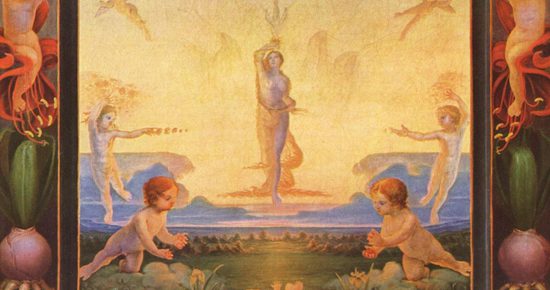
“The Morning,” Philipp Otto Runge (1808). Wikimedia Commons.

Despite what Inkubus Sukkubus sing in Craft Of The Wise, Paganism in the form in which myself and others like me practice today is for the most part a modern phenomenon. The first modern Pagans, or “neo-Pagans” as some call them, have their origins in the Romanticist movement of the 18th-19th centuries. In the 19th century, Europe also saw an increased interest in the occult, as well as a feeling of nostalgia for rural traditions as Europe begin increasingly urbanised. These waves of interest in ancient pre-Christian beliefs and practices continued until reaching a peak post-war, in which various writers popularised paganism and witchcraft. The ideas expressed by these writers gelled well with social movements of the 60s and 70s, such as the hippie movement, environmentalism, feminism, and the decline of Christianity in many parts of Europe and America.
Today, there are a wide variety of Pagan paths. The most popular form of Paganism is Wicca, which is centred on the worship of the God and the Goddess and places emphasis on Witchcraft. Another popular form of Paganism in the UK is Druidry, which is inspired by the beliefs of the Celtic peoples and is shamanic and nature-orientated. Other Pagan paths include Heathenry, which is based on the beliefs of the ancient Anglo-Saxons and Vikings; Hellenism, which focuses on the Greek pantheon; and the Goddess movement, which devotes its energies to the veneration of the feminine. These are just a few examples of the wide variety of Pagan paths out there, but what’s important to remember is that a large number of Pagans generally do not stick to one specific path. Many are eclectic, incorporating bits and pieces of paths that make sense to them. Pagans might even worship deities from different pantheons together, or combine their Pagan beliefs with those of other faiths. I myself practise Western-style Paganism in combination with Japanese Shinto. Paganism can be both solitary or group-orientated, and when Pagans do get together as a group, it’s common for the group not to follow one specific path.
Now I’ve given a little outline of the basics of Paganism, I’d now like to talk more about the idea of freedom in relation to the Pagan path.
Nature as Freedom
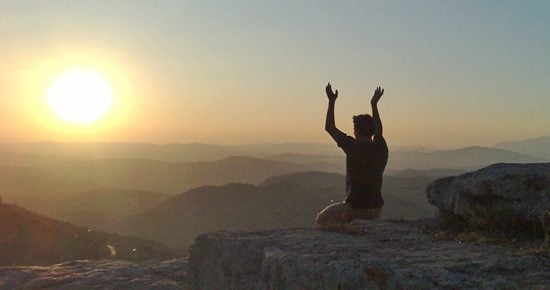

Firstly, Pagans believe that being closer to nature makes them free. You could say that nature is the ultimate expression of freedom as nature is inherently untamed, in contrast to human society which is controlled and regulated. In deepening their connections with trees, rivers, standing stones, mountains and other natural phenomena, Pagans believe they are liberating themselves from the constrains of human society, and getting back to a more primal state in which are no societal obligations to fulfil.
Freedom from Authority
Somewhat related to this point is the idea that Paganism represents freedom from authority. Paganism is founded on the folk traditions of the general populace, rather than the teachings of a particular individual or institution. This is partly true for pre-Christian pagan beliefs, and certainly true for modern Pagans today. Paganism has no founder, no leader, no centralised institution, no holy book, and no clergy. In fact, Pagans tend to reject any hint of authoritarianism. Attempts to turn Paganism into a path constrained by a single doctrine, or to give Paganism a single voice, are largely met with resistance in the Pagan community. As many within the community comment, trying to impose rules and structure on Pagans is like trying to “herd cats;” an apt description, not only because cats are a favoured animal among Pagans and witches, but also because cats are an enduring symbol of liberty. As David V. Barrett says in A Brief Guide to Secret Religions:
“It is arguable that one of Neo-Paganism’s greatest strengths is its diversity. Although there is sometimes rivalry and mutual criticism between different traditions and groups of Neo-Pagans…there is probably far more commonality between them, and mutual support in the face of opposition, than there is between the many variations and offshoots of Christianity.”
You could say that Pagans are in fact united as a community because the majority believe in liberty, diversity and respecting each other’s individual paths, rather than enforcing rules and dogma. It is because we believe in individual freedom.
Author Nina Lyon, who has written books about her own eclectic, liberal form of nature-based spirituality, has described her beliefs as “punk religion.” I think that “punk religion” is a very good description for Paganism. Paganism is a religion that rebels against the traditions of many organised religions both by defying concepts like idolatry and blasphemy, and by letting its followers interpret Paganism however they see fit. As such, Pagans frequently see themselves as counter-cultural and non-mainstream, not only in their spirituality but in other aspects of their daily lives and views of the world.
Freedom of Thought

Tim Schapker, Wikimedia Commons
There’s another reason why I think “punk religion” is an apt label for Paganism, and that is the idea that it encourages freedom of thought and the imagination. Paganism as a movement has long history of creativity. Like the Punk movement, which rejects cookie-cutter, factory-made materialism in fashion and music in favour of individual expression, Paganism seems to attract a lot of imaginative, artistic types. The majority of Pagans I know have some kind of creative hobby: Drawing, writing poetry and novels, singing, baking, and creating beautiful objects of art, to name but a few.
I think that to be a Pagan, you need to have a degree of creativity and imagination, because Paganism has no real texts giving instructions on to how to practise the religion and to live one’s life. There are no firm rules as to how one should be Pagan.
What’s more, a great deal of creativity is encouraged in Pagan rituals. Most practitioners of Paganism seem to agree that Pagans gain a lot spiritually by creating their own ritual, rather than copying one written by another word-for-word. Pagans may also write poetry or songs to perform during a ritual, and playing instruments such as a drum at ceremonies is not uncommon. This creativity extends to altars as well – although there is some guidance as to what is appropriate on a Pagan altar, Pagans tend to put a lot of imagination into their altar designs. And then of course there’s the tools,offerings, incense, oils and other items used in Pagan practice….all of these can be home-made and many books on Paganism come with instructions for making these.
Imagination and creativity is central to witchcraft as well. A key aspect of many forms of magic is visualisation – the act of seeing in your mind’s eye what you want to achieve. A practitioner of magic may use visualisation throughout ritual: They may envision the energy they are summoning as something like light or electricity, or the elements embodied in the form of supernatural beings, or the presence of their deities in the Circle. For a magic worker, the barrier between the physical world and the world of the imagination is tenuous, or even illusionary.
And for those many Pagans who try to live an environmentally-friendly lifestyle due to their beliefs, creativity is something of an essential. Trying to live a life that is low-carbon, low-waste, sustainable and fair trade requires a lot of thinking outside the box, forethought and imagination; you quickly find that practically every aspect of modern life is an ecological problem to be solved.
Political freedom
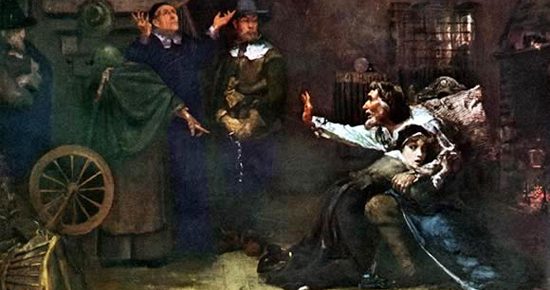
“Accused of Witchcraft,” Douglas Volk (1884). Wikimedia Commons.

It is for this creativity that we can consider Paganism to be the Punk Rock of religions. But there is another, deeper reason too. And that is its enduring rebelliousness and resistance to political oppression. Paganism has continually represented political freedom.
We must not forget that the reason why Paganism flourishes in the Western world today is because of liberty. Without exception, the only countries where Paganism, and especially witchcraft, can be practised openly are those that embrace civil liberties. For Pagans living in a liberal society, it’s easy to forget how transgressive our path is in the context of less liberal nations. Our way of life is literally blasphemy in the eyes of oppressive states and fundamentalists of organised religions: It promotes the veneration of many deities, the reverence of sacred images, the practise of magic and communion with the divine among laymen, the view of nature as something not inferior to humanity, the embracing of sexual freedom and the naked human form, and, most subversive of all, the equality of all people regardless of gender, race, sexuality or religious belief. The only reason why I am not imprisoned and punished by the state for saying this, and why I do not fear violent repercussions from those who disagree with me, is because I live in a society that says that I cannot be detained by the state for writing about my beliefs – and, importantly, other people in this country do not have the right to commit crimes against me because I offend them. That is the essence of freedom of expression.
It was not always like this in the UK. The Witchcraft Act, introduced in the 16th century to punish practitioners of magic, was only repealed in 1951, while blasphemy laws were abolished less than a decade ago in 2008. While these laws were in force, people could be, and were, punished by the state for actions deemed offensive to Christianity. Practitioners of witchcraft and other pagan ways most definitely fit this category in the strictest interpretation of these laws, hence the witchcraft trials of the 15th – 18th centuries.
How different things are today. Not only have the laws that officially prohibited Paganism been repealed, but Pagans are in fact defended from persecution by the Equality Act, under which religion is considered a “protected characteristic.” This means that it is now illegal to discriminate against Pagans on the basis of their religion. So not only can I openly practice Paganism without fear of persecution from my own government; I can also practice openly in the knowledge that employers and service providers cannot legally discriminate against me for being a Pagan.
Pagans are not simply benefactors of the fight for greater political freedom, either. Pagans have been active fighters in the continuing battle for greater liberty for all. The 1960s and 70s saw the rise of second-wave feminism, in which women campaigned for greater equality and freedom in the workplace, family and reproductive rights. At the same time, Europe and America saw the rise of modern witchcraft and the Goddess movement. In a way, these two movements were the spiritual expression of feminism. They sought to bestow greater spiritual power on women within a society that was largely Christian – a patriarchal religion. Additionally, they reclaimed the idea of a “witch” not as the evil, ugly, cackling hag, but as the powerful, wise woman in control of her own destiny and living in harmony with nature. Today, Paganism continues to attract a large female following, and many members are politically active in other causes fighting for freedom for others.
Paganism is a path that both supports freedom, and depends on freedom. As a liberal path, it empowers ordinary people by saying they have the right to interpret their religion, commune with their deities, and tap into supernatural forces without the need of guidance from a priest or other authority figure. It encourages its followers to explore their spirituality through their own individual, creative expression. And it rejects illiberal laws that oppress the voices that question or defy established religious institutions. This is why Pagans may regard themselves truly as wild and free.
Secularism, Politics & Human Rights
Previous Post
July 14, 2017
Is UNESCO Enabling Discrimination? The Case Of Okinoshima
Next Post
July 31, 2017 Pagan, Shinto & Spiritual Book Reviews July 2017
Browse Our Archives
Select a Category Art, Craft & Expression Musings & Miscellaneous Nature & Science News & Reviews Ritual & Festivals Secularism, Politics & Human Rights Shinto & Japanese Religion Uncategorized
Select a Month August 2023 July 2023 June 2023 May 2023 April 2023 March 2023 February 2023 January 2023 December 2022 November 2022 October 2022 September 2022 August 2022 July 2022 June 2022 May 2022 April 2022 March 2022 February 2022 January 2022 December 2021 November 2021 October 2021 September 2021 August 2021 July 2021 June 2021 May 2021 April 2021 March 2021 February 2021 January 2021 December 2020 November 2020 October 2020 September 2020 August 2020 July 2020 June 2020 May 2020 April 2020 March 2020 February 2020 January 2020 December 2019 November 2019 October 2019 September 2019 August 2019 July 2019 June 2019 May 2019 April 2019 March 2019 February 2019 January 2019 December 2018 November 2018 October 2018 September 2018 August 2018 July 2018 June 2018 May 2018 April 2018 March 2018 February 2018 January 2018 December 2017 August 2017 July 2017 June 2017 May 2017 April 2017 March 2017 February 2017 January 2017 December 2016 November 2016 October 2016 September 2016 August 2016 July 2016 June 2016 May 2016 April 2016 March 2016 February 2016 January 2016
Follow Us!
TAKE THE
Religious Wisdom Quiz
Which disciple is known as 'the Twin'?
Select your answer to see how you score.
James Andrew Philip Thomas
Related posts from Pagan Tama

Three reasons why Pagans should support equality for...
Holy Well Pilgrimage: The Hidden Wells of St...

Holy Well Pilgrimage: The Mysterious Face Of St...

Opposing Religious Discrimination At Schools: A (Mixed) Success
TRENDING AT PATHEOS Pagan

I was recently chatting with someone on Instagram. She asked me what...

While there are many people who share their results, the end of...

On July 23, I saw Christopher Nolan's The Odyssey which is Homer’s...

As I write this two big events have just finished up. One...

Restoring the Watershed of Divine Love
Perhaps cooperation is not something we manufacture through legislation, ideology, or moral...

Many UUs don’t pray because of bad experiences in a previous religion,...
view all Pagan blogs
Ad-Free & Subscriber Log-In Subscription Support
- About Us
- 2026 Calendar
- Videos
- Podcasts
- Library of World Religions
- Faith In Media Tracker
- Advertise With Us
- Write for Us
- Privacy Policy
- Terms of Service
- Do Not Sell My Data
- Contact Us
- Radiant Digital
- Manage Newsletter Subscriptions
- Unsubscribe From Notifications
- Sitemap
Copyright 2008-2026, Patheos. All rights reserved.
Subscription Support Ad-Free & Subscriber Log-In
Follow Patheos