
BuddhistCatholicContemplativeEvangelicalGeneral ChristianHinduJewishLatter-day SaintMuslimNew VisionsProgressive Christian
Beliefs
- Buddhist
- Catholic
- Contemplative
- Evangelical
- General Christian
- Hindu
- Jewish
- Latter-day Saint
- More Voices
- Muslim
- New Visions
- Pagan
- Progressive Christian
Topics
- Religion News
- Food and Religion
- Sports and Religion
- Religious Art
- Religious Music and Entertainment
- Religious Events
- History and Religion
- Style and Religion
- Politics and Religion
- Women in Religion
- Recreation Outdoors and Religion
- Business Finance and Religion
- Careers Workplace and Religion
- Education and Religion
- Family Parenting and Religion
- Health Fitness and Religion
- Home and Religion
- Relationships and Religion
- Technology and Religion
- Travel and Religion
Columnists
- Buddhist Columnists
- Business Finance and Religion Columnists
- Careers Workplace and Religion Columnists
- Catholic Columnists
- Contemplative Columnists
- Education and Religion Columnists
- Evangelists Columnists
- Family Parenting and Religion Columnists
- General Christian Columnists
- Health Fitness and Religion Columnists
- Hindu Columnists
- History and Religion Columnists
- Home and Religion Columnists
- Jewish Columnists
- More Voices Columnists
- Latter Day Columnists
- Muslim Columnists
- New Visions Columnists
- Nonreligious Columnists
- Pagan Columnists
- Politics and Religion Columnists
- Progressive Columnists
- Recreation Outdoors and Religion Columnists
- Relationships and Religion Columnists
- Religion News Columnists
- Religious Art Columnists
- Religious Events Columnists
- Religious Music and Entertainment Columnists
- Sports and Religion Columnists
- Style and Religion Columnists
- Technology and Religion Columnists
- Travel and Religion Columnists
- Women in Religion Columnists
Resource Library
- 2026 Calendar
- Library of World Religions
- The 100 Most Holy Places on Earth
- Patheos Answers
- Podcasts
- Videos
- Faith Leaders Database
- Anglican Episcopalian
- Bahai
- Baptist
- Buddhism
- Christianity
- Confucianism
- Eastern Orthodoxy
- Hinduism
- Holiness and Pentecostal
- ISKCON
- Islam
- Judaism
- Lutheran
- Methodist
- The Church of Jesus Christ of Latter-day Saints
- New Age
- Paganism
- Presbytarian and Reformed
- Protestantism
- Religion Behind the Scenes
- Roman Catholic
- Scientology
- Shia Islam
- Sikhism
- Sufism
- Sunni Islam
- Taoism
- Zen
- See all religions
Research Tools
 Ad-Free & Subscriber Log-In Subscription Support
Ad-Free & Subscriber Log-In Subscription Support
Follow Patheos 

- Trending:
- Forgiveness
- |
- Marriage
- |
- Consciousness
- |
- Death Penalty
- |
- Election
- |
- Halloween
 Pagan Tama
- Home
- Pagan
- Grieving For Robots And Dolls: Animism Or Materialism Gone Mad?
Grieving For Robots And Dolls: Animism Or Materialism Gone Mad?
Last updated on: March 21, 2017 at 7:22 am by Megan Manson
Grieving For Robots And Dolls: Animism Or Materialism Gone Mad? 2017-03-21T07:22:58+00:00 Megan Manson
Patheos Explore the world's faith through different perspectives on religion and spirituality! Patheos has the views of the prevalent religions and spiritualities of the world.
You may remember in 2014, various news sources reported on funerals held for AIBO robot dogs in Japan. Since Sony stopped repairing and making spare parts for AIBOs, the dogs have been slowly “dying out.” In response to this, Buddhist priests have been holding funeral services for them.

AIBO. Sven Volkens, CC Wikimedia Commons

This may seem pretty strange to anyone outside of Japan. Indeed, a lot of Japanese people find it rather odd as well. Some may even find it rather disturbing that somehow, in treating an artificial human creation as a living thing, we have lost touch with reality and are forgetting what makes living things special.
But treating certain man-made creations with the same respect as natural objects is nothing new in Japan. There’s a whole article on funeral rites for inanimate objects here. Objects that may be disposed of in a ritualistic fashion in Japan have included needles, chopsticks, combs and bladed items – in general, items that people use in a fairly personal, intimate fashion. Other items that may be disposed of more carefully are dolls. Some Japanese are reluctant to throw out dolls as ordinary rubbish because they resemble people, and so it somehow seems cruel to treat them as trash.
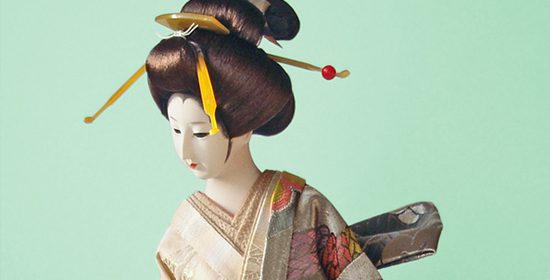
Japanese doll. Public domain, Wikimedia Commons

There are various reasons for doing this. One is related to the idea of “sympathetic magic” as described in The Golden Bough. There are two types of sympathetic magic. First, there is “homeopathic magic,” in which an object can be connected to another object simply by physically resembling it. This may explain the thinking behind disposing of dolls through ritual means – they look like people, so they must be treated like people. Secondly, there is “contagious magic,” in which two otherwise unrelated objects form a magical connection simply by being in physical contact with each other. In the case of the personal items listed above, they are seen as “contaminated” with that person’s spirit, giving them a supernatural connection with that person. As such a connection can be dangerous, ritual disposal of such objects stops any harm from coming to the former owner.
Finally, the concept of treating items with respect in Japan very likely has a connection with the animistic nature of Shinto. In Shinto, kami can inhabit both natural and man-made objects. In a similar fashion, items that have been carefully hand-crafted, such as traditional masks and swords, are thought to possess, if not something so lofty as kami, a kind of soul or spirit that requires respect. Disposing of such an item in a careless, disrespectful manner can offend the spirit, which may become vengeful; this is the basis for the belief in O-bake – ghosts that often take the form of old, disused objects such as umbrellas or lanterns.
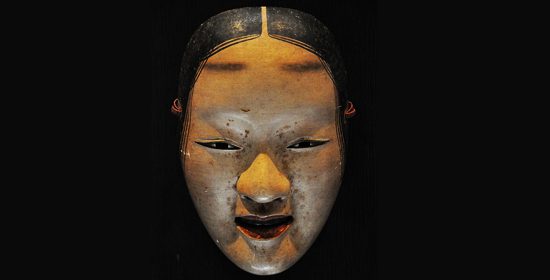
Mask for Japanese Noh theatre. Hand-crafted noh masks are treated with great care and respect – performers will talk and bow to them before putting them on. Public domain, Wikimedia Commons.

Aside from the appeasement of spirits that may inhibit an object, one may wish to dispose of items in ritual fashion for more symbolic purposes. By holding funeral rites for objects, one is showing respect for that object’s creator, acknowledging that it is a piece of art that has taken time and skill to create. Additionally, one is showing gratitude for the service that the object has given. It’s a way of acknowledging that without the object, your life would have been more difficult and you are thankful for that object’s existence. It demonstrates that you have made an attachment with that object and are reluctant to part with it.
I believe that this way of thinking about man-made objects, rather than disconnecting us from the natural world, can encourage us to protect it. By being grateful to all the objects we use, rather than thoughtlessly throwing them away when they have outlived their usefulness, we step away from the “disposable world” mentality that’s so commonplace these days. Respecting man-made objects reminds us that those objects originally came from nature, and are therefore a valuable resource that must be used carefully and sustainably. This applies to any objects made by man, be it an old needle or a robotic dog.
Previous Post

March 14, 2017
What Do Gods And Mascots Have In Common?
Next Post
March 26, 2017 Nature Deities Verses Human Deities
Browse Our Archives
Select a Category Art, Craft & Expression Musings & Miscellaneous Nature & Science News & Reviews Ritual & Festivals Secularism, Politics & Human Rights Shinto & Japanese Religion Uncategorized
Select a Month August 2023 July 2023 June 2023 May 2023 April 2023 March 2023 February 2023 January 2023 December 2022 November 2022 October 2022 September 2022 August 2022 July 2022 June 2022 May 2022 April 2022 March 2022 February 2022 January 2022 December 2021 November 2021 October 2021 September 2021 August 2021 July 2021 June 2021 May 2021 April 2021 March 2021 February 2021 January 2021 December 2020 November 2020 October 2020 September 2020 August 2020 July 2020 June 2020 May 2020 April 2020 March 2020 February 2020 January 2020 December 2019 November 2019 October 2019 September 2019 August 2019 July 2019 June 2019 May 2019 April 2019 March 2019 February 2019 January 2019 December 2018 November 2018 October 2018 September 2018 August 2018 July 2018 June 2018 May 2018 April 2018 March 2018 February 2018 January 2018 December 2017 August 2017 July 2017 June 2017 May 2017 April 2017 March 2017 February 2017 January 2017 December 2016 November 2016 October 2016 September 2016 August 2016 July 2016 June 2016 May 2016 April 2016 March 2016 February 2016 January 2016
Follow Us!
TAKE THE
Religious Wisdom Quiz
Which letter encourages believers to "rejoice in the Lord always"?
Select your answer to see how you score.
2 Thessalonians Colossians 1 Peter Philippians
Related posts from Pagan Tama

Pagan & Shinto News: Japan PM's Wife Criticised...

Protest Plans To Demolish 'Ghibli' Shinto Shrine To...

Pagan & Shinto News SPECIAL: Appeal for Japan...
My Weather Wishes For The Tanabata Star Festival
TRENDING AT PATHEOS Pagan

I was recently chatting with someone on Instagram. She asked me what...

While there are many people who share their results, the end of...

On July 23, I saw Christopher Nolan's The Odyssey which is Homer’s...

As I write this two big events have just finished up. One...

Restoring the Watershed of Divine Love
Perhaps cooperation is not something we manufacture through legislation, ideology, or moral...

Many UUs don’t pray because of bad experiences in a previous religion,...
view all Pagan blogs
Ad-Free & Subscriber Log-In Subscription Support
- About Us
- 2026 Calendar
- Videos
- Podcasts
- Library of World Religions
- Faith In Media Tracker
- Advertise With Us
- Write for Us
- Privacy Policy
- Terms of Service
- Do Not Sell My Data
- Contact Us
- Radiant Digital
- Manage Newsletter Subscriptions
- Unsubscribe From Notifications
- Sitemap
Copyright 2008-2026, Patheos. All rights reserved.
Subscription Support Ad-Free & Subscriber Log-In
Follow Patheos