
BuddhistCatholicContemplativeEvangelicalGeneral ChristianHinduJewishLatter-day SaintMuslimNew VisionsProgressive Christian
Beliefs
- Buddhist
- Catholic
- Contemplative
- Evangelical
- General Christian
- Hindu
- Jewish
- Latter-day Saint
- More Voices
- Muslim
- New Visions
- Pagan
- Progressive Christian
Topics
- Religion News
- Food and Religion
- Sports and Religion
- Religious Art
- Religious Music and Entertainment
- Religious Events
- History and Religion
- Style and Religion
- Politics and Religion
- Women in Religion
- Recreation Outdoors and Religion
- Business Finance and Religion
- Careers Workplace and Religion
- Education and Religion
- Family Parenting and Religion
- Health Fitness and Religion
- Home and Religion
- Relationships and Religion
- Technology and Religion
- Travel and Religion
Columnists
- Buddhist Columnists
- Business Finance and Religion Columnists
- Careers Workplace and Religion Columnists
- Catholic Columnists
- Contemplative Columnists
- Education and Religion Columnists
- Evangelists Columnists
- Family Parenting and Religion Columnists
- General Christian Columnists
- Health Fitness and Religion Columnists
- Hindu Columnists
- History and Religion Columnists
- Home and Religion Columnists
- Jewish Columnists
- More Voices Columnists
- Latter Day Columnists
- Muslim Columnists
- New Visions Columnists
- Nonreligious Columnists
- Pagan Columnists
- Politics and Religion Columnists
- Progressive Columnists
- Recreation Outdoors and Religion Columnists
- Relationships and Religion Columnists
- Religion News Columnists
- Religious Art Columnists
- Religious Events Columnists
- Religious Music and Entertainment Columnists
- Sports and Religion Columnists
- Style and Religion Columnists
- Technology and Religion Columnists
- Travel and Religion Columnists
- Women in Religion Columnists
Resource Library
- 2026 Calendar
- Library of World Religions
- The 100 Most Holy Places on Earth
- Patheos Answers
- Podcasts
- Videos
- Faith Leaders Database
- Anglican Episcopalian
- Bahai
- Baptist
- Buddhism
- Christianity
- Confucianism
- Eastern Orthodoxy
- Hinduism
- Holiness and Pentecostal
- ISKCON
- Islam
- Judaism
- Lutheran
- Methodist
- The Church of Jesus Christ of Latter-day Saints
- New Age
- Paganism
- Presbytarian and Reformed
- Protestantism
- Religion Behind the Scenes
- Roman Catholic
- Scientology
- Shia Islam
- Sikhism
- Sufism
- Sunni Islam
- Taoism
- Zen
- See all religions
Research Tools
 Ad-Free & Subscriber Log-In Subscription Support
Ad-Free & Subscriber Log-In Subscription Support
Follow Patheos 

- Trending:
- Forgiveness
- |
- Marriage
- |
- Consciousness
- |
- Death Penalty
- |
- Election
- |
- Halloween
 Pagan Tama
- Home
- Pagan
- Shrines And Ceremonies: A Shinto Priest Explains
Shrines And Ceremonies: A Shinto Priest Explains
Last updated on: November 28, 2016 at 7:28 am by Megan Manson
Shrines And Ceremonies: A Shinto Priest Explains 2016-11-28T07:28:41+00:00 Megan Manson
Patheos Explore the world's faith through different perspectives on religion and spirituality! Patheos has the views of the prevalent religions and spiritualities of the world.
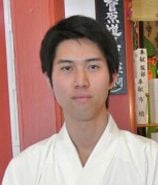 In the previous two posts, Shinto priest Taishi Kato explained some of the basic concepts of Shinto. In the final entry to this series, he now talks about Shinto shrines (jinja), the Shinto places of worship where kami dwell, and the importance of Shinto ceremony.
“Originally, Shinto shrines were set up in special places of nature, such as forest, mountains or cliffs, and no permanent buildings were constructed. Ordinary people were prevented from entering the inner grounds of the shrine territory. When ceremonies were held in those places, temporary shrines were set up. In the fifth century, the present form of Shinto shrine was established as a building amidst nature. Nowadays jinja are situated in places of remarkable natural beauty or otherwise incorporating nature.
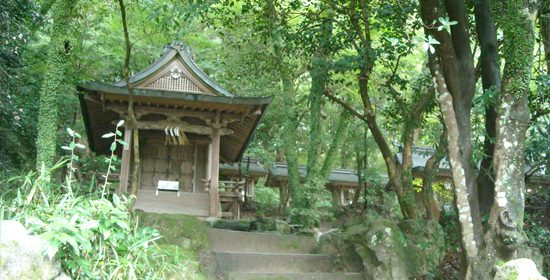
Jinja are designed for uniting human beings with nature. Firstly, there is the torii sacred gate. The torii is the symbol of the entrance into the jinja. Torii were originally made of wood but now they can be made of stone, metal or even ferroconcrete. The torii marks off the sacred space from the secular. There are no physical borders to cross the torii, as it symbolises a door that opens to the outer world. One of the purposes of the torii is to bring people in harmony with nature. When you pass through the torii, you purify your mind and reconnect with life force.
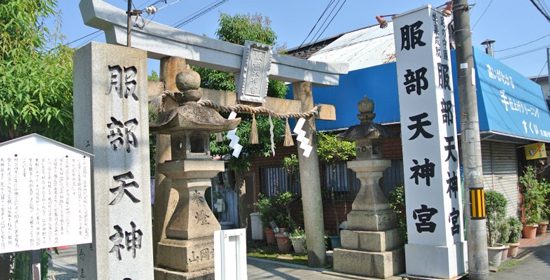
Torii leading into Hattori Tenjingu Shrine (Taishi’s shrine). Courtesy Green Shinto
Secondly, there is the purification fountain, the temizuya. A purification fountain is a place for visitors to rinse their hands and mouth in symbolic purification. Usually, it is located near the entrance of a jinja and most of them are designed as a font of running water with dippers under a simple roof supported by pillars. The aim of purification is to remove temporary impurities from one’s mind. To purify yourself, you do the following:
1. Take the water dipper in your right hand and pour water onto your left hand.
2. Take the water dipper in your left hand, and pour water onto your right hand.
3. Once more take the water dipper in your right hand, pour water into your cupped left hand, and rinse your mouth with the water from your hand (do not drink directly from the dipper).
4. In consideration for the next visitor, raise the dipper vertically and rinse off the handle with fresh water, then replace the dipper in its original location.
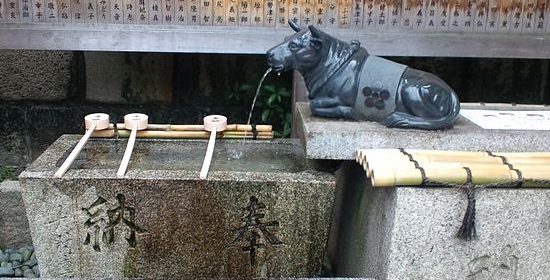
Temizuya at Sugawara Intenmangu Shrine. Yanajin33, CC Wikimedia Commons

Instead of doctrine or sacred scripture, Shinto puts emphasis on the ceremony. The essence of a Shinto ceremony is to create the space and time for enhanced connection to life forces while removing temporary impurities from one’s mind. Participants can put themselves into a state of heightened concentration on the here and now by reconnecting to one’s intuitive perception during a ceremony. In addition, as a Shinto priest, I can claim that the reason why Shinto cherishes ceremony and ritual is because Shinto is not based on objective knowledge but subjective intuition of time and space inside a jinja. Jinja create the space and time for enhanced connection to life forces. It leads to shifting from objective thinking to one’s subjective intuition. One’s subjective intuition helps one to integrate with life forces. Therefore, the ceremony is the most important service for Shinto priest in order to help visitors to integrate with the flow of life forces, which is the aim of Shinto.
For example, it is quite common for students to visit jinja before taking an entrance exam. Why do most of them come? Because they dwell in the past and the future without focusing on the here and now. They may regret not studying more. They may also worry about what to do if there is a question they don’t know how to answer. These are anxieties based on thinking about the past and future which mean they cannot concentrate on the exam. The students want to remove these sort of temporary impurities from their minds through ritual. And then they can take the exam in a state of the heightened concentration on the here and now.
It can be said that the essence of Shinto has a big influence on Japanese culture, which means cherishing harmony in society. To put it simply, Japanese people realise that they live through various interactions in society. They also have an influence on these interactions. Japanese people share the sensitivities of this interconnectedness consciously and unconsciously. Harmony is the most important thing of all.”
Pagan Tama would like to thank Taishi for all his helpful explanations!
Keep up to date by following Pagan Tama at Facebook here.
Previous Post
November 20, 2016
What Is Kami? A Shinto Priest Explains
Next Post

November 29, 2016 Pagan, Shinto & Spiritual Book Reviews November 2016
Browse Our Archives
Select a Category Art, Craft & Expression Musings & Miscellaneous Nature & Science News & Reviews Ritual & Festivals Secularism, Politics & Human Rights Shinto & Japanese Religion Uncategorized
Select a Month August 2023 July 2023 June 2023 May 2023 April 2023 March 2023 February 2023 January 2023 December 2022 November 2022 October 2022 September 2022 August 2022 July 2022 June 2022 May 2022 April 2022 March 2022 February 2022 January 2022 December 2021 November 2021 October 2021 September 2021 August 2021 July 2021 June 2021 May 2021 April 2021 March 2021 February 2021 January 2021 December 2020 November 2020 October 2020 September 2020 August 2020 July 2020 June 2020 May 2020 April 2020 March 2020 February 2020 January 2020 December 2019 November 2019 October 2019 September 2019 August 2019 July 2019 June 2019 May 2019 April 2019 March 2019 February 2019 January 2019 December 2018 November 2018 October 2018 September 2018 August 2018 July 2018 June 2018 May 2018 April 2018 March 2018 February 2018 January 2018 December 2017 August 2017 July 2017 June 2017 May 2017 April 2017 March 2017 February 2017 January 2017 December 2016 November 2016 October 2016 September 2016 August 2016 July 2016 June 2016 May 2016 April 2016 March 2016 February 2016 January 2016
Follow Us!
TAKE THE
Religious Wisdom Quiz
What did Samuel's mother promise if God gave her a son?
Select your answer to see how you score.
To offer a burnt sacrifice To move to Jerusalem To fast for 40 days To dedicate him to the Lord
Related posts from Pagan Tama
Protest Plans To Demolish 'Ghibli' Shinto Shrine To...
My Weather Wishes For The Tanabata Star Festival
Connecting With Shinto Kami Overseas

Garden Rituals: What Do Pagans Think?
TRENDING AT PATHEOS Pagan

I was recently chatting with someone on Instagram. She asked me what...

While there are many people who share their results, the end of...

On July 23, I saw Christopher Nolan's The Odyssey which is Homer’s...

As I write this two big events have just finished up. One...

Restoring the Watershed of Divine Love
Perhaps cooperation is not something we manufacture through legislation, ideology, or moral...

Many UUs don’t pray because of bad experiences in a previous religion,...
view all Pagan blogs
Ad-Free & Subscriber Log-In Subscription Support
- About Us
- 2026 Calendar
- Videos
- Podcasts
- Library of World Religions
- Faith In Media Tracker
- Advertise With Us
- Write for Us
- Privacy Policy
- Terms of Service
- Do Not Sell My Data
- Contact Us
- Radiant Digital
- Manage Newsletter Subscriptions
- Unsubscribe From Notifications
- Sitemap
Copyright 2008-2026, Patheos. All rights reserved.
Subscription Support Ad-Free & Subscriber Log-In
Follow Patheos