
BuddhistCatholicContemplativeEvangelicalGeneral ChristianHinduJewishLatter-day SaintMuslimNew VisionsProgressive Christian
Beliefs
- Buddhist
- Catholic
- Contemplative
- Evangelical
- General Christian
- Hindu
- Jewish
- Latter-day Saint
- More Voices
- Muslim
- New Visions
- Pagan
- Progressive Christian
Topics
- Religion News
- Food and Religion
- Sports and Religion
- Religious Art
- Religious Music and Entertainment
- Religious Events
- History and Religion
- Style and Religion
- Politics and Religion
- Women in Religion
- Recreation Outdoors and Religion
- Business Finance and Religion
- Careers Workplace and Religion
- Education and Religion
- Family Parenting and Religion
- Health Fitness and Religion
- Home and Religion
- Relationships and Religion
- Technology and Religion
- Travel and Religion
Columnists
- Buddhist Columnists
- Business Finance and Religion Columnists
- Careers Workplace and Religion Columnists
- Catholic Columnists
- Contemplative Columnists
- Education and Religion Columnists
- Evangelists Columnists
- Family Parenting and Religion Columnists
- General Christian Columnists
- Health Fitness and Religion Columnists
- Hindu Columnists
- History and Religion Columnists
- Home and Religion Columnists
- Jewish Columnists
- More Voices Columnists
- Latter Day Columnists
- Muslim Columnists
- New Visions Columnists
- Nonreligious Columnists
- Pagan Columnists
- Politics and Religion Columnists
- Progressive Columnists
- Recreation Outdoors and Religion Columnists
- Relationships and Religion Columnists
- Religion News Columnists
- Religious Art Columnists
- Religious Events Columnists
- Religious Music and Entertainment Columnists
- Sports and Religion Columnists
- Style and Religion Columnists
- Technology and Religion Columnists
- Travel and Religion Columnists
- Women in Religion Columnists
Resource Library
- 2026 Calendar
- Library of World Religions
- The 100 Most Holy Places on Earth
- Patheos Answers
- Podcasts
- Videos
- Faith Leaders Database
- Anglican Episcopalian
- Bahai
- Baptist
- Buddhism
- Christianity
- Confucianism
- Eastern Orthodoxy
- Hinduism
- Holiness and Pentecostal
- ISKCON
- Islam
- Judaism
- Lutheran
- Methodist
- The Church of Jesus Christ of Latter-day Saints
- New Age
- Paganism
- Presbytarian and Reformed
- Protestantism
- Religion Behind the Scenes
- Roman Catholic
- Scientology
- Shia Islam
- Sikhism
- Sufism
- Sunni Islam
- Taoism
- Zen
- See all religions
Research Tools
 Ad-Free & Subscriber Log-In Subscription Support
Ad-Free & Subscriber Log-In Subscription Support
Follow Patheos 

- Trending:
- Forgiveness
- |
- Marriage
- |
- Consciousness
- |
- Death Penalty
- |
- Election
- |
- Halloween
 Pagan Tama
- Home
- Pagan
- Do We Embody Our Gods?
Do We Embody Our Gods?
Last updated on: September 19, 2016 at 9:08 pm by Megan Manson
Do We Embody Our Gods? 2016-09-19T21:08:57+00:00 Megan Manson
Patheos Explore the world's faith through different perspectives on religion and spirituality! Patheos has the views of the prevalent religions and spiritualities of the world.
When considering the relationship we have with our deities, I’ve been wondering to what extent we embody the deities we follow.
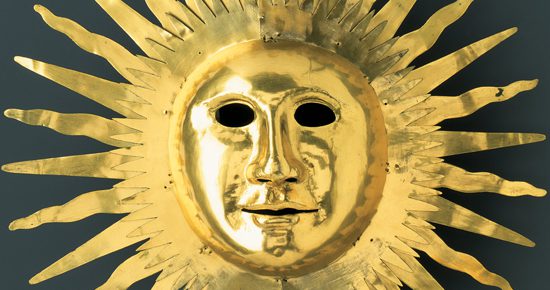
Sun mask with facial features of August II (the Strong) as Apollo, the Sun God. Public domain, Wikimedia Commons

Some Pagans have a Pantheistic outlook, and they would say that the whole of the universe, including ourselves, can itself be understood as deity so of course we embody them. Some Wiccans also hold the view that the God and the Goddess are within us all.
But how about Pagans such as myself who have a particular deity to whom they are particularly drawn or focus their worship? Because I consider my patron deity to be Inari Ōkami, does this mean that I, to some extent, embody Inari?
I think this about other Pagans I know who have patron deities. Do my friends who venerate Lilith represent an aspect of Lilith herself? Is this reflected in their personality and demeanour? My Pagan friends do in fact seem to have traits that in part reflect the traits of the God or Goddess they follow. Many of my friends who follow a form of Great Mother Goddess are gentle and maternal, which seems appropriate enough! Similarly, my friends who have an affinity with deities associated with darkness, rebellion or death also have an appreciation for “darker” aesthetics and alternative lifestyles.
I believe that when we venerate a deity and live our life in a manner that the deity would approve of, we do embody at least a small part of them. When we fail to honour our deities appropriately or behave in a manner that they would find offensive, we lose this closeness with them and we do not embody them to the same extent. This is an idea shared with Christianity, as followers of Christ often believe that behaving in accordance with his teachings draws them closer to him.
So just as foxes are seen as Inari’s messengers, so too, I think, are her followers. When I meet with a Pagan who venerates Brighid for example, it is as if a small part of Inari is also meeting with a small part of Brighid. I see devotees almost as “masks” that our deities wear in order to interact with the human, mortal world.
Following on from this, I believe devotees, collectively, contribute in “building up” our deities. By holding rituals for them, telling stories about them, and acting in a way in which they approve, we all work as a part of the deity like parts of the body or mind. Even if devotees have conflicting ideas, this is fine – our own minds too have conflicting ideas.
So the next time someone says that we just “make up our gods,” you can tell them that they’re right in way – just a very literal way as our gods are “made up” of us!
Previous Post

September 16, 2016
10 Things to Do in Autumn (According to the Japanese)
Next Post

September 27, 2016 Pagan, Shinto & Spiritual Book Reviews September 2016
Browse Our Archives
Select a Category Art, Craft & Expression Musings & Miscellaneous Nature & Science News & Reviews Ritual & Festivals Secularism, Politics & Human Rights Shinto & Japanese Religion Uncategorized
Select a Month August 2023 July 2023 June 2023 May 2023 April 2023 March 2023 February 2023 January 2023 December 2022 November 2022 October 2022 September 2022 August 2022 July 2022 June 2022 May 2022 April 2022 March 2022 February 2022 January 2022 December 2021 November 2021 October 2021 September 2021 August 2021 July 2021 June 2021 May 2021 April 2021 March 2021 February 2021 January 2021 December 2020 November 2020 October 2020 September 2020 August 2020 July 2020 June 2020 May 2020 April 2020 March 2020 February 2020 January 2020 December 2019 November 2019 October 2019 September 2019 August 2019 July 2019 June 2019 May 2019 April 2019 March 2019 February 2019 January 2019 December 2018 November 2018 October 2018 September 2018 August 2018 July 2018 June 2018 May 2018 April 2018 March 2018 February 2018 January 2018 December 2017 August 2017 July 2017 June 2017 May 2017 April 2017 March 2017 February 2017 January 2017 December 2016 November 2016 October 2016 September 2016 August 2016 July 2016 June 2016 May 2016 April 2016 March 2016 February 2016 January 2016
Follow Us!
TAKE THE
Religious Wisdom Quiz
Which city did the believers first call themselves "Christians"?
Select your answer to see how you score.
Rome Corinth Antioch Jerusalem
Related posts from Pagan Tama

Three reasons why Pagans should support equality for...

Holy Well Pilgrimage: The Hidden Wells of St...

Holy Well Pilgrimage: The Mysterious Face Of St...

Protest Plans To Demolish 'Ghibli' Shinto Shrine To...
TRENDING AT PATHEOS Pagan

I was recently chatting with someone on Instagram. She asked me what...

While there are many people who share their results, the end of...

On July 23, I saw Christopher Nolan's The Odyssey which is Homer’s...

As I write this two big events have just finished up. One...

Restoring the Watershed of Divine Love
Perhaps cooperation is not something we manufacture through legislation, ideology, or moral...

Many UUs don’t pray because of bad experiences in a previous religion,...
view all Pagan blogs
Ad-Free & Subscriber Log-In Subscription Support
- About Us
- 2026 Calendar
- Videos
- Podcasts
- Library of World Religions
- Faith In Media Tracker
- Advertise With Us
- Write for Us
- Privacy Policy
- Terms of Service
- Do Not Sell My Data
- Contact Us
- Radiant Digital
- Manage Newsletter Subscriptions
- Unsubscribe From Notifications
- Sitemap
Copyright 2008-2026, Patheos. All rights reserved.
Subscription Support Ad-Free & Subscriber Log-In
Follow Patheos