
BuddhistCatholicContemplativeEvangelicalGeneral ChristianHinduJewishLatter-day SaintMuslimNew VisionsProgressive Christian
Beliefs
- Buddhist
- Catholic
- Contemplative
- Evangelical
- General Christian
- Hindu
- Jewish
- Latter-day Saint
- More Voices
- Muslim
- New Visions
- Pagan
- Progressive Christian
Topics
- Religion News
- Food and Religion
- Sports and Religion
- Religious Art
- Religious Music and Entertainment
- Religious Events
- History and Religion
- Style and Religion
- Politics and Religion
- Women in Religion
- Recreation Outdoors and Religion
- Business Finance and Religion
- Careers Workplace and Religion
- Education and Religion
- Family Parenting and Religion
- Health Fitness and Religion
- Home and Religion
- Relationships and Religion
- Technology and Religion
- Travel and Religion
Columnists
- Buddhist Columnists
- Business Finance and Religion Columnists
- Careers Workplace and Religion Columnists
- Catholic Columnists
- Contemplative Columnists
- Education and Religion Columnists
- Evangelists Columnists
- Family Parenting and Religion Columnists
- General Christian Columnists
- Health Fitness and Religion Columnists
- Hindu Columnists
- History and Religion Columnists
- Home and Religion Columnists
- Jewish Columnists
- More Voices Columnists
- Latter Day Columnists
- Muslim Columnists
- New Visions Columnists
- Nonreligious Columnists
- Pagan Columnists
- Politics and Religion Columnists
- Progressive Columnists
- Recreation Outdoors and Religion Columnists
- Relationships and Religion Columnists
- Religion News Columnists
- Religious Art Columnists
- Religious Events Columnists
- Religious Music and Entertainment Columnists
- Sports and Religion Columnists
- Style and Religion Columnists
- Technology and Religion Columnists
- Travel and Religion Columnists
- Women in Religion Columnists
Resource Library
- 2026 Calendar
- Library of World Religions
- The 100 Most Holy Places on Earth
- Patheos Answers
- Podcasts
- Videos
- Faith Leaders Database
- Anglican Episcopalian
- Bahai
- Baptist
- Buddhism
- Christianity
- Confucianism
- Eastern Orthodoxy
- Hinduism
- Holiness and Pentecostal
- ISKCON
- Islam
- Judaism
- Lutheran
- Methodist
- The Church of Jesus Christ of Latter-day Saints
- New Age
- Paganism
- Presbytarian and Reformed
- Protestantism
- Religion Behind the Scenes
- Roman Catholic
- Scientology
- Shia Islam
- Sikhism
- Sufism
- Sunni Islam
- Taoism
- Zen
- See all religions
Research Tools
 Ad-Free & Subscriber Log-In Subscription Support
Ad-Free & Subscriber Log-In Subscription Support
Follow Patheos 

- Trending:
- Forgiveness
- |
- Marriage
- |
- Consciousness
- |
- Death Penalty
- |
- Election
- |
- Halloween
 Pagan Tama
- Home
- Pagan
- Four Elements, Four States of Matter
Four Elements, Four States of Matter
Last updated on: May 22, 2016 at 10:59 am by Megan Manson
Four Elements, Four States of Matter 2016-05-22T10:59:48+00:00 Megan Manson
Patheos Explore the world's faith through different perspectives on religion and spirituality! Patheos has the views of the prevalent religions and spiritualities of the world.
The Four Elements are, by definition, fundamental to many forms of Paganism, particularly Wicca. But in the modern world, I find it difficult to reconcile the four classical elements of Earth, Air, Fire and Water with the 100 or so chemical elements of science – how can I refer to the Four Elements when I know that the reality is far more complex?
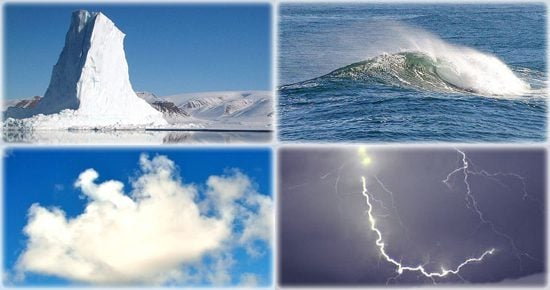
The four states of matter – solid, liquid, gas and plasma.
Instead, like many modern Pagans, I find it much easier to attribute the Four Elements with the four states of matter in science – solid, liquid, gas and plasma. In fact, the four classical elements fit the four states of matter so well, it could be that our ancestors had something of an inkling that the world around them consisted of these states of matter, but not knowing about atoms they had to use the analogy of the Four Elements to explain them. This is how the Four Elements correspond with the four states of matter…

Earth = Solid
The solid state of matter is the state that we usually find most familiar. Most solid items can be seen, touched and represented easily. It is the state in which particles are the lowest energy, but most highly ordered. Solids are strong and stable, holding their shape; the word “solid” as an adjective has connotations of reliability, durability and truthfulness. When forced to change, solids break rather than change shape.
When working with the energies of Earth, we should think of these qualities – strong, stable, safe and orderly, but also inflexible, heavy, cold and low in energy.
 Water = Liquid
Liquid is the second state of matter. Its particles have a little more energy than a solid, so they can slide over each other. This gives liquid its ability to take the shape of any container that holds it, and to flow.
As a liquid itself, Water exhibits these qualities. In magic, Water energy is slightly higher than a solid, and can be considered more versatile, but it is still fairly self-contained as well as being cold and heavy.
 Air = Gas
Heat a liquid enough and it’ll evaporate into gas. Gas is a highly energised state of matter; the particles have all broken free of each other and move in random directions. As a result, gases are formless and often invisible – this makes them somewhat mysterious for humans.
Air, the mix of gases that we are so familiar with and depend upon, is the element attributed with qualities of lightness, energy and warm. It’s also associated with intellect and intuition, perhaps because gases are generally invisible, just like human thought – we say things like, “oh, I just plucked that idea out of the air.”
 Fire = Plasma
When a gas is heated to extreme temperatures, the very atoms themselves are ripped apart, the electrons breaking free from protons to become free-flowing, forming a plasma. Plasmas in nature can be found in lightning, stars and some kinds of flame.
Although most flames aren’t really plasma (they are reacting gases), the element of Fire certainly has many of the qualities of a plasma: Extreme energy and heat, a strong connection with light, chaotic behaviour, weightlessness, and destructiveness. That’s why working with Fire energy in magic requires caution – it is extremely powerful but can be dangerous! The word “plasma” often makes us think of futuristic, space-age techology, and this can be carried across to Fire energy – use it when invoking something new and revolutionary.
 Aether/Void/Spirit = Spacetime
Many traditions include a fifth element, often called Aether or Void or Spirit, which is the most mysterious element of all. It’s either considered an “everythingness,” a pervasive force exisiting throughout all the other elements, or a “nothingness,” devoid of anything at all, or somehow a combination of the two.
I equate the fifth element with Spacetime, the “structure” of existence itself which results in gravity. Spacetime consists of “quantum foam,” a seething sea of potential at the tiniest scale possible in which virtual particles exist for almost no time before disappearing. It’s the ultimate “everything in nothingness,” equating very well to the idea of the aether. Think of Spacetime when working with the fifth element – something infinitely unknowable yet with infinite potential.
State of matter images by ElfQrin, CC Wikimedia Commons.
Spacetime image by Mysid, CC Wikimedia Commons.


Previous Post

May 19, 2016
Skulls: Beyond Memento Mori
Next Post
May 25, 2016 Tokonoma – Japan’s “Secular Altars”
Browse Our Archives
Select a Category Art, Craft & Expression Musings & Miscellaneous Nature & Science News & Reviews Ritual & Festivals Secularism, Politics & Human Rights Shinto & Japanese Religion Uncategorized
Select a Month August 2023 July 2023 June 2023 May 2023 April 2023 March 2023 February 2023 January 2023 December 2022 November 2022 October 2022 September 2022 August 2022 July 2022 June 2022 May 2022 April 2022 March 2022 February 2022 January 2022 December 2021 November 2021 October 2021 September 2021 August 2021 July 2021 June 2021 May 2021 April 2021 March 2021 February 2021 January 2021 December 2020 November 2020 October 2020 September 2020 August 2020 July 2020 June 2020 May 2020 April 2020 March 2020 February 2020 January 2020 December 2019 November 2019 October 2019 September 2019 August 2019 July 2019 June 2019 May 2019 April 2019 March 2019 February 2019 January 2019 December 2018 November 2018 October 2018 September 2018 August 2018 July 2018 June 2018 May 2018 April 2018 March 2018 February 2018 January 2018 December 2017 August 2017 July 2017 June 2017 May 2017 April 2017 March 2017 February 2017 January 2017 December 2016 November 2016 October 2016 September 2016 August 2016 July 2016 June 2016 May 2016 April 2016 March 2016 February 2016 January 2016
Follow Us!
TAKE THE
Religious Wisdom Quiz
Which language is the official language of the Roman Catholic Mass worldwide since Vatican II?
Select your answer to see how you score.
Greek Local vernacular Latin French
Related posts from Pagan Tama

Pagan & Shinto News: Japan PM's Wife Criticised...

Secret 'Roman Bath' In Woods Given Its Magic...

Pilgrimage to...St Nectan's Glen, Cornwall

Dealing With Japan's Sacred Deer
TRENDING AT PATHEOS Pagan

I was recently chatting with someone on Instagram. She asked me what...

While there are many people who share their results, the end of...

On July 23, I saw Christopher Nolan's The Odyssey which is Homer’s...

As I write this two big events have just finished up. One...

Restoring the Watershed of Divine Love
Perhaps cooperation is not something we manufacture through legislation, ideology, or moral...

Many UUs don’t pray because of bad experiences in a previous religion,...
view all Pagan blogs
Ad-Free & Subscriber Log-In Subscription Support
- About Us
- 2026 Calendar
- Videos
- Podcasts
- Library of World Religions
- Faith In Media Tracker
- Advertise With Us
- Write for Us
- Privacy Policy
- Terms of Service
- Do Not Sell My Data
- Contact Us
- Radiant Digital
- Manage Newsletter Subscriptions
- Unsubscribe From Notifications
- Sitemap
Copyright 2008-2026, Patheos. All rights reserved.
Subscription Support Ad-Free & Subscriber Log-In
Follow Patheos