
BuddhistCatholicContemplativeEvangelicalGeneral ChristianHinduJewishLatter-day SaintMuslimNew VisionsProgressive Christian
Beliefs
- Buddhist
- Catholic
- Contemplative
- Evangelical
- General Christian
- Hindu
- Jewish
- Latter-day Saint
- More Voices
- Muslim
- New Visions
- Pagan
- Progressive Christian
Topics
- Religion News
- Food and Religion
- Sports and Religion
- Religious Art
- Religious Music and Entertainment
- Religious Events
- History and Religion
- Style and Religion
- Politics and Religion
- Women in Religion
- Recreation Outdoors and Religion
- Business Finance and Religion
- Careers Workplace and Religion
- Education and Religion
- Family Parenting and Religion
- Health Fitness and Religion
- Home and Religion
- Relationships and Religion
- Technology and Religion
- Travel and Religion
Columnists
- Buddhist Columnists
- Business Finance and Religion Columnists
- Careers Workplace and Religion Columnists
- Catholic Columnists
- Contemplative Columnists
- Education and Religion Columnists
- Evangelists Columnists
- Family Parenting and Religion Columnists
- General Christian Columnists
- Health Fitness and Religion Columnists
- Hindu Columnists
- History and Religion Columnists
- Home and Religion Columnists
- Jewish Columnists
- More Voices Columnists
- Latter Day Columnists
- Muslim Columnists
- New Visions Columnists
- Nonreligious Columnists
- Pagan Columnists
- Politics and Religion Columnists
- Progressive Columnists
- Recreation Outdoors and Religion Columnists
- Relationships and Religion Columnists
- Religion News Columnists
- Religious Art Columnists
- Religious Events Columnists
- Religious Music and Entertainment Columnists
- Sports and Religion Columnists
- Style and Religion Columnists
- Technology and Religion Columnists
- Travel and Religion Columnists
- Women in Religion Columnists
Resource Library
- 2026 Calendar
- Library of World Religions
- The 100 Most Holy Places on Earth
- Patheos Answers
- Podcasts
- Videos
- Faith Leaders Database
- Anglican Episcopalian
- Bahai
- Baptist
- Buddhism
- Christianity
- Confucianism
- Eastern Orthodoxy
- Hinduism
- Holiness and Pentecostal
- ISKCON
- Islam
- Judaism
- Lutheran
- Methodist
- The Church of Jesus Christ of Latter-day Saints
- New Age
- Paganism
- Presbytarian and Reformed
- Protestantism
- Religion Behind the Scenes
- Roman Catholic
- Scientology
- Shia Islam
- Sikhism
- Sufism
- Sunni Islam
- Taoism
- Zen
- See all religions
Research Tools
 Ad-Free & Subscriber Log-In Subscription Support
Ad-Free & Subscriber Log-In Subscription Support
Follow Patheos 

- Trending:
- Forgiveness
- |
- Marriage
- |
- Consciousness
- |
- Death Penalty
- |
- Election
- |
- Halloween
 Pagan Tama
- Home
- Pagan
- The Need for Human-Friendly Conservation
The Need for Human-Friendly Conservation
Last updated on: March 25, 2018 at 10:21 am by Megan Manson
The Need for Human-Friendly Conservation 2018-03-25T10:21:36+00:00 Megan Manson
Patheos Explore the world's faith through different perspectives on religion and spirituality! Patheos has the views of the prevalent religions and spiritualities of the world.
In my last post, I argued that Humanists who believe environmentalism is anti-Humanists are incorrect, in that environmentalism seeks to protect the interests mankind. Now let’s look from the reverse perspective – at how some environmentalists perhaps need to adopt a more Humanist perspective, and always factor in human rights as a basic component of conservation.

Maasai men performing traditional jumping dance (Adumu). Public domain via Wikimedia Commons

What prompted me to think about this was watching BBC’s The Hunt last year*,* a David Attenborough documentary about nature’s predators and how they live. While for the most part it’s an excellent series, I found the final episode a little disturbing. It was about the very real need for conservation of top predators, but some of the methods highlighted made me uncomfortable.

By Sbj1976 / Wikimedia Commons

In once instance, they showed how a small, not especially wealthy community in India was incentivised to move from their isolated forest-based village to a more urban area in order to make more room for tigers. Although the villagers were given compensation to move, my impression was that little else was done to ensure they could continue to make a living, and many villagers seemed unhappy with this relocation – understandably so. What’s more, the tiger specialist in charge of the project argued that these villagers would be better off in the urban area, where he said there would be better access to education and so forth, than in their original forest home. I’ve heard propaganda like this used many times to justify the forced relocation of tribal peoples and others who choose to live in isolated areas away from large settlements, and it was frightening to hear such ideas here. One wonders how much say the villagers had in this re-location and whether it was genuinely done for the sake of conservation, or had a more political end in mind.
In another scene, we saw two white conservationists travelling to East Africa to confront the Maasai people over their killing of lions. Since they depend entirely on cattle for their diet, defending herds from lions is simply a part of life for the Maasai; the documentary noted that the Maasai have lived alongside lions for “thousands of years.” Lions are also be hunted for ritual purposes by the Maasai, particularly as a rite of passage. But these white conservationists took it upon themselves to tell the Maasai that this ancient way of life is wrong, and that they shouldn’t kill lions.

By Aurelio Arias / Wikimedia Commons

This smacked so much of a particularly old-fashioned brand of cultural imperialism that it was difficult to watch. True, lions are classified as “vulnerable” (but not “endangered”) by IUCN and their numbers are declining, but picking on a group of indigenous tribesmen who take a few lions every year in order to defend their cattle is not going to solve the problem. All it does is give the governments of Kenya and Tanzania more incentive to put pressure on the Maasai people to abandon their traditional way of life – a way of life that the Maasai would very much like to retain. This form of environmentalism in fact drives a wedge between nature and the people who live within it. The Maasai understand more than anyone that if they want to continue their way of life, which includes the ritual hunting of lions, they need to hunt them responsibly to make sure they do not wipe them all out (hence the hunting in such small numbers). They don’t need outsiders who have never experienced Maasai life wagging their fingers and giving them a ticking off for killing lions. Meanwhile, lion numbers continue to plummet due to issues that have nothing to do with the Maasai, including destruction of their habitat and trophy hunting by rich tourists. If we want to help lions, these are the issues that we need to be tackling, not picking on tribal people. I certainly did not miss the irony that The Hunt, which celebrates the incredible abilities of nature’s most awesome predators, seemed to condemn the actions of the Maasai – the most inventive, brilliant and successful hunters of all on the East African plains.
Conservation is hard, and finding solutions that satisfy the needs of people and the rest of the environment can be a minefield. But we must not be tempted by the “easy option” of victimising the most vulnerable targets – be they ordinary villagers in India or Maasai tribes in Africa – to try and solve these problems.
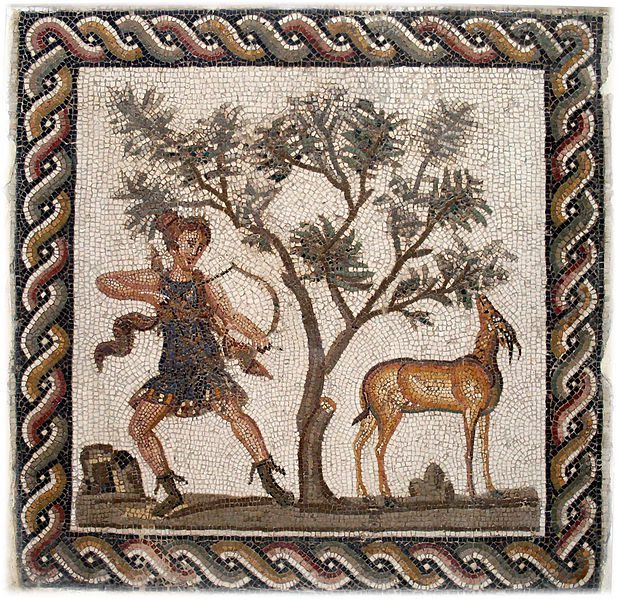
Diana, Goddess of hunting. Public domain via Wikimedia Commons.

As Pagans, we are aware that human beings are just as part of nature as any other animal in the ecosystem. That is why I believe, as a Pagan and as a Humanist, actions carried out in the name of environmentalism and conservation must be conducted in a way that ensures human rights are not violated in the process. Pagan Gods and Goddesses of hunting were often the same Gods and Goddesses who protected nature too. The message theses deities taught was that using the natural resources around you to live is a good thing, as long as it is done properly and with respect. Those who cause upheaval in the lives of ordinary people in the name of environmentalism seem to have forgotten this message.
Fortunately, there are environmentalists who realise that conservation that includes humans as part of the ecosystem to preserve and treasure is a better way to go. I strongly recommend watching BBC’s Human Planet, the best documentary series ever made in my opinion, which explores the many ingenious ways humans around the world live sustainably side-by-side with nature.
If you are interested in finding out more about the conflicts that arise between environmentalism and the human rights of tribal peoples, and want to help support those who choose to live in tribal communities, please do check out the charity Survival International.
Secularism, Politics & Human Rights
Previous Post

April 11, 2016
Yes, Environmentalism is Humanist
Next Post

April 16, 2016 Help for Kumamoto
Browse Our Archives
Select a Category Art, Craft & Expression Musings & Miscellaneous Nature & Science News & Reviews Ritual & Festivals Secularism, Politics & Human Rights Shinto & Japanese Religion Uncategorized
Select a Month August 2023 July 2023 June 2023 May 2023 April 2023 March 2023 February 2023 January 2023 December 2022 November 2022 October 2022 September 2022 August 2022 July 2022 June 2022 May 2022 April 2022 March 2022 February 2022 January 2022 December 2021 November 2021 October 2021 September 2021 August 2021 July 2021 June 2021 May 2021 April 2021 March 2021 February 2021 January 2021 December 2020 November 2020 October 2020 September 2020 August 2020 July 2020 June 2020 May 2020 April 2020 March 2020 February 2020 January 2020 December 2019 November 2019 October 2019 September 2019 August 2019 July 2019 June 2019 May 2019 April 2019 March 2019 February 2019 January 2019 December 2018 November 2018 October 2018 September 2018 August 2018 July 2018 June 2018 May 2018 April 2018 March 2018 February 2018 January 2018 December 2017 August 2017 July 2017 June 2017 May 2017 April 2017 March 2017 February 2017 January 2017 December 2016 November 2016 October 2016 September 2016 August 2016 July 2016 June 2016 May 2016 April 2016 March 2016 February 2016 January 2016
Follow Us!
TAKE THE
Religious Wisdom Quiz
Which city did Paul describe as "a city filled with idols"?
Select your answer to see how you score.
Corinth Jerusalem Athens Rome
Related posts from Pagan Tama

Pagan & Shinto News: Japan PM's Wife Criticised...

Three reasons why Pagans should support equality for...

Holy Well Pilgrimage: The Hidden Wells of St...

Holy Well Pilgrimage: The Mysterious Face Of St...
TRENDING AT PATHEOS Pagan

I was recently chatting with someone on Instagram. She asked me what...

While there are many people who share their results, the end of...

On July 23, I saw Christopher Nolan's The Odyssey which is Homer’s...

As I write this two big events have just finished up. One...

Restoring the Watershed of Divine Love
Perhaps cooperation is not something we manufacture through legislation, ideology, or moral...

Many UUs don’t pray because of bad experiences in a previous religion,...
view all Pagan blogs
Ad-Free & Subscriber Log-In Subscription Support
- About Us
- 2026 Calendar
- Videos
- Podcasts
- Library of World Religions
- Faith In Media Tracker
- Advertise With Us
- Write for Us
- Privacy Policy
- Terms of Service
- Do Not Sell My Data
- Contact Us
- Radiant Digital
- Manage Newsletter Subscriptions
- Unsubscribe From Notifications
- Sitemap
Copyright 2008-2026, Patheos. All rights reserved.
Subscription Support Ad-Free & Subscriber Log-In
Follow Patheos