
BuddhistCatholicContemplativeEvangelicalGeneral ChristianHinduJewishLatter-day SaintMuslimNew VisionsProgressive Christian
Beliefs
- Buddhist
- Catholic
- Contemplative
- Evangelical
- General Christian
- Hindu
- Jewish
- Latter-day Saint
- More Voices
- Muslim
- New Visions
- Pagan
- Progressive Christian
Topics
- Religion News
- Food and Religion
- Sports and Religion
- Religious Art
- Religious Music and Entertainment
- Religious Events
- History and Religion
- Style and Religion
- Politics and Religion
- Women in Religion
- Recreation Outdoors and Religion
- Business Finance and Religion
- Careers Workplace and Religion
- Education and Religion
- Family Parenting and Religion
- Health Fitness and Religion
- Home and Religion
- Relationships and Religion
- Technology and Religion
- Travel and Religion
Columnists
- Buddhist Columnists
- Business Finance and Religion Columnists
- Careers Workplace and Religion Columnists
- Catholic Columnists
- Contemplative Columnists
- Education and Religion Columnists
- Evangelists Columnists
- Family Parenting and Religion Columnists
- General Christian Columnists
- Health Fitness and Religion Columnists
- Hindu Columnists
- History and Religion Columnists
- Home and Religion Columnists
- Jewish Columnists
- More Voices Columnists
- Latter Day Columnists
- Muslim Columnists
- New Visions Columnists
- Nonreligious Columnists
- Pagan Columnists
- Politics and Religion Columnists
- Progressive Columnists
- Recreation Outdoors and Religion Columnists
- Relationships and Religion Columnists
- Religion News Columnists
- Religious Art Columnists
- Religious Events Columnists
- Religious Music and Entertainment Columnists
- Sports and Religion Columnists
- Style and Religion Columnists
- Technology and Religion Columnists
- Travel and Religion Columnists
- Women in Religion Columnists
Resource Library
- 2026 Calendar
- Library of World Religions
- The 100 Most Holy Places on Earth
- Patheos Answers
- Podcasts
- Videos
- Faith Leaders Database
- Anglican Episcopalian
- Bahai
- Baptist
- Buddhism
- Christianity
- Confucianism
- Eastern Orthodoxy
- Hinduism
- Holiness and Pentecostal
- ISKCON
- Islam
- Judaism
- Lutheran
- Methodist
- The Church of Jesus Christ of Latter-day Saints
- New Age
- Paganism
- Presbytarian and Reformed
- Protestantism
- Religion Behind the Scenes
- Roman Catholic
- Scientology
- Shia Islam
- Sikhism
- Sufism
- Sunni Islam
- Taoism
- Zen
- See all religions
Research Tools
 Ad-Free & Subscriber Log-In Subscription Support
Ad-Free & Subscriber Log-In Subscription Support
Follow Patheos 

- Trending:
- Forgiveness
- |
- Marriage
- |
- Consciousness
- |
- Death Penalty
- |
- Election
- |
- Halloween
 Pagan Tama
- Home
- Pagan
- Year of the Monkey
Year of the Monkey
Last updated on: February 3, 2016 at 2:59 pm by Megan Manson
Year of the Monkey 2016-02-03T14:59:45+00:00 Megan Manson
Patheos Explore the world's faith through different perspectives on religion and spirituality! Patheos has the views of the prevalent religions and spiritualities of the world.
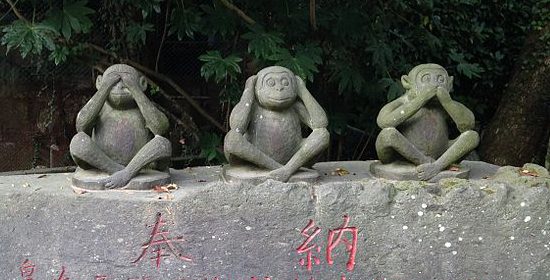
Sculpture of the Three Wise Monkeys in Hiyoshi Shrine in Yanagawa, Fukuoka.
February 8 marks the beginning of the Chinese Year of the Monkey – specifically, the Red Fire Monkey. Japan also follows the tradition of a 12 yearly cycle of zodiac animals, but unlike China, it now uses the Gregorian calendar rather than the old lunar calendar so it has in fact been the Year of the Monkey in Japan since January 1 in Japan.
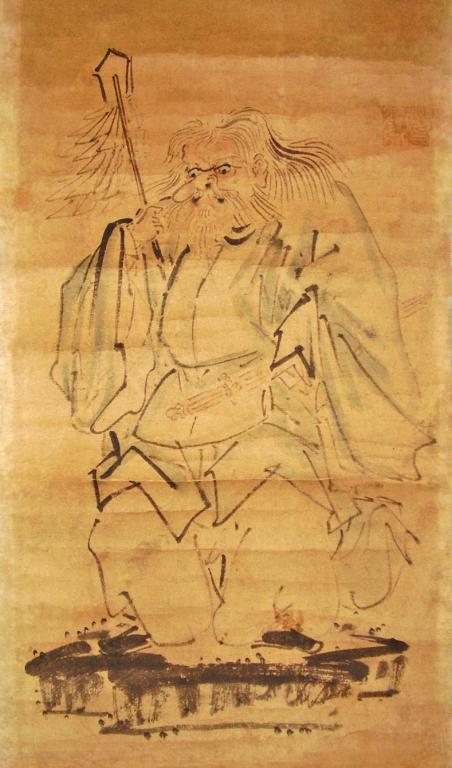
Sarutahiko Ookami. Public domain via Wikimedia Commons.
The monkey is a significant animal in Japan. Unlike some of the other animals in the Chinese zodiac, the monkey has been familiar to the Japanese since ancient times because macaques are native to the Japanese islands. Monkeys are common in Japanese folktales, in which they are portrayed as cunning, witty and mischievous. They are associated with the Shinto kami (deity) Sarutahiko Okami (猿田彦大神), whose name can be translated literally as “Great God Prince Monkey Field.” Sarutahiko symbolises the idea of misogi, or purification (a fundamental concept in Shinto), and is patron of martial arts.
But perhaps the most famous monkey icon in Japan is the san-zaru or san-en, often known as the Three Wise Monkeys in English. The Three Wise Monkeys have been present in Japanese iconography since the 17th century, and have links with Buddhism, Confucianism and Taoism. One monkey is depicted covering his eyes with his paws, the other his ears, and the third his mouth. In English, they are accompanied by the maxim, “See no evil, hear no evil, speak no evil.” But why is this? And what does this proverb mean?
To answer the first question, it’s helpful to understand the Japanese version of this proverb, which is “mizaru, kikazaru, iwazaru” (見ざる、聞かざる、言わざる). This literally means “Not seeing, not hearing, not speaking,” but there’s a bit of a pun involved. The suffix –zaru, which changes the verb into the negative, sounds like “saru,”(猿) which means “monkey.” That’s where this icon comes from – it is a literal, visual pun of monkeys that are not seeing, hearing or speaking!
But what “see no evil, hear no evil, speak no evil” actually refers to is a matter of debate. In the West it often has the negative interpretation of refusing to take moral responsibility by feigning ignorance of wrongdoing (similar to “turning a blind eye”). But originally it probably had a more positive meaning in Buddhism, referring to keeping one’s mind and actions pure by refusing to partake in any evil deeds – even seeing, hearing or speaking them. I link this back to the Shinto idea of misogi – of keeping one’s self close to the kami by avoiding impurity in thoughts and deeds. Perhaps that is another reason why the patron of purity, Sarutahiko, is so closely linked with monkeys.
If you haven’t already made a New Year’s Resolution, why not make one inspired by the monkey for Chinese New Year? On January 1st, I made the following prayers in order to commemorate the Year of the Monkey:
Like the monkey, may I have the wit to make wise decisions, and be full of energy to put my thoughts into action.
Like Sarutahiko Okami, may I be pure and disciplined in mind, and persevere to overcome all challenges.
May I keep my thoughts, words and actions free from that which is harmful.
May I never turn a blind eye to that which I believe is wrong, and always speak out for what I believe is right.
References and further reading
“Monkeys in Japanese Culture,” Wikipedia
“Three Wise Monkeys,” Wikipedia
Image credit:
By そらみみ (Own work) [CC BY-SA 4.0 (http://creativecommons.org/licenses/by-sa/4.0)], via Wikimedia Commons
Previous Post
February 1, 2016
Inari, Japan's "Fox God"
Next Post

February 7, 2016 Legally-Binding Handfastings - I Do?
Browse Our Archives
Select a Category Art, Craft & Expression Musings & Miscellaneous Nature & Science News & Reviews Ritual & Festivals Secularism, Politics & Human Rights Shinto & Japanese Religion Uncategorized
Select a Month August 2023 July 2023 June 2023 May 2023 April 2023 March 2023 February 2023 January 2023 December 2022 November 2022 October 2022 September 2022 August 2022 July 2022 June 2022 May 2022 April 2022 March 2022 February 2022 January 2022 December 2021 November 2021 October 2021 September 2021 August 2021 July 2021 June 2021 May 2021 April 2021 March 2021 February 2021 January 2021 December 2020 November 2020 October 2020 September 2020 August 2020 July 2020 June 2020 May 2020 April 2020 March 2020 February 2020 January 2020 December 2019 November 2019 October 2019 September 2019 August 2019 July 2019 June 2019 May 2019 April 2019 March 2019 February 2019 January 2019 December 2018 November 2018 October 2018 September 2018 August 2018 July 2018 June 2018 May 2018 April 2018 March 2018 February 2018 January 2018 December 2017 August 2017 July 2017 June 2017 May 2017 April 2017 March 2017 February 2017 January 2017 December 2016 November 2016 October 2016 September 2016 August 2016 July 2016 June 2016 May 2016 April 2016 March 2016 February 2016 January 2016
Follow Us!
TAKE THE
Religious Wisdom Quiz
How should Christians handle anger according to Ephesians?
Select your answer to see how you score.
Ignore it completely Shout to release it Hold it in for years Do not let the sun go down on it
Related posts from Pagan Tama
Protest Plans To Demolish 'Ghibli' Shinto Shrine To...

Pagan & Shinto News SPECIAL: Appeal for Japan...
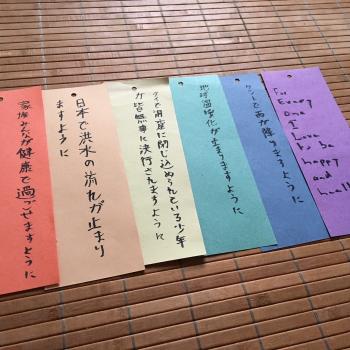
My Weather Wishes For The Tanabata Star Festival
Connecting With Shinto Kami Overseas
TRENDING AT PATHEOS Pagan

I was recently chatting with someone on Instagram. She asked me what...

While there are many people who share their results, the end of...

On July 23, I saw Christopher Nolan's The Odyssey which is Homer’s...

As I write this two big events have just finished up. One...

Restoring the Watershed of Divine Love
Perhaps cooperation is not something we manufacture through legislation, ideology, or moral...

Many UUs don’t pray because of bad experiences in a previous religion,...
view all Pagan blogs
Ad-Free & Subscriber Log-In Subscription Support
- About Us
- 2026 Calendar
- Videos
- Podcasts
- Library of World Religions
- Faith In Media Tracker
- Advertise With Us
- Write for Us
- Privacy Policy
- Terms of Service
- Do Not Sell My Data
- Contact Us
- Radiant Digital
- Manage Newsletter Subscriptions
- Unsubscribe From Notifications
- Sitemap
Copyright 2008-2026, Patheos. All rights reserved.
Subscription Support Ad-Free & Subscriber Log-In
Follow Patheos