
BuddhistCatholicContemplativeEvangelicalGeneral ChristianHinduJewishLatter-day SaintMuslimNew VisionsProgressive Christian
Beliefs
- Buddhist
- Catholic
- Contemplative
- Evangelical
- General Christian
- Hindu
- Jewish
- Latter-day Saint
- More Voices
- Muslim
- New Visions
- Pagan
- Progressive Christian
Topics
- Religion News
- Food and Religion
- Sports and Religion
- Religious Art
- Religious Music and Entertainment
- Religious Events
- History and Religion
- Style and Religion
- Politics and Religion
- Women in Religion
- Recreation Outdoors and Religion
- Business Finance and Religion
- Careers Workplace and Religion
- Education and Religion
- Family Parenting and Religion
- Health Fitness and Religion
- Home and Religion
- Relationships and Religion
- Technology and Religion
- Travel and Religion
Columnists
- Buddhist Columnists
- Business Finance and Religion Columnists
- Careers Workplace and Religion Columnists
- Catholic Columnists
- Contemplative Columnists
- Education and Religion Columnists
- Evangelists Columnists
- Family Parenting and Religion Columnists
- General Christian Columnists
- Health Fitness and Religion Columnists
- Hindu Columnists
- History and Religion Columnists
- Home and Religion Columnists
- Jewish Columnists
- More Voices Columnists
- Latter Day Columnists
- Muslim Columnists
- New Visions Columnists
- Nonreligious Columnists
- Pagan Columnists
- Politics and Religion Columnists
- Progressive Columnists
- Recreation Outdoors and Religion Columnists
- Relationships and Religion Columnists
- Religion News Columnists
- Religious Art Columnists
- Religious Events Columnists
- Religious Music and Entertainment Columnists
- Sports and Religion Columnists
- Style and Religion Columnists
- Technology and Religion Columnists
- Travel and Religion Columnists
- Women in Religion Columnists
Resource Library
- 2026 Calendar
- Library of World Religions
- The 100 Most Holy Places on Earth
- Patheos Answers
- Podcasts
- Videos
- Faith Leaders Database
- Anglican Episcopalian
- Bahai
- Baptist
- Buddhism
- Christianity
- Confucianism
- Eastern Orthodoxy
- Hinduism
- Holiness and Pentecostal
- ISKCON
- Islam
- Judaism
- Lutheran
- Methodist
- The Church of Jesus Christ of Latter-day Saints
- New Age
- Paganism
- Presbytarian and Reformed
- Protestantism
- Religion Behind the Scenes
- Roman Catholic
- Scientology
- Shia Islam
- Sikhism
- Sufism
- Sunni Islam
- Taoism
- Zen
- See all religions
Research Tools
 Ad-Free & Subscriber Log-In Subscription Support
Ad-Free & Subscriber Log-In Subscription Support
Follow Patheos 

- Trending:
- Forgiveness
- |
- Marriage
- |
- Consciousness
- |
- Death Penalty
- |
- Election
- |
- Halloween
 Staff of Asclepius
- Home
- Pagan
- Building A Magical Community
Building A Magical Community
Last updated on: May 31, 2016 at 11:54 am by Guest Contributor
Building A Magical Community 2016-05-31T11:54:19-05:00 Guest Contributor
Patheos Explore the world's faith through different perspectives on religion and spirituality! Patheos has the views of the prevalent religions and spiritualities of the world.
By Masery
First posted to the Witches Voice in 2008 under the Order of the Elodrym’s profile which is no longer available. witchvox.com
A yearning to belong is a natural drive to fulfill a need for understanding and security. Traditionally magickal and mystical groups gathered for the sole purpose of study of and initiation into the occult. The growing interest in magick and mysticism as a way of life is creating a need for a broader sense of community. In order to evolve as an esoteric community we need spiritually oriented open groups and not just secret mystery schools. Open communities would include people who practice magick or spirituality in their daily lives but aren’t interested in formal training.
It is human nature to gather in groups. We instinctively know that there is safety in numbers and when we surround ourselves with intelligent people, we increase our ability to accomplish our goals. Communities are defined by similarities between members and the various traditions they share. A positive community welcomes diverse members as an opportunity to exchange new ideas. They challenge ways of thinking without being overly aggressive or confrontational. There is a difference between questioning someone’s ideas and using mental intimidation to prove a point or boost the ego. A healthy group’s members will enter into constructive dialog instead of pressuring new members into conforming to a group mind.

IMAGE: Photograph of symbols on the beach at Crackington Haven, North Cornwall. by Andy Tootell at Flickr CC license some rights reserved.
Leaders of dysfunctional magickal groups claim to be the only mouthpiece of a deity or to have exclusive access to special knowledge. These charlatans expect all members to obey them. They also require the group’s knowledge to be hoarded. A truly spiritual community acknowledges that each member has the ability to commune with Divinity without any intersession from a priesthood or leader. A spiritual community allows members to share their experiences openly with each other and will acknowledge the benefits of gaining knowledge from outside of the group.
Strong, compassionate communities offer members assistance and comfort in times of despair and celebrate with each other in times of joy. When there are difficult transitions such as career changes, family conflict, and death, a positive community will rally around the member and offer support. Instead of telling them what they “should” or “shouldn’t” do they will ask what needs to be done and offer advice if asked. They respect each individual’s decisions. Respecting each member’s free will; however, is balanced with the strength to step in when a member is behaving in a way that will harm the group or themselves. A circle of assistance can be created around that member to offer help. If they refuse, then that person has the right to learn from what is perceived as a mistake. Discernment is required to understand how dangerous the member’s actions would be for themselves and the group. There are times when a member and group must part ways with perhaps the understanding that the member may return when the destructive behavior has become more constructive.
Community’s role is to celebrate a member’s milestones. They cheer them on when successful. They gather to honor births, unions, birthdays and seasonal changes to mark life’s continuation. Fully experiencing joys together strengthens each member, empowering them to pull together as a group in more difficult times.
Another positive trait among groups is that they won’t demand monetary donations from members. However, a positive group will be made up of members willing to offer their resources, time, or money to the organizations. Like a hive of bees, each contributing to the whole to reap sweet rewards.
A healthy group dynamic can be set up by using Professor Muneera Spence’s seven rules for collaboration:
Look for common ground: look for shared personal experiences, listen and give feedback, accept differences in perception and opinions, uncover similar values, be open about who you are and expect the same of others
Learn about others: recognize their perspectives and needs, allow others to freely express themselves
Critique results, not people: make other people feel good, personal hostility is a waste of time, avoid put downs or criticizing a person instead of their ideas
Give and get respect: respect other opinions, be considerate and friendly, have some empathy, speak with confidence and tact
Proceed slowly: check for understanding and acceptance of each idea before moving on to the next.
Be explicit and clear: observe nonverbal communication, speak clearly, select meaningful words, share ideas and feelings
Remember the five “Cs” of communication: clarity, completeness, conciseness, concreteness, and correctness (2)
Just as community strives to offer a safe, welcoming place for individuals so too can individuals take action to create the type of community they desire. Peers of San Francisco Psychologist Dr. Leo Busgaglia approached him with a story about a man who committed suicide by jumping from the Golden Gate Bridge. The man’s note said, “I’m going to walk across the Bridge and if no one smiles at me, I’m going to jump.” The people thought Dr. Busgaglia would be stricken with sympathy. Instead he said, “I wonder how many people he smiled at.” (1) Community is a circle, not a straight line. Each individual must bear some responsibility. In a functioning community circle, a member willingly fills their neighbor’s cup; the next person fills the next cup, and so forth knowing their cup will always be refilled.
(1) Shaler PhD, Roberta “Where Your Soul is Welcome and Your Voice is Heard” Vision Magazine (August 2007)
(2) Spence, Muneera U. “Graphic Design: Collaborative Processes = Understanding Self and Others.” (lecture) Art 325: Collaborative Processes. Fairbanks Hall, Oregon State University, Corvallis, Oregon. 13 Apr. 2006.
Internet Resources
Stages of Group Development www.chimaeraconsulting.com/tuckman.htm
Group Dynamics and Community Building by Jerry Hampton www.community4me.com/faq_smallgrp.html
Psychiatrist Morgan Scott Peck en.wikipedia.org/wiki/M._Scott_Peck His biography, stages of spiritual development, and thoughts on community building.
Previous Post

March 21, 2011
What is your heart song?
Next Post
March 22, 2011 March 22 is Diabetes Alert Day
Browse Our Archives
Select a Category About The Blog Adapting and Accessibility Current Events Entertainment Gatherings Guest Author Health and Wellness Holidays, Esbats, Sabats humor Interviews Magick and Spirituality Protecting Your Rights Science Share Your Story, Information, or Ideas Sports Sustainability Uncategorized
Select a Month May 2015 March 2015 February 2015 January 2015 December 2014 November 2014 October 2014 September 2014 August 2014 July 2014 June 2014 May 2014 March 2014 February 2014 January 2014 December 2013 October 2013 September 2013 August 2013 July 2013 June 2013 May 2013 April 2013 January 2013 December 2012 November 2012 October 2012 September 2012 August 2012 July 2012 June 2012 May 2012 April 2012 March 2012 February 2012 January 2012 December 2011 November 2011 October 2011 September 2011 August 2011 July 2011 June 2011 May 2011 April 2011 March 2011 February 2011 January 2011 December 2010 November 2010 September 2010 August 2010
Follow Us!
TAKE THE
Religious Wisdom Quiz
What was the primary method of food preservation in Biblical times?
Select your answer to see how you score.
Pickling Drying Smoking Salting
Related posts from Staff of Asclepius


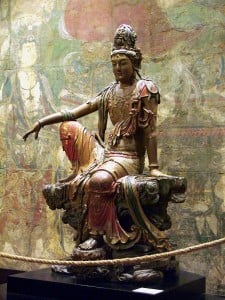
One Earth Mother, One Bodhisattva and the Spring...

Public Health in Sacred Space #health
TRENDING AT PATHEOS Pagan

I was recently chatting with someone on Instagram. She asked me what...

While there are many people who share their results, the end of...

On July 23, I saw Christopher Nolan's The Odyssey which is Homer’s...

As I write this two big events have just finished up. One...

Restoring the Watershed of Divine Love
Perhaps cooperation is not something we manufacture through legislation, ideology, or moral...

Many UUs don’t pray because of bad experiences in a previous religion,...
view all Pagan blogs
Ad-Free & Subscriber Log-In Subscription Support
- About Us
- 2026 Calendar
- Videos
- Podcasts
- Library of World Religions
- Faith In Media Tracker
- Advertise With Us
- Write for Us
- Privacy Policy
- Terms of Service
- Do Not Sell My Data
- Contact Us
- Radiant Digital
- Manage Newsletter Subscriptions
- Unsubscribe From Notifications
- Sitemap
Copyright 2008-2026, Patheos. All rights reserved.
Subscription Support Ad-Free & Subscriber Log-In
Follow Patheos