
BuddhistCatholicContemplativeEvangelicalGeneral ChristianHinduJewishLatter-day SaintMuslimNew VisionsProgressive Christian
Beliefs
- Buddhist
- Catholic
- Contemplative
- Evangelical
- General Christian
- Hindu
- Jewish
- Latter-day Saint
- More Voices
- Muslim
- New Visions
- Pagan
- Progressive Christian
Topics
- Religion News
- Food and Religion
- Sports and Religion
- Religious Art
- Religious Music and Entertainment
- Religious Events
- History and Religion
- Style and Religion
- Politics and Religion
- Women in Religion
- Recreation Outdoors and Religion
- Business Finance and Religion
- Careers Workplace and Religion
- Education and Religion
- Family Parenting and Religion
- Health Fitness and Religion
- Home and Religion
- Relationships and Religion
- Technology and Religion
- Travel and Religion
Columnists
- Buddhist Columnists
- Business Finance and Religion Columnists
- Careers Workplace and Religion Columnists
- Catholic Columnists
- Contemplative Columnists
- Education and Religion Columnists
- Evangelists Columnists
- Family Parenting and Religion Columnists
- General Christian Columnists
- Health Fitness and Religion Columnists
- Hindu Columnists
- History and Religion Columnists
- Home and Religion Columnists
- Jewish Columnists
- More Voices Columnists
- Latter Day Columnists
- Muslim Columnists
- New Visions Columnists
- Nonreligious Columnists
- Pagan Columnists
- Politics and Religion Columnists
- Progressive Columnists
- Recreation Outdoors and Religion Columnists
- Relationships and Religion Columnists
- Religion News Columnists
- Religious Art Columnists
- Religious Events Columnists
- Religious Music and Entertainment Columnists
- Sports and Religion Columnists
- Style and Religion Columnists
- Technology and Religion Columnists
- Travel and Religion Columnists
- Women in Religion Columnists
Resource Library
- 2026 Calendar
- Library of World Religions
- The 100 Most Holy Places on Earth
- Patheos Answers
- Podcasts
- Videos
- Faith Leaders Database
- Anglican Episcopalian
- Bahai
- Baptist
- Buddhism
- Christianity
- Confucianism
- Eastern Orthodoxy
- Hinduism
- Holiness and Pentecostal
- ISKCON
- Islam
- Judaism
- Lutheran
- Methodist
- The Church of Jesus Christ of Latter-day Saints
- New Age
- Paganism
- Presbytarian and Reformed
- Protestantism
- Religion Behind the Scenes
- Roman Catholic
- Scientology
- Shia Islam
- Sikhism
- Sufism
- Sunni Islam
- Taoism
- Zen
- See all religions
Research Tools
 Ad-Free & Subscriber Log-In Subscription Support
Ad-Free & Subscriber Log-In Subscription Support
Follow Patheos 

- Trending:
- Forgiveness
- |
- Marriage
- |
- Consciousness
- |
- Death Penalty
- |
- Election
- |
- Halloween
 At the Herm
- Home
- Pagan
- Hermes in Service
Hermes in Service
Last updated on: May 11, 2016 at 7:53 am by Sam Webster
Hermes in Service 2016-05-11T07:53:25-07:00 Sam Webster
Patheos Explore the world's faith through different perspectives on religion and spirituality! Patheos has the views of the prevalent religions and spiritualities of the world.
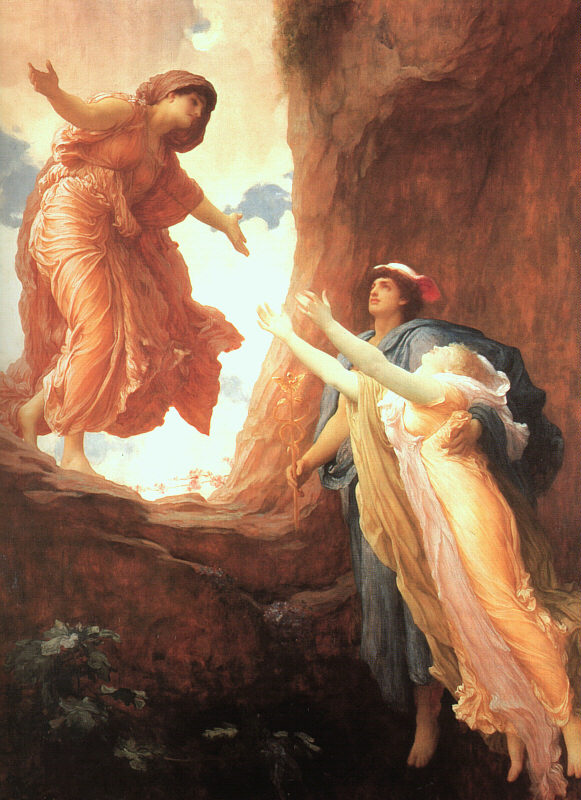 As our community matures, we are inevitably producing priesthoods and with that, laity. This happens because commitment and investment are not the same for all individuals. Some can, even must, pour their lives into their dedication to the Gods or to a particular Deity or set of Deities. Others, even finding a divine relationship congenial or compelling, may not be called into deeper engagement for temperament, path, or resources. There is no shame in this. Not everyone is called to the priesthood, although anyone can officiate at or offer worship. Just some make a life of it, and with that comes the knowledge, skills and experience that demands so much more while giving so deeply.
Besides expertise, the priesthood has other responsibilities which the laity do not take on. First is the prime duty of all priesthoods, to bless all with the grace of their Deities. This is the core function of priesthood: making the presence of the Deities manifest. Priestfolk, due to their expertise and cultivated relationship with the Deities, can enable access to the Divine Ones for those who have not their level of skill, or are in need, as well as shine the light or grace of Them in a place or on an occasion.
Being skilled and practiced, Priestfolk are of course good for officiating at worship, educating those approaching the Deity and, if skilled enough, this includes priesthood training and initiation. The core of this is the maintenance of cult: the regular service of the Deity through worship. In times past ensuring that the holy days of the Deity were celebrated with the customary rites and offerings was the major function of the priesthood. Today, we often have to create the modes of worship that we need and are appropriate to our cultures. This puts us at the beginning of lineages of practice, which over time will become customary and established, presuming we survive. Mechanically, there is a fundamental need for someone to take responsibility for the creation and performance of divine cult; to remember the feast days and the rites, and be a repository of the knowledge of the Deity. This is a commitment to perform the rites irrespective of the presence of a congregation. On this day, at this time, this Deity or Deities are worshiped. Alone or in the company of others, the Priestfolk perform their duty and offer worship time and again. For instance, those I train to the Priesthood of Hermes and of Hekate in their initiations take on the vow to perform Their rites each Dark of the Moon.
This work over time is vital. The regular performance of cult cultivates and develops the connection between the Deity and the worshippers, even if there is only one human present. This is not theory but the consequence of experience. Having made offerings to Hermes and Hekate every Dark of the Moon since January 1992 and to Inanna and Ishtar at every First Crescent of the Moon since July 1993, I can speak to the depth of connection that is formed when regular offerings are made. Sometimes early on it was only my late wife, Tara and I. At times the First Crescent community had up to fifty people in attendance. These days, my public work being in other spheres, I enjoy the quietude of solitary worship, but each month the rites are performed, the libations poured out, the food reverently placed on Their altars. And They come…
From this we can see that the most important objective or outward distinction between priests and laity is the call to serve. However deep the devotion, however capable at invocation, unless the individual feels the call, the demand, to benefit beings through manifesting the presence and blessings of the Deity, they are not called to the priesthood. At a certain and distinct level, the Priest gives up of their life to the Deity, yields some of their will to the Deity, and makes place for the Deity in their mind, heart, and soul. In so doing, the Priest becomes a partner to the Deity, even in some cases so deeply as to call it a marriage, and in this co-operate on projects and initiatives inspired by and on behalf of the Deity.
It is important to make another distinction here, that between the priesthood and ministry. Both can be found in the same person, but they require different kinds of training and have different foci. The priest, as expressed above, serves and focuses on the Deity. Something of an upward and inward focus. The minister, however much they may serve a Deity, in their ministry they focus on and serve the individual and the congregation. An outward and downward focus, so to speak. Ideally, a religious professional would be trained in both, although that is hard to come by these days. Seminaries, predominantly Protestant in the States, mostly teach ministry and very little about worship or devotion. The Catholics and Orthodox being exceptions.
Service itself is a special matter to Hermes. Being the ‘Angel of Jove’ as the Orphic Hymns put it, Hermes is the only Olympian specifically in a service relationship, in this case to the King of the Gods in this pantheon. For one thing, this sacralizes the role of servitor, a view found in other feudally structured pantheons, such as the relationship of Hanuman to Rama which specifically highlights devotion. Since so many of us in our employment are subordinate to another, finding the sacred in that relationship can be a grace. But even those called to lead do well to remember the service nature of the Guide. Our culture touts leaders as ‘great ones’ and tends to see them as autocrats, however benevolent. Yet this is a perversion of the true nature of leadership and is founded on rulership and domination. True leadership is in service to those led. Leadership is only legitimate when it is an articulation of the wills of the led. Governance is only by the consent of the governed or it is mere oppression. Lest anyone see this as capitulation to extant and, in our day, corrupt powers, it is well to remember the tricksy nature of this God. Servants know all, fill the cup and plate, stand ready with blade, garrott, and secret vial. Sometimes the best subversion is beside the throne.
Some are called to serve. Of those who answer the call, it is vital they be trained to true service, seeking the benefit of the served, centering the purpose on the recipient. The alternative is the antithesis of service: forcing one’s own agenda upon those served or mere self-aggrandizement under the cover of ‘leadership’. But when we serve the Gods, when we serve the people, when we serve the moment and the occasion, we can be mostly deeply fulfilled even as our actions fade and are forgotten by those we serve and the benefit and their joy in the benefit shines on. There we stand with invisible Hermes, smiling upon the good, before moving on to the next great challenge.
Previous Post
April 5, 2016
Hermes at War
Next Post

June 9, 2016 Hermes and the Spirits
Browse Our Archives
Select a Category Ancestors At the Herm Deity Yoga Ethics Hermes Pagan Restoration Reincarnation Sam Webster The Dead Theurgy
Select a Month January 2017 October 2016 September 2016 June 2016 May 2016 April 2016 March 2016 February 2016 January 2016 December 2015 November 2015 October 2015 September 2015 August 2015 July 2015 March 2014 February 2014 January 2014 December 2013 November 2013 October 2013 September 2013 August 2013 July 2013 June 2013 May 2013 April 2013
Follow Us!
TAKE THE
Religious Wisdom Quiz
What does "Jesus" name mean?
Select your answer to see how you score.
Savior Messiah Anointed one God saves
Related posts from At the Herm
Hermes & Morals, Good Night & Good Luck

Hermes, Ethics, and a dash of Thelema

Working Polytheism Part 2: Means

TRENDING AT PATHEOS Pagan

When we talk about Greek religion, we often begin with the dodekatheion—the...

I was recently chatting with someone on Instagram. She asked me what...

While there are many people who share their results, the end of...

On July 23, I saw Christopher Nolan's The Odyssey which is Homer’s...

As I write this two big events have just finished up. One...

Restoring the Watershed of Divine Love
Perhaps cooperation is not something we manufacture through legislation, ideology, or moral...
view all Pagan blogs
Ad-Free & Subscriber Log-In Subscription Support
- About Us
- 2026 Calendar
- Videos
- Podcasts
- Library of World Religions
- Faith In Media Tracker
- Advertise With Us
- Write for Us
- Privacy Policy
- Terms of Service
- Do Not Sell My Data
- Contact Us
- Radiant Digital
- Manage Newsletter Subscriptions
- Unsubscribe From Notifications
- Sitemap
Copyright 2008-2026, Patheos. All rights reserved.
Subscription Support Ad-Free & Subscriber Log-In
Follow Patheos