
BuddhistCatholicContemplativeEvangelicalGeneral ChristianHinduJewishLatter-day SaintMuslimNew VisionsProgressive Christian
Beliefs
- Buddhist
- Catholic
- Contemplative
- Evangelical
- General Christian
- Hindu
- Jewish
- Latter-day Saint
- More Voices
- Muslim
- New Visions
- Pagan
- Progressive Christian
Topics
- Religion News
- Food and Religion
- Sports and Religion
- Religious Art
- Religious Music and Entertainment
- Religious Events
- History and Religion
- Style and Religion
- Politics and Religion
- Women in Religion
- Recreation Outdoors and Religion
- Business Finance and Religion
- Careers Workplace and Religion
- Education and Religion
- Family Parenting and Religion
- Health Fitness and Religion
- Home and Religion
- Relationships and Religion
- Technology and Religion
- Travel and Religion
Columnists
- Buddhist Columnists
- Business Finance and Religion Columnists
- Careers Workplace and Religion Columnists
- Catholic Columnists
- Contemplative Columnists
- Education and Religion Columnists
- Evangelists Columnists
- Family Parenting and Religion Columnists
- General Christian Columnists
- Health Fitness and Religion Columnists
- Hindu Columnists
- History and Religion Columnists
- Home and Religion Columnists
- Jewish Columnists
- More Voices Columnists
- Latter Day Columnists
- Muslim Columnists
- New Visions Columnists
- Nonreligious Columnists
- Pagan Columnists
- Politics and Religion Columnists
- Progressive Columnists
- Recreation Outdoors and Religion Columnists
- Relationships and Religion Columnists
- Religion News Columnists
- Religious Art Columnists
- Religious Events Columnists
- Religious Music and Entertainment Columnists
- Sports and Religion Columnists
- Style and Religion Columnists
- Technology and Religion Columnists
- Travel and Religion Columnists
- Women in Religion Columnists
Resource Library
- 2026 Calendar
- Library of World Religions
- The 100 Most Holy Places on Earth
- Patheos Answers
- Podcasts
- Videos
- Faith Leaders Database
- Anglican Episcopalian
- Bahai
- Baptist
- Buddhism
- Christianity
- Confucianism
- Eastern Orthodoxy
- Hinduism
- Holiness and Pentecostal
- ISKCON
- Islam
- Judaism
- Lutheran
- Methodist
- The Church of Jesus Christ of Latter-day Saints
- New Age
- Paganism
- Presbytarian and Reformed
- Protestantism
- Religion Behind the Scenes
- Roman Catholic
- Scientology
- Shia Islam
- Sikhism
- Sufism
- Sunni Islam
- Taoism
- Zen
- See all religions
Research Tools
 Ad-Free & Subscriber Log-In Subscription Support
Ad-Free & Subscriber Log-In Subscription Support
Follow Patheos 

- Trending:
- Forgiveness
- |
- Marriage
- |
- Consciousness
- |
- Death Penalty
- |
- Election
- |
- Halloween
 At the Herm
- Home
- Pagan
- The Speech of the God and The Value of Deliberation
The Speech of the God and The Value of Deliberation
Last updated on: January 13, 2016 at 8:00 am by Sam Webster
The Speech of the God and The Value of Deliberation 2016-01-12T16:07:44-08:00 Sam Webster
Patheos Explore the world's faith through different perspectives on religion and spirituality! Patheos has the views of the prevalent religions and spiritualities of the world.
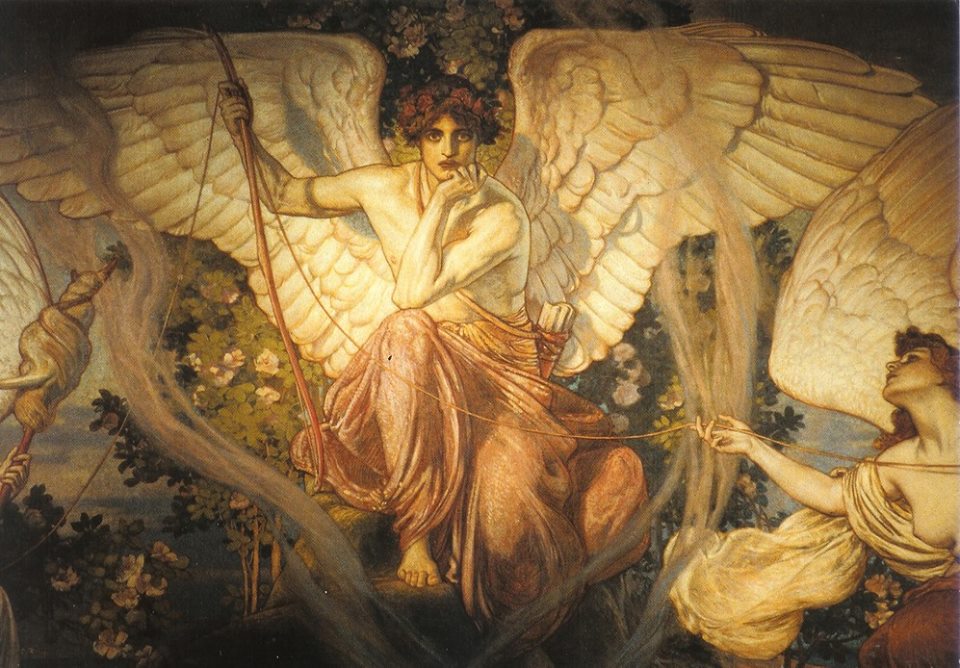 Today our commentarial tradition is fast and furious. If a weakness can be seen in any statement, it is instantly pounced upon and used to flog the knowledge, the intelligence, or even the character, of the author. What a long way we have come…
The Tantric tradition summarizes the entitative state as being constituted by body, speech, and mind. We have touched upon the ‘bodily’ presence of Hermes in His Pantos Apolytos, or All-Liberating, form. Likewise His speech possesses a distinctive character that we are invited, even enjoined to adopt as we work with Him. One aspect of this is Hermes, Lord of Discourse, well suited to our internet world.
Whether in the media, the blogosphere, or simple conversation, having a cutting response to what someone said seems to be an imperative and apparently accrues significant social capital. It has not always been this way. In ancient world, decisions were made slowly. Long conversation, many points of view, many voices were heard. Those voices were schooled in the power of rhetoric to present their ideas in the best light. Probing questions, as typified by Socrates’ method, were expected. The rules of logic and discourse were used to challenge and defend each proposition.
In varying forms, this means of decision making is quite common around the world in traditional societies. Tribal councils would sit for long hours, famously in Native American tradition in silence, patiently awaiting the spirit to move the discussion. After one had spoken, silence again to contemplate the words. This is supposed to be the method of the U.S. Senate, a ‘deliberative’ body, slow moving to allow wisdom to seep in. The Quakers are especially known for this, sitting in silence and discussing matters slowly until consensus is reached. Truly, these values, of speaking well, listening, contemplating, reasoning, and long discussion, are ancient Pagan values, worthy of our acclaim and adherence.
Society today, however has little time for deliberation and discourse. The memorable soundbite, the idea-branding, gets more attention today than a long reasoned report. We are quick to comment on a post without reading it in close detail. We form our answer to a speaker even before they are done with their words. News media is willing to repeat reports demonstrated to be untrue because they are salacious enough for a ratings bump or to pander to the audiences’ prejudice, ofttimes prejudices cultivated by that media outlet.
More subtly, and more dangerously, we live in a era when most who have received a public education have been fed the Prussian method. This is a classist approach to education, splitting it in two levels. One group, the wealthy ‘patrician’ class who can afford private education, are trained in critical thinking. Their education is one of questions which they are encouraged to contemplate, to solve, and to make decisions about. The other group is the ‘plebes’, the rest of us who have received public education, are taught answers, which we are to repeat on tests, demonstrating our ability to perform repetitive and clerical tasks and deliver the expected ‘correct’ answers. This group is not taught to think, but to respond to queries. Good drones, maybe even head drone in charge, if you are lucky and obedient. The conditioning is intense. The pressure to answer first, to receive acclaim for answering ‘correctly’ is profound. We have game shows on tv that teach and reward this. Unfortunately, this is just another form of internalized slavery. We are so much more effective at oppressing ourselves than having to wear chains.
Hermes is called the prophet of discourse in the Orphic Hymns. The values He embodies include the practice of inquiry, investigation, asking of questions, listening to speech, analysis of discourse with reason and intuition, evaluated by aesthetics, and the careful, even clever response with a sharp eye out for the truth. When we seek the comfortable lie, when we bend the truth, when we can’t admit our all too human inadequacy to merely approximate reality, we lose our place in the world, we don’t know ourselves nor our world and wander hopelessly and unanchored without the Guide of Souls. Hereunto is the Speech of Hermes…
Previous Post

December 9, 2015
Forming the God
Next Post

February 10, 2016 The Mind of the God: the Power of the Question
Browse Our Archives
Select a Category Ancestors At the Herm Deity Yoga Ethics Hermes Pagan Restoration Reincarnation Sam Webster The Dead Theurgy
Select a Month January 2017 October 2016 September 2016 June 2016 May 2016 April 2016 March 2016 February 2016 January 2016 December 2015 November 2015 October 2015 September 2015 August 2015 July 2015 March 2014 February 2014 January 2014 December 2013 November 2013 October 2013 September 2013 August 2013 July 2013 June 2013 May 2013 April 2013
Follow Us!
TAKE THE
Religious Wisdom Quiz
Which New Testament book has the "Hall of Faith" listing heroes like Abraham and Moses?
Select your answer to see how you score.
Galatians Hebrews 1 Peter James
Related posts from At the Herm
Hermes & Morals, Good Night & Good Luck

Hermes, Ethics, and a dash of Thelema

Working Polytheism Part 2: Means

TRENDING AT PATHEOS Pagan

When we talk about Greek religion, we often begin with the dodekatheion—the...

I was recently chatting with someone on Instagram. She asked me what...

While there are many people who share their results, the end of...

On July 23, I saw Christopher Nolan's The Odyssey which is Homer’s...

As I write this two big events have just finished up. One...

Restoring the Watershed of Divine Love
Perhaps cooperation is not something we manufacture through legislation, ideology, or moral...
view all Pagan blogs
Ad-Free & Subscriber Log-In Subscription Support
- About Us
- 2026 Calendar
- Videos
- Podcasts
- Library of World Religions
- Faith In Media Tracker
- Advertise With Us
- Write for Us
- Privacy Policy
- Terms of Service
- Do Not Sell My Data
- Contact Us
- Radiant Digital
- Manage Newsletter Subscriptions
- Unsubscribe From Notifications
- Sitemap
Copyright 2008-2026, Patheos. All rights reserved.
Subscription Support Ad-Free & Subscriber Log-In
Follow Patheos