
BuddhistCatholicContemplativeEvangelicalGeneral ChristianHinduJewishLatter-day SaintMuslimNew VisionsProgressive Christian
Beliefs
- Buddhist
- Catholic
- Contemplative
- Evangelical
- General Christian
- Hindu
- Jewish
- Latter-day Saint
- More Voices
- Muslim
- New Visions
- Pagan
- Progressive Christian
Topics
- Religion News
- Food and Religion
- Sports and Religion
- Religious Art
- Religious Music and Entertainment
- Religious Events
- History and Religion
- Style and Religion
- Politics and Religion
- Women in Religion
- Recreation Outdoors and Religion
- Business Finance and Religion
- Careers Workplace and Religion
- Education and Religion
- Family Parenting and Religion
- Health Fitness and Religion
- Home and Religion
- Relationships and Religion
- Technology and Religion
- Travel and Religion
Columnists
- Buddhist Columnists
- Business Finance and Religion Columnists
- Careers Workplace and Religion Columnists
- Catholic Columnists
- Contemplative Columnists
- Education and Religion Columnists
- Evangelists Columnists
- Family Parenting and Religion Columnists
- General Christian Columnists
- Health Fitness and Religion Columnists
- Hindu Columnists
- History and Religion Columnists
- Home and Religion Columnists
- Jewish Columnists
- More Voices Columnists
- Latter Day Columnists
- Muslim Columnists
- New Visions Columnists
- Nonreligious Columnists
- Pagan Columnists
- Politics and Religion Columnists
- Progressive Columnists
- Recreation Outdoors and Religion Columnists
- Relationships and Religion Columnists
- Religion News Columnists
- Religious Art Columnists
- Religious Events Columnists
- Religious Music and Entertainment Columnists
- Sports and Religion Columnists
- Style and Religion Columnists
- Technology and Religion Columnists
- Travel and Religion Columnists
- Women in Religion Columnists
Resource Library
- 2026 Calendar
- Library of World Religions
- The 100 Most Holy Places on Earth
- Patheos Answers
- Podcasts
- Videos
- Faith Leaders Database
- Anglican Episcopalian
- Bahai
- Baptist
- Buddhism
- Christianity
- Confucianism
- Eastern Orthodoxy
- Hinduism
- Holiness and Pentecostal
- ISKCON
- Islam
- Judaism
- Lutheran
- Methodist
- The Church of Jesus Christ of Latter-day Saints
- New Age
- Paganism
- Presbytarian and Reformed
- Protestantism
- Religion Behind the Scenes
- Roman Catholic
- Scientology
- Shia Islam
- Sikhism
- Sufism
- Sunni Islam
- Taoism
- Zen
- See all religions
Research Tools
 Ad-Free & Subscriber Log-In Subscription Support
Ad-Free & Subscriber Log-In Subscription Support
Follow Patheos 

- Trending:
- Forgiveness
- |
- Marriage
- |
- Consciousness
- |
- Death Penalty
- |
- Election
- |
- Halloween
 At the Herm
- Home
- Pagan
- God Work
God Work
Last updated on: November 19, 2015 at 5:52 am by Sam Webster
God Work 2015-11-19T05:52:19-08:00 Sam Webster
Patheos Explore the world's faith through different perspectives on religion and spirituality! Patheos has the views of the prevalent religions and spiritualities of the world.
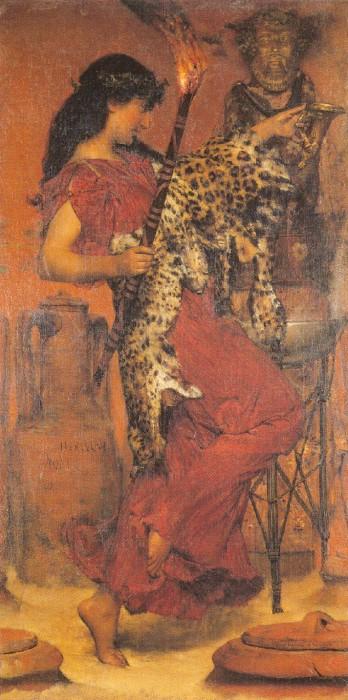 Is it enough to worship the many Divinities we know?
For our maintenance, our simple well being, of course! Divine Providence is an ever-present grace to which we can attune and make more present in our lives by worship. Yet there are more advanced approaches for the seriously committed. They require deep commitment because they do not work quickly, and require long labors to succeed, but the benefits are a profound and transformative spirituality.
Preparation, Union, Action
One of the meanings we can get out of the word ‘theurgy’ is “god work”. To work with the Deities requires significant preparation. It is actually quite easy to get dramatic effects, possession, and prophecy. Just build up enough focused ecstasy. But without preparation, the results are poor. Unless the possessed, the ‘vehicle’, has been purged of the psychic detritus of life and our world, whatever the Deity has to say will be distorted. Another source of distortion is the lack of proper preparation. If they are too stiff, like unkneaded clay, the subtle qualities of the Deity will not be received and transmitted though the vehicle. Likewise ignorance is an impediment, limiting the vehicle’s modes of expression. More dangerous, though, than a lack or diminishment of effect, is the damage the Divine presence can do to the unprepared. The Divine fire burns profoundly and any dross in the psyche, any distraction or clutching to a secret or subtle core of self leads to damage in the life and to the body and soul of the vehicle. Sadly, I’ve seen the damage possessory practice can do. It can distort the metabolism, bringing about anorexia or corpulence. It can negatively impact relationships, and I’ve seen many end after a powerful occasion of possession. What could be more intimate?
But, with the right preparation Divine power flows through the soul like light through glass. Purification of the body, mind, and soul, as well as the continual practice of an ethical life, equanimity, and the right cultivation of passion, prepare the soul to receive the Goddess or God. Education and training also have their place. Right knowledge tells the operator both Who and how to invoke Them, as well as the proper sequence for spiritual advancement.
But when done correctly, Divine Union is one of the greatest, most powerful and effective means of spiritual transformation. As Iamblichus says, by consorting with the Gods we slowly become more like Them, divinized, healed, purged of the dross, filled with light and Divine awareness. This is best done in the solitude of individual practice and secretly in ordinary life. All too often Union is practiced solely as a means of divination or of seeking oracular advice. At times this is done in the context of a group like a coven, or even in a ‘public’ setting like a festival. This can all be beautiful and helpful, if the vehicle is sufficiently developed and prepared. However this is also quite dangerous as the vehicle can experience a tremendous strain on the ego from holding the Deity and the worshipful gaze of other souls. So many have been hurt by doing possessory work, and so many think this is a good practice for public ritual. I shudder to think of the damage I’ve seen done down the years…
When we fuse with a Deity our souls are ‘tinctured’ with their presence. An aspect of Their Form, which is Their character, is imprinted on our soul. Or, if the Neoplatonists are right and our souls contain all the Forms, then the presence of the Deity activates or otherwise empowers the Form-that-is-the-Diety within us, bringing out the character of the Deity in ourselves. Herein also lies danger as we are likely to invoke Deities who we like and who are like us. What this naturally does is exacerbate those same qualities, and since they are manifest in the divided way that they are in humans, those qualities come out in partial and imbalanced ways. The Angry become more angry, the Bitchy become more so, etc.
This was discovered by many down the ages and so the continual counsel has been to invoke all the Gods and especially those unlike ourselves, and particularly to invoke in a balanced manner.
Union
The range of possession is quite broad, from the faintest inspiration to full-on divine presence, where the vehicle has no conscious awareness of the actions afterwards and the Deity manifests in power. The list in Iamblichus’ De Mysteriis reads like a classic description of the Fakir; piercing without pain or bleeding, holding red hot iron without burning. These were seen a proofs of the intensity of the possession, and while naturally very dangerous are better proofs than the disruption and dramas often seen in the lives of the ill-prepared. Iamblichus, in the 3rd Book of De Mysteriis discusses this phenomenon at length and uses the language of possession in ways we would find uncommon today. From the slightest touch of the Divinity to complete overwhelm he considered forms of possession. When we receive visions, for Iamblichus, this was caused by the Deity possessing the pneumatic or etheric sheath or vehicle permeating and surrounding the body. This was for him the seat of the imagination and the ‘projector’ screen on and in which the visions appear.
One of the more annoying dimensions of studying the ancient West is that they did not write down the details of ritual and practices, so what we get are fragmentary ‘leaks’ from when a description just happens to include some ritual information. From this we have cobbled together our rather imperfect understanding of ancient practice.
Fortunately, we have another resource. A very similar culture made much more of a point to write it all down, and one branch of that culture developed a rich critical tradition of looking at rituals and practices and developed deep understanding about how and why to use them. This is the Indian tradition, and specifically the Buddhist part of that. Since the Buddhists were mostly driven out of India during the Moghul empire this knowledge and practice is best preserved in Tibet which ended up with the most complete form of the Buddhadharma. Now, of course, China is working to destroy that. Sad though that is, it is forcing the knowledge of how to do Divine Union out of the Tibetans in an effort to preserve their culture. They are sharing both theory and practice in an unprecedented manner, much to our advantage. Arguably, for reasons I will next present, we Pagan magic users and religious are the natural audience for this knowledge. We can make it work better than most people in our culture, although that has its drawbacks, too.
From my researches, I have come to the realization that the reason these practices are so accessible to us is that they are related to our own. The western esoteric/magical/Pagan tradition is fundamentally founded upon Iamblichus’ presentation of theurgy which we have received mostly through De Mysteriis, written about AD (Anno Dominationis) 300. It is the cornerstone, so to speak, because it gives the reason and methodology for invoking the Gods as a path of spiritual advancement. This path was the last great florescence of spiritual development in the western world before Christianity destroyed civilization. Interestingly, in India very similar developments were going on but were not interfered with until much later and so they continued to develop. Over time they became Tantra and later the Bhakti Marga, the way of devotion, which uses Tantric elements in its practice. My finding from practicing both Eastern and Western methods is that they are completely interoperable because they are the same spiritual technology in two different cultures at two different levels of development.
Interoperability is only one useful finding. More valuable still is that the fundamental structures of Tantric invocation are quite accessible to us in the West. Deploying these methods in their fullest power does require an understanding of their Tantric origins. However, the threshold for understanding and using these spiritual technologies in a basic yet effective way is very low. The following summary description will provide an example.
The core of the method for invoking a Deity used in Tantra is like making and filling a bottle. After preliminaries of purification and energy raising, the symbolic form of the Deity is composed before or surrounding the practitioner. It is then, in Tantra, adorned with the Chakras to provide the channels whereby the Deity will articulate Their power in each of the domains the energy centers relate to. Any similar system would suffice. Then the Deity Itself, or its Spirit, or other means or metaphor, is invited to come and inhabit the image, to fill the bottle. The spirit is sealed into the image and the Chakras are activated. Then the Deity is made offerings and given praise to focus and attract Its attention. Other actions may be done to ‘arouse Its heart’, or activate the Divine power. Finally, if generated before the practitioner, the Deity is asked for boons, if generated surrounding the practitioner, the power of the God is wielded by the practitioner in union with the God.
For worship, generating the Deity in front will suffice. But for spiritual advancement union is the fastest route. Each time we unite with a Deity we become more like the Deity. Some of Their divine character is aroused in us and we are simultaneously purified by their presence. In short, we become ever so slightly more Divine.
This can be seen in the various levels of approach in the different grades of Tantra. They vary from system to system, but their basic pattern is one of progressive intimacy. At first the approach is like a vassal to a Lord, with much bowing and scraping and supplication, and a strong focus on purity and purification. Next the Deity is approached as we would a Friend, with deep respect and care but not so worried about offending with impurity. Third, or so, the Deity is approached with the intimacy of a Lover, with deep mutuality and connection, few layers of impediments, little worry over purity, but with a still marked sense of duality. The Lover is still other. With the next level the approach reaches its perigee and changes its focus. In this variety, called by the Nyngma “Maha Yoga Tantra”, the practitioner arises as the Deity in a form of invited possession. The mage or yogi dissolves the form of their own body, speech, and mind, and re-arises as the Deity, with all of Their attributes, even Their speech (mantra or prophecy), and in advanced practitioners, Their Mind. The Deity takes over the mage or yogi to the extent the practitioner is ‘fit’ or properly prepared. Any magic, initiations or other works are done from this state.
There are two more levels beyond Divine Union or Deity Yoga, as this is properly called. The next involves union with the Cosmos as Divine, and the last in this series, the union is with the Ground of Being Itself, and involves an awareness that no change or action is required for this state. Truly this is the most challenging level of Tantra and the most prone to misunderstanding and delusion. For this reason, discussion of these two advanced levels, Anu Yoga Tantra and Ati Yoga Tantra will be done at another time. For today, the Divine work we have been discussing is sufficient.
Action
After union, then what? First off as mentioned above, every time we cohabitate with a Deity we become more like them and more divine in general. The more we cultivate that presence, the more we develop. Also, there are other benefits and practices that only come when we can establish the Deity in ourselves and continue our lives. The greatest examples of this come from a collection of stories of the 84 MahaSiddhas, the Great Practitioners. In these stories, an ordinary person is taught how to invoke a Deity and they successfully do the preliminary practices, which enables them to invisibly put on the form of the Deity and hold the Divine Mind. Then they go about their lives viewing their trade from the perspective of the Deity. The weaver weaves samsara and nirvana into non-dual reality. The thief steals all the phenomenal universe. The bar-maid pours out nectar for all her patrons, and so forth. After years of practice, and the time of their deaths, usually, their attainment manifested so others could see it, and was recorded in the collection of stories.
This gives us a clue to the approach. First, it takes significant amounts of practice to achieve and hold divine union. Achieving union is really only the beginning. From then we mix that divine presence with all of our actions until the whole world is transformed into the realm of the Divine. Truly, this is Divine Work, theurgy. In India and the Buddhadharma, it is called Deity Yoga, simply meaning the practice of divine union.
By this point in practice, the ritual work attenuates down to the least elaborate. All that has been done already and sufficiently. Refuge, the cultivation of the ‘wisdom attitude’ the accumulations of merit and wisdom, and the elaborate construction of the visualization of the Deity, Their Retinue and Palace can be reduced to the sounding of a single ‘seed’ syllable, or bija. This bija or ‘seed’ is the root sound of the entire buddha family or class of deities, but for the adept practitioner it becomes the key of manifestation. Simply by sounding this one syllable the yogi or mage can transform into the Deity and hold that presence, mind, and character effortlessly. They have become a manifestation of the Deity.
In long stable cultures where social mobility is not much known, the practitioner simply accepts their lot in life. They take on the Divine form and continue being the weaver or bar-maid. In the tumult of the West with our religious strife, social change, and technological progress, the magi have been deeply part of that transformation. From the Rosicrucians (ca. 1600) onward, the program of the study of Nature and Her wisdom for the good of the commonwealth has been a project of the adepts. We have now advanced to the level where everyone can be fed, clothed, sheltered, educated, and provided for with medical care. This is the first time in human history this has been achieved, and it is substantially due to the efforts, subtly and not, of the magic users of the West. However, as many will note and remark rightly, the benefits of such beneficent ability are not evenly distributed.
Whereas it is clear to any who have studied the matter that there are no longer any material impediments to the distribution of such good, it becomes rapidly clear that only reason why it is not happening today is that the values, the sense of decency, which would demand that we share the phenomenal wealth our world-culture is producing throughout society, leaving none hungry, sick, or unsheltered, that those righteous values are not the values of our culture. Greed, dominance, and self-absorption characterize the over-culture and its beneficiaries are ethically, if not morally corrupt.
Only Divine power is likely to overcome this distractive tendency, and fortunately through the power of theurgy, deity yoga, we are given the one means that will change human values, that and ritual, the tool the West has abandoned, is the means for expressing, transmitting and transforming values. But that is a topic for another day.
Previous Post
October 14, 2015
My Ancestors Are Dead
Next Post
December 9, 2015 Forming the God
Browse Our Archives
Select a Category Ancestors At the Herm Deity Yoga Ethics Hermes Pagan Restoration Reincarnation Sam Webster The Dead Theurgy
Select a Month January 2017 October 2016 September 2016 June 2016 May 2016 April 2016 March 2016 February 2016 January 2016 December 2015 November 2015 October 2015 September 2015 August 2015 July 2015 March 2014 February 2014 January 2014 December 2013 November 2013 October 2013 September 2013 August 2013 July 2013 June 2013 May 2013 April 2013
Follow Us!
TAKE THE
Religious Wisdom Quiz
What did Solomon build for foreign wives that angered God?
Select your answer to see how you score.
Armies Ships at Tarshish City walls High places (shrines)
Related posts from At the Herm
Hermes & Morals, Good Night & Good Luck
Hermes, Ethics, and a dash of Thelema
Working Polytheism Part 2: Means
TRENDING AT PATHEOS Pagan

I was recently chatting with someone on Instagram. She asked me what...

While there are many people who share their results, the end of...

On July 23, I saw Christopher Nolan's The Odyssey which is Homer’s...

As I write this two big events have just finished up. One...

Restoring the Watershed of Divine Love
Perhaps cooperation is not something we manufacture through legislation, ideology, or moral...

Many UUs don’t pray because of bad experiences in a previous religion,...
view all Pagan blogs
Ad-Free & Subscriber Log-In Subscription Support
- About Us
- 2026 Calendar
- Videos
- Podcasts
- Library of World Religions
- Faith In Media Tracker
- Advertise With Us
- Write for Us
- Privacy Policy
- Terms of Service
- Do Not Sell My Data
- Contact Us
- Radiant Digital
- Manage Newsletter Subscriptions
- Unsubscribe From Notifications
- Sitemap
Copyright 2008-2026, Patheos. All rights reserved.
Subscription Support Ad-Free & Subscriber Log-In
Follow Patheos