
BuddhistCatholicContemplativeEvangelicalGeneral ChristianHinduJewishLatter-day SaintMuslimNew VisionsProgressive Christian
Beliefs
- Buddhist
- Catholic
- Contemplative
- Evangelical
- General Christian
- Hindu
- Jewish
- Latter-day Saint
- More Voices
- Muslim
- New Visions
- Pagan
- Progressive Christian
Topics
- Religion News
- Food and Religion
- Sports and Religion
- Religious Art
- Religious Music and Entertainment
- Religious Events
- History and Religion
- Style and Religion
- Politics and Religion
- Women in Religion
- Recreation Outdoors and Religion
- Business Finance and Religion
- Careers Workplace and Religion
- Education and Religion
- Family Parenting and Religion
- Health Fitness and Religion
- Home and Religion
- Relationships and Religion
- Technology and Religion
- Travel and Religion
Columnists
- Buddhist Columnists
- Business Finance and Religion Columnists
- Careers Workplace and Religion Columnists
- Catholic Columnists
- Contemplative Columnists
- Education and Religion Columnists
- Evangelists Columnists
- Family Parenting and Religion Columnists
- General Christian Columnists
- Health Fitness and Religion Columnists
- Hindu Columnists
- History and Religion Columnists
- Home and Religion Columnists
- Jewish Columnists
- More Voices Columnists
- Latter Day Columnists
- Muslim Columnists
- New Visions Columnists
- Nonreligious Columnists
- Pagan Columnists
- Politics and Religion Columnists
- Progressive Columnists
- Recreation Outdoors and Religion Columnists
- Relationships and Religion Columnists
- Religion News Columnists
- Religious Art Columnists
- Religious Events Columnists
- Religious Music and Entertainment Columnists
- Sports and Religion Columnists
- Style and Religion Columnists
- Technology and Religion Columnists
- Travel and Religion Columnists
- Women in Religion Columnists
Resource Library
- 2026 Calendar
- Library of World Religions
- The 100 Most Holy Places on Earth
- Patheos Answers
- Podcasts
- Videos
- Faith Leaders Database
- Anglican Episcopalian
- Bahai
- Baptist
- Buddhism
- Christianity
- Confucianism
- Eastern Orthodoxy
- Hinduism
- Holiness and Pentecostal
- ISKCON
- Islam
- Judaism
- Lutheran
- Methodist
- The Church of Jesus Christ of Latter-day Saints
- New Age
- Paganism
- Presbytarian and Reformed
- Protestantism
- Religion Behind the Scenes
- Roman Catholic
- Scientology
- Shia Islam
- Sikhism
- Sufism
- Sunni Islam
- Taoism
- Zen
- See all religions
Research Tools
 Ad-Free & Subscriber Log-In Subscription Support
Ad-Free & Subscriber Log-In Subscription Support
Follow Patheos 

- Trending:
- Forgiveness
- |
- Marriage
- |
- Consciousness
- |
- Death Penalty
- |
- Election
- |
- Halloween
 Pagan Families
- Home
- Pagan
- Family, Parenting and Religion
- What Nights Are For
What Nights Are For
Last updated on: February 23, 2015 at 10:24 am by cbcabeen
What Nights Are For 2015-02-21T19:22:21-05:00 cbcabeen
Patheos Explore the world's faith through different perspectives on religion and spirituality! Patheos has the views of the prevalent religions and spiritualities of the world.
I lie awake in the dark with my children beside me, one on each side. The little one snuggles with her whole body, the big one with just an outstretched hand. I remember when she followed me in her sleep like a sunflower follows the sun; now when she does that, it usually means she needs another blanket.
As I write this, I’m starting the slow process of night-weaning my second child, and it’s gotten me thinking on how we sleep. I’ve done little sleep training, since it’s easier to change my own sleep habits than my children’s. If they need help getting back to sleep, I help, and slowly the kids have absorbed the idea that nights are for sleep. But in the meantime, they’ve taken me into ancient rhythms of waking and sleeping. It’s been over five years since I’ve “slept the night,” and as awful as that might sound to new parents, I’m looking back on those nights with a sense of gratitude.
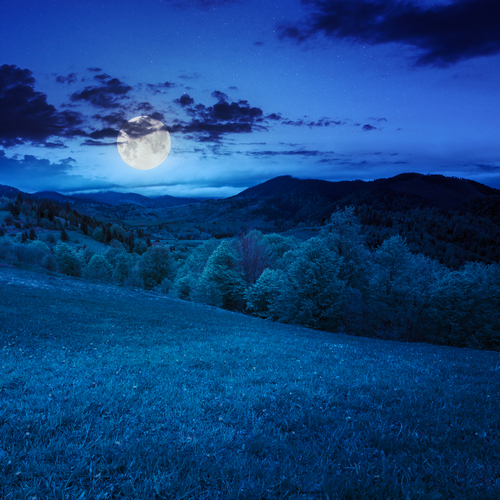
Photo courtesy of Shutterstock
When I take the long view toward my last five years of nights, what I see is a spiritual practice that unfolded without being put on a to-do list, without me even knowing to look for it. It grew of its own accord, same as the children. Somewhere between the moments of pregnant insomnia, between lullabies and guided meditations, sore hips and flashes of anger, my understanding of night time changed. Instead of sleeping in a calculated, efficient way and asking my time in bed to disappear in the darkness, now I travel through troughs of dreams and crests of wakefulness. Wakefulness complements dreaming like a hill complements a valley, and so I’ve found myself in a topography full of vistas.
It shouldn’t surprise me. This intermittent approach to sleep is hardly new, nor is using it for spiritual ends. When artificial light was scarce, people went to bed earlier than they do now, but that doesn’t mean they slept all night. Historian A. Roger Ekirch’s survey of texts from pre-modern Europe shows that for centuries, nighttime sleep was divided into two main segments, separated by a watching hour in the early AM. During that hour of the night, people would talk with their bedmates, pray, get sexy, contemplate dreams, smoke, steal fruit from their neighbors’ trees, and–I presume–nurse their babies. Anthropologists have observed similar sleep patterns among some contemporary traditional cultures. And Thomas Wehr, who pioneered studies of circadian rhythms, found that contemporary Americans sleep bimodally, too, if they don’t have access to artificial light.
In addition to the watching hour, people in traditional cultures also woke up more often due to minor disruptions and discomforts. Historically we’ve slept together in groups, had more babies, and slept with those babies in those groups–you can do the math there yourself, and then throw in more fleas. Sleeping the night is a modern Western invention, not the inevitable result of maturity. People with more traditional sleep patterns weren’t chronically exhausted as a result (though they also typically took naps), and unlike modern Americans, they generally spoke positively of waking up in the middle of the night. Other studies suggest a biological basis for why people considered the watching hour so cozy and pleasant: early morning brings a daily high tide of prolactin, the same hormone that leads to milk production and post-orgasmic satisfaction, among other things. It facilitates a calm which is good for getting perspective on our lives and letting go of old anxieties.
This is the unexpected vantage point that I’ve landed at by going to bed early and going along with my kids’ predilection to wake up at night: I benefit from keeping a watching hour, too, even when I’m soothing a baby or toddler back to sleep. In my experience, time awake at night is not always fun, but sometimes it’s indispensable. Especially in the early winter, when days are busier than usual and full of to-do lists, I need space in the dark. And when I need that space, I inevitably find myself waking up to fill it.
At first I tended to write in my head when I woke up. I stayed awake for hours sometimes, repeating the same magic phrases, and excused myself by supposing that it would help me write more quickly once I got to a computer. Except it didn’t, and over time I noticed that much of what I was writing in my head at night sounded defensive and stuck. I also noticed that thinking in words takes me out of the dark and toward daytime consciousness, which is useless at night when you’re snuggled between people. So I started moving away from the modern sense that the hours of the day are ideally interchangeable, toward seeing night as having its own character and own ways of thinking.
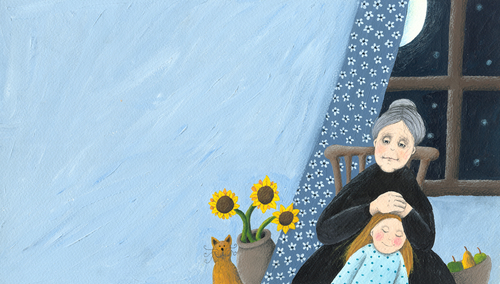
Photo courtesy of Shutterstock
Now I hold the watching hour as a sabbath from making mental to-do lists. I started meditating instead. I watch which concerns come toward me begging to be narrated, notice what’s binding the tension, and release it. I watch what my fantasies are for presenting myself and connecting to other people, and name them. I revisit dreams and watch for images forming in my head, until the whole world seems to be spinning around me in the dark. Dreamwork has been especially useful for bridging the abyss between my past and my sense of self as a parent, and more generally when different parts of myself have fallen out of sync and need to talk to each other again. Interspersed with it all is nursing and caring for children. It’s work, I know. But as I’ve cared for others, I sense that I too am cared for in the arms of Mother Night.
Have the long nights called you and your children to a waking hour, too? If so, what needs to happen for you to enjoy being up in the middle of the night?
C. B. Cabeen is a pagan who identifies loosely with Reclaiming. Her spiritual path focuses on parenting her five year old and one year old, especially through telling stories, playing pretend, and exploring the natural world. She holds a masters degree in Religious Studies and lives with her family in Santa Barbara, California.
Previous Post

February 18, 2015
When Kids Meet the Gods
Next Post

February 25, 2015 Children Who Rest with My Ancestors: Part 1
Browse Our Archives
Select a Category abortion Adoption birth Birth Guardians birth stories breastfeeding Contraception divorce Flash Points From the Editor's Desk grandparenting home infertility marriage menstruation Miscarriage Pagan Families Parenting poetry postpartum pregnancy review ritual sex education Uncategorized Wednesday Wisdom
Select a Month September 2015 August 2015 July 2015 June 2015 May 2015 April 2015 March 2015 February 2015 January 2015 December 2014 November 2014 October 2014 September 2014 August 2014 July 2014 June 2014 May 2014 April 2014 March 2014 February 2014 January 2014 December 2013 November 2013 October 2013 September 2013 August 2013 July 2013 June 2013 May 2013 April 2013 March 2013 February 2013 January 2013 December 2012 November 2012 October 2012 September 2012 August 2012 July 2012 June 2012 May 2012 April 2012 March 2012 February 2012 January 2012 December 2011 November 2011 October 2011 September 2011 August 2011 July 2011 June 2011 May 2011
Follow Us!
TAKE THE
Religious Wisdom Quiz
What did Nehemiah rebuild in Jerusalem amid much opposition?
Select your answer to see how you score.
The Temple The tower of Siloam The palace The city wall
Related posts from Pagan Families

Sharing Our Spiritual Path With Our Children, Part...
Sharing Our Spiritual Path With Our Children, Part...

Sharing Our Spiritual Path With Our Children, Part...

TRENDING AT PATHEOS Pagan

I was recently chatting with someone on Instagram. She asked me what...

While there are many people who share their results, the end of...

On July 23, I saw Christopher Nolan's The Odyssey which is Homer’s...

As I write this two big events have just finished up. One...

Restoring the Watershed of Divine Love
Perhaps cooperation is not something we manufacture through legislation, ideology, or moral...

Many UUs don’t pray because of bad experiences in a previous religion,...
view all Pagan blogs
Ad-Free & Subscriber Log-In Subscription Support
- About Us
- 2026 Calendar
- Videos
- Podcasts
- Library of World Religions
- Faith In Media Tracker
- Advertise With Us
- Write for Us
- Privacy Policy
- Terms of Service
- Do Not Sell My Data
- Contact Us
- Radiant Digital
- Manage Newsletter Subscriptions
- Unsubscribe From Notifications
- Sitemap
Copyright 2008-2026, Patheos. All rights reserved.
Subscription Support Ad-Free & Subscriber Log-In
Follow Patheos