
BuddhistCatholicContemplativeEvangelicalGeneral ChristianHinduJewishLatter-day SaintMuslimNew VisionsProgressive Christian
Beliefs
- Buddhist
- Catholic
- Contemplative
- Evangelical
- General Christian
- Hindu
- Jewish
- Latter-day Saint
- More Voices
- Muslim
- New Visions
- Pagan
- Progressive Christian
Topics
- Religion News
- Food and Religion
- Sports and Religion
- Religious Art
- Religious Music and Entertainment
- Religious Events
- History and Religion
- Style and Religion
- Politics and Religion
- Women in Religion
- Recreation Outdoors and Religion
- Business Finance and Religion
- Careers Workplace and Religion
- Education and Religion
- Family Parenting and Religion
- Health Fitness and Religion
- Home and Religion
- Relationships and Religion
- Technology and Religion
- Travel and Religion
Columnists
- Buddhist Columnists
- Business Finance and Religion Columnists
- Careers Workplace and Religion Columnists
- Catholic Columnists
- Contemplative Columnists
- Education and Religion Columnists
- Evangelists Columnists
- Family Parenting and Religion Columnists
- General Christian Columnists
- Health Fitness and Religion Columnists
- Hindu Columnists
- History and Religion Columnists
- Home and Religion Columnists
- Jewish Columnists
- More Voices Columnists
- Latter Day Columnists
- Muslim Columnists
- New Visions Columnists
- Nonreligious Columnists
- Pagan Columnists
- Politics and Religion Columnists
- Progressive Columnists
- Recreation Outdoors and Religion Columnists
- Relationships and Religion Columnists
- Religion News Columnists
- Religious Art Columnists
- Religious Events Columnists
- Religious Music and Entertainment Columnists
- Sports and Religion Columnists
- Style and Religion Columnists
- Technology and Religion Columnists
- Travel and Religion Columnists
- Women in Religion Columnists
Resource Library
- 2026 Calendar
- Library of World Religions
- The 100 Most Holy Places on Earth
- Patheos Answers
- Podcasts
- Videos
- Faith Leaders Database
- Anglican Episcopalian
- Bahai
- Baptist
- Buddhism
- Christianity
- Confucianism
- Eastern Orthodoxy
- Hinduism
- Holiness and Pentecostal
- ISKCON
- Islam
- Judaism
- Lutheran
- Methodist
- The Church of Jesus Christ of Latter-day Saints
- New Age
- Paganism
- Presbytarian and Reformed
- Protestantism
- Religion Behind the Scenes
- Roman Catholic
- Scientology
- Shia Islam
- Sikhism
- Sufism
- Sunni Islam
- Taoism
- Zen
- See all religions
Research Tools
 Ad-Free & Subscriber Log-In Subscription Support
Ad-Free & Subscriber Log-In Subscription Support
Follow Patheos 

- Trending:
- Forgiveness
- |
- Marriage
- |
- Consciousness
- |
- Death Penalty
- |
- Election
- |
- Halloween
 Pagan Families
- Home
- Pagan
- Family, Parenting and Religion
- Blessing Baby
Blessing Baby
Last updated on: January 8, 2013 at 8:00 am by Guest Contributor
Blessing Baby 2013-01-07T21:53:48-05:00 Guest Contributor
Patheos Explore the world's faith through different perspectives on religion and spirituality! Patheos has the views of the prevalent religions and spiritualities of the world.
By Sunweaver
Having babies eleven years apart does present unique challenges, particularly when your religion has dramatically transformed during that time. My youngest was born last November and my eldest will be twelve in September. The first time around, I considered myself a Wiccan who worshipped the Greek gods and I now self-identify as a Hellenic Polytheist. The difference between those two designations is not a subtle one and I’m still figuring out some of the finer points of a Hellenic practice. I’m not a reconstructionist, which means that I believe what the ancients did as their practice is important to know, but often not relevant to a modern practice. This generally means that I have to put a lot of thought into what sorts of rituals I do, how to do them, and why. “Because that’s how the ancients did it” isn’t really a good enough reason for me. There’s a lot of time, space, and cultural context between here and now and there and then. Having recently had a baby, I’ve been thinking about what sorts of rituals around baby-having are appropriate for a family such as mine and how to be a modern Hellenic Polytheist mom. More often than not, particularly where birth and motherhood are concerned, ancient Greece is not a good example of culturally (and medically) appropriate behavior. 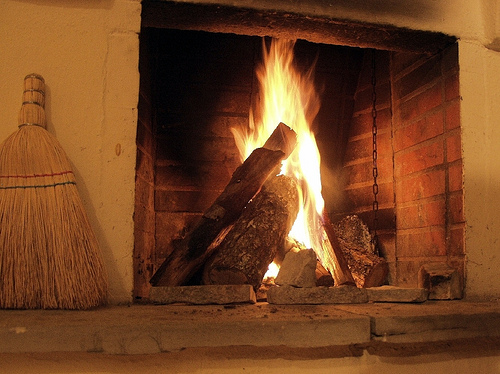
We know that back then you weren’t supposed to give birth in a temple, which is good to know if you’re very pregnant and visiting Nashville. Fortunately, here’s a hospital a stone’s throw away from our Parthenon, so there’s not much danger of that happening. We also know that infanticide was common for deformed or otherwise unwanted children. That’s not really useful, either, though this is what you find the majority of information on when you google “infant” and “ancient Greece.” One useful bit we do know is that on the fifth or tenth day of life, a baby was taken around the hearth, introduced to the gods and the family, and named. There were purification rituals, particularly for those who participated in the birth, prior to the event and presents and nosh after. This is called the Amphidromia, and unlike most ancient Hellenic rituals, this one is simple enough to adapt to modern life and isn’t that far off from the sort of ritual I like to do anyway.
With my first one, I had either just completed a Wiccan first degree or was about to and I had decided then that a “Wiccaning” wasn’t going to be the right ritual for us. The ritual as written in the Farrars’ A Witches’ Bible, centers around Cernunnos and Aradia and involves giving the baby a “hidden name.” Even if I had substituted Greek gods, it still wouldn’t have been the right ritual. I wanted the focus to be more on blessing the baby and, like in the Amphidromia, formally introducing her to the gods and the community. Those things are in a Wiccaning, but are not the focus of it, as such. I’d had the idea of something from a fairy tale where all the good fairies gave magical gifts to the baby and adding the blessings of the gods to that. I didn’t know about the Amphidromia then, but that was more or less what we did. There were still Wiccan undertones, such as choosing one god and one goddess to call and introducing her to the four quarters, but I’d already begun to deviate from the Wiccan model of worship.
That sort of ritual still appeals to me, though it will be far less Wiccan-flavored now than it had been even then, mostly because I don’t feel obligated toward that ritual structure anymore. Finding that there is a Greek name for what I was already going to do is convenient, but I don’t feel any more obligated to the ancient ritual than I do to the Wiccan one. The most important thing is that the little one has been blessed and recognized as part of the community. She’ll officially be one of us and she’ll be protected by the gods and the community, but free to choose her own path as she grows.
In addition to her personal and group practice as a priestess of Apollo, Sunweaver works as interfaith clergy with a diversity of religious groups in the Middle Tennessee area. She is a founding member of the Rutherford County Women of Faith and has worked with the area interfaith center, Wisdom House, to help bring positive awareness to the non-Abrahamic religions. She is a fiber arts enthusiast as well as a mother and a Master’s student in biology.
Fireplace photo By Tilemahos Efthimiadis. Some rights reserved
Previous Post

January 7, 2013
Community participation
Next Post

January 9, 2013 Wednesday Wisdom: Birthing bodies
Browse Our Archives
Select a Category abortion Adoption birth Birth Guardians birth stories breastfeeding Contraception divorce Flash Points From the Editor's Desk grandparenting home infertility marriage menstruation Miscarriage Pagan Families Parenting poetry postpartum pregnancy review ritual sex education Uncategorized Wednesday Wisdom
Select a Month September 2015 August 2015 July 2015 June 2015 May 2015 April 2015 March 2015 February 2015 January 2015 December 2014 November 2014 October 2014 September 2014 August 2014 July 2014 June 2014 May 2014 April 2014 March 2014 February 2014 January 2014 December 2013 November 2013 October 2013 September 2013 August 2013 July 2013 June 2013 May 2013 April 2013 March 2013 February 2013 January 2013 December 2012 November 2012 October 2012 September 2012 August 2012 July 2012 June 2012 May 2012 April 2012 March 2012 February 2012 January 2012 December 2011 November 2011 October 2011 September 2011 August 2011 July 2011 June 2011 May 2011
Follow Us!
TAKE THE
Religious Wisdom Quiz
Which queen visited Solomon to test his wisdom?
Select your answer to see how you score.
Queen Vashti Queen of Sheba Queen Esther Queen Jezebel
Related posts from Pagan Families

Sharing Our Spiritual Path With Our Children, Part...
Sharing Our Spiritual Path With Our Children, Part...

Birth Guardians: Catherine Rivera

Sharing Our Spiritual Path With Our Children, Part...
TRENDING AT PATHEOS Pagan

I was recently chatting with someone on Instagram. She asked me what...

While there are many people who share their results, the end of...

On July 23, I saw Christopher Nolan's The Odyssey which is Homer’s...

As I write this two big events have just finished up. One...

Restoring the Watershed of Divine Love
Perhaps cooperation is not something we manufacture through legislation, ideology, or moral...

Many UUs don’t pray because of bad experiences in a previous religion,...
view all Pagan blogs
Ad-Free & Subscriber Log-In Subscription Support
- About Us
- 2026 Calendar
- Videos
- Podcasts
- Library of World Religions
- Faith In Media Tracker
- Advertise With Us
- Write for Us
- Privacy Policy
- Terms of Service
- Do Not Sell My Data
- Contact Us
- Radiant Digital
- Manage Newsletter Subscriptions
- Unsubscribe From Notifications
- Sitemap
Copyright 2008-2026, Patheos. All rights reserved.
Subscription Support Ad-Free & Subscriber Log-In
Follow Patheos