
BuddhistCatholicContemplativeEvangelicalGeneral ChristianHinduJewishLatter-day SaintMuslimNew VisionsProgressive Christian
Beliefs
- Buddhist
- Catholic
- Contemplative
- Evangelical
- General Christian
- Hindu
- Jewish
- Latter-day Saint
- More Voices
- Muslim
- New Visions
- Pagan
- Progressive Christian
Topics
- Religion News
- Food and Religion
- Sports and Religion
- Religious Art
- Religious Music and Entertainment
- Religious Events
- History and Religion
- Style and Religion
- Politics and Religion
- Women in Religion
- Recreation Outdoors and Religion
- Business Finance and Religion
- Careers Workplace and Religion
- Education and Religion
- Family Parenting and Religion
- Health Fitness and Religion
- Home and Religion
- Relationships and Religion
- Technology and Religion
- Travel and Religion
Columnists
- Buddhist Columnists
- Business Finance and Religion Columnists
- Careers Workplace and Religion Columnists
- Catholic Columnists
- Contemplative Columnists
- Education and Religion Columnists
- Evangelists Columnists
- Family Parenting and Religion Columnists
- General Christian Columnists
- Health Fitness and Religion Columnists
- Hindu Columnists
- History and Religion Columnists
- Home and Religion Columnists
- Jewish Columnists
- More Voices Columnists
- Latter Day Columnists
- Muslim Columnists
- New Visions Columnists
- Nonreligious Columnists
- Pagan Columnists
- Politics and Religion Columnists
- Progressive Columnists
- Recreation Outdoors and Religion Columnists
- Relationships and Religion Columnists
- Religion News Columnists
- Religious Art Columnists
- Religious Events Columnists
- Religious Music and Entertainment Columnists
- Sports and Religion Columnists
- Style and Religion Columnists
- Technology and Religion Columnists
- Travel and Religion Columnists
- Women in Religion Columnists
Resource Library
- 2026 Calendar
- Library of World Religions
- The 100 Most Holy Places on Earth
- Patheos Answers
- Podcasts
- Videos
- Faith Leaders Database
- Anglican Episcopalian
- Bahai
- Baptist
- Buddhism
- Christianity
- Confucianism
- Eastern Orthodoxy
- Hinduism
- Holiness and Pentecostal
- ISKCON
- Islam
- Judaism
- Lutheran
- Methodist
- The Church of Jesus Christ of Latter-day Saints
- New Age
- Paganism
- Presbytarian and Reformed
- Protestantism
- Religion Behind the Scenes
- Roman Catholic
- Scientology
- Shia Islam
- Sikhism
- Sufism
- Sunni Islam
- Taoism
- Zen
- See all religions
Research Tools
 Ad-Free & Subscriber Log-In Subscription Support
Ad-Free & Subscriber Log-In Subscription Support
Follow Patheos 

- Trending:
- Forgiveness
- |
- Marriage
- |
- Consciousness
- |
- Death Penalty
- |
- Election
- |
- Halloween
 Orthodoxy in Communion With Rome
- Home
- Catholic
- Is Eucharistic Ecclesiology the key to restoring communion between Catholic and Orthodox Churches? (Introduction)
Is Eucharistic Ecclesiology the key to restoring communion between Catholic and Orthodox Churches? (Introduction)
Last updated on: April 11, 2018 at 3:55 pm by Pete Vere
Is Eucharistic Ecclesiology the key to restoring communion between Catholic and Orthodox Churches? (Introduction) 2018-04-11T15:55:01-05:00 Pete Vere
Patheos Explore the world's faith through different perspectives on religion and spirituality! Patheos has the views of the prevalent religions and spiritualities of the world.
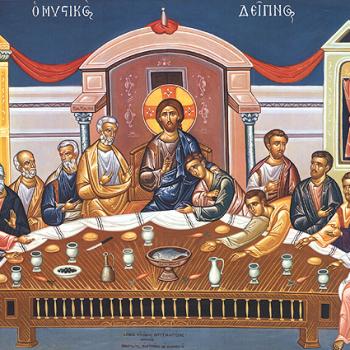
In his ecclesiological reflection Called to Communion, then-Joseph Cardinal Ratzinger devotes an entire chapter to Eucharistic ecclesiology. “The Church is Eucharist,” he stated, before introducing the concept of communio – both vertical and horizontal. As the future Pope Benedict XVI explained, although writing as a private theologian: “The Church is communion; she is the communion of the Word and Body of Christ and is thus communion among men, who by means of this communion that brings them together from above and from within are made one people, indeed, one Body.”
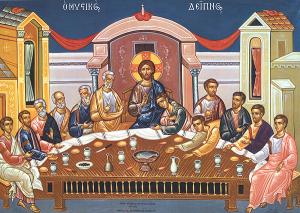
In short, there is a double meaning to communion – one sacramental and one ecclesiological – and both are brought together in eucharistic ecclesiology. The first is the vertical communion between God and man through man’s participation in the Sacred Mysteries, also known as the Holy Eucharist. The second is the horizontal communion among Christians who through the Eucharist become one Body in Christ.
I am a firm believer that both vertical and horizontal communion are important as fully-initiated Christians: that is, as Christians validly baptized, chrismated (or confirmed), and communed in the Eucharistic Mysteries. It takes both vertical and horizontal to make the sign of the cross.
Likewise, both sacramental and ecclesiological meanings of communion are important when discussing ecumenism between Catholicism and Orthodoxy. After all, a restoration of communion between ecclesiological entities would also bring about a restoration of communion in the partaking of Sacred Mysteries.
Yet must the latter necessarily follow the former in working toward a restoration of full communion? Or might a restoration of ecclesiological communion follow a period of communicatio in sacris: a period during which Eastern Orthodoxy and Catholicism had restored a communion of the cup?
As we Byzantine Christians on the Julian Calendar celebrate Christ’s resurrection today, I would like to roll out a series discussing the possibility of restored shared communion in light of canon law and both East and West’s understanding of Eucharistic ecclesiology.
Next Post

April 14, 2018 Dear Mr Arroyo: Our Children Scream the Truth
Browse Our Archives
Select a Category Canon Law Catholic Apologetics East-West Ecumenism Eastern Christian Identity Eucharistic Ecclesiology Faith and Family Faith and Pop Culture Family Adventures Liturgy and Eucharist Living the Byzantine Catholic Faith Mormon and Community of Christ Motorcycling Pope Francis Pro-life Professional Wrestling and MMA Sex Abuse Scandal Social Justice Uncategorized
Select a Month November 2019 August 2019 July 2019 April 2019 March 2019 February 2019 December 2018 October 2018 June 2018 May 2018 April 2018 March 2018
Follow Us!
TAKE THE
Religious Wisdom Quiz
What did Jesus teach about judging others?
Select your answer to see how you score.
Do not judge lest you be judged Judge quickly Ignore everyone Use harsh words
Related posts from Orthodoxy in Communion With Rome
"Rejoice, O Wood and Tree of Life, the...
Orthodoxy in Communion With Rome
Orthodoxy in Communion With Rome
The Pro-Life Movement is Bigger Than America: A...
Orthodoxy in Communion With Rome
Pope Emeritus Benedict: No longer the voice of...
Orthodoxy in Communion With Rome
TRENDING AT PATHEOS Catholic

Creation, Preservation, and Teleology in Catholic Theology
As I write this, it is very early Monday morning. Like millions...

The Parable Of The Sower And The Word...
One of Christ’s most famous parables is that of the sower who...

Rejecting Doom: Christian Hope And Human Action
Christianity is a religion of hope. We are to have hope and...

Why I Choose the Eucharist Over the Sermon
Choose the Eucharist, Not the Sermon What are we supposed to get...

5 Design Elements Found in Spiritually Rooted Homes
Putting Spirituality Into Home Decor Our homes are more than our living...

Credo: A Story of God Told with the...
About 10 years ago, I began to imagine a personal "Credo" that...
view all Catholic blogs
Ad-Free & Subscriber Log-In Subscription Support
- About Us
- 2026 Calendar
- Videos
- Podcasts
- Library of World Religions
- Faith In Media Tracker
- Advertise With Us
- Write for Us
- Privacy Policy
- Terms of Service
- Do Not Sell My Data
- Contact Us
- Radiant Digital
- Manage Newsletter Subscriptions
- Unsubscribe From Notifications
- Sitemap
Copyright 2008-2026, Patheos. All rights reserved.
Subscription Support Ad-Free & Subscriber Log-In
Follow Patheos