
BuddhistCatholicContemplativeEvangelicalGeneral ChristianHinduJewishLatter-day SaintMuslimNew VisionsProgressive Christian
Beliefs
- Buddhist
- Catholic
- Contemplative
- Evangelical
- General Christian
- Hindu
- Jewish
- Latter-day Saint
- More Voices
- Muslim
- New Visions
- Pagan
- Progressive Christian
Topics
- Religion News
- Food and Religion
- Sports and Religion
- Religious Art
- Religious Music and Entertainment
- Religious Events
- History and Religion
- Style and Religion
- Politics and Religion
- Women in Religion
- Recreation Outdoors and Religion
- Business Finance and Religion
- Careers Workplace and Religion
- Education and Religion
- Family Parenting and Religion
- Health Fitness and Religion
- Home and Religion
- Relationships and Religion
- Technology and Religion
- Travel and Religion
Columnists
- Buddhist Columnists
- Business Finance and Religion Columnists
- Careers Workplace and Religion Columnists
- Catholic Columnists
- Contemplative Columnists
- Education and Religion Columnists
- Evangelists Columnists
- Family Parenting and Religion Columnists
- General Christian Columnists
- Health Fitness and Religion Columnists
- Hindu Columnists
- History and Religion Columnists
- Home and Religion Columnists
- Jewish Columnists
- More Voices Columnists
- Latter Day Columnists
- Muslim Columnists
- New Visions Columnists
- Nonreligious Columnists
- Pagan Columnists
- Politics and Religion Columnists
- Progressive Columnists
- Recreation Outdoors and Religion Columnists
- Relationships and Religion Columnists
- Religion News Columnists
- Religious Art Columnists
- Religious Events Columnists
- Religious Music and Entertainment Columnists
- Sports and Religion Columnists
- Style and Religion Columnists
- Technology and Religion Columnists
- Travel and Religion Columnists
- Women in Religion Columnists
Resource Library
- 2026 Calendar
- Library of World Religions
- The 100 Most Holy Places on Earth
- Patheos Answers
- Podcasts
- Videos
- Faith Leaders Database
- Anglican Episcopalian
- Bahai
- Baptist
- Buddhism
- Christianity
- Confucianism
- Eastern Orthodoxy
- Hinduism
- Holiness and Pentecostal
- ISKCON
- Islam
- Judaism
- Lutheran
- Methodist
- The Church of Jesus Christ of Latter-day Saints
- New Age
- Paganism
- Presbytarian and Reformed
- Protestantism
- Religion Behind the Scenes
- Roman Catholic
- Scientology
- Shia Islam
- Sikhism
- Sufism
- Sunni Islam
- Taoism
- Zen
- See all religions
Research Tools
 Ad-Free & Subscriber Log-In Subscription Support
Ad-Free & Subscriber Log-In Subscription Support
Follow Patheos 

- Trending:
- Forgiveness
- |
- Marriage
- |
- Consciousness
- |
- Death Penalty
- |
- Election
- |
- Halloween
 Orthodixie
- Home
- Eastern Orthodox
- Find the Morality Missing in the Case for Natural Marriage, or Lose
Find the Morality Missing in the Case for Natural Marriage, or Lose
Last updated on: June 20, 2015 at 9:15 am by Fr. Joseph Huneycutt
Find the Morality Missing in the Case for Natural Marriage, or Lose 2015-06-20T09:15:23-05:00 Fr. Joseph Huneycutt
Patheos Explore the world's faith through different perspectives on religion and spirituality! Patheos has the views of the prevalent religions and spiritualities of the world.
Building the Resistance to Same-Sex Marriage
(third in a series of articles)
Find the Morality Missing in the Case for Natural Marriage, or Lose
By Robert R. Reilly; June 8, 2015
 Why have the pro-natural family forces been losing in court? Intentionally or not, Judge Richard Posner explained the reason in a 7th Circuit Court ruling (Sept. 4, 2014), in which he decided against the Indiana and Wisconsin laws restricting marriage to a man and a woman:
“The state [Wisconsin] does not mention Justice Alito’s invocation [in the Windsor case] of a moral case against same-sex marriage, when he states in his dissent that ‘others explain the basis for the institution in more philosophical terms. They argue that marriage is essentially the solemnizing of a comprehensive, exclusive, permanent union that is intrinsically ordered to producing new life, even if it does not always do so.’ [U.S. v. Windsor, 133 S.Ct. 2675, 2718 (2013).] That is a moral argument for limiting marriage to heterosexuals. The state does not mention the argument because as we said, it mounts no moral arguments against same-sex marriage.” Baskin v. Bogan, 766 F.3d 648, 669 (7th Cir. 2014) (emphasis added).
While Justice Alito recognizes that there is a moral argument for limiting marriage to heterosexuals, it was not only the State of Wisconsin that failed to make such a case. Neither have the States of Michigan, Kentucky, Ohio, or Tennessee in Obergefell, the decisive case now before the U.S. Supreme Court. I believe that this is one of the key reasons that the pro-natural family position has been losing in most of the cases thus far.
With the moral foundation missing, an air of unreality pervades the federal court system. Let us see how unreal by looking at a couple of examples. When invalidating Oregon’s constitutional ban on same-sex marriage (May 19, 2014), U.S. District Judge Michael McShane wrote in his opinion,
“I believe that if we can look for a moment past gender and sexuality, we can see in these [same-sex] plaintiffs nothing more or less than our own families. Families who we would expect our constitution to protect, if not exalt, in equal measure.” Geiger v. Kitzhaber, 994 F. Supp. 2d 1128, 1147 (D. Or. 2014).
This is an extraordinary remark. What Judge McShane calls “gender and sexuality” is the only means by which families are generated. Since families come from parents, you cannot look past parents and still have a family — because there would be no family there. Homosexual acts cannot generate families; therefore, their “families” cannot be the same. If there are children present, we may be sure that both parents of the children are not present in that family. That is a lot to look past.
In Virginia, U.S. District Judge Arenda L. Wright Allen voided as unconstitutional that part of the Virginia state constitution and the Code of Virginia that define marriage as between one man and one woman. Ineptly, she began her decision on February 13, 2014, by confusing the basic texts of the American Founding (since corrected by her). She apparently thought that the phrase “all men are created equal” comes from the Constitution. It is, of course, perhaps the single most famous line in the Declaration of Independence. Judge Wright Allen appealed to this principle to endorse same-sex marriage on behalf of two lesbian and homosexual couples who brought suit against Virginia.
Why did Virginia have laws against unnatural marriage in the first place? One would have to conclude from Judge Wright Allen that it was motivated by sheer prejudice and that only now has the light dawned upon the court that this is unfair. In fact, like Justice Anthony Kennedy in the Windsor decision, she asserted that there was a lack of “any rational basis” in Virginia’s exclusion of same-sex couples from marriage. In fact, she inaccurately stated that, “These laws limit the fundamental right to marry to only those Virginia citizens willing to choose a member of the opposite gender for a spouse.” Actually, they limit marriage much further than that — to exclude minors, the already married, immediate kin, and others. But why might this limitation exist in respect to same-sex couples? Judge Wright Allen never says, though she could have drawn upon several thousand years of Western and other civilizations to do so.
Here is part of what she neglected to say. In 1885, in Murphy v. Ramsey, which upheld the ban against polygamy in the Utah territory, The U.S. Supreme Court eloquently put forth the “legitimate purpose” of marriage:
“For certainly no legislation can be supposed more wholesome and necessary in the founding of a free, self-governing commonwealth… than that which seeks to establish it on the basis of the idea of the family, as consisting in and springing from the union for life of one man and one woman in the holy estate of matrimony; the sure foundation of all that is stable and noble in our civilization; the best guarantee of that reverent morality which is the source of all beneficent progress in social and political improvement.”
However, Judge Wright Allen might believe that this is exactly what same-sex couples want in marriage, as well. Perhaps my favorite line from her ruling is that the “[homosexual persons] meet all of the legal requirements for marriage in Virginia except for the fact that they are the same gender.” This is like saying that the only thing that prevents ten year olds from marrying is that they are too young. Or, the only thing that prevents a giraffe from being a donkey is the fact that it is a giraffe.
Homosexuals cannot be “married” — not for reasons having anything to do with heartless conservatives or with the law, but everything to do with how human beings are made. The ultimate, inbuilt end of sex is to make “one flesh,” which is what happens in marriage between a man and a woman. Two becoming “one flesh” encompasses both the generative and unitive nature of sex. Only men and women are physically capable of becoming “one flesh.” Only a unitive act can be generative, and only a generative act can be unitive — in that only it makes two “one flesh.” That is why the unitive and procreative aspects of sex are essentially inseparable, and why they find the fulfilment only in the unique station of marriage.
For homosexual couples, the marital act is physically impossible — the pieces don’t fit — and the attempt to imitate it through sodomy is incapable in any circumstances of generating new life. One thing that same-sex couples all share is a unique disability to express either the unitive or procreative essence of conjugal relations. For these reasons, among many others, common law has held through the centuries that marriage can be only between a man and a woman. Common law also held that if a marriage is not consummated, it could be declared to be a legal nullity. It is astonishing that Judge Wright Allen seemed to be unaware of these basic facts. In some states, entering into a marriage with the intent of never consummating it is considered marital fraud. Since same-sex marriages cannot be consummated, why aren’t they considered marital fraud?
One can expect such constitutional and moral illiteracy from the opponents of natural marriage, but what about from its defenders? For instance, in 2009, California’s Proposition 8, a constitutional amendment restricting marriage to one man and woman, was challenged in the U.S. District Court for the Northern District of California before then closeted homosexual District Judge Vaughn Walker. Since the State Attorney General and the Governor had refused to defend their State’s own constitution, other groups stepped in, hiring attorney Charles Cooper to plead their case. Here is what Cooper argued to the U.S. Supreme Court in the Hollingsworth v. Perry case as a defense of California’s Proposition 8:
“But consider the California voter, in 2008, in the ballot booth, with the question before her whether or not this age-old bedrock social institution should be fundamentally redefined, and knowing that there’s no way that she or anyone else could possibly know what the long-term implications of – of profound redefinition of a bedrock social institution would be. That is reason enough, Your Honor, that would hardly be irrational for that voter to say, I believe that this experiment, which is now only fairly four years old, even in Massachusetts, the oldest State that is conducting it, to say, I think it better for California to hit the pause button and await additional information from the jurisdictions where this experiment is still maturing.”
This is risibly weak. Wait for additional information? Cooper suggested that it was a lack of knowledge concerning the outcome of unnatural marriage that led to skepticism as to its soundness, rather than the moral knowledge that such an arrangement was against the “Laws of Nature and of Nature’s God,” and therefore could not possibly be advanced as a right. Since chastity is the moral principle of marriage, how could an unchaste act — such as sodomy or any other homosexual act — be the basis of marriage? Something cannot be its opposite.
Cooper studiously avoided saying anything like this. He was at pains to portray the issue of marriage as one of states’ rights. However in doing so, he assumed a moral equivalence of traditional marriage and same sex marriage. This left him in the position of Stephen A. Douglas in the Lincoln/Douglas debates. Douglas said that the slavery issue should be left to the states to decide, as there was nothing inherently right or wrong in slavery. Popular sovereignty should reign. Cooper adopted an analogous position concerning marriage — it is a states’ rights issue. However, homosexual proponents have taken on themselves the mantle of civil rights; they claim (inappropriately) to be Lincoln in this debate. This left Cooper in a sure-to-lose position — taking, analogously, the slavery position in an antislavery fight. Does that sound too harsh? Here is Cooper’s own statement, posted on National Review Online, 5/2/14, setting out his legal strategy:
“The heart of our defense, from beginning to end, was the simple proposition that people of goodwill can reasonably disagree over whether marriage should be redefined to include same-sex couples, and that the Constitution, therefore, leaves resolution of that controversial public policy issue in the hands of the voters of each State, to decide according to their own social, political, and moral values, and does not place it in the hands of federal judges. Our position on the constitutional issue was thus entirely distinct from, and did not take sides on, the social policy issue. Indeed, in my initial appearance in the District Court, I stated that if the tables were turned — if California’s voters had adopted gay marriage, as the voters of several states now have — I would be no less willing to defend their right to make that decision too.”
In other words, the lawyer hired to defend traditional marriage conceded that sodomitical marriage can be a positive good, so long as it is approved by a majority.
Later we learned why Cooper was not prepared to make the moral case for marriage. The deeper underlying reason for his incapacity surfaced in 2014, when he revealed that he actually has taken sides: “My daughter Ashley’s path in life has led her to happiness with a lovely young woman named Casey, and our family and Casey’s family are looking forward to celebrating their marriage in just a few weeks.” Cooper stated that, “I told Ashley that what matters most is that I love her and she loves me.” However, as Edith Stein said, “Do not accept anything as love which lacks truth.” Love contains an obligation to the truth — especially transcendent truths regarding the ordering of our souls to the Good. Is this Good not compromised by unnatural marriage? Love seeks the well-being of the other person. An unchaste act, which is any homosexual act, harms the person on whom it is performed and the person performing it. Cooper explains that his “views evolve on issues of this kind the same way as other people’s do, and how I view this down the road may not be the way I view it now, or how I viewed it 10 years ago.” Let us be clear as to how one can “evolve” in this way: one is historicism, the other positivism — both are inimical to America’s Founding and to understanding our Constitution correctly.
Many homosexual “marriage” opponents seem to suffer a sense of moral illegitimacy — and this includes many Republicans. They have the right instinct, but do not know how to express their view. When they are put on the spot to defend their position, they really have no way to explain it. Since they do not want to be embarrassed, they simply shut up or retreat. Most of these people have no background in moral philosophy or ethics. They are products of our modern educational system which denudes the mind of any notion of natural law, which is the fundamental point from which unnatural “marriage” should be opposed, and replaces it with moral and cultural relativism.
The reason for the kind of backpedaling exhibited in Indiana, whose Governor Michael Pence could not adequately support the religious freedom protection law he had signed, is that so many refuse to recognize what this conflict is really about. The retreat to the position of defending religious freedom means that the issue of the immorality of sodomy and other homosexual acts has been abandoned – both in and out of court. That is a terrible substantive and strategic error. Giving up on the moral issue basically gives the whole issue away — because if sodomy is not wrong, then not allowing it to serve as the basis of marriage must be bigotry. One must forthrightly say and show that sodomitical behavior is against the “Laws of Nature and of Nature’s God” and that, therefore, it cannot be advanced as a right. If sodomy is wrong, then it cannot be the basis of marriage.
Alas, one will not be able to find any such moral principles set out in the parties’ briefs filed in the marriage case to be decided by the U.S. Supreme Court later this month. For example, the State of Michigan’s brief states that: “This case is not about the best marriage definition. It is about the fundamental question regarding how our democracy resolves such debates about social policy…” Yes, it is partly about how things are decided, but it is also about what is being decided. It is not simply a procedural issue; it is also a substantive one.
After giving a thoroughly inadequate description of what marriage is, the Michigan brief gives the characterization of the same-sex view “that marriage is primarily about commitment, with gender and biological procreation taking less prominent roles. From this perspective, marriage is a commitment that grounds couples and provides familial stability.” What, I wonder, is the purpose of participating in your opponent’s denial of reality? Do grapes in the process of winemaking take a “less prominent role” in a winemaking process that uses no grapes? One of those processes produces wine; the other one does not. Is a non-grape simply a “less prominent” grape? Is an empty glass the same as a full one? Then this asinine observation is added: “Importantly, neither view stigmatizes the other; they are simply different conceptions of what the marriage institution should be.” Well, yes, they are different, in fact, contradictory. If there is something the marriage institution “should” be, shouldn’t a conception of marriage antithetical to it be stigmatized?
Next we learn from the Michigan brief that voters should be able to decide such issues “on decent and rational grounds.” After giving away those “rational grounds” in the brief’s introduction, it is not surprising that the petitioners nowhere present those grounds. Instead we hear that, “The difference in these views is not that one side promotes equality, justice, and tolerance while the other endorses inequality, injustice, and intolerance.” Well, then, what is the difference? Are right and wrong simply two different views of morality, neither of which is false? This is the path to insanity, and to another loss in court. Natural marriage and unnatural “marriage” are not two kinds of marriage: one is marriage, and the other is not. If you’re not willing to say at least this much, why bother saying anything? Michigan is tying the noose around its own neck, but at least it is consistent, with Judge Posner’s words, in giving “no moral arguments against same-sex marriage.”
That is not to say that the moral arguments have not been made to the Court – but that job fell to the amici curiae. The moral and Biblical cases against same-sex marriage were made by Foundation for Moral Law, and Public Advocate, U.S. Justice Foundation, and certain other amici.
Kentucky’s brief seeks to “urge this Court to resolve the issues creating the legal chaos that has resulted since Windsor.” Unfortunately, what the Court is going to do in the way of resolution is pretty much a foregone conclusion. The question will soon arise: what, then, are we going to do?
The homosexual movement will not succeed in the long run. Dream worlds do not last. They invariably turn into nightmares from which people eventually wake themselves. How long that takes and how much damage it incurs in the meantime will depend partly on us.
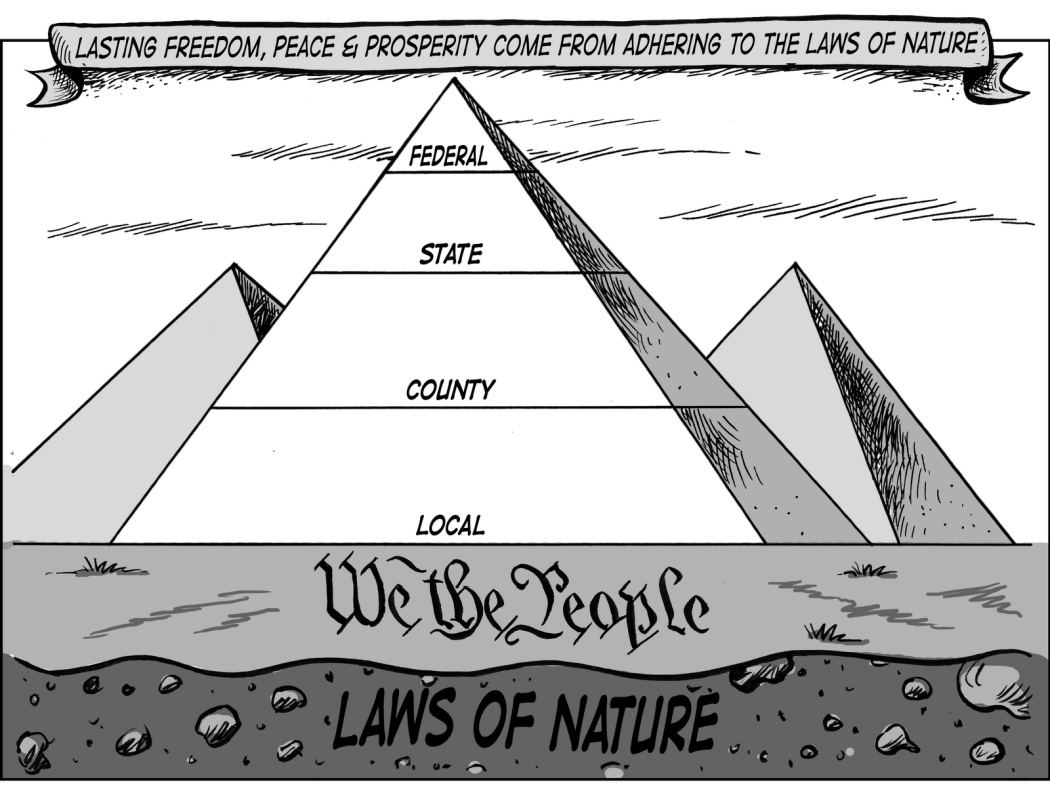
Reflecting on his experiences in Nazi Germany where he had been imprisoned, Heinrich Rommen wrote: “When one of the relativist theories is made the basis of a totalitarian state, man is stirred to free himself from the pessimistic resignation that characterizes these relativist theories and to return to his principles.” We have the means at hand to return to this country’s first principles: they are called “the Laws of Nature and of Nature’s God.” We need them now as much as did our Founders. Let us return to them forthwith — before it is too late.
________________________
Robert R. Reilly is the author of Making Gay Okay: How Rationalizing Homosexual Behavior Is Changing Everything. He served as a Special Assistant to President Ronald Reagan and was the Director of the Voice of America.
This article is part of a series on “Building Resistance to Same-Sex Marriage.” Should you want to help support this important work, contributions may be made to the U.S. Justice Foundation.
Permission is freely granted to publish, copy, reproduce, distribute, or excerpt from this article for any purpose.
Previous Post

June 19, 2015
Marriage: It’s Not Political, It’s Biblical
Browse Our Archives
Select a Category Uncategorized
Select a Month November 2016 October 2016 August 2016 May 2016 April 2016 January 2016 September 2015 August 2015 June 2015 May 2015 April 2015 March 2015 January 2015 December 2014 November 2014 October 2014 September 2014 August 2014 July 2014 June 2014 May 2014 April 2014 March 2014 February 2014 January 2014 December 2013 November 2013 October 2013 September 2013 August 2013 July 2013 June 2013 May 2013 April 2013 March 2013 February 2013 January 2013 December 2012 November 2012 October 2012 September 2012 August 2012 July 2012 June 2012 May 2012 April 2012 March 2012 February 2012 January 2012 December 2011 November 2011 October 2011 September 2011 August 2011 July 2011 June 2011 May 2011 April 2011 March 2011 February 2011 January 2011 December 2010 November 2010 October 2010 September 2010 August 2010 July 2010 June 2010 May 2010 April 2010 March 2010 February 2010 January 2010 December 2009 November 2009 October 2009 September 2009 August 2009 July 2009 June 2009 May 2009 April 2009 March 2009 February 2009 January 2009 December 2008 November 2008 October 2008 September 2008 August 2008 July 2008 June 2008 May 2008 April 2008 March 2008 February 2008 January 2008 December 2007 November 2007 October 2007 September 2007 August 2007 July 2007 June 2007 May 2007 April 2007 March 2007 February 2007 January 2007 December 2006 November 2006 October 2006 September 2006 August 2006 July 2006 June 2006 May 2006 April 2006 March 2006 February 2006 January 2006 December 2005 November 2005 October 2005 September 2005 August 2005 July 2005 June 2005 May 2005 April 2005 March 2005 February 2005 January 2005 December 2004 November 2004 October 2004 September 2004 August 2004 July 2004 June 2004 May 2004
Follow Us!
TAKE THE
Religious Wisdom Quiz
Who came to Jesus at night to ask about being born again?
Select your answer to see how you score.
Cornelius Simon Zacchaeus Nicodemus
Related posts from Orthodixie
We Have No King ... but Caesar?

Holy Cow! Batman, St Cuthbert, Jack Chick –...

BREAKING NEWS: Men & Women Are Different!
TRENDING AT PATHEOS Eastern Orthodox

Did Prayer Cure His Cancer? Or Was It...
At 4 AM one morning, Joshua W. Brown’s wife awoke to a...

8 Ways a Near-Death Experience Rewires the Soul
Does Consciousness Survive Physical Death? After 50 Years of Research, Dr. Raymond...

Holy Longing: What Our Restlessness Is Telling Us
“One can find so many pains when the rain is falling.” -John...

What this is NOT about. This blog is definitely not about...

Who said the Israelites were God’s chosen? That’s right, they did. Who...

The Spirit World Is the Real World: God...
A Monk’s Wisdom on Body and Spirit I sit with Brother Martin...
view all Eastern Orthodox blogs
Ad-Free & Subscriber Log-In Subscription Support
- About Us
- 2026 Calendar
- Videos
- Podcasts
- Library of World Religions
- Faith In Media Tracker
- Advertise With Us
- Write for Us
- Privacy Policy
- Terms of Service
- Do Not Sell My Data
- Contact Us
- Radiant Digital
- Manage Newsletter Subscriptions
- Unsubscribe From Notifications
- Sitemap
Copyright 2008-2026, Patheos. All rights reserved.
Subscription Support Ad-Free & Subscriber Log-In
Follow Patheos