
BuddhistCatholicContemplativeEvangelicalGeneral ChristianHinduJewishLatter-day SaintMuslimNew VisionsProgressive Christian
Beliefs
- Buddhist
- Catholic
- Contemplative
- Evangelical
- General Christian
- Hindu
- Jewish
- Latter-day Saint
- More Voices
- Muslim
- New Visions
- Pagan
- Progressive Christian
Topics
- Religion News
- Food and Religion
- Sports and Religion
- Religious Art
- Religious Music and Entertainment
- Religious Events
- History and Religion
- Style and Religion
- Politics and Religion
- Women in Religion
- Recreation Outdoors and Religion
- Business Finance and Religion
- Careers Workplace and Religion
- Education and Religion
- Family Parenting and Religion
- Health Fitness and Religion
- Home and Religion
- Relationships and Religion
- Technology and Religion
- Travel and Religion
Columnists
- Buddhist Columnists
- Business Finance and Religion Columnists
- Careers Workplace and Religion Columnists
- Catholic Columnists
- Contemplative Columnists
- Education and Religion Columnists
- Evangelists Columnists
- Family Parenting and Religion Columnists
- General Christian Columnists
- Health Fitness and Religion Columnists
- Hindu Columnists
- History and Religion Columnists
- Home and Religion Columnists
- Jewish Columnists
- More Voices Columnists
- Latter Day Columnists
- Muslim Columnists
- New Visions Columnists
- Nonreligious Columnists
- Pagan Columnists
- Politics and Religion Columnists
- Progressive Columnists
- Recreation Outdoors and Religion Columnists
- Relationships and Religion Columnists
- Religion News Columnists
- Religious Art Columnists
- Religious Events Columnists
- Religious Music and Entertainment Columnists
- Sports and Religion Columnists
- Style and Religion Columnists
- Technology and Religion Columnists
- Travel and Religion Columnists
- Women in Religion Columnists
Resource Library
- 2026 Calendar
- Library of World Religions
- The 100 Most Holy Places on Earth
- Patheos Answers
- Podcasts
- Videos
- Faith Leaders Database
- Anglican Episcopalian
- Bahai
- Baptist
- Buddhism
- Christianity
- Confucianism
- Eastern Orthodoxy
- Hinduism
- Holiness and Pentecostal
- ISKCON
- Islam
- Judaism
- Lutheran
- Methodist
- The Church of Jesus Christ of Latter-day Saints
- New Age
- Paganism
- Presbytarian and Reformed
- Protestantism
- Religion Behind the Scenes
- Roman Catholic
- Scientology
- Shia Islam
- Sikhism
- Sufism
- Sunni Islam
- Taoism
- Zen
- See all religions
Research Tools
 Ad-Free & Subscriber Log-In Subscription Support
Ad-Free & Subscriber Log-In Subscription Support
Follow Patheos 

- Trending:
- Forgiveness
- |
- Marriage
- |
- Consciousness
- |
- Death Penalty
- |
- Election
- |
- Halloween
 On the Catholic Beat
- Home
- Catholic
- Religion News
- Cancel Culture? Or Actions and Consequences?
Cancel Culture? Or Actions and Consequences?
Last updated on: May 1, 2021 at 9:13 am by Brian Fraga
Cancel Culture? Or Actions and Consequences? 2021-05-01T09:13:51-05:00 Brian Fraga
Patheos Explore the world's faith through different perspectives on religion and spirituality! Patheos has the views of the prevalent religions and spiritualities of the world.
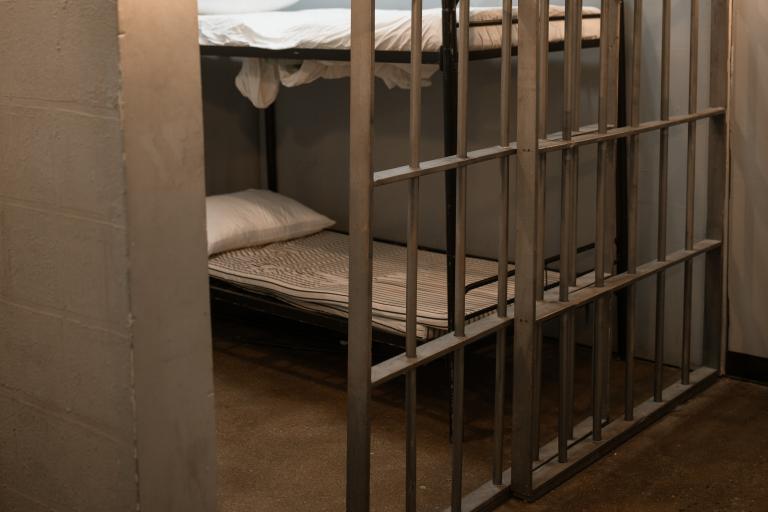
Photo by RODNAE Productions from Pexels
A basic life lesson my wife and I are teaching our preschool-aged daughter is that actions have consequences. If she behaves disrespectfully, she knows there is a good chance she won’t be able to watch TV or have a dessert that evening.
Some people in our political and commentariat classes, including some Catholic social media personalities, seem to have never learned that principle, given how they conflate natural consequences for bad behavior with “cancel culture,” especially when the “cancel” target in question is someone with whom they share political or ideological views.
I’m not talking about Twitter mobs looking to erase all traces of a comedian who made an off-color joke in 2011, or petitions to take Dukes of Hazzard off the air, or calls for the burning of all John Wayne’s movies for racist comments he made in an early 1970s interview in the pages of Playboy Magazine.
What I’m referring to is the convenient cry of “cancel culture” to deflect responsibility for politicians who, for example, spread blatantly false narratives about non-existent voter fraud and then employed rhetoric that encouraged a seditious mob to storm the U.S. Capitol in an attempt to overthrow the U.S. government.
When a politician who is partly responsible for such actions tries to play the victim because a publisher cancels his book deal, my response is basically to tell him, “Cry me a river.”
Now, there are legitimate discussions to be had about so-called cancel culture, an unfortunate trait seen on the extreme ends of the political and theological spectrums that sometimes flares into the mainstream during moments of cultural hysteria. If you want to see real cancel culture in action, go to Catholic Twitter and express an unpopular opinion or a political observation. The self-appointed Inquisitors will come for you quicker than you can tweet, “Joe Biden is a Mass-attending Catholic.”
We can have real debates about how much influence and power that “Big Tech” firms like Google, Facebook, Twitter and Amazon can wield in our society and democracy. Who wants multi-billionaires like Mark Zuckerberg, Jack Dorsey or Jeff Bezos to have the undue ability to silence dissidents and stifle unpopular speech on platforms that increasingly act as the new public square? Not me.
But more often than not, what I’ve been seeing lately is the deployment of “Big Tech” and “cancel culture” to complain about things like Donald Trump being booted off Twitter and Facebook for spreading blatant misinformation about how the election was stolen from him – it wasn’t – and then using those platforms to help mobilize and praise a mob that tried to stop the certification of the election he lost.
The fact of the matter is that former president used his bully pulpit and every lever of power at his disposal to try to overturn a democratic election. He used social media to amplify his lies about election fraud, and his words had tragic consequences. Five people died at the U.S. Capitol on Jan. 6 because of Donald Trump’s words and reckless actions.
A president’s words have power that can be used for good and bad. Given his steadfast refusal to accept reality or responsibility for his actions, it would have been negligent for Twitter and Facebook not to remove him from their platforms. That’s not “cancel culture.” That’s a consequence of Trump not having used his platform responsibly.
More recently we saw “cancel culture” invoked regarding the outrage that BIPOC students and others at Catholic University of America had expressed over the controversial and polarizing pro-life activist Abby Johnson having been invited to speak on campus to a pro-life student group. From what I could tell, the complaints were motivated not by Johnson’s pro-life stance, but rather over racially-insensitive things she had said on social media.
For example, during a row on Twitter, Johnson once called a Black preacher “Tyrone” – a racist trope – after initiating the exchange by tweeting at him, “Let me tell you about real racism.” She posted a YouTube video, since deleted, opining that police officers would be right to profile her adopted Black son when he was older because, in her words, Black men are statistically more likely to commit crimes.
Given that history, you can understand why Black students, people of color and others would have a problem with Johnson being given a platform on a Catholic college campus. Is that “cancel culture?” Or do people have a right to argue that those who blatantly use racist stereotypes should not be held up as a pro-life witness in an official Catholic setting?
And not for nothing, I didn’t see some of the individuals who came to Johnson’s defense also decry “cancel culture” when the cyber militias organized protests against Father James Martin from speaking in Catholic venues over his “bridge-building” approach to ministry with the LGBT community, or when EWTN essentially fired Gloria Purvis for speaking out against systemic racism.
Now the Catholic Intellectual Tradition holds up dialogue as a virtue, and the reality is that we have to learn how to talk with and live alongside people who may hold political views and opinions that we disagree with or even find repugnant. We have to carve out enough space for God’s grace to operate in the life of a person so that they can grow spiritually, emotionally and intellectually. “Canceling” or permanently sidelining a racist, a bigot, or a homophobe is not necessarily wise because it could close them off to conversion.
But at the same time – we have a “both/and tradition,” after all – actions have consequences, some of them serious. A husband who cheats on his wife may find forgiveness in the confessional, but he still could find himself kicked out of the house. A convicted murderer forfeits his freedom. A pathological liar loses the trust and business of his clients. An unrepentant racist shouldn’t be surprised to be disinvited from a public speaking gig.
In extreme circumstances, such as the case of a Catholic who is excommunicated from the Church, someone has to be removed from a community because of the severity of their actions and the need to protect the innocent.
Those aren’t examples of “cancel culture.” Those are offenses that require repentance and reparation.
She is still learning the concept, but my young daughter is beginning to understand that reconciliation requires contrition, an apology, a turning away from bad behavior, and accepting whatever the consequences may be. When she’s wrong, she knows the right thing to do is to say, “I’m sorry,” not play the victim. Which, more often than not these days, is what the invocation of cancel culture really is.
Browse Our Archives
Select a Category Uncategorized
Select a Month June 2021 May 2021 April 2021 March 2021 February 2021 January 2021 December 2020 November 2020 October 2020 September 2020 August 2020 July 2020 June 2020 May 2020 April 2020 March 2020 February 2020 January 2020 December 2019 November 2019
Follow Us!
TAKE THE
Religious Wisdom Quiz
Why was Jesus' eating with tax collectors controversial?
Select your answer to see how you score.
They were healthy They were famous They were viewed as sinners They were wealthy
Related posts from On the Catholic Beat
An Interview with Gloria Purvis on the Catholic...
Cleared of Sexual Abuse, Chicago's Father Michael Pfleger...
Father Altman Vows to Resist His Bishop's Request...

Jesuit Provincial in China To Become New Bishop...
TRENDING AT PATHEOS Catholic

Rejecting Doom: Christian Hope And Human Action
Christianity is a religion of hope. We are to have hope and...

It’s What Comes From Within Which Matters
One of the most difficult things for us to understand is why...

Why I Choose the Eucharist Over the Sermon
Choose the Eucharist, Not the Sermon What are we supposed to get...

5 Design Elements Found in Spiritually Rooted Homes
Putting Spirituality Into Home Decor Our homes are more than our living...

Credo: A Story of God Told with the...
About 10 years ago, I began to imagine a personal "Credo" that...

The Anatomy of Divine Revelation in Catholic Thought
The claim that God has made Himself known to human beings is...
view all Catholic blogs
Ad-Free & Subscriber Log-In Subscription Support
- About Us
- 2026 Calendar
- Videos
- Podcasts
- Library of World Religions
- Faith In Media Tracker
- Advertise With Us
- Write for Us
- Privacy Policy
- Terms of Service
- Do Not Sell My Data
- Contact Us
- Radiant Digital
- Manage Newsletter Subscriptions
- Unsubscribe From Notifications
- Sitemap
Copyright 2008-2026, Patheos. All rights reserved.
Subscription Support Ad-Free & Subscriber Log-In
Follow Patheos