
BuddhistCatholicContemplativeEvangelicalGeneral ChristianHinduJewishLatter-day SaintMuslimNew VisionsProgressive Christian
Beliefs
- Buddhist
- Catholic
- Contemplative
- Evangelical
- General Christian
- Hindu
- Jewish
- Latter-day Saint
- More Voices
- Muslim
- New Visions
- Pagan
- Progressive Christian
Topics
- Religion News
- Food and Religion
- Sports and Religion
- Religious Art
- Religious Music and Entertainment
- Religious Events
- History and Religion
- Style and Religion
- Politics and Religion
- Women in Religion
- Recreation Outdoors and Religion
- Business Finance and Religion
- Careers Workplace and Religion
- Education and Religion
- Family Parenting and Religion
- Health Fitness and Religion
- Home and Religion
- Relationships and Religion
- Technology and Religion
- Travel and Religion
Columnists
- Buddhist Columnists
- Business Finance and Religion Columnists
- Careers Workplace and Religion Columnists
- Catholic Columnists
- Contemplative Columnists
- Education and Religion Columnists
- Evangelists Columnists
- Family Parenting and Religion Columnists
- General Christian Columnists
- Health Fitness and Religion Columnists
- Hindu Columnists
- History and Religion Columnists
- Home and Religion Columnists
- Jewish Columnists
- More Voices Columnists
- Latter Day Columnists
- Muslim Columnists
- New Visions Columnists
- Nonreligious Columnists
- Pagan Columnists
- Politics and Religion Columnists
- Progressive Columnists
- Recreation Outdoors and Religion Columnists
- Relationships and Religion Columnists
- Religion News Columnists
- Religious Art Columnists
- Religious Events Columnists
- Religious Music and Entertainment Columnists
- Sports and Religion Columnists
- Style and Religion Columnists
- Technology and Religion Columnists
- Travel and Religion Columnists
- Women in Religion Columnists
Resource Library
- 2026 Calendar
- Library of World Religions
- The 100 Most Holy Places on Earth
- Patheos Answers
- Podcasts
- Videos
- Faith Leaders Database
- Anglican Episcopalian
- Bahai
- Baptist
- Buddhism
- Christianity
- Confucianism
- Eastern Orthodoxy
- Hinduism
- Holiness and Pentecostal
- ISKCON
- Islam
- Judaism
- Lutheran
- Methodist
- The Church of Jesus Christ of Latter-day Saints
- New Age
- Paganism
- Presbytarian and Reformed
- Protestantism
- Religion Behind the Scenes
- Roman Catholic
- Scientology
- Shia Islam
- Sikhism
- Sufism
- Sunni Islam
- Taoism
- Zen
- See all religions
Research Tools
 Ad-Free & Subscriber Log-In Subscription Support
Ad-Free & Subscriber Log-In Subscription Support
Follow Patheos 

- Trending:
- Forgiveness
- |
- Marriage
- |
- Consciousness
- |
- Death Penalty
- |
- Election
- |
- Halloween
 On the Catholic Beat
- Home
- Catholic
- Religion News
- Five Years Since His U.S. Visit, Pope Francis Presses On
Five Years Since His U.S. Visit, Pope Francis Presses On
Last updated on: May 1, 2021 at 9:13 am by Brian Fraga
Five Years Since His U.S. Visit, Pope Francis Presses On 2021-05-01T09:13:32-05:00 Brian Fraga
Patheos Explore the world's faith through different perspectives on religion and spirituality! Patheos has the views of the prevalent religions and spiritualities of the world.
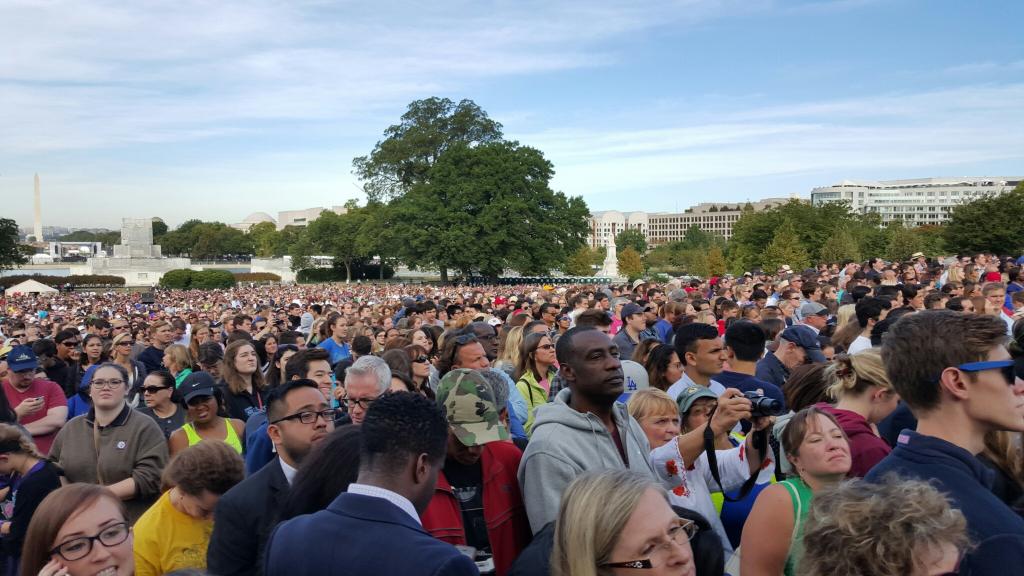
Thousands of the faithful gathered outside the U.S. Capitol on Sept. 24, 2015 to catch a glimpse of Pope Francis. Original photo.
It seems almost hard to imagine in today’s COVID-19 era, but five years ago I stood shoulder-to-shoulder in a huge crowd of people outside the U.S. Capitol, waiting for Pope Francis to arrive.
A politically-connected friend had given me a ticket to the event. I just needed to make my own way down to Washington D.C., and convince the daily newspaper I worked for at the time that the first papal address to a joint session of Congress was worth sending a local reporter to cover. Thankfully, my editors agreed.
Pope Francis’ 2015 apostolic visit to the United States seems today like it came at a heady time for the Catholic Church in the United States. Just then a little over two years into his pontificate, the Holy Father rode a wave of mostly positive press in the American and Catholic media.
The night before the pontiff’s address to Congress, I remember being in my D.C. hotel room, watching Charlie Rose’s PBS talk show, where a panel of Catholic priests and theologians spoke about what a breath of fresh air the humble pope from Argentina was for a Church that for so long seemed to be mired in scandal and bogged down in stale arguments related to sexual morality.
The analysis I wrote at the time suggested that Pope Francis was upending the “Catholic paradigm,” which I defined then as a manner of practicing the faith where to be a “good Catholic,” at least in the United States, meant to check off the right answers to the “Five Non-Negotiables” we sometimes see in politically-conservative Catholic voter guides.
I stand by much of what I wrote five years ago, though I probably underestimated the resistance the pontiff was already facing in the conservative corners of the Church. The coverage in secular and Catholic media was mostly positive, but the disaffection was real, and it was building, among those who had grown accustomed to how John Paul II and Benedict XVI exercised the Petrine ministry.
As I left the Capitol grounds on that September morning in 2015, I remember walking by a young man who was being interviewed by a television news crew. I overheard the man say he was disappointed that Pope Francis had not been more explicit in denouncing abortion. That was already then a common complaint among politically-conservative American Catholics, namely that Pope Francis didn’t give enough attention to the life issues.
In the five years since, the criticisms and anger have boiled over. The turning point for many on the so-called Catholic Right seems to have been Amoris Laetitia, Pope Francis’ 2016 post-synodal apostolic exhortation on family life that conservative critics believe undermine Catholic moral teachings on marriage and family, especially the Church’s sacramental discipline for the divorced who civilly remarry without an annulment.
Just think about everything that has happened since Amoris Laetitia was published in April 2016. A few examples: The Dubia. Cardinal Raymond Burke threatening “a formal act of correction” against the pope. Letters of “filial correction” accusing the pope of fostering heresy. Archbishop Carlo Maria Vigano’s 2018 dossier calling on Pope Francis to resign, and the handful of conservative bishops who came to the former nuncio’s defense, but not the pope’s.
Many of the same critics have decided to not give this pope the benefit of the doubt on anything, whether that’s his call to heed “the cry of the Amazon,” the Holy See’s current diplomatic strategy with China or Fratelli Tutti, the Holy Father’s new encyclical on human fraternity that was just released today.
The shine on the Francis pontificate has also been dulled by the clergy sex abuse scandals, which had receded in the headlines for a time but came roaring back in 2018 with revelations about the sexual predatory behavior of former Cardinal Theodore McCarrick and the Pennsylvania Grand Jury Report. Pope Francis has made some missteps on responding to clergy sex abuse and we’re still waiting on a promised Vatican report on McCarrick’s ecclesial career nearly two years since we learned about his abuse.
Reform is Never Easy
Many of the American conservatives’ concerns about confusion and lack of clarity in the Francis pontificate may have merit, but also keep in mind that reform always elicits resistance. One man’s reformation is sometimes another’s apocalypse.
The current pope’s vision of a decentralized, synodal Church that provides room for frank and open dialogue on controversial matters like the celibate priesthood and communion for those remarried outside the Church threatens those who felt safe under the top-down, keep-certain-topics-off-the-table leadership approach of previous popes.
Pope Francis’ less confrontational stance with secular modernity and his “who am I to judge” attitude for believers – gay, straight, single, married, etc. – who are trying to discern and make their way through the moral life are also unsettling for Catholics who were, and still are, invested in the “Five Non-Negotiables” paradigm I wrote about in 2015.
That paradigm, or status quo if you want to call it, is further tied in to a distinctly conservative political-theological structure where the Church’s moral truths and social teaching principles are uncritically fused with an American neoliberal ideology of limited government, free markets, individual liberty bordering on libertarianism, and laissez-faire economics.
His critiques of unfettered capitalism and trickle-down economics, not to mention his outspoken defense of the rights of migrants and the environment, pose somewhat of a mortal threat to the socio-politico-cultural-theological project that conservative American Catholic intellectuals like George Weigel, the late Michael Novak and those who are like-minded have put great time and work in building up over the better part of three decades.
A considerable number of Catholics still have a stake in that framework, and it is not easy for them to give that up for a vision of the Church that is less a citadel of morality and virtue and more of a field hospital for the weak and sinful. This battle of visions is turbulent enough that a small but vocal minority of traditionalist Catholics appear to hunger for simpler times and what they believe was a stronger pre-Vatican II Church that at the very least had moral clarity. “When it worked,” a friend of mine likes to say, half-jokingly, of the pre-conciliar Church.
The thing is, time marches on. The Catholic Church that emerged from the Council of Trent and reigned supreme in the West for centuries is not coming back. The figurative genie never returns to its lamp. If the Pope Francis Era leaves behind a new “paradigm,” perhaps it may be a reorientation to the kerygma, the apostolic proclamation of salvation through Jesus Christ. You know; the Good News. John 3:16. The Gospel stripped down to its core essence.
At least that was the impression of some of the people I interviewed who stood next to me, waiting to catch a glimpse of Pope Francis outside the Capitol that September morning in 2015. In my reporting that day, Jocelyn O’Brien, a resident of Portland, Oregon, told me that she felt “connected” to the pontiff in a special way.
“He’s getting us back to basics of what’s important in life,” O’Brien said, “And that’s love.”
Previous Post

September 19, 2020
Don't Treat Your Neighbor Like A Cartoon Villain.
Browse Our Archives
Select a Category Uncategorized
Select a Month June 2021 May 2021 April 2021 March 2021 February 2021 January 2021 December 2020 November 2020 October 2020 September 2020 August 2020 July 2020 June 2020 May 2020 April 2020 March 2020 February 2020 January 2020 December 2019 November 2019
Follow Us!
TAKE THE
Religious Wisdom Quiz
Jesus replied: "‘Love the Lord your God with all your heart and with all your soul and with all your mind.’ This is the first and greatest commandment. And the second is like it: ‘__________________’"
Select your answer to see how you score.
Love Your Neighbor As Yourself Do Not Kill Love Others Honor Your Father And Mother
Related posts from On the Catholic Beat
An Interview with Gloria Purvis on the Catholic...
Cleared of Sexual Abuse, Chicago's Father Michael Pfleger...
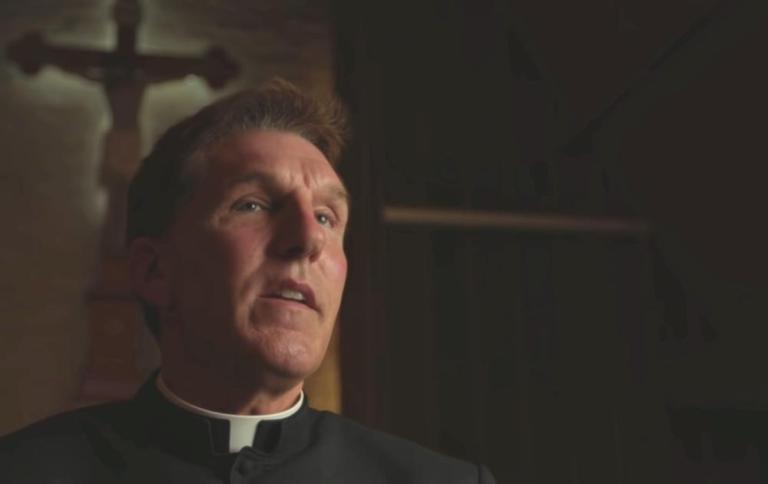
Father Altman Vows to Resist His Bishop's Request...

Jesuit Provincial in China To Become New Bishop...
TRENDING AT PATHEOS Catholic

Creation, Preservation, and Teleology in Catholic Theology
As I write this, it is very early Monday morning. Like millions...

The Parable Of The Sower And The Word...
One of Christ’s most famous parables is that of the sower who...

Rejecting Doom: Christian Hope And Human Action
Christianity is a religion of hope. We are to have hope and...

Why I Choose the Eucharist Over the Sermon
Choose the Eucharist, Not the Sermon What are we supposed to get...

5 Design Elements Found in Spiritually Rooted Homes
Putting Spirituality Into Home Decor Our homes are more than our living...

Credo: A Story of God Told with the...
About 10 years ago, I began to imagine a personal "Credo" that...
view all Catholic blogs
Ad-Free & Subscriber Log-In Subscription Support
- About Us
- 2026 Calendar
- Videos
- Podcasts
- Library of World Religions
- Faith In Media Tracker
- Advertise With Us
- Write for Us
- Privacy Policy
- Terms of Service
- Do Not Sell My Data
- Contact Us
- Radiant Digital
- Manage Newsletter Subscriptions
- Unsubscribe From Notifications
- Sitemap
Copyright 2008-2026, Patheos. All rights reserved.
Subscription Support Ad-Free & Subscriber Log-In
Follow Patheos