
BuddhistCatholicContemplativeEvangelicalGeneral ChristianHinduJewishLatter-day SaintMuslimNew VisionsProgressive Christian
Beliefs
- Buddhist
- Catholic
- Contemplative
- Evangelical
- General Christian
- Hindu
- Jewish
- Latter-day Saint
- More Voices
- Muslim
- New Visions
- Pagan
- Progressive Christian
Topics
- Religion News
- Food and Religion
- Sports and Religion
- Religious Art
- Religious Music and Entertainment
- Religious Events
- History and Religion
- Style and Religion
- Politics and Religion
- Women in Religion
- Recreation Outdoors and Religion
- Business Finance and Religion
- Careers Workplace and Religion
- Education and Religion
- Family Parenting and Religion
- Health Fitness and Religion
- Home and Religion
- Relationships and Religion
- Technology and Religion
- Travel and Religion
Columnists
- Buddhist Columnists
- Business Finance and Religion Columnists
- Careers Workplace and Religion Columnists
- Catholic Columnists
- Contemplative Columnists
- Education and Religion Columnists
- Evangelists Columnists
- Family Parenting and Religion Columnists
- General Christian Columnists
- Health Fitness and Religion Columnists
- Hindu Columnists
- History and Religion Columnists
- Home and Religion Columnists
- Jewish Columnists
- More Voices Columnists
- Latter Day Columnists
- Muslim Columnists
- New Visions Columnists
- Nonreligious Columnists
- Pagan Columnists
- Politics and Religion Columnists
- Progressive Columnists
- Recreation Outdoors and Religion Columnists
- Relationships and Religion Columnists
- Religion News Columnists
- Religious Art Columnists
- Religious Events Columnists
- Religious Music and Entertainment Columnists
- Sports and Religion Columnists
- Style and Religion Columnists
- Technology and Religion Columnists
- Travel and Religion Columnists
- Women in Religion Columnists
Resource Library
- 2026 Calendar
- Library of World Religions
- The 100 Most Holy Places on Earth
- Patheos Answers
- Podcasts
- Videos
- Faith Leaders Database
- Anglican Episcopalian
- Bahai
- Baptist
- Buddhism
- Christianity
- Confucianism
- Eastern Orthodoxy
- Hinduism
- Holiness and Pentecostal
- ISKCON
- Islam
- Judaism
- Lutheran
- Methodist
- The Church of Jesus Christ of Latter-day Saints
- New Age
- Paganism
- Presbytarian and Reformed
- Protestantism
- Religion Behind the Scenes
- Roman Catholic
- Scientology
- Shia Islam
- Sikhism
- Sufism
- Sunni Islam
- Taoism
- Zen
- See all religions
Research Tools
 Ad-Free & Subscriber Log-In Subscription Support
Ad-Free & Subscriber Log-In Subscription Support
Follow Patheos 

- Trending:
- Forgiveness
- |
- Marriage
- |
- Consciousness
- |
- Death Penalty
- |
- Election
- |
- Halloween
 On the Catholic Beat
- Home
- Catholic
- Religion News
- Catholic Takes on Whether Police Can Be Reformed or Need to Be Defunded, even Abolished
Catholic Takes on Whether Police Can Be Reformed or Need to Be Defunded, even Abolished
Last updated on: October 19, 2020 at 1:49 pm by Brian Fraga
Catholic Takes on Whether Police Can Be Reformed or Need to Be Defunded, even Abolished 2020-10-19T13:49:40-05:00 Brian Fraga
Patheos Explore the world's faith through different perspectives on religion and spirituality! Patheos has the views of the prevalent religions and spiritualities of the world.
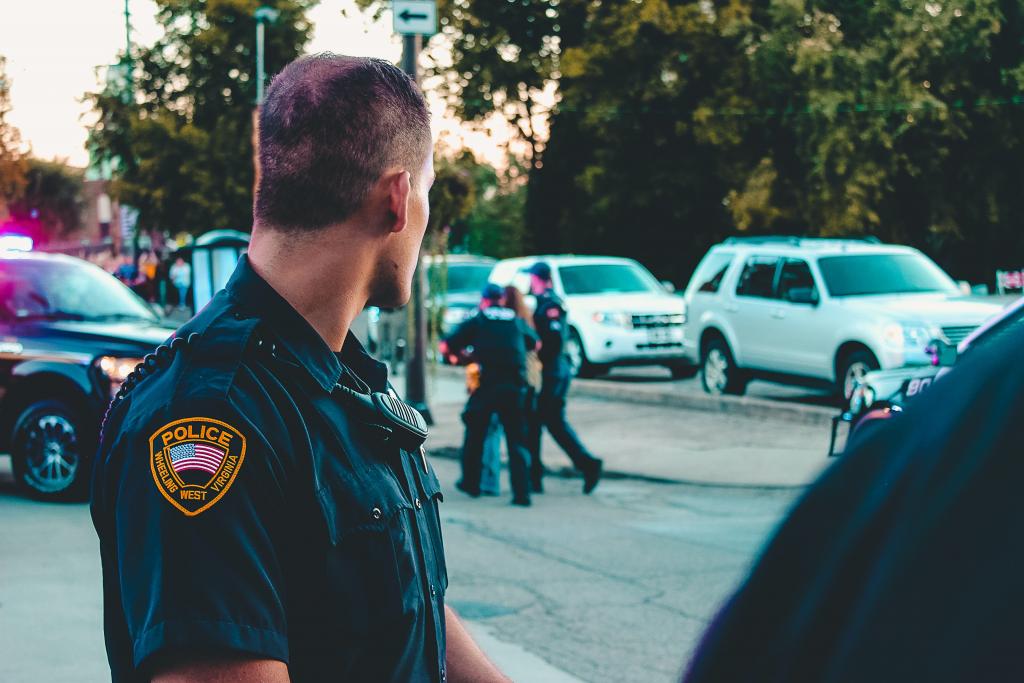
Photo by Rosemary Ketchum from Pexels
The Biden-Harris campaign has gone to some lengths to distance itself from the “Defund the Police” movement, which the Trump campaign and its surrogates are all to eager to associate with the Democratic ticket.
But the debate over whether police departments can be reformed or need to be defunded – even abolished – is playing out on the streets, in universities and in op-ed pages, including in America Media, which recently published two columns online from Catholic academics with opposing views on the subject.
Dwayne David Paul, a Catholic educator and writer, and the director of the Collaborative Center for Justice, writes that the history of policing in America is inextricably linked with a deep history of white supremacy and racist violence against communities of color.
“The evidence does not support popular liberal reforms: Anti-bias training has no discernible impact on deterring police tviolence,” says Paul, who argues that “People of faith must examine the moral legitimacy of policing itself” as “there has never been a time when it has not crushed the weak and promoted the interests of the powerful.”
Paul adds:
American policing, in particular, has its origins in a system that the church now regards as evil. In the U.S. South, “slave patrols,” aimed at quashing resistance to slavery, were among the first organized law enforcement bodies. In the North, policing expanded as a way to use violence to discipline disgruntled workers and the poor, and to prevent them from effectively organizing. Finally, police forces in the U.S. territories, including the present-day Western states, were used to advance colonial expansion and suppress Indigenous populations. The church’s moral vocabulary collapses under the weight of this history. There can be no reconciliation where there has only been violence. There was no Eden here.
Tobias Winright, a former law enforcement officer who currently teaches theology at St. Louis University, concedes many of Paul’s points about the problematic history of policing in the United States. But unlike his counterpart, Winright argues that policing is salvageable, and can be “reimagined.”
My point is that not all policing was founded on anti-Black racism and white supremacy. “Policing as we know it” neither had to be this way nor has to continue so.
Winright noted that Pope Francis thanked a group of Italian police officers for their service at an audience in 2017. The pope told those officers that their vocation “is service” and that their mission “is expressed in service to others” through their “constant availability, patience, a spirit of sacrifice and sense of duty.”
Winright adds:
To reimagine and cultivate such a culture of policing, one that bends toward what Gerald Schlabach and I have labeled “just policing,” will require significant changes in academy and field training, as well as recruiting from the community. The social peacekeeping model, in my view, is consonant with Catholic social teaching on protecting human dignity and the common good. A key ingredient, moreover, would be inculcating the virtue of solidarity among those—whether they are still called police or, I think better, peace officers—who pledge to serve and protect their fellow citizens. I believe that reforms guided by this vision can uphold that Black lives matter.
My two cents
As a former local newspaper reporter who covered local police departments for several years, I find that both Paul and Winright make great points. I met and still know many great professional law enforcement officers who take their job seriously and know how to interact with the public. Good police work is possible, and is to be commended.
But there are still serious problems in modern policing, especially as it pertains to the culture in police departments, which I often found to be insular and resistant to any calls for reform and accountability. Just this weekend, the Boston Globe found that scores of active troopers in the Massachusetts State Police are still on the job despite documented behavioral issues that include arrests for personal misbehavior and fraudulently billing the state for overtime.
Those issues speak to longrunning grievances against police held by communities of color that do not see law enforcement as there to help so much as to harass and dehumanize them on a daily basis. Until real fundamental reforms take root, even changes that we may consider “radical” today like redirecting some police funding to social service agencies, and police accountability is taken seriously, the protests we’ve been seeing on the streets this year will likely continue.
Previous Post

October 19, 2020
EWTN CEO Endorses Donald Trump for President
Next Post

October 20, 2020 Guilt Tripping and Manipulation: A Catholic Campaign Strategy?
Browse Our Archives
Select a Category Uncategorized
Select a Month June 2021 May 2021 April 2021 March 2021 February 2021 January 2021 December 2020 November 2020 October 2020 September 2020 August 2020 July 2020 June 2020 May 2020 April 2020 March 2020 February 2020 January 2020 December 2019 November 2019
Follow Us!
TAKE THE
Religious Wisdom Quiz
What does "Gethsemane" mean?
Select your answer to see how you score.
Olive tree Oil press Garden Spring
Related posts from On the Catholic Beat
An Interview with Gloria Purvis on the Catholic...
Cleared of Sexual Abuse, Chicago's Father Michael Pfleger...
Father Altman Vows to Resist His Bishop's Request...

Jesuit Provincial in China To Become New Bishop...
TRENDING AT PATHEOS Catholic

Creation, Preservation, and Teleology in Catholic Theology
As I write this, it is very early Monday morning. Like millions...

The Parable Of The Sower And The Word...
One of Christ’s most famous parables is that of the sower who...

Rejecting Doom: Christian Hope And Human Action
Christianity is a religion of hope. We are to have hope and...

Why I Choose the Eucharist Over the Sermon
Choose the Eucharist, Not the Sermon What are we supposed to get...

5 Design Elements Found in Spiritually Rooted Homes
Putting Spirituality Into Home Decor Our homes are more than our living...

Credo: A Story of God Told with the...
About 10 years ago, I began to imagine a personal "Credo" that...
view all Catholic blogs
Ad-Free & Subscriber Log-In Subscription Support
- About Us
- 2026 Calendar
- Videos
- Podcasts
- Library of World Religions
- Faith In Media Tracker
- Advertise With Us
- Write for Us
- Privacy Policy
- Terms of Service
- Do Not Sell My Data
- Contact Us
- Radiant Digital
- Manage Newsletter Subscriptions
- Unsubscribe From Notifications
- Sitemap
Copyright 2008-2026, Patheos. All rights reserved.
Subscription Support Ad-Free & Subscriber Log-In
Follow Patheos