
BuddhistCatholicContemplativeEvangelicalGeneral ChristianHinduJewishLatter-day SaintMuslimNew VisionsProgressive Christian
Beliefs
- Buddhist
- Catholic
- Contemplative
- Evangelical
- General Christian
- Hindu
- Jewish
- Latter-day Saint
- More Voices
- Muslim
- New Visions
- Pagan
- Progressive Christian
Topics
- Religion News
- Food and Religion
- Sports and Religion
- Religious Art
- Religious Music and Entertainment
- Religious Events
- History and Religion
- Style and Religion
- Politics and Religion
- Women in Religion
- Recreation Outdoors and Religion
- Business Finance and Religion
- Careers Workplace and Religion
- Education and Religion
- Family Parenting and Religion
- Health Fitness and Religion
- Home and Religion
- Relationships and Religion
- Technology and Religion
- Travel and Religion
Columnists
- Buddhist Columnists
- Business Finance and Religion Columnists
- Careers Workplace and Religion Columnists
- Catholic Columnists
- Contemplative Columnists
- Education and Religion Columnists
- Evangelists Columnists
- Family Parenting and Religion Columnists
- General Christian Columnists
- Health Fitness and Religion Columnists
- Hindu Columnists
- History and Religion Columnists
- Home and Religion Columnists
- Jewish Columnists
- More Voices Columnists
- Latter Day Columnists
- Muslim Columnists
- New Visions Columnists
- Nonreligious Columnists
- Pagan Columnists
- Politics and Religion Columnists
- Progressive Columnists
- Recreation Outdoors and Religion Columnists
- Relationships and Religion Columnists
- Religion News Columnists
- Religious Art Columnists
- Religious Events Columnists
- Religious Music and Entertainment Columnists
- Sports and Religion Columnists
- Style and Religion Columnists
- Technology and Religion Columnists
- Travel and Religion Columnists
- Women in Religion Columnists
Resource Library
- 2026 Calendar
- Library of World Religions
- The 100 Most Holy Places on Earth
- Patheos Answers
- Podcasts
- Videos
- Faith Leaders Database
- Anglican Episcopalian
- Bahai
- Baptist
- Buddhism
- Christianity
- Confucianism
- Eastern Orthodoxy
- Hinduism
- Holiness and Pentecostal
- ISKCON
- Islam
- Judaism
- Lutheran
- Methodist
- The Church of Jesus Christ of Latter-day Saints
- New Age
- Paganism
- Presbytarian and Reformed
- Protestantism
- Religion Behind the Scenes
- Roman Catholic
- Scientology
- Shia Islam
- Sikhism
- Sufism
- Sunni Islam
- Taoism
- Zen
- See all religions
Research Tools
 Ad-Free & Subscriber Log-In Subscription Support
Follow Patheos 

- Trending:
- Advent
- |
- Forgiveness
- |
- Thanksgiving
- |
- Election
- |
- Seasonal Holidays
- |
- Marriage
 On the Catholic Beat
- Home
- Catholic
- Religion News
- Reporter’s Notebook: Clergy Sex Abuse Accountability.
Reporter’s Notebook: Clergy Sex Abuse Accountability.
Last updated on: July 17, 2020 at 10:53 am by Brian Fraga
Reporter’s Notebook: Clergy Sex Abuse Accountability. 2020-07-17T10:53:44-05:00 Brian Fraga
Patheos Explore the world's faith through different perspectives on religion and spirituality! Patheos has the views of the prevalent religions and spiritualities of the world.
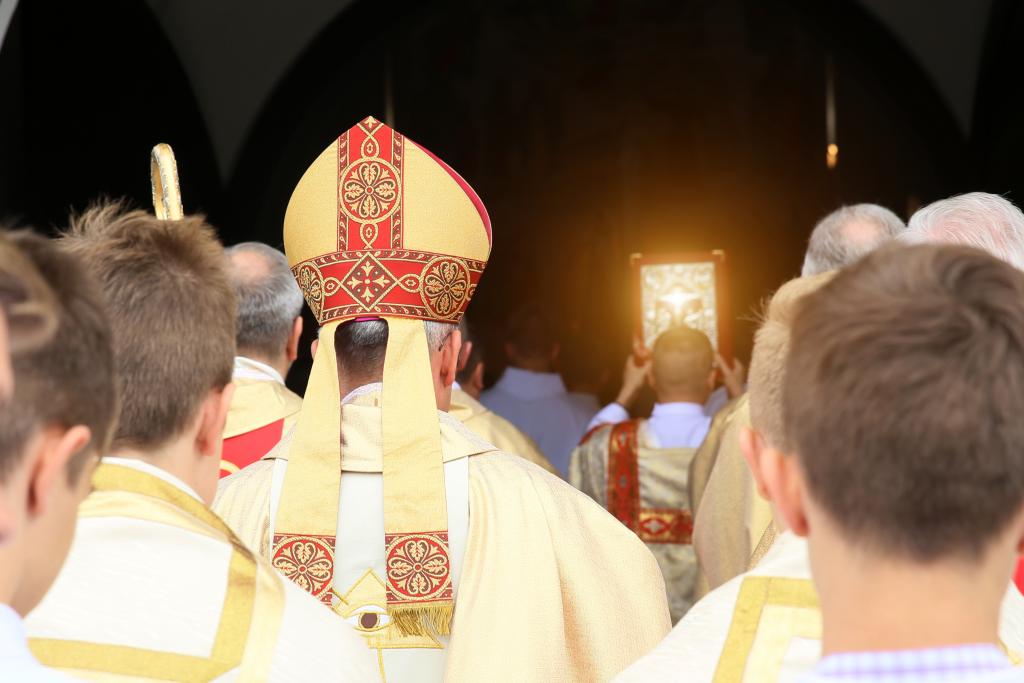
Via Shutterstock
I interviewed Francesco Cesareo, the former chairman of the National Review Board, last week for Our Sunday Visitor on the completion of his eight years leading the committee that advises the U.S. Conference of Catholic Bishops on clergy sex abuse matters.
Our Sunday Visitor: On clergy sex abuse and accountability, where do you think we are now compared to where we were eight years ago?
Francesco C. Cesareo: I think that there’s been progress in terms of really understanding that this issue of clerical sexual abuse has to be at the forefront of the work of the bishops, that they cannot assume it is a historical event that is done with and occurred in the past.
Cesareo, the president of Assumption College in Worcester, Massachusetts, also went into the progress made on holding bishops accountable, the changes that he believes still need to be made to the Dallas Charter, as well as the reasons he sees for why a culture of accountability may not yet have taken root in some parishes or schools.
During our discussion, Cesareo also commented on a few topics that I didn’t have the space to include in the above-linked OSV interview. Below are some of the unpublished, on-the-record remarks from the interview.
On whether the present Code of Canon Law is an obstacle to instituting the reforms Cesareo would have liked to have seen with Vos Estis, the motu proprio issued last year by Pope Francis on bishop accountability.
“Canon law has been often a roadblock. Different canonists interpret canon law differently. Some canonist say canon law doesn’t prohibt X, Y or Z while others would say yes it does. I think there has to be a real assessment of what’s permissible within the realm of canon law that would not be a roadblock but would be an opportunity for meaningful reform going forward.
I think that looking at ways in which canon law – which is obviously a major undertaking, and one that is not specific to a particular episcopal conference but is the universal law of the church and something that would have to be done at the level of the Vatican….
While canon law can be a roadblock, canon law can also been seen as an opportunity whereby on the local diocesan level, through codes of conduct and diocesan policy, there are areas that perhaps cannot be universally applied, can [still] be applied on the local level.
So, I don’t see it as a complete obstacle. I see it as more of a roadblock where things can still be changed on the local level through diocesan codes of conduct and policies, where canon law would not be a block.”
Despite the flaws he saw in Vos Estis’ metropolitan model, Cesareo saw the motu proprio as a step in the right direction.
“There is a process that is very clear. It’s only been put in place a few months, so it is new. I don’t believe it has been actually put into practice, and what I mean by that is I don’t think any allegations have come forward against current or retired bishops where this process is actually been employed. Time will tell.
It certainly is a move in the right direction, and a recognition that one of the problems with the Charter was that bishops were not part of the it, so they were not held accountable to the Charter in the same way that priests and deacons were. It’s definitely a move in the right direction.
It’s a three-year experiment, and hopefully in these three years we’ll learn something about the effectiveness of this process and if the process is not as effective as it is hoped to be, I would hope that the bishops would revisit it and improve upon it going forward. It’s still too early to tell because that process has only been in place a few months.”
As a college president, Cesareo spoke about the sex abuse crisis being a barrier for young adults from taking the faith seriously.
“It leads to questions on the part of young people. What I’ve seen is a level of frustration, a sense of what can they do that’s going to have a meaningful impact so that the Church can deal with this in a way that can restore trust and credibility. It is a problem and I think particularly the McCarrick situation and the subsequent grand jury reports in Pennsylvania and other parts of the country has really impacted the Church in a way that will take a couple of generations to recover from.
I think the message for young people has to be is that they have to be able to separate the problem of sexual abuse that occurred in the Church from faith in Jesus Christ and faith in the gospel, to recognize that the Church is an imperfect institution, that the Church is made up of humans and that humans are sinners, but that our faith has to be in Christ and in the Gospel.
If we put our faith in Christ and the gospel, we can, we should and we must continue to engage in the life of the Church because meaningful reform only occurs from within; it never occurs from without. Helping young people to recognize that while the Church isn’t perfect, it’s never going to be because we’re on a pilgrimage; it’s a pilgrim Church. Our role and our responsibility is to help the Church to become a better institution despite its flaws because we ourselves are individually-flawed. If we use our gifts and talents and put them at the service of the Church, then we’ve assumed our co-responsibility as laity in the life of the Church, and I think that’s important.”
-30-


Browse Our Archives
Select a Category Uncategorized
Select a Month June 2021 May 2021 April 2021 March 2021 February 2021 January 2021 December 2020 November 2020 October 2020 September 2020 August 2020 July 2020 June 2020 May 2020 April 2020 March 2020 February 2020 January 2020 December 2019 November 2019
Follow Us!
TAKE THE
Religious Wisdom Quiz
What was the primary liquid measurement in Biblical times?
Select your answer to see how you score.
Hin Bath Ephah Cor
Related posts from On the Catholic Beat
An Interview with Gloria Purvis on the Catholic...
Cleared of Sexual Abuse, Chicago's Father Michael Pfleger...
Father Altman Vows to Resist His Bishop's Request...

Jesuit Provincial in China To Become New Bishop...
TRENDING AT PATHEOS Catholic

If Baptism Washes Away Sin, Why Do Catholics...
The seven sacraments stand as the foundation of Catholic ecclesial life. The...

Far from promoting indifference, inaction, or quietism, Paul consistently tells us to...

The Power of Setting a Good Example
Remember last August when the Chicago White Sox hosted a "Pope Hat...

Theology As A Way of Life, Not Mere...
I enjoy the study of dogmatic and systematic theology. I like studying...

A Catholic Critique of Biblical Unitarianism
If the statistics are to be believed, Unitarianism is rising worldwide. Although...

How Grandma Tourism Helps Grandparents Live Their Vocation
Grandma, The New Travel Influencer What started as a nostalgia-inspired social media...
view all Catholic blogs
Ad-Free & Subscriber Log-In Subscription Support
- About Us
- 2026 Calendar
- Videos
- Podcasts
- Library of World Religions
- Faith In Media Tracker
- Advertise With Us
- Write for Us
- Privacy Policy
- Terms of Service
- Do Not Sell My Data
- Contact Us
- Radiant Digital
- Manage Newsletter Subscriptions
- Unsubscribe From Notifications
- Sitemap
Copyright 2008-2026, Patheos. All rights reserved.
Subscription Support Ad-Free & Subscriber Log-In
Follow Patheos