
BuddhistCatholicContemplativeEvangelicalGeneral ChristianHinduJewishLatter-day SaintMuslimNew VisionsProgressive Christian
Beliefs
- Buddhist
- Catholic
- Contemplative
- Evangelical
- General Christian
- Hindu
- Jewish
- Latter-day Saint
- More Voices
- Muslim
- New Visions
- Pagan
- Progressive Christian
Topics
- Religion News
- Food and Religion
- Sports and Religion
- Religious Art
- Religious Music and Entertainment
- Religious Events
- History and Religion
- Style and Religion
- Politics and Religion
- Women in Religion
- Recreation Outdoors and Religion
- Business Finance and Religion
- Careers Workplace and Religion
- Education and Religion
- Family Parenting and Religion
- Health Fitness and Religion
- Home and Religion
- Relationships and Religion
- Technology and Religion
- Travel and Religion
Columnists
- Buddhist Columnists
- Business Finance and Religion Columnists
- Careers Workplace and Religion Columnists
- Catholic Columnists
- Contemplative Columnists
- Education and Religion Columnists
- Evangelists Columnists
- Family Parenting and Religion Columnists
- General Christian Columnists
- Health Fitness and Religion Columnists
- Hindu Columnists
- History and Religion Columnists
- Home and Religion Columnists
- Jewish Columnists
- More Voices Columnists
- Latter Day Columnists
- Muslim Columnists
- New Visions Columnists
- Nonreligious Columnists
- Pagan Columnists
- Politics and Religion Columnists
- Progressive Columnists
- Recreation Outdoors and Religion Columnists
- Relationships and Religion Columnists
- Religion News Columnists
- Religious Art Columnists
- Religious Events Columnists
- Religious Music and Entertainment Columnists
- Sports and Religion Columnists
- Style and Religion Columnists
- Technology and Religion Columnists
- Travel and Religion Columnists
- Women in Religion Columnists
Resource Library
- 2026 Calendar
- Library of World Religions
- The 100 Most Holy Places on Earth
- Patheos Answers
- Podcasts
- Videos
- Faith Leaders Database
- Anglican Episcopalian
- Bahai
- Baptist
- Buddhism
- Christianity
- Confucianism
- Eastern Orthodoxy
- Hinduism
- Holiness and Pentecostal
- ISKCON
- Islam
- Judaism
- Lutheran
- Methodist
- The Church of Jesus Christ of Latter-day Saints
- New Age
- Paganism
- Presbytarian and Reformed
- Protestantism
- Religion Behind the Scenes
- Roman Catholic
- Scientology
- Shia Islam
- Sikhism
- Sufism
- Sunni Islam
- Taoism
- Zen
- See all religions
Research Tools
 Ad-Free & Subscriber Log-In Subscription Support
Ad-Free & Subscriber Log-In Subscription Support
Follow Patheos 

- Trending:
- Forgiveness
- |
- Marriage
- |
- Consciousness
- |
- Death Penalty
- |
- Election
- |
- Halloween
 On the Catholic Beat
- Home
- Catholic
- Religion News
- Real Talk: White American Catholics Have a Racism Problem.
Real Talk: White American Catholics Have a Racism Problem.
Last updated on: April 30, 2021 at 3:21 pm by Brian Fraga
Real Talk: White American Catholics Have a Racism Problem. 2021-04-30T15:21:32-05:00 Brian Fraga
Patheos Explore the world's faith through different perspectives on religion and spirituality! Patheos has the views of the prevalent religions and spiritualities of the world.
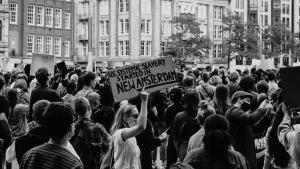
Shane Aldendorff, via Pexels
This may shock you, though it sadly shouldn’t: White American Catholics can be racist.
Yes, even those who attend Mass on Sundays and Holy Days of Obligation, who pray the Rosary everyday, listen to Catholic radio and walk at the March for Life every year. People who profess to follow Jesus Christ, who tout their Catholic bona fides on social media and buy their favorite apologist’s latest book.
White Catholics – practicing and non-practicing – can be racist, sometimes overtly in unguarded moments. We share racially insensitive memes, laugh at jokes poking fun at racist stereotypes and tell people to “lighten up” when they object. We don’t stop to think about how those behaviors reinforce racist assumptions that are embedded deep in our culture and society.
To give our neighbors the benefit of the doubt, perhaps we Catholics of white European descent are just too often insensitive, caught up in our worlds, and not aware of our intellectual blind sports. More likely than not, we are ignorant of the toxic legacy from chattel slavery, Jim Crow laws, white supremacy and institutionalized racism that is deeply encoded in the United States’ DNA.
“I don’t see white or black. I’m color-blind.”
“All lives matter.”
“What about abortion?”
Those responses – all defensive in nature – are not intended to foster listening and dialogue, but rather to avoid difficult conversations, change the topic and ignore the inconvenient truth that racism is real.
“Stop playing the race card.”
“How do you know that white cop who beat that black man was racist?”
“Don’t you know abortion kills more black people every year than police brutality?”
Some think those responses reflect reason and objective reality, but they don’t. In truth, those are things we white people say to avoid thinking about how we perpetuate the institutional racism that we benefit from and which continues to subjugate people of color in this country.
“I’ve never personally seen racism.”
“Come on, times have changed.”
“Abortion is the real racism.”
It’s true that the Klan isn’t marching in full robes down Washington D.C., and that people today risk becoming a social outcast if they yell the N-word at a black person. A white woman might even lose her job if she’s captured on a cell phone video threatening to call the police on a black man who tells her to leash her dog in a public park.
No, racial prejudice today is more subtle, cloaked in political dog whistles, zoning regulations and public funding priorities that place black communities at disadvantages, as well as in disingenuous debate tactics and catchphrases that are meant to ignore, deflect or dismiss concerns about racial inequality and bigotry in 21st century America.
We saw that defensiveness from our white politically-conservative coreligionists in 2017 when the U.S. Conference of Catholic Bishops announced it was forming an ad-hoc committee to speak out against racism after that summer’s shameful gathering of white nationalists at Charlottesville, Virginia.
“The bishops are hopping on the leftist media bandwagon.”
“More political correctness from our bishops!”
“What about Antifa? And when will our bishops speak out against abortion?!?”
That same kneejerk white reaction against any attempt to call out racism manifested itself as outraged patriotism when NFL quarterback Colin Kaepernick bent his knee during the national anthem to protest police brutality against black men. The resistance to that nonviolent act of protest has resulted in Kaepernick’s effective blackballing from a league where 70 percent of the players are black, but virtually all the head coaches, front office personnel and owners are white.
The substance of Kaepernick’s protest – that unarmed black men were being harassed killed by police officers – were ignored. Instead, we heard intellectually-dishonest arguments about how Kaepernick and other kneeling NFL players were disrespecting the American flag and veterans.
“They should be grateful that they get paid to play a game.”
“I don’t see them kneeling for abortion!”
A lot of white people were just as angry at Lebron James when he wore an “I Can’t Breathe” T-shirt to protest the New York City police officers who choked Eric Garner to death.
“I watch sports to get away from politics. I don’t wanna see this crap.”
On her noxious Fox News show that often amplifies white nationalist themes, Laura Ingraham – a Catholic convert who invites EWTN’s Raymond Arroyo on her set every week – let the mask fall ever so slightly, telling James in 2018 to “shut up and dribble” and saying of the black NBA star, “I mean he’s a person, he has some worth I imagine.”
Compare that treatment with how Ingraham – and Arroyo – this week came to the defense of New Orleans Saints quarterback Drew Brees, who is white and had said in an interview a few days earlier that he would never support someone kneeling during the anthem because it disrespected the flag. While James had “some worth I imagine,” Brees was “a good Christian man” who had a right to speak his mind.
Brees, by the way, after being roundly criticized even by former teammates, subsequently apologized for his comments, which he said “lacked awareness and any type of compassion or empathy” and “completely missed the mark” on where we as a country are right now in our national moment on race.
Of course, it’s not just outspoken black athletes who draw the ire of white people, Catholic or not. It’s also black sportscasters, celebrities, radio hosts, journalists, and everyday people who speak out against racism. When “Black Lives Matter” activists marched in the streets, some of our conservative white coreligionists rolled their eyes and badmouthed them as troublemakers, radicals and socialists.
“This white person was killed by the police. I don’t see any memorials and marches for them.”
“Talking like this about white people is reverse racism.”
“Why are we even talking about racism when abortion is still legal?”
The bishops conference’s social media posts about Black History Month and matters related to race relations often solicit ignorant comments from people with white faces in their profile pictures about how Church leaders need to stop “dividing” people and start worrying about saving souls and preaching the Gospel.
The thing is, bishops, priests, religious and laity are indeed preaching the Gospel and saving souls when they condemn racism and march in the streets to show solidarity with civil rights activists. Even as we journey to our final home, the Kingdom of God is present among us on this earth. We are called to build up that Kingdom for all our brothers and sisters, no matter the color of their skin.
That is a lesson that I, a man of Portuguese descent with white skin, have had to learn. And it hasn’t always been easy. Listening to people of color share their experiences and perspectives has forced me to reflect on my own past behavior and complicity in institutional racism.
Having conversations with men and women of color has also helped me to realize how there are things I’ve never had to worry about as a white man. I’ve never had to think about the possibility that any encounter I have with a police officer could end really badly for me, even if I do nothing to provoke the officer.
The tough work of racial reconciliation and justice inevitably prompts an uncomfortable examination of conscience where white people find themselves thinking about how the privileges we have in this society have been made possible by the exploitation, marginalization and dehumanization of black and brown-skinned people. It can be unsettling, and deservedly so.
We’re all impacted by racism, whether we care to acknowledge it or not. In this national reckoning we are now undergoing, sparked by the horrific death of George Floyd at the hands – or knee – of a Minneapolis police officer, we are all forced to look in the mirror and ask ourselves a difficult question.
“Am I racist?”
Previous Post

May 26, 2020
After "AKA Jane Roe," An Examination of Conscience Is In Order
Next Post
June 16, 2020 How Black Catholic Leaders Have Been Responding to the George Floyd Video.
Browse Our Archives
Select a Category Uncategorized
Select a Month June 2021 May 2021 April 2021 March 2021 February 2021 January 2021 December 2020 November 2020 October 2020 September 2020 August 2020 July 2020 June 2020 May 2020 April 2020 March 2020 February 2020 January 2020 December 2019 November 2019
Follow Us!
TAKE THE
Religious Wisdom Quiz
True or False: Paul commanded Timothy to rebuke older men harshly.
Select your answer to see how you score.
FALSE TRUE
Related posts from On the Catholic Beat
An Interview with Gloria Purvis on the Catholic...
Cleared of Sexual Abuse, Chicago's Father Michael Pfleger...
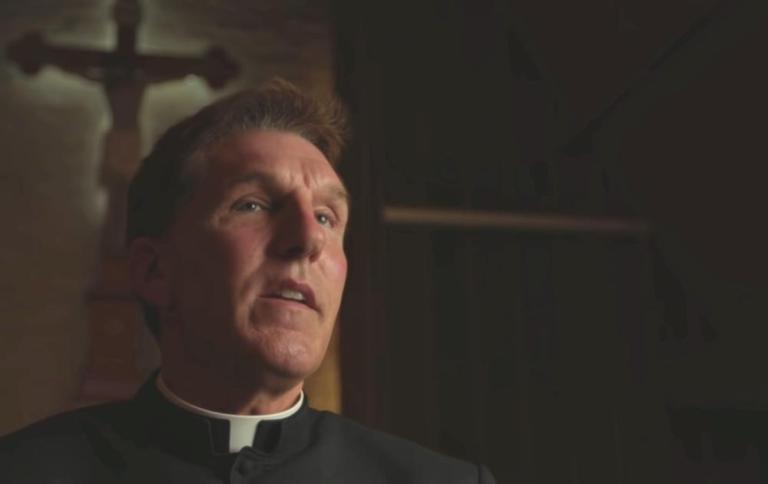
Father Altman Vows to Resist His Bishop's Request...

Jesuit Provincial in China To Become New Bishop...
TRENDING AT PATHEOS Catholic

Rejecting Doom: Christian Hope And Human Action
Christianity is a religion of hope. We are to have hope and...

It’s What Comes From Within Which Matters
One of the most difficult things for us to understand is why...

Why I Choose the Eucharist Over the Sermon
Choose the Eucharist, Not the Sermon What are we supposed to get...

5 Design Elements Found in Spiritually Rooted Homes
Putting Spirituality Into Home Decor Our homes are more than our living...

Credo: A Story of God Told with the...
About 10 years ago, I began to imagine a personal "Credo" that...

The Anatomy of Divine Revelation in Catholic Thought
The claim that God has made Himself known to human beings is...
view all Catholic blogs
Ad-Free & Subscriber Log-In Subscription Support
- About Us
- 2026 Calendar
- Videos
- Podcasts
- Library of World Religions
- Faith In Media Tracker
- Advertise With Us
- Write for Us
- Privacy Policy
- Terms of Service
- Do Not Sell My Data
- Contact Us
- Radiant Digital
- Manage Newsletter Subscriptions
- Unsubscribe From Notifications
- Sitemap
Copyright 2008-2026, Patheos. All rights reserved.
Subscription Support Ad-Free & Subscriber Log-In
Follow Patheos