
BuddhistCatholicContemplativeEvangelicalGeneral ChristianHinduJewishLatter-day SaintMuslimNew VisionsProgressive Christian
Beliefs
- Buddhist
- Catholic
- Contemplative
- Evangelical
- General Christian
- Hindu
- Jewish
- Latter-day Saint
- More Voices
- Muslim
- New Visions
- Pagan
- Progressive Christian
Topics
- Religion News
- Food and Religion
- Sports and Religion
- Religious Art
- Religious Music and Entertainment
- Religious Events
- History and Religion
- Style and Religion
- Politics and Religion
- Women in Religion
- Recreation Outdoors and Religion
- Business Finance and Religion
- Careers Workplace and Religion
- Education and Religion
- Family Parenting and Religion
- Health Fitness and Religion
- Home and Religion
- Relationships and Religion
- Technology and Religion
- Travel and Religion
Columnists
- Buddhist Columnists
- Business Finance and Religion Columnists
- Careers Workplace and Religion Columnists
- Catholic Columnists
- Contemplative Columnists
- Education and Religion Columnists
- Evangelists Columnists
- Family Parenting and Religion Columnists
- General Christian Columnists
- Health Fitness and Religion Columnists
- Hindu Columnists
- History and Religion Columnists
- Home and Religion Columnists
- Jewish Columnists
- More Voices Columnists
- Latter Day Columnists
- Muslim Columnists
- New Visions Columnists
- Nonreligious Columnists
- Pagan Columnists
- Politics and Religion Columnists
- Progressive Columnists
- Recreation Outdoors and Religion Columnists
- Relationships and Religion Columnists
- Religion News Columnists
- Religious Art Columnists
- Religious Events Columnists
- Religious Music and Entertainment Columnists
- Sports and Religion Columnists
- Style and Religion Columnists
- Technology and Religion Columnists
- Travel and Religion Columnists
- Women in Religion Columnists
Resource Library
- 2026 Calendar
- Library of World Religions
- The 100 Most Holy Places on Earth
- Patheos Answers
- Podcasts
- Videos
- Faith Leaders Database
- Anglican Episcopalian
- Bahai
- Baptist
- Buddhism
- Christianity
- Confucianism
- Eastern Orthodoxy
- Hinduism
- Holiness and Pentecostal
- ISKCON
- Islam
- Judaism
- Lutheran
- Methodist
- The Church of Jesus Christ of Latter-day Saints
- New Age
- Paganism
- Presbytarian and Reformed
- Protestantism
- Religion Behind the Scenes
- Roman Catholic
- Scientology
- Shia Islam
- Sikhism
- Sufism
- Sunni Islam
- Taoism
- Zen
- See all religions
Research Tools
 Ad-Free & Subscriber Log-In Subscription Support
Ad-Free & Subscriber Log-In Subscription Support
Follow Patheos 

- Trending:
- Forgiveness
- |
- Marriage
- |
- Consciousness
- |
- Death Penalty
- |
- Election
- |
- Halloween
 One Degree to Another
- Home
- Evangelical
- The Best Quotes from Your Future Self Will Thank You
The Best Quotes from Your Future Self Will Thank You
Last updated on: June 23, 2021 at 4:23 pm by Scott Slayton
The Best Quotes from Your Future Self Will Thank You 2021-06-23T16:23:05-05:00 Scott Slayton
Patheos Explore the world's faith through different perspectives on religion and spirituality! Patheos has the views of the prevalent religions and spiritualities of the world.
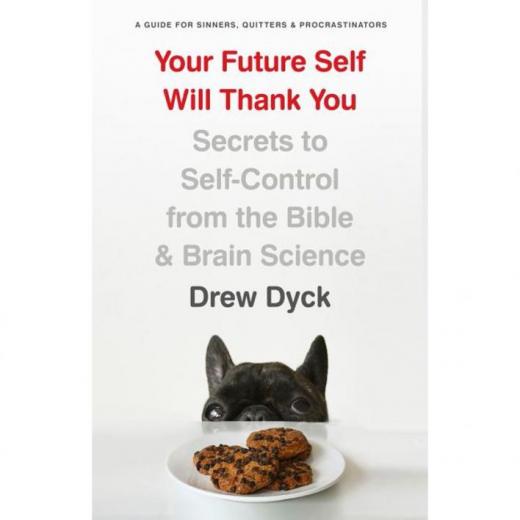
Every once in a while, you read a book at the perfect time. When COVID lockdowns started last year, I thought about how much I was going to read and how much I was going to write. Instead, like many, I developed poor habits that made it more difficult for me to concentrate, read, write, and work. Coming out of this malaise, I was finally able to read Drew Dyck’s Your Future Self Will Thank You.
Dyck speaks about the virtue which lays at the foundation of all of the virtues, self-control. Without self-control, our growth in grace, in cultivating virtue, and in making progress in personal growth would be impossible. Diving into relevant passages of Scripture and referencing the latest insights from brain science, he helps us learn the importance of self-control and how we can begin to cultivate this foundational virtue. These were my favorite quotes from Your Future Self Will Thank You.
“Self-control isn’t just one good character trait, a nice addition to the pantheon of virtues. It’s foundational. Not because it’s more important than the other virtues, but because the others rely on it.” (15)
“Defeating the enemy beyond your walls is hard; subduing the enemy within is harder.” (18)
“Biblical self-control isn’t about proud self-reliance or earning your way to heaven. It’s not somehow nullified by grace. You will find no asterisks by the biblical exhortations to exercise self-control. What you will find is a truckload of commands to resist evil, flee lust, avoid temptation, abstain from sin, control your tongue, guard your heart, and, most graphically, kill the flesh.” (20)
“The Bible portrays self-control not as restrictive, but rather as the path of freedom.” (20)
“Self-control is the ability to do the right thing, even when you don’t feel like it.” (33)
“There’s a cruel irony that comes into play whenever we value something above God. If we prioritize happiness above all else, we will never find happiness. If we grant marriage or family or work the highest place in our hearts, we end up hurting those too. These are all good things, but they were never meant to bear the full weight of our ultimate allegiance.” (40)
“Being self-controlled enables us to suspend our interests enough to truly love others.” (41)
“Ultimately, self-control isn’t about you. It’s about surrendering to God’s purposes for you. And it’s not about getting success or money or power. In the end, it’s about love.” (42)
“How can we be so selfless one moment and so stupid and sinful the next? Genesis provides a rather elegant answer. Our capacity for selflessness and splendor comes from the fact that we were made in the image of God. Our sinfulness and stupidity? That traces back to the fall.” (61)
“According to (David) Brooks, it was this consciousness of sin that allowed people to cultivate virtue. That might seem like a strange argument. How could having a dim view of human nature enable people to become more virtuous? Because once they were conscious of their sinful nature, they could take steps to fight against it.” (65)
“Accepting the biblical vision of human nature arms you with a sober self-awareness. It makes you wary of your impulses and desires. It helps you realize that you need wisdom and divine help to resist temptations and pursue righteousness. Ultimately, it’s the first step to leading a self-controlled life.” (66)
“We don’t need exotic tools or secret knowledge to defeat him. When we resist temptation, Satan flees.” (68)
“Ultimately, what Jesus will receive from His Father will vastly surpass anything Satan can offer. But it will require faith and humility, patience, and trust. Jesus always opts for the slower, harder way.” (70)
“Ego depletion has implications for battling temptations too. Actually, it means that “battling temptation is usually a bad idea. It’s easy to imagine that if we can fend off temptation once, we can do it again. But we’re often weaker the second time ’round. Perhaps that’s why Scripture urges us to flee temptation.” (82)
“Knowledge doesn’t always translate into action.” (99)
“Habits start small. They begin with little actions. But over time they snowball.” (111)
“If you’re trying to build new habits in your life, introduce them one at a time.” (127)
“Sanctification is like sailing. Sailors can’t move without the wind, but that doesn’t mean they kick up their feet on the deck and wait to start moving.” (149)
“Studies show that people with an ‘anxious attachment’ to God are more likely to suffer from paranoia, neuroticism, and eating disorders like bulimia.” (155)
“The internet hasn’t created any new temptations. It’s just heightened the old ones that were there all along.” (168)
“I’d also read a sobering study showing that distraction from constant email and text messages resulted in a ten point temporary drop in IQ, more than double the loss of IQ points someone experiences while high on marijuana.” (173)
“A loss of self-control always results in a loss of freedom.” (207)
“You’ve seen it all before. You know he always gives you the best stuff upfront–and makes you pay for everything down the road. God, on the other hand, is more interested in your future self. He’s more concerned about you than your current level of comfort. He cares more about who you’re becoming than how you feel right now. And while the devil gives his best up front, God always saves his best for last.” (208)
“No, self-control isn’t the sexiest topic, but it’s vital. Cultivating it will not only improve your own life. It will bless the lives of everyone you know and love. So endeavor to live a life marked by self-control. Your future self will thank you. And others will too.” (214)
(You can read more of my favorite quotes from great books here.)
Related Posts:
“The Best Quotes from The Common Rule”
“The Best Quotes from The Prodigal Prophet”
Previous Post

June 21, 2021
The One Thing You Cannot Leave out of Your Funeral Sermon
Next Post
June 27, 2021 How to Prepare a Sermon When You are a Bivocational Pastor
Browse Our Archives
Select a Category Bible Books Church Life Marriage Parenting Photos The Ministry Uncategorized
Select a Month August 2021 July 2021 June 2021 February 2021 December 2020 November 2020 October 2020 March 2020 July 2019 April 2019 December 2018 November 2018 October 2018 September 2018 August 2018 July 2018 June 2018 May 2018 April 2018 March 2018 February 2018 January 2018 December 2017 November 2017 October 2017 September 2017 August 2017 July 2017 June 2017 May 2017 April 2017 March 2017 February 2017 January 2017 December 2016 November 2016 October 2016 September 2016 August 2016 July 2016 June 2016 May 2016 April 2016 March 2016 February 2016 January 2016 December 2015 November 2015 October 2015 September 2015 August 2015 July 2015 May 2015 April 2015 March 2015 February 2015 January 2015 December 2014 November 2014 October 2014 September 2014 August 2014 July 2014 June 2014 May 2014 April 2014 March 2014 February 2014 January 2014 December 2013 November 2013 October 2013 September 2013 August 2013 July 2013
Follow Us!
TAKE THE
Religious Wisdom Quiz
What year did Martin Luther post his 95 Theses?
Select your answer to see how you score.
1401 1517 1492 1600
Related posts from One Degree to Another
The Best Quotes from Gentle and Lowly
The Best Quotes from The Possibility of Prayer


TRENDING AT PATHEOS Evangelical

How the author of the world's best hymn...
I've been working with John Newton for a while now. This makes...

Long before this Lectio Divina, Psalm 130 - the song - started...

What About the Trees? Another Living Parable
After I finished writing the last article about falling leaves as a...

Why Classical Education Is a Conversation, Not a...
Come and Read: Joy in Classical Education When I was a little...

Falling Leaves: A Living Parable on Letting Go
I’ve spent the vast majority of my life in the southeast corner...

Cornell University has received a great deal of negative publicity and intense...
view all Evangelical blogs
Ad-Free & Subscriber Log-In Subscription Support
- About Us
- 2026 Calendar
- Videos
- Podcasts
- Library of World Religions
- Faith In Media Tracker
- Advertise With Us
- Write for Us
- Privacy Policy
- Terms of Service
- Do Not Sell My Data
- Contact Us
- Radiant Digital
- Manage Newsletter Subscriptions
- Unsubscribe From Notifications
- Sitemap
Copyright 2008-2026, Patheos. All rights reserved.
Subscription Support Ad-Free & Subscriber Log-In
Follow Patheos