
BuddhistCatholicContemplativeEvangelicalGeneral ChristianHinduJewishLatter-day SaintMuslimNew VisionsProgressive Christian
Beliefs
- Buddhist
- Catholic
- Contemplative
- Evangelical
- General Christian
- Hindu
- Jewish
- Latter-day Saint
- More Voices
- Muslim
- New Visions
- Pagan
- Progressive Christian
Topics
- Religion News
- Food and Religion
- Sports and Religion
- Religious Art
- Religious Music and Entertainment
- Religious Events
- History and Religion
- Style and Religion
- Politics and Religion
- Women in Religion
- Recreation Outdoors and Religion
- Business Finance and Religion
- Careers Workplace and Religion
- Education and Religion
- Family Parenting and Religion
- Health Fitness and Religion
- Home and Religion
- Relationships and Religion
- Technology and Religion
- Travel and Religion
Columnists
- Buddhist Columnists
- Business Finance and Religion Columnists
- Careers Workplace and Religion Columnists
- Catholic Columnists
- Contemplative Columnists
- Education and Religion Columnists
- Evangelists Columnists
- Family Parenting and Religion Columnists
- General Christian Columnists
- Health Fitness and Religion Columnists
- Hindu Columnists
- History and Religion Columnists
- Home and Religion Columnists
- Jewish Columnists
- More Voices Columnists
- Latter Day Columnists
- Muslim Columnists
- New Visions Columnists
- Nonreligious Columnists
- Pagan Columnists
- Politics and Religion Columnists
- Progressive Columnists
- Recreation Outdoors and Religion Columnists
- Relationships and Religion Columnists
- Religion News Columnists
- Religious Art Columnists
- Religious Events Columnists
- Religious Music and Entertainment Columnists
- Sports and Religion Columnists
- Style and Religion Columnists
- Technology and Religion Columnists
- Travel and Religion Columnists
- Women in Religion Columnists
Resource Library
- 2026 Calendar
- Library of World Religions
- The 100 Most Holy Places on Earth
- Patheos Answers
- Podcasts
- Videos
- Faith Leaders Database
- Anglican Episcopalian
- Bahai
- Baptist
- Buddhism
- Christianity
- Confucianism
- Eastern Orthodoxy
- Hinduism
- Holiness and Pentecostal
- ISKCON
- Islam
- Judaism
- Lutheran
- Methodist
- The Church of Jesus Christ of Latter-day Saints
- New Age
- Paganism
- Presbytarian and Reformed
- Protestantism
- Religion Behind the Scenes
- Roman Catholic
- Scientology
- Shia Islam
- Sikhism
- Sufism
- Sunni Islam
- Taoism
- Zen
- See all religions
Research Tools
 Ad-Free & Subscriber Log-In Subscription Support
Ad-Free & Subscriber Log-In Subscription Support
Follow Patheos 

- Trending:
- Forgiveness
- |
- Marriage
- |
- Consciousness
- |
- Death Penalty
- |
- Election
- |
- Halloween
 One Degree to Another
- Home
- Evangelical
- The Best Quotes from The Possibility of Prayer
The Best Quotes from The Possibility of Prayer
Last updated on: June 30, 2021 at 10:50 am by Scott Slayton
The Best Quotes from The Possibility of Prayer 2021-06-30T10:50:15-05:00 Scott Slayton
Patheos Explore the world's faith through different perspectives on religion and spirituality! Patheos has the views of the prevalent religions and spiritualities of the world.
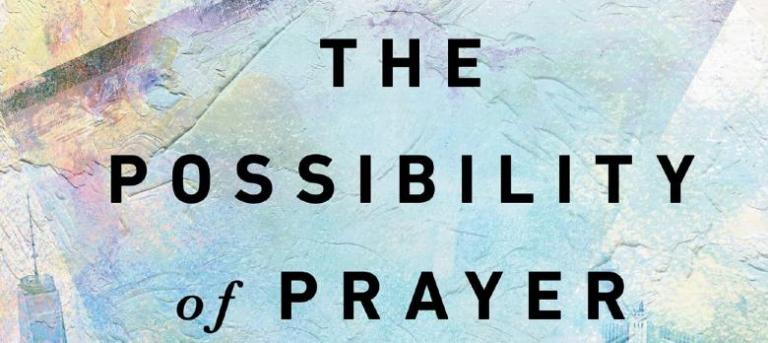
Mention prayer around most Christians and you are sure to see some people hang their heads in shame. We know that we ought to pray, but we often don’t, and this produces guilt and shame. Then, the guilt and shame that we feel over our lack of time in prayer keep us from praying. Then, when we finally do pray, we are confused about what to pray and give up because of the awkwardness.
John Starke has given us an excellent aid to focus on our prayer lives with The Possibility of Prayer. In it, he reminds us that our identity is not found in our performance, but in Christ. This encourages us to pray because our audience with God does not depend on our goodness, but Christ’s. He also speaks into our busy lives to show why we need to give priority to prayer in a time when we are always focused on what we have produced. Starke’s book encouraged me to slow my pace of life so I can give time and attention to prayer.
These were my favorite quotes from The Possibility of Prayer:
“We live in an age of efficiency. We judge our use of time by what we accomplish or produce. Anything we do that seems inefficient or unhurried is a waste of time. ‘I didn’t get anything done today.’ If that’s how we evaluate our use of time, is it any wonder we rarely justify the time of prayer, much less any meaningful spiritual exercise.” (6)
“Prayer is not possible because we have somehow made ourselves worthy of God’s attention, but because God has made himself known to us. We did not have to ascend like phoenixes out of our ashes to get God’s attention, but God descended into the depths of dust with us.” (15)
“A life of prayer and spiritual depth is one of learning how to experience love truly with God and then also with others.” (40)
“In Christ and before the courts of heaven, we don’t have to prove ourselves. We don’t have to be a false version of ourselves. We can simply be ourselves and love. When you pray, repeat that last line to yourself and believe it.” (43)
“A life of prayer and stillness with God is the place reactionary hearts go to die and be raised as something deeper.” (51)
“We must not wait until we feel better about ourselves before we come to God; that’s just pride masked by self-loathing. Coming quickly to God in repentance is a sign of humility, of putting all our trust in the blood of Christ, knowing that we have no worthiness in ourselves.” (73)
“If a spiritual leader tells you that all your encounters with God should be like Mount Sinai, then either that leader has not been praying for long or is trying to sell you something. Not every prayer will lead to amazement, but every prayer deserves our pondering.” (89)
“Solitude saves us from our own perspective, encouraging us toward a wider view than we’re accustomed to or comfortable with–a view that is not our own. God has a view of the entire landscape, and we need him in order to see reality from beyond our incestuous imaginations. Without him, we get stuck in the loop of our own self-grandeur.” (122)
“Heavy social media use makes solitude with God scattered and frustrating. But healthy rhythms of solitude and even boredom, supported by resistance to technology (maybe through intentional times of disconnecting from social media), can bring surprising richness and refreshment to our lives.” (132)
“Solitude develops our inner lives to love what God loves–and God loves our neighbors.” (133)
“The best way to love and care for those in our community is to regularly practice solitude with God.” (133)
“The rhythm of feasting and fasting forms hearts at rest with God rather than hearts that restlessly crave the things of this world. It makes the life of prayer easier. Fasting teaches my heart to hunger for the deep things of God. Prayer is the daily feast on those things.” (149)
“The Sabbath was made for more than just recovery or preventing exhaustion.” (152)
“The Sabbath is God’s weekly invitation to experience spiritual vibrancy that many Christians, for one reason or another, have refused to accept.” (152)
“The practice of Sabbath teaches us that nothing in this life is too important that it cannot be set aside in order to receive what God has for us rather than what we can make or do for ourselves. Our daily rhythms of prayer are small sabbaths–ways of saying to our soul, ‘Nothing is so important that it can’t regularly be set aside to receive what God has for me today in his Word and in prayer.” (157)
“The Sabbath is our confession that the world is held together by Christ’s hands, not ours.” (158)
“To be a healing and restorative practice, the Sabbath must be a weekly rhythm. We must figure out how to make time for a day once a week when we’re not working but instead are putting joy and blessedness in the forefront.” (160)
“When Christ said, ‘It is finished’ on the cross, it was a death blow to finding our worth and fullness through our work.” (165)
“The more alienated we are from other Christians, the more we will be alienated from Christ himself.” (169)
“We simply cannot depend on a personal prayer life for a healthy spiritual life–or even an adequate one. Without other Christians and the experience of worshiping with them on a regular basis, our personal prayer lives will suffer.” (169)
“If you’ve ever wondered what God wants for your life, here is at least a partial answer: to be deeply connected and involved in the body of Christ. You won’t be satisfied until you are.” (176)
(You can read more of my favorite quotes from great books here.)
Related Posts:
“The Best Quotes from Your Future Self Will Thank You”
“The Best Quotes from The Common Rule”
Previous Post

June 27, 2021
How to Prepare a Sermon When You are a Bivocational Pastor
Next Post
July 12, 2021 Why You Should Embrace Boredom
Browse Our Archives
Select a Category Bible Books Church Life Marriage Parenting Photos The Ministry Uncategorized
Select a Month August 2021 July 2021 June 2021 February 2021 December 2020 November 2020 October 2020 March 2020 July 2019 April 2019 December 2018 November 2018 October 2018 September 2018 August 2018 July 2018 June 2018 May 2018 April 2018 March 2018 February 2018 January 2018 December 2017 November 2017 October 2017 September 2017 August 2017 July 2017 June 2017 May 2017 April 2017 March 2017 February 2017 January 2017 December 2016 November 2016 October 2016 September 2016 August 2016 July 2016 June 2016 May 2016 April 2016 March 2016 February 2016 January 2016 December 2015 November 2015 October 2015 September 2015 August 2015 July 2015 May 2015 April 2015 March 2015 February 2015 January 2015 December 2014 November 2014 October 2014 September 2014 August 2014 July 2014 June 2014 May 2014 April 2014 March 2014 February 2014 January 2014 December 2013 November 2013 October 2013 September 2013 August 2013 July 2013
Follow Us!
TAKE THE
Religious Wisdom Quiz
Who warned "the tongue is a fire"?
Select your answer to see how you score.
Peter John Paul James
Related posts from One Degree to Another
The Best Quotes from Gentle and Lowly

The Best Quotes from Your Future Self Will...


TRENDING AT PATHEOS Evangelical

The REST of Your Life: A Creative Wrestles...
This week I had a conversation with a good friend from church....

How the author of the world's best hymn...
I've been working with John Newton for a while now. This makes...

Long before this Lectio Divina, Psalm 130 - the song - started...

What About the Trees? Another Living Parable
After I finished writing the last article about falling leaves as a...

Why Classical Education Is a Conversation, Not a...
Come and Read: Joy in Classical Education When I was a little...

Cornell University has received a great deal of negative publicity and intense...
view all Evangelical blogs
Ad-Free & Subscriber Log-In Subscription Support
- About Us
- 2026 Calendar
- Videos
- Podcasts
- Library of World Religions
- Faith In Media Tracker
- Advertise With Us
- Write for Us
- Privacy Policy
- Terms of Service
- Do Not Sell My Data
- Contact Us
- Radiant Digital
- Manage Newsletter Subscriptions
- Unsubscribe From Notifications
- Sitemap
Copyright 2008-2026, Patheos. All rights reserved.
Subscription Support Ad-Free & Subscriber Log-In
Follow Patheos