
BuddhistCatholicContemplativeEvangelicalGeneral ChristianHinduJewishLatter-day SaintMuslimNew VisionsProgressive Christian
Beliefs
- Buddhist
- Catholic
- Contemplative
- Evangelical
- General Christian
- Hindu
- Jewish
- Latter-day Saint
- More Voices
- Muslim
- New Visions
- Pagan
- Progressive Christian
Topics
- Religion News
- Food and Religion
- Sports and Religion
- Religious Art
- Religious Music and Entertainment
- Religious Events
- History and Religion
- Style and Religion
- Politics and Religion
- Women in Religion
- Recreation Outdoors and Religion
- Business Finance and Religion
- Careers Workplace and Religion
- Education and Religion
- Family Parenting and Religion
- Health Fitness and Religion
- Home and Religion
- Relationships and Religion
- Technology and Religion
- Travel and Religion
Columnists
- Buddhist Columnists
- Business Finance and Religion Columnists
- Careers Workplace and Religion Columnists
- Catholic Columnists
- Contemplative Columnists
- Education and Religion Columnists
- Evangelists Columnists
- Family Parenting and Religion Columnists
- General Christian Columnists
- Health Fitness and Religion Columnists
- Hindu Columnists
- History and Religion Columnists
- Home and Religion Columnists
- Jewish Columnists
- More Voices Columnists
- Latter Day Columnists
- Muslim Columnists
- New Visions Columnists
- Nonreligious Columnists
- Pagan Columnists
- Politics and Religion Columnists
- Progressive Columnists
- Recreation Outdoors and Religion Columnists
- Relationships and Religion Columnists
- Religion News Columnists
- Religious Art Columnists
- Religious Events Columnists
- Religious Music and Entertainment Columnists
- Sports and Religion Columnists
- Style and Religion Columnists
- Technology and Religion Columnists
- Travel and Religion Columnists
- Women in Religion Columnists
Resource Library
- 2026 Calendar
- Library of World Religions
- The 100 Most Holy Places on Earth
- Patheos Answers
- Podcasts
- Videos
- Faith Leaders Database
- Anglican Episcopalian
- Bahai
- Baptist
- Buddhism
- Christianity
- Confucianism
- Eastern Orthodoxy
- Hinduism
- Holiness and Pentecostal
- ISKCON
- Islam
- Judaism
- Lutheran
- Methodist
- The Church of Jesus Christ of Latter-day Saints
- New Age
- Paganism
- Presbytarian and Reformed
- Protestantism
- Religion Behind the Scenes
- Roman Catholic
- Scientology
- Shia Islam
- Sikhism
- Sufism
- Sunni Islam
- Taoism
- Zen
- See all religions
Research Tools
 Ad-Free & Subscriber Log-In Subscription Support
Follow Patheos 

- Trending:
- Advent
- |
- Forgiveness
- |
- Thanksgiving
- |
- Election
- |
- Seasonal Holidays
- |
- Marriage
 One Degree to Another
- Home
- Evangelical
- How to Prepare a Sermon When You are a Bivocational Pastor
How to Prepare a Sermon When You are a Bivocational Pastor
Last updated on: June 27, 2021 at 8:18 pm by Scott Slayton
How to Prepare a Sermon When You are a Bivocational Pastor 2021-06-27T20:18:08-05:00 Scott Slayton
Patheos Explore the world's faith through different perspectives on religion and spirituality! Patheos has the views of the prevalent religions and spiritualities of the world.
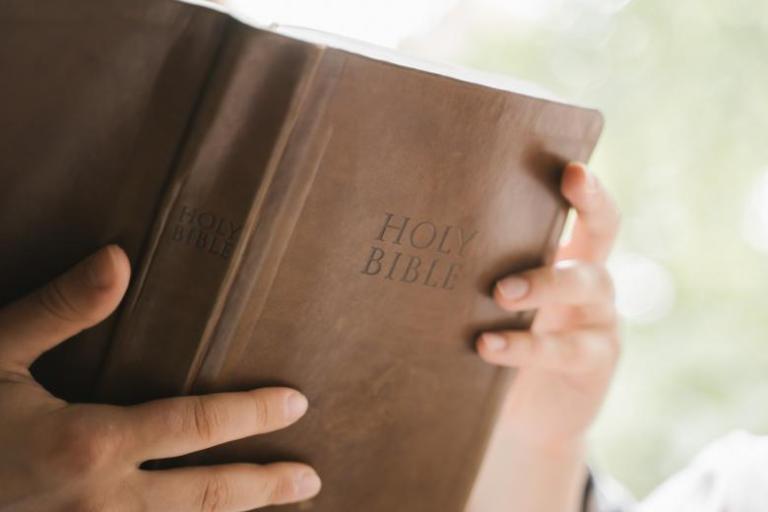
Photo by Tima Miroshnichenko from Pexels
After 18 years of pastoring full-time, I stepped away from leadership, got a full-time job that was not in the church, and took time to heal and recuperate after extreme burnout. About a year later, a church called me as their bivocational pastor. For most of the year, like around half of SBC pastors, I work a full-time job and serve as pastor of a church.
One of the biggest challenges in moving to bivocational ministry was in the area of sermon prep. When I was full-time, I had a sermon prep rhythm that allowed me to finish my sermon on Friday at noon. Even though prep and writing only took around 12 hours, my weekly schedule usually revolved around sermon prep.
Now I find myself in a very different routine. My full-time job starts and stops at set times every day. I also have additional responsibilities at work that keep me an extra ten to fifteen hours per week during different seasons of the year. Sermon prep is still an important part of my week, but now I have to work on my sermon when I can. I discovered that this requires even more intentionality than when I was full-time.
What follows is the rhythm that I have tried to establish for myself in sermon prep as a bivocational pastor. In sharing this, I have avoided assigning particular tasks to particular days because every pastor’s full-time job schedule is different. However, I hope that these broad categories of sermon prep will help those serving in bivocational ministry.
Preach through Books of the Bible
Sometimes our theological convictions and practical necessity line up nicely. Preaching through books of the Bible allows God’s word to speak in context and provides God’s people with a balanced diet in his word. This helps preachers to avoid hobby horses and forces them to preach on topics that they would ordinarily avoid.
If you are a bivocational pastor, it gives you an added benefit–you don’t spend days trying to figure out what you are going to preach. I once spoke with a pastor who said that he still found himself on Sunday mornings and flipping through his Bible trying to figure out what he had the “unction” to preach. I never heard any of those sermons, but I am sure that they were shallow and thin. When you preach through a book of the Bible, you can get started as early as possible working on the next sermon, and have time for God’s word to marinate in your mind.
Start Early in the Week
Since you know what you are preaching, now you need to make sure that you get started early in the week. The first step in my sermon prep is to read the passage that I am preaching ten times. (How long it takes me to do this depends on the length of the passage.) Then, I make twenty-five observations from the passage.
By the time I have done this, I know my text pretty well. This is the most important part of your preaching other than your personal walk with the Lord. Get this essential part of sermon prep done as soon as possible during the week. When I am working a normal schedule, I try to at least read the text ten times by the time I go to bed Monday night. This allows me to spend time thinking about the sermon even when I am not sitting down and working on it.
Utilize the “Gaps” in Your Day
Unless you get a weekday or two off, it is going to be difficult to devote one long block of time (3-4 hours) to working on your sermon. Instead, you have to learn how to use “gaps” in your day to maximize sermon time. For example, you could scroll through your phone during the twenty minutes that you are in the waiting room at the doctor’s office, or you could use that time to read commentaries for your sermon or read books that will help prime the pump for sermon illustrations. Also, this is a wise way to work because you never know when an obligation at your full-time job may cut into your sermon prep late in the week. (A helpful way to learn how to do this is to read on the journalistic style of deep work in Cal Newport’s book Deep Work.)
If you learn your text really well early in the week, you can also use time when you are driving to think through the sermon. There have been many times that I have come up with points of application, sermon illustrations, or insights into the text when I was thinking about it while I was driving. You can also use driving time to call people in your church to find out how you can pray for them. Understanding how the people in your church are struggling gives you the opportunity to pray for them and gives insight into how you can help them from God’s word on Sunday morning.
Set a Time at Which You Will Start Writing
I have an extremely high standard for the quality of my sermons. When I was full-time, I developed a standard flow for each of my sermons and was able to preach my sermon without notes. I would often hold off writing the sermon until I was sure I had answered every exegetical question to the best of my ability.
When you work 40-60 hours a week and preach, you do not have the luxury of being a perfectionist about your preaching. Work as hard as you can to have the sermon ready, but at some point you have just got to get the sermon on paper and trust that the Lord is going to use it. You may not have had time to read eight commentaries. Maybe you wanted to track down an issue and read a section in a Systematic Theology text on it. As long as you know the text and have worked through it as best as possible, give yourself permission to start writing and be content with not being as prepared as you wish you could be. Besides, if you had 50 hours to work on the sermon, you would still feel you had not done all that you could.
Related Posts:
“The One Thing You Cannot Leave Out of Your Funeral Sermon”
“The Weight of Being a Pastor”
For Further Reading:
8 Hours or Less by Ryan Huguley
Deep Work by Cal Newport
Christ-Centered Preaching by Bryan Chapell
Previous Post

June 23, 2021
The Best Quotes from Your Future Self Will Thank You
Next Post
June 30, 2021 The Best Quotes from The Possibility of Prayer
Browse Our Archives
Select a Category Bible Books Church Life Marriage Parenting Photos The Ministry Uncategorized
Select a Month August 2021 July 2021 June 2021 February 2021 December 2020 November 2020 October 2020 March 2020 July 2019 April 2019 December 2018 November 2018 October 2018 September 2018 August 2018 July 2018 June 2018 May 2018 April 2018 March 2018 February 2018 January 2018 December 2017 November 2017 October 2017 September 2017 August 2017 July 2017 June 2017 May 2017 April 2017 March 2017 February 2017 January 2017 December 2016 November 2016 October 2016 September 2016 August 2016 July 2016 June 2016 May 2016 April 2016 March 2016 February 2016 January 2016 December 2015 November 2015 October 2015 September 2015 August 2015 July 2015 May 2015 April 2015 March 2015 February 2015 January 2015 December 2014 November 2014 October 2014 September 2014 August 2014 July 2014 June 2014 May 2014 April 2014 March 2014 February 2014 January 2014 December 2013 November 2013 October 2013 September 2013 August 2013 July 2013
Follow Us!
TAKE THE
Religious Wisdom Quiz
What Christian group is known for using incense during worship?
Select your answer to see how you score.
Orthodox Christians Baptists Jehovah’s Witnesses Pentecostals
Related posts from One Degree to Another

The One Thing You Cannot Leave out of...
What Do You Do When You Preach a...

When Pastors Walk Through a Dark Night of...
TRENDING AT PATHEOS Evangelical

Making Stones Into Bread: Choosing the “Right” Work
I was on my online arts ministry Zoom meeting with the International...

Ukraine’s exhausted Christians face fifth winter of war
By Julian Lukins The full-scale war in Ukraine is taking “a serious...

Russell Brand's Conviction is not anti-Christian Persecution
How do we shed the reputation that the Church is OK with...

Have you ever caught yourself saying, “I’ll do it tomorrow,” or “Now...

Write Your Story: A Great Way to Find...
A few month’s back, my son was scrolling around Facebook and saw...

Throughout history, people have pursued pleasure, possessions, relationships, and success in an...
view all Evangelical blogs
Ad-Free & Subscriber Log-In Subscription Support
- About Us
- 2026 Calendar
- Videos
- Podcasts
- Library of World Religions
- Faith In Media Tracker
- Advertise With Us
- Write for Us
- Privacy Policy
- Terms of Service
- Do Not Sell My Data
- Contact Us
- Radiant Digital
- Manage Newsletter Subscriptions
- Unsubscribe From Notifications
- Sitemap
Copyright 2008-2026, Patheos. All rights reserved.
Subscription Support Ad-Free & Subscriber Log-In
Follow Patheos