
BuddhistCatholicContemplativeEvangelicalGeneral ChristianHinduJewishLatter-day SaintMuslimNew VisionsProgressive Christian
Beliefs
- Buddhist
- Catholic
- Contemplative
- Evangelical
- General Christian
- Hindu
- Jewish
- Latter-day Saint
- More Voices
- Muslim
- New Visions
- Pagan
- Progressive Christian
Topics
- Religion News
- Food and Religion
- Sports and Religion
- Religious Art
- Religious Music and Entertainment
- Religious Events
- History and Religion
- Style and Religion
- Politics and Religion
- Women in Religion
- Recreation Outdoors and Religion
- Business Finance and Religion
- Careers Workplace and Religion
- Education and Religion
- Family Parenting and Religion
- Health Fitness and Religion
- Home and Religion
- Relationships and Religion
- Technology and Religion
- Travel and Religion
Columnists
- Buddhist Columnists
- Business Finance and Religion Columnists
- Careers Workplace and Religion Columnists
- Catholic Columnists
- Contemplative Columnists
- Education and Religion Columnists
- Evangelists Columnists
- Family Parenting and Religion Columnists
- General Christian Columnists
- Health Fitness and Religion Columnists
- Hindu Columnists
- History and Religion Columnists
- Home and Religion Columnists
- Jewish Columnists
- More Voices Columnists
- Latter Day Columnists
- Muslim Columnists
- New Visions Columnists
- Nonreligious Columnists
- Pagan Columnists
- Politics and Religion Columnists
- Progressive Columnists
- Recreation Outdoors and Religion Columnists
- Relationships and Religion Columnists
- Religion News Columnists
- Religious Art Columnists
- Religious Events Columnists
- Religious Music and Entertainment Columnists
- Sports and Religion Columnists
- Style and Religion Columnists
- Technology and Religion Columnists
- Travel and Religion Columnists
- Women in Religion Columnists
Resource Library
- 2026 Calendar
- Library of World Religions
- The 100 Most Holy Places on Earth
- Patheos Answers
- Podcasts
- Videos
- Faith Leaders Database
- Anglican Episcopalian
- Bahai
- Baptist
- Buddhism
- Christianity
- Confucianism
- Eastern Orthodoxy
- Hinduism
- Holiness and Pentecostal
- ISKCON
- Islam
- Judaism
- Lutheran
- Methodist
- The Church of Jesus Christ of Latter-day Saints
- New Age
- Paganism
- Presbytarian and Reformed
- Protestantism
- Religion Behind the Scenes
- Roman Catholic
- Scientology
- Shia Islam
- Sikhism
- Sufism
- Sunni Islam
- Taoism
- Zen
- See all religions
Research Tools
 Ad-Free & Subscriber Log-In Subscription Support
Ad-Free & Subscriber Log-In Subscription Support
Follow Patheos 

- Trending:
- Forgiveness
- |
- Marriage
- |
- Consciousness
- |
- Death Penalty
- |
- Election
- |
- Halloween
 One Degree to Another
- Home
- Evangelical
- When the Bible Confronts Your Confirmation Bias
When the Bible Confronts Your Confirmation Bias
Last updated on: April 7, 2019 at 9:35 pm by Scott Slayton
When the Bible Confronts Your Confirmation Bias 2019-04-07T21:35:08-05:00 Scott Slayton
Patheos Explore the world's faith through different perspectives on religion and spirituality! Patheos has the views of the prevalent religions and spiritualities of the world.
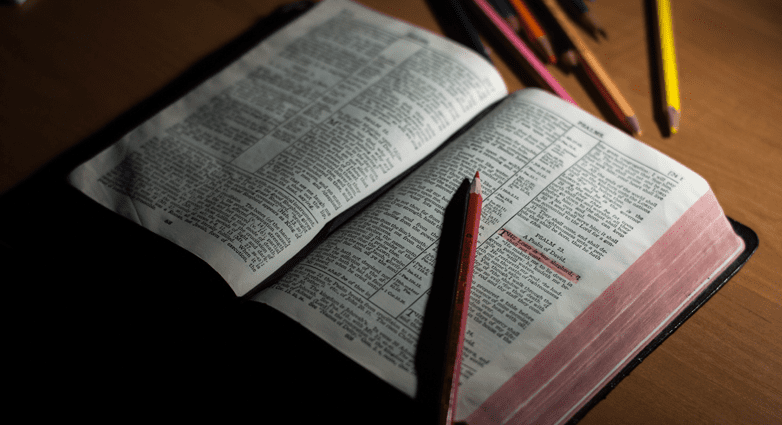
John-Mark Smith/Pexels
“The one who states his case first seems right, until the other comes along and examines him.”
Proverbs 18:17
Solomon’s wisdom echoes through the ages. Many people think a book written almost 3,000 years ago cannot have anything to say to our technological age, but Proverbs feels especially relevant in our foolish age. Solomon’s words on money, words, work, marriage, and family cut through our foolish notions and reorient our hearts towards God’s wisdom. The proverbs often confront us in ways we would not anticipate. They force us to reevaluate our most-cherished habits and to repent of our deepest-held notions.
Proverbs 18:17 strikes at the heart of one of our culture’s favorite pastimes–engaging in confirmation bias. Confirmation bias causes us to evaluate stories in light of our preconceived notions about what is true. We hear a story, filter it through our preexisting grid, and develop a snap judgment about it without hearing the other side of the story.
Solomon’s words in Proverbs 18:17 force us to reevaluate this practice. Solomon agrees that the first side of the story always sounds right, especially when it reinforces what we already believe to be true. However, he also said that the case falls apart when another person examines him. The story that seemed so juicy when we first heard it often loses its luster when the rest of the story comes into view.
A Case Study
A few weeks ago, a conservative Christian speaker drew attention when she said she had been disinvited from a speaking engagement at Cornell University because of her biblical views on marriage. The Cornell Political Union scheduled Jannique Stewart to speak on abortion as a “moral wrong.” As with other CPU events, Stewart would speak for 30 minutes and put forward her position before a Q&A with the audience. Then, the audience would have a debate and vote on where they stood on the issue.
Everything seemed fine until Stewart says a representative from the CPU called her to say they would not allow her to speak because of her views on sexuality and marriage. (She believes sex should be reserved for marriage and that marriage should be between a man and a woman.) In her Facebook post detailing the cancellation, she accused the CPU of saying that having her on campus would be “tantamount to allowing a racist to speak who held pro-slavery and pro-holocaust views.”
The response to her announcement was swift. FoxNews personality Todd Starnes hosted her on his radio show to talk about the controversy. Robert P. George, McCormick Professor of Jurisprudence at Princeton University, jumped into the controversy, saying it further cemented the left’s legacy of branding everyone who disagrees with them as a hater and a bigot. He also said, “Evidently, no Catholic, Evangelical Protestant, Eastern Orthodox Christian, Orthodox Jew, or Muslim, who believes what his or her faith tradition teaches about sex and marriage is permitted to engage in debate at the Cornell Political Union.”
Most conservative evangelicals would agree. We see our faith and moral commitments under assault from some of the highest levels of American life, particularly at the University level, so any story we hear that smacks of bias against Christians confirms what we already know to be true. We buy the story hook, line, and sinker without taking the time to investigate further.
However, the Cornell Political Union is telling a different story about why they rescinded Stewart’s invitation and claim that elements of her story are not true. The CPU told The Cornell Daily Sun that, “The accusations of discrimination that Jannique Stewart has leveled against the Cornell Political Union are false. We have never negatively categorized Ms. Stewart’s beliefs, nor have we ever attacked her character.
In addition, CPU President John Baker said that the canceled her appearance because of security concerns. He said, “We had discovered information [about] her past advocacy activities that could potentially lead to a situation in which the security of our members was jeopardized. And to prevent security risks we would have had to be able to afford security and that’s not something we’re able to afford at this time.”
A Lesson
Here we have a classic example of two people telling two completely different stories. Ms. Stewart says she was disinvited because of her views on marriage and the CPU claims that has nothing to do with her cancellation. I don’t know Jannique Stewart and have never heard her speak, nor do I know anyone affiliated with the Cornell Political Union, so I cannot testify to either’s character or integrity. I do not know who is telling the truth and who is not.
Confirmation bias causes us to take sides in stories like this because one side of the story fits our preexisting narrative about the world. This is especially true in our social media culture, where we tend to develop strong opinions based on incomplete or inaccurate information. Then, we share these stories based on incomplete or inaccurate information and they spread to other people, causing them to take sides without enough information. If you believe that Christians are persecuted by colleges, you will be tempted to believe the story despite evidence to the contrary. In fact, you will be tempted to believe the story without any further investigation.
Solomon’s words force us to learn a different way. Wisdom dictates that we listen to two sides of the story before we make up our minds. If we only hear one side of a story, we will likely believe stories that are either partially or completely untrue. If we are people who love Jesus, who is the truth, then we cannot abide believing and sharing an untruth.
Proverbs 18:17 forces us to stay silent until we know the truth. This means doing something counter-cultural in the social media era–don’t share stories or your opinion about a story until you have investigated its truthfulness. “This sounds true to me” is not enough. “I’ve heard of other stories like this” will not suffice. Allow the story to be cross-examined. Hear the other side of the story so clearly that you can articulate it yourself. Only then should you speak up and Solomon has plenty to say about how you do.
Related Posts:
“Why Our Culture Needs a Strong Dose of Proverbs“
“The Best Quotes from God’s Wisdom for Navigating Life“
For Further Reading:
Proverbs by Ray Ortlund
God’s Wisdom for Navigating Life by Tim and Kathy Keller
Previous Post

December 24, 2018
My Favorite Books of 2018
Next Post
July 1, 2019 Living Like You Have Real Hope
Browse Our Archives
Select a Category Bible Books Church Life Marriage Parenting Photos The Ministry Uncategorized
Select a Month August 2021 July 2021 June 2021 February 2021 December 2020 November 2020 October 2020 March 2020 July 2019 April 2019 December 2018 November 2018 October 2018 September 2018 August 2018 July 2018 June 2018 May 2018 April 2018 March 2018 February 2018 January 2018 December 2017 November 2017 October 2017 September 2017 August 2017 July 2017 June 2017 May 2017 April 2017 March 2017 February 2017 January 2017 December 2016 November 2016 October 2016 September 2016 August 2016 July 2016 June 2016 May 2016 April 2016 March 2016 February 2016 January 2016 December 2015 November 2015 October 2015 September 2015 August 2015 July 2015 May 2015 April 2015 March 2015 February 2015 January 2015 December 2014 November 2014 October 2014 September 2014 August 2014 July 2014 June 2014 May 2014 April 2014 March 2014 February 2014 January 2014 December 2013 November 2013 October 2013 September 2013 August 2013 July 2013
Follow Us!
TAKE THE
Religious Wisdom Quiz
Who said, "Your people will be my people and your God my God"?
Select your answer to see how you score.
Leah Bathsheba Ruth Esther
Related posts from One Degree to Another

The Lord is Near in Our Pain- 1...

Why I Switched from a Digital Bible to...

The First 15 Verses that Every Christian Should...

TRENDING AT PATHEOS Evangelical

How the author of the world's best hymn...
I've been working with John Newton for a while now. This makes...

Long before this Lectio Divina, Psalm 130 - the song - started...

What About the Trees? Another Living Parable
After I finished writing the last article about falling leaves as a...

Why Classical Education Is a Conversation, Not a...
Come and Read: Joy in Classical Education When I was a little...

Falling Leaves: A Living Parable on Letting Go
I’ve spent the vast majority of my life in the southeast corner...

Cornell University has received a great deal of negative publicity and intense...
view all Evangelical blogs
Ad-Free & Subscriber Log-In Subscription Support
- About Us
- 2026 Calendar
- Videos
- Podcasts
- Library of World Religions
- Faith In Media Tracker
- Advertise With Us
- Write for Us
- Privacy Policy
- Terms of Service
- Do Not Sell My Data
- Contact Us
- Radiant Digital
- Manage Newsletter Subscriptions
- Unsubscribe From Notifications
- Sitemap
Copyright 2008-2026, Patheos. All rights reserved.
Subscription Support Ad-Free & Subscriber Log-In
Follow Patheos